

Childlike and childish both mean “resembling a child,” but in very different ways. A childlike person has the positive aspects of a child: innocent, curious, open-minded; whereas, generally, a childish person has the negative aspects of a child: selfish, impatient, prone to outbursts. (Childish can have the positive meaning too, but it’s uncommon.) They’re not quite opposites, but it’s a stark contrast.
It’s strange how two adjectives can form in a straightforward way from a single noun, and end up in such different places. I was thinking about this recently, and being the kind of person I am, I wondered if there were other examples.
Spoiler: Yes.
Noun: sun
Adjectives: sunny, solar
A pretty simple example. A sunny day has a lot of sunshine (literally), and a sunny disposition means you give off lots of sunshine (metaphorically). Solar, by contrast, is more about the sun as an astronomical body: solar flares, solar eclipses. (I guess the moon’s equivalents would be loony and lunar, although loony means something a bit different.)
Noun: star
Adjectives: starry, stellar, sidereal
Continuing with the astronomical theme, we find that starry and stellar are pretty much equivalent to the sun’s sunny and solar. But star has a third trick up its sleeve: sidereal. This word is more focused on the “fixed stars” and constellations collectively, across the heavens, rather than any single star in particular.
Noun: king
Adjectives: royal, regal
Both words are etymologically related to king, or rather, the Latin rex. Royal means “related or connected to kings (and their families)” in a very general way: the royal crown, the Royal Air Force, royal blood, etc. Again, this is loosely analogous to solar and sun. But regal means “having the dignity or magnificence of a king.” It’s more about the feeling or appearance of kingship, rather than a connection to an actual king.
This is a much subtler distinction than, say, childlike vs. childish, partly because the meanings are more similar to each other, and partly because royal can also (sometimes) have the meaning I just gave for regal, and vice versa. Thanks, English!
Noun: water
Adjectives: watery, aquatic
Aqua is simply the Latin word for water, so these adjectives both come from the parent noun in a straightforward way, just like the other cases.
Aquatic covers anything that’s in or on the water: aquatic plants, aquatic sports, the aquatic sciences. But it doesn’t cover the use of water for other purposes — you wouldn’t use aquatic to talk about, say, water for drinking or for watering crops. By contrast, watery means “full of water,” or soaked, or wet, or waterlogged: watery eyes, a watery grave. Here again, the parallel between sun/sunny/solar and water/watery/aquatic is striking, though not 100% perfect.
Also, The Life Watery with Steve Zissou would just be ridiculous.
Noun: tree
Adjectives: treelike, arborescent
That’s right — arborescent is a word. English has two separate words for “resembling a tree,” and that’s all I’m gonna say about that.
There does seem to be a pattern here (putting aside the child and tree examples). Sun, star, king, and water all have one adjective that simply means “related to [noun] in some way,” and another that means roughly “full of [noun] or its attributes.” I don’t think I ever noticed that before, not even when I started writing this post — I only made the connection about halfway through. Neat.
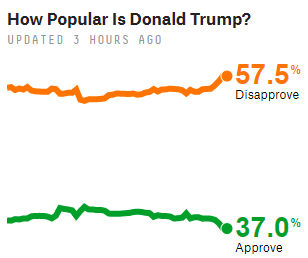
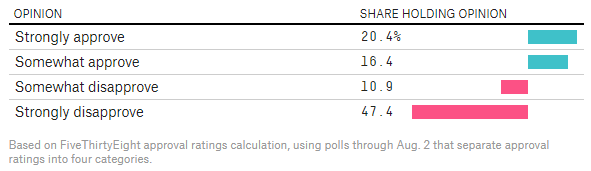
By the way, my latest five posts have been: a love poem, an analysis of presidential approval ratings, a system for classifying degrees of fame, nuclear war, and now, the connection between nouns and adjectives. Can’t say I don’t give you variety!


 Brian D. Buckley