The Muslim ban is real. This is actually the country we live in now.

A lot of people say that if you swear all the time, it loses its effectiveness. You’ve got to reserve it for situations where it’s really warranted. I’ve tried to write my blog according to that rule.

With that in mind, take a look at this fucking bullshit.

No, the U.S. isn’t permanently banning all Muslims from coming in. Not yet. But we have institutionalized religious intolerance.

This isn’t going to happen, it has already happened.

The authors of this news article seem calmer than I am, so I’ll let them explain:

President Trump on Friday closed the nation’s borders to refugees from around the world, ordering that families fleeing Syrian carnage be indefinitely blocked from entering the United States, and temporarily suspending immigration from several predominantly Muslim countries.

So far, this is a geographical test, not a religious one — at least nominally. If that’s all it was, I’d only be regular angry: the ordinary, moderate amount of anger I feel every day when I look at the news. But keep reading.

Declaring the measure part of an extreme vetting plan to “keep radical Islamic terrorists” out of the country, Mr. Trump also ordered that Christians around the globe who are seeking entry into the United States should be granted priority over Muslims, for the first time establishing a religious test for refugees.

I don’t think I can adequately express how furious I am at the phrase establishing a religious test for refugees.

Okay. Breathe.

Out of curiosity, what are these countries we’re so concerned about?

Iraq, Syria, Iran, Sudan, Libya, Somalia and Yemen.

To be fair: These are, of course, dangerous and unstable places, and of course we should be careful about who we let into our country. (It wasn’t exactly an open-door policy before this order.) Also, to be fair: Many predominantly Muslim countries, such as Indonesia, are not on the list.

The main thing is that we prevent another 9/11 from happening. Right?

Announcing his “extreme vetting” plan, the president invoked the specter of the Sept. 11, 2001, attacks. Most of the 19 hijackers on the planes that crashed into the World Trade Center, the Pentagon and a field in Shanksville, Pa., were from Saudi Arabia. The rest were from the United Arab Emirates, Egypt and Lebanon. None of those countries is on Mr. Trump’s visa ban list.

Oh. Well, um. Hm.

Saudi Arabia was the home of 15 of the 9/11 hijackers, as well as Osama bin Laden. It is an absolute monarchy in which Sharia law dominates and women aren’t allowed to vote.

Egypt was the home of one of the 9/11 hijackers, has been racked by violence, and is run by a dictator.

Not to mention, Turkey — another predominantly Muslim country — has been racked by violence, and is run by a president with strong authoritarian leanings.

By Trump’s logic, these are also very scary places, right? Kind of weird that they’re not on this list. But then, I’m sure he has his reasons. It’s not like he has business interests in —

Oh wait, just kidding. Trump has business interests in Saudi Arabia, Egypt, and Turkey. (And, incidentally, Indonesia.)

At this point you may be wondering if there’s a complete list of Mr. Trump’s business interests. Haha, nope! Because he still, somehow, still hasn’t released his tax returns. And he’s not planning to. (Reminder: There’s a petition.) But if you’re curious, Time has a good list of the business interests we do know about (or have reason to suspect).

So, to summarize:

  • Muslims are dangerous
  • But not the ones who can help make Trump rich
  • Christians are not dangerous
  • Torture is fine
  • If you’re fleeing the ravages of war and torture, and you think the U.S. is some sort of haven of peace and liberty, you’d better find Jesus in a hurry
  • Jesus was a Middle Eastern refugee

Stay tuned. We’ll be talking about more ways to fight back in the days and weeks to come.
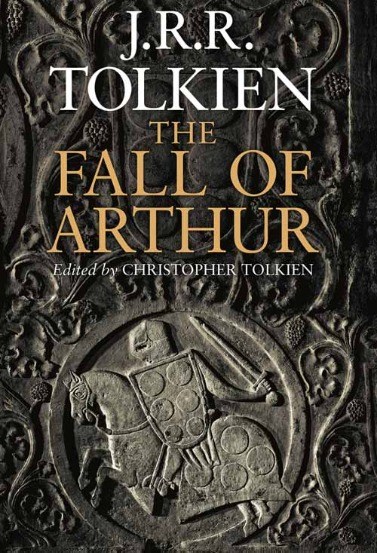
Postmortem: The Fall of Arthur

tfoa

For a man who died in 1973, John Ronald Reuel Tolkien still gets an awful lot of books published: The Silmarillion, 1977; the twelve-volume History of Middle-Earth in the 80s and 90s; The Children of Húrin, 2007; and others.

All this is possible because one of his sons, Christopher Tolkien, has devoted a remarkable amount of time and energy over the decades to combing the elder Tolkien’s voluminous notes, sketches, and drafts, which are often incomplete and hard to decipher. Christopher is 92 today, and still going.

A few years ago he came out with The Fall of Arthur. A few weeks ago I discovered it in a local bookstore. A few days ago I finished it. And it’s excellent.

The Fall of Arthur is an unfinished long poem about the death of King Arthur, the last battle with Mordred, and the downfall of Camelot, covering roughly the same ground as the final chapters of Thomas Malory’s Le Morte D’Arthur, though Tolkien draws on other sources as well. It is written in a form relatively unknown today, the so-called alliterative verse of the Old English poets, used most famously in Beowulf. Tolkien’s work has no rhyme, but a definite rhythm and structure, as in this bit from the first canto (chapter):

Dark and dreary     were the deep valleys,
where limbs gigantic    of lowering trees
in endless aisles    were arched o’er rivers
flowing down afar    from fells of ice.

That space in the middle of each line is part of the Beowulf form, too. When discussing it, Tolkien speaks of both lines and “half-lines.” The purpose of the half-lines would require a whole separate blog post (and more research on my part), but the Wiki page I linked above has some explanation.

More remarkable, from my perspective, is that this is really good poetry.

I grew up on The Hobbit and Lord of the Rings, and I thought the poetry and songs in those books was amazing — but the older I got, the less impressed I was. So I wasn’t sure what to expect here. But his use of language is just beautiful.

I think the Old English form (as opposed to the more conventional rhyming verses he uses elsewhere) pushes him to find more interesting word choices. I also love all the old words he uses, which make the poem as a whole feel both ancient and truly connected with Arthur’s world. In the quote above, “fells” are hills or heights — so “fells of ice” are hills of ice. Elsewhere, he uses “tarn,” which is a small steep-banked mountain lake. (Incidentally, “tarn” appears in the first paragraph of The Fall of the House of Usher as well.) Other examples abound.

I’ve gotta say, too, it’s refreshing to read a serious work by Tolkien that isn’t in Middle-earth. I like hobbits as much as the next guy, but sometimes I also like, y’know, not hobbits. So that was cool.

As I mentioned, the poem is unfinished — as with so many projects in his career (and mine), real life got in the way. The story ends well before the apocalyptic Battle of Camlann (the battle that puts the Morte in Morte D’Arthur). At 40 pages, the poem itself takes up less than a quarter of the full volume. The rest is mostly commentary by Christopher in the form of three essays:

The Poem in Arthurian Tradition — Which sources did Tolkien draw on for his story? The Arthur mythology doesn’t have a single canonical source. It’s a jumble of different authors and traditions and languages over a span of centuries, with some altering or expanding on earlier works, and some inventing completely new stories. Christopher offers a solid historical context for the mythology his father decided to use.

The Unwritten Poem and Its Relation to The Silmarillion — Although The Fall of Arthur isn’t a Middle-earth story, there are certain parallels. The strongest parallel is between Avalon and Tol Eressëa, the latter being the “Lonely Isle” near Valinor from The Silmarillion. Tolkien also, at some point, wrote some lines of verse — which do not appear in the main poem — featuring the Silmarillion character Eärendel:

Eärendel goeth on eager quest
to magic islands beyond the miles of the sea,
past the hills of Avalon and the halls of the moon,
the dragon’s portals and the dark mountains
of the Bay of Faery on the borders of the world.

Even putting aside the Arthurian connection via Avalon, the lines above are gorgeous poetry, in my opinion — the word choice isn’t as sophisticated as what you’ll find in The Fall of Arthur, but it’s a vivid image nonetheless.

The Evolution of the Poem — Christopher had access to earlier drafts of the main poem, and he uses them to show how his father’s ideas grew and changed over the course of multiple revisions. He presents this evolution in considerable detail, taking a full 50 pages — which is longer than the poem itself. I confess this is the only section of the book I was unable to finish. I love writing, and editing, and revision, and poetry, and textual analysis, and Tolkien, and King Arthur, but even so, there’s only so much “See how he added five lines here?” that I can stomach. Nevertheless, it’s a great resource for anyone doing serious research, and its inclusion demonstrates once again Christopher’s dedication to his father’s work.

There’s also an appendix, an essay, where J. R. R. Tolkien explains in his own words what alliterative verse is all about, and explains the Old English verse tradition more generally. I found it fascinating, but I fear I may be in the minority there.

Whew! I always start these postmortems intending them to be just a few words about the book or movie or whatever, and I always end up being reminded yet again that writing “a few words” is beyond my abilities. But that’s how it goes.

Happy weekend!

Want Trump to release his tax returns?

Then sign this WhiteHouse.gov petition.

If it gets 100,000 signatures, a White House response is guaranteed (at least, under the current rules). It already has 362,000 signatures, so we’re way past that requirement. But the more signatures it gets, the stronger the message it sends.

You may think petitions don’t do a lot, and you may be right. But since it takes about thirty seconds and approximately zero effort, there’s not a lot of downside. Let’s fire on all cylinders.

This must be how Pandora felt

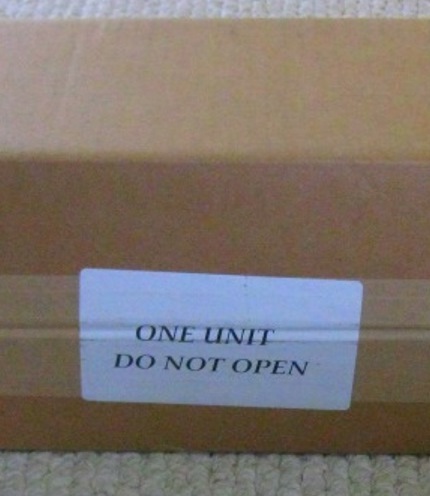
A package arrived on our front porch, and I’m so confused:

box

box2

What say you, good readers? Follow instructions? Or cry Havoc! and let slip the dogs of war?

UPDATE: It’s a Swiffer.

The Last Jedi — alternate titles

sw-tlj

It was recently announced that Star Wars Episode VIII would be titled (subtitled? sub-subtitled?) The Last Jedi. Given the quality of recent installments in the franchise, and the return of both Mark Hamill and Carrie Fisher (whose scenes were all shot before she passed away), there’s plenty to be excited about.

Even better, we at BrianDBuckley.com can now exclusively reveal this list of alternate titles for Episode VIII, all of which were very close contenders for the final name.

  • The Ocho
  • Master Skywalker or: How I Learned to Stop Worrying and Love the Dark Side
  • Gungan Style
  • There Is Literally No Title We Could Choose Which Would Cause You to Not Buy Tickets
  • The Force Gets Sleepy Again
  • C-3PO and Jar Jar’s Ewok Hijinks
  • Oh No It Is a Spherical Superweapon
  • Rey Doesn’t Like Sand Either but She’s Not Getting All Whiny About It
  • We Ship Kylo Rey
  • The First Order Retaliates (A Totally Original Storyline Bearing No Resemblance to The Empire Strikes Back)
  • Let’s Talk About Midi-chlorians
  • Kylo Ren Recites Some Poetry that Got a Really Positive Response on Deviantart
  • The Hanukkah Special
  • Title’); DROP TABLE Titles;–
  • Our Screenwriter Quit but We Found Some Pretty Good Fan Fiction
  • Pride and Prejudice and Droids
  • Han Solo’s Resurrection and Immediate Second Death
  • That’s Not How the Force Works
  • The Plural of ‘Jedi’ Is ‘Jedi’ Okay?
  • Whatever Fan Site Had ‘Finn Is Secretly Snoke,’ Good Job, You Guys Nailed It
  • The Non-Canon Adventures of Sith Lord BB-8 and His Apprentice Poe
  • The Penultimate Jedi

NBC News is often wonderful

I never realized I could get such warm fuzzies from quality journalism.

In case you haven’t heard, Trump’s press secretary Sean Spicer — in his first press conference as speaker for the President — told a few petty and easily debunked lies about crowd size, among other things. Showing a bizarre obsession with the minutiae of this subject, he also took time to attack the media for “deliberately false reporting” (i.e., debunking his boss’s wild assertions). He launched a particular attack on a single detail of a single report by a single reporter, which was found to be false (and which the reporter had corrected already, within minutes of publication, along with an apology).

Of course, he took no questions.

It now fell to Kellyanne Conway to defend the indefensible — a job at which she has a great deal of experience. The video above is Chuck Todd from Meet the Press grilling her on these absurd, childish, unnecessary, easily debunkable, Orwellian lies. Why did the President feel the need to do this?

Over and over, he told her: “You did not answer the question.” “You did not answer the question.” “You did not answer the question.”

When, at one point, she referred to Spicer’s lies as “alternative facts,” he helpfully clarified:

Wait a minute. Alternative facts? Alternative facts? Four of the five facts he uttered . . . were just not true. Alternative facts are not facts; they’re falsehoods.

I honestly have a hard time understanding this phenomenon.

It doesn’t matter how much you like Trump, or dislike the media, or anyone else. This is just basic, verifiable information. You don’t have to hate Trump for it, or say he’s a bad person. We’re just talking, at a very elementary level, about whether information is accurate or not.

You either care about the truth, or you don’t.

Many people don’t. But it’s incredibly gratifying that so many people, of so many political persuasions, still do.

Fox News is occasionally wonderful

It’s not often that I have anything nice to say about Fox News, but the video clip above is just glorious.

There’s a longstanding myth that anti-Trump protesters are largely paid professionals doing it for the money rather than from sincere belief. Like most such myths, there has never been any evidence for it, but that doesn’t stop people from believing.

A few days ago, on January 17, Fox’s Tucker Carlson interviewed a man who claims to run a group called Demand Protest, which supposedly pays people to go to rallies and demonstrations. Carlson delivers possibly the best opening I’ve heard for any interview, ever:

So, um, this is a sham. Your company isn’t real. Your website is fake. The claims you have made are lies. This is a hoax.

And that’s just in the first 60 seconds.

The Demand Protest guy makes a show of defending himself against these accusations, but as the interview goes on, it becomes obvious he’s just messing around. He says he was inspired by people like Julian Assange “and Peyton Manning,” which took my brain a second to process because he says it so casually.

Eventually the hoaxer explains:

It’s pretty darn easy these days to just say whatever the heck you want on national TV and have it passed off as truth. It’s pretty incredible to me how easy it was to get the coverage we got.

Indeed it is.

Two and a half hours till Inauguration. Now more than ever, let’s keep our eyes open for the truth.

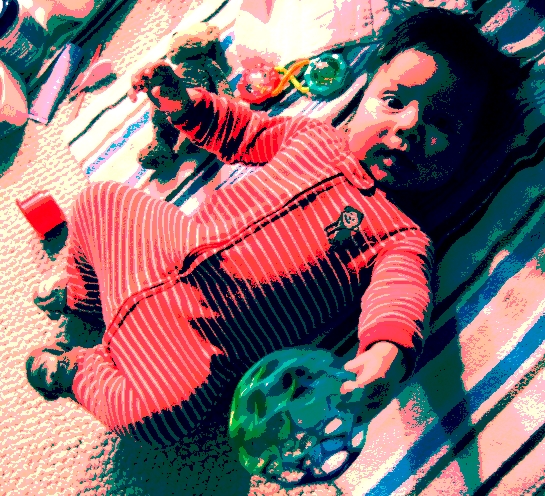
Evan eleven

bloo contrast crystalline dark ghostly hues inkay  poster quads  splits z_final

Thought for the Week

I want to learn how to write the way babies learn how to talk: With constant practice, without dwelling on failure, certain of achieving a potential I can’t yet imagine.

Who & what did our President-elect attack on Twitter this week?

twitterump

With so much abuse flying out of one person’s mouth (er — keyboard) it can be tough to keep it all straight. Don’t worry. We’ve got you covered.

Sunday, January 1, 2017
(No tweets today!)

Monday, January 2, 2017
The mayor of Chicago (implied)
The media and “pundits”
China

Tuesday, January 3, 2017
General Motors
Obamacare
Congress
U.S. intelligence community (implied)

Wednesday, January 4, 2017
John Podesta
The Democratic National Committee
The media
The Democratic National Committee (again)
Hillary Clinton
The media (again)
Obamacare
Senator Chuck Schumer
Democrats

Thursday, January 5, 2017
Democrats
Senator Chuck Schumer
Obamacare
The media
Toyota Motor Corp.
The Democratic National Committee

Friday, January 6, 2017
The media
Hillary Clinton
Democrats
Arnold Schwarzenegger
The Democratic National Committee

Saturday, January 7, 2017
The Democratic National Committee
(…and it’s not even noon yet)

Oh well. He may be hotheaded. But at least he’s not, like, in charge of making treaties or launching nukes or anything.