Monthly Archives: June 2015

The Best Grammar Joke I Know

A high school student was supposed to meet his English teacher for a study session. He called her up and said, “Where you at?”

In a severe tone she replied, “One should never end a sentence with a preposition.”

He thought a second, then said, “Where you at, bitch?”

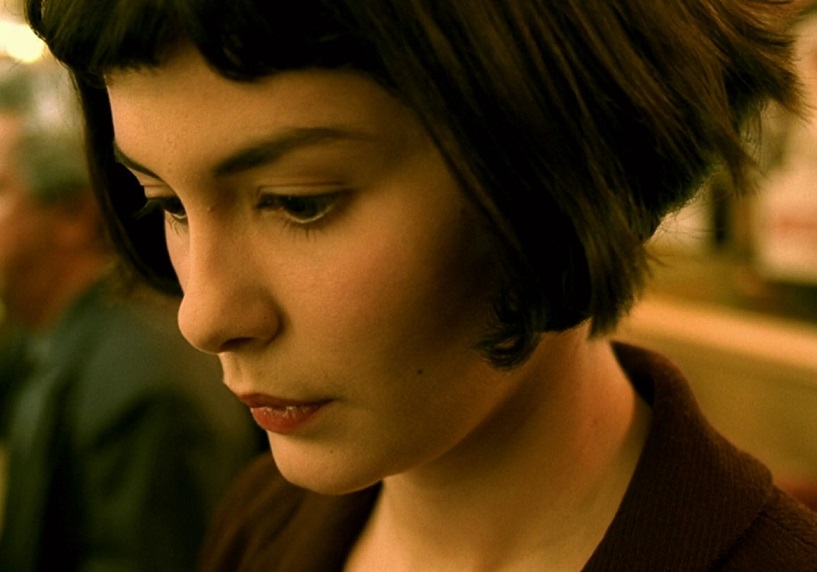
Postmortem: Amélie

Amelie

Warning: spoilers ahead. But, I mean, this isn’t Game of Thrones we’re talking about here.

I had heard that Amélie was a bubbly, joyful, heartwarming kind of movie. It was – but it’s also deeper, heavier, even a little darker than I expected. That’s a good thing.

It’s a French film, French-language with subtitles, released in 2001. Nominated for five Oscars. I kept finding little references to it in various corners of the Net, and finally decided I should give it a try. Betsy and I watched it on Sunday.

Amélie is an introverted young Parisian woman with a menagerie of eclectic neighbors, including a brittle-boned old painter who can’t leave his apartment, a grocer who abuses his slow but kind assistant, and a middle-aged woman who obsesses over her long-dead husband. Amélie’s father is distant and cold (think Spock without the charm or the science). She has no close friends and has never formed a serious romance.

Then one day she finds a tiny old box of toys and tracks down its owner, a grandfather who lost the mementos a lifetime ago. She moves him to tears and vows to become an angel of kindness in her complicated little society, enacting elaborate schemes to give people what she thinks they want.

Not all her schemes end well, and even the successful ones remind her of the gaps in her own life. She eventually finds love of her own and must confront her fears of getting close. Of course, it all turns out happily in the end.

The movie has a warm, quirky style that reminds me of Wes Anderson. (The actual director was Jean-Pierre Jeunet, who also directed, of all things, Alien: Resurrection.) A faceless omniscient narrator explains the likes and dislikes of characters as they’re introduced, giving us an insider’s guide to this colorful world.

We learn Amélie’s entire life history, from conception (complete with a photo of the exact sperm that created her) to her mother’s death (caused by a suicidal jumper landing right on top of her) to her unusual hobbies (trying to guess how many orgasms are happening in the city right that moment, as we are treated to vivid footage of the same). Special effects create visual metaphor, as when Amélie literally melts into the floor from emotion, or when we actually see her heart pumping away inside her.

Most of all, I was struck by Amélie‘s boundless energy, endless creativity, and hilarious audacity. Streaks of darkness are often played for laughs, but there’s sadness and magic in her world as well. By the end, I felt lucky to have been a part of it.

Transcendence: The Tornado

Each week, we’ll look at another example of what I call a “moment of transcendence” – a scene from a show, a passage from a book, or anything else, that I find soul-piercingly resonant: joyful, sad, awe-inspiring, terrifying, or whatever. These moments are highly subjective, so you may not feel the same way I do, but nevertheless I’ll try to convey why I find the fragment so powerful. I hope we can enjoy it together.


This is my favorite TV commercial of all time:

A great storm has descended on the Great Plains. A girl stands in front of her house, staring forward, awestruck, oblivious to her father’s shouts. Fighting the wind, he rushes out, picks her up, and takes her to safety. Even as she is carried away, she can’t stop staring. She has seen a tornado, descended from on high, screaming across their quiet land like a black serpent of heaven.

Very often – almost always, I think – moments of transcendence are moments of unveiling. Everything in life is veiled, masked in drab exterior, sometimes for secrecy but usually just by default, because it’s normal for things (and people) to hide their true character. We glimpse inside only in brief flashes of revelation, and our minds clutch these precious insights like diamonds.

Nature is that way. Most of the time it’s calm, even dull, and we may think of nature as just another creature we’ve domesticated. And then one day the veil slips, and we catch just a glimmer of the beast underneath, something big as a planet, feeding on oceans, breathing winds the size of countries, still rolling in the same great cycles it has followed for numberless aeons.

Years ago, I read a forum post about this commercial. Somebody said it was ridiculous, that the girl was an idiot for standing outside in such obvious danger. The comment is interesting for two reasons.

First, it demonstrates the wildly divergent opinions that different people can have about the same work of art. For me, this video is so beautiful that I struggle to find words to express it. For him (or her), it’s garbage. Many things are sacred, but no one thing is sacred to everyone.

Second, it’s a valid point: standing outside watching a tornado is, from a certain viewpoint, stupid. That’s one of the side effects of beauty, of enchantment. It distorts logic, elevates the heart, confuses the mind. It makes you do stupid things. The “smart” thing is to stay indoors, increase your chance of survival, never look directly at a storm.

Except then you have to ask – what, exactly, are you surviving for?

If you have thoughts about the commercial, or wish to share a transcendent moment of your own, leave a comment!

Friday Links

Sir Christopher Lee has died at age 93. He played Dracula, Fu Manchu, Saruman, Count Dooku, Bond villain Scaramanga, and Frankenstein’s monsters – among many other roles – in a career that spanned over 250 movies. He could trace his lineage back to Charlemagne, he released a heavy metal album at 92, and he seems to have been respected and loved by many who worked with him. He never retired; he went on acting right up till the end.

You Are Not Dr. Seuss. A good analysis of why so many Dr. Seuss imitators fail so badly. (Answer: among other virtues, Dr. Seuss commanded not only excellent rhyme but also excellent meter. Most people only get the rhyme.) My own poetry is far from perfect, but I have long prided myself on sterling meter.

Astounding scientific fact: this weekend, our planet will make two complete rotations. Don’t miss it! See you Monday.

The World Between Yes and No

“Did you give him the money?”

“Well, listen, here’s what happened – ”

“Did you give him the money, yes or no?”

People sometimes feel that a yes-or-no question should be answered (or answerable) with one or the other, a single word, and that anything else means the responder is being evasive.

Sometimes this feeling is correct. Sometimes there really is a simple yes or no, and they’re trying to confuse the issue.

But many times, the best answer or most direct answer isn’t a simple yes or no. The term “yes-or-no question” is, in fact, misleading. There are plenty of perfectly valid responses not covered by either word. Responses like…


A clear answer exists, but you refuse to give it.

Maybe the answer would compromise your privacy, someone else’s trust, national security, or any of a million other interests.

Maybe answering would set a bad precedent (e.g., the answer is in the FAQ, and you don’t want to keep re-answering it forever).

Maybe you just don’t feel like answering, and you don’t need a specific reason, because the questioner is Not the Boss of You.

A clear answer exists, but you’re not certain what it is.

Maybe you have no idea.

Maybe you have a good guess, but you’re not 100% sure. Maybe the source for your answer isn’t entirely reliable.

Maybe the answer theoretically exists, but is unknowable at this time (e.g. “Will it rain three weeks from today?”).

Maybe you don’t know right at the moment, but given some time, you could look it up or figure it out.

No clear answer exists; the answer is undefined.

Is fan fiction legal in the U.S.? It isn’t just that you don’t know the answer; the answer literally does not exist. It depends on a judge’s interpretation of a law, and that interpretation has not yet been given.

The question is defective in some way.

Maybe the question is ill-defined. (“Is this the best way to get to Cleveland?” “Well, what do you mean by ‘best’? Do you mean fastest? Easiest? Cheapest?”)

Maybe the question contains a false assumption. (“Have you finished writing the Sandburg Report yet?” “Uh, you didn’t assign that to me.” Technically “no” would be the correct answer there, but it’s certainly not the best answer.)

Maybe you need more information to answer the question; “It depends.”

The answer is complex.

“Are your students doing their homework?” “Well, the majority are pretty consistent. Several have struggled in the past, but they’re getting better. Amy and Tristan haven’t turned in a single assignment all year.”

A literal, unqualified yes or no would be misleading.

“Do you think we should outlaw these horrible activities?” “No…because I think existing laws prohibit them already, and we can fight this most effectively by enforcing the laws we have.”

You are unable to process the question.

Maybe you didn’t hear what they said.

Maybe you’re too tired, confused, or drunk to come up with a good answer.

Maybe the question is too complicated for you to understand.

Maybe English (or whatever) isn’t your first language, and you’re still trying to figure out what they asked.


Obviously the list above is not exhaustive, and many questions or situations could fall under multiple categories. But I think the point is clear: yes-or-no questions are not always yes or no. It’s a false dichotomy – like most dichotomies are.

Love the complexity. Embrace the fuzzy.

Haiku 365: May

#122: 5/4/2015
Eating ice cream straight
from the carton. Keeping it
classy, Buckley-style.

#123: 5/4/2015
Re-painting the fence.
Body gets to be outside,
mind wanders. Win-win.

#124: 5/4/2015
History, symbols,
mythology, and Carl Jung.
Reading addiction!

#125: 5/4/2015
Like the lawnmower,
my mind needs a couple pulls
to start its engine.

#126: 5/5/2015
Night has descended:
whence this dim sunless ghost-light
lingering on high?

#127: 5/6/2015
Slim young apple tree
stands up straight, blossoming pink,
nuzzled by cold fog.

#128: 5/7/2015
Brown leaf on driveway
hunched in its evening shadow
like a surly toad.

#129: 5/9/2015
Focus on haiku.
A helpful wall blocks my view
of dirty dishes.

#130: 5/9/2015
When will the rain come?
How much work before sky-drops
send us scurrying?

#131: 5/10/2015
Morning of yard work,
wearing sunscreen, feeding grass.
Sniff – now I smell green.

#132 – 5/11/2015
The rustling forest
calls at dusk, whispering old
songs, promising charms.

#133: 5/12/2015
The eyes of the wolf
pierce darkness, cleave midnight mist,
apprehend moonlight.

#134: 5/13/2015
A thousand faces
for but a single hero.
Whither his bright blade?

#135: 5/14/2015
Calligraphy needs
steel resolve. Shaky thumbs make
shaky majuscules.

#136: 5/24/2015
Peter’s Neverland,
the looking-glass of Alice:
what realm waits for me?

#137: 5/24/2015
Drifting toward summer,
lazy sunlight and brief nights
welcoming solstice.

#138: 5/24/2015
Eyes of hurricanes,
the Eye of the Sahara.
Earth is watching us.

#139: 5/24/2015
Breathless, unblinking,
frigid angels of the Deep
fear no hook or net.

#140: 5/24/2015
Nickels and a dime
jangle loose in my pocket.
Pipsqueak percussion.

#141: 5/24/2015
Clumsy number eight
could slip on rounded feet, fall,
become infinite.

#142: 5/24/2015
Poets love the moon.
Does it hang in space, august,
judging motley verse?

#143: 5/24/2015
Dear sir or madam:
Do you enjoy short letters?
Sincerely, B. B.

#144: 5/24/2015
Do you make mistakes?
I once vowed to be faultless.
That was a mistake.

#145: 5/24/2015
Deep in the Great Plains,
sea of grass and sea of sky
watch each other dream.

#146: 5/25/2015
Dying smoke alarm,
nestled – where? All day we hunt
that infernal beep.

#147: 5/26/2015
Jealously we guard
our rectangles of trim grass.
Fences loom like walls.

#148: 6/5/2015
Just before midnight:
I’m an isle of consciousness
in a dream-wracked sea.

#149: 6/5/2015
Blind, dark, and heavy,
that was depression. Viscous.
Future’s fluid now.

#150: 6/5/2015
My orange slices
sit on their newly-shed skin
like five plump reptiles.

#151: 6/5/2015
This burned-out light bulb
ought to symbolize something.
Hmm…you work it out.

#152: 6/5/2015
Quoth the raven: “It
might not happen for a while.
But, I mean, who knows?”

Transcendence

Now that “The Witch and the Dragon” is online in its entirety, it’s time for a new Monday feature. So let’s talk.

Sometimes, when you’re reading a story, you come across a part that gleams in golden ink across the page. It isn’t merely insightful, or moving, or clever, or funny, or brilliant. At the risk of sounding dramatic: it leaps from the book and pierces your soul. You laugh, or shiver, or cry, or merely sit, transfixed. You remember this fragment long after you’ve forgotten the plot and the author and even the title. “This is it,” you say. “This is why we make art.”

I’ve been savoring and revisiting these little fragments for as long as I can remember. I don’t think I’ve ever heard a term for them, so I’m calling them moments of transcendence.

These moments can come from anywhere: books (fiction and non), poems, TV shows, movies, paintings, music, even video games. They appear in sources as lofty as Shakespeare, the Bible, and the Tao Te Ching, as humble as newspaper comic strips, as dry as textbooks, as sophisticated as Keats, as mainstream as car insurance commercials (yes, really).

You can find them in works you love, works you despise, works that are completely mediocre aside from that one shining moment. They can be as short as a few words, or (very rarely) as long as an entire TV episode.

Art can be good, even great, without such moments. By his own admission, Isaac Asimov consciously avoided them, so as to make his failures less spectacular; nevertheless, he achieved his share of both. Lord Dunsany, on the other hand, seemed to be trying for transcendence in every paragraph, which (for me) started off enchanting but very quickly grew tiresome. Tolkien, I feel, achieved a nice balance – but then, I’m awfully biased.

Each Monday, I’m going to feature a moment of transcendence. I’ll give you the background, the context, and the fragment itself, and then I’ll try to convey some sense of why it affects me as it does.

Moments of transcendence are, of course, utterly subjective. One reader’s awe is another’s cheesiness; what makes one viewer cry will make another yawn. I certainly don’t expect you to feel the same way about these bits and pieces as I do. But as I share them – and I hope you’ll share yours, too! – maybe we’ll get a better understanding of how to make great art.

Or, failing that, we’ll watch some sweet YouTube clips.

We start next Monday!

Friday Links

Congress and the President have finally ended the NSA’s bulk phone records collection program. It’s progress. Not the endgame by any means, but an excellent first step. Meanwhile, fresh revelations come to light.

Significantly, it appears that Congress has shifted its thinking on this key issue. The Senate approved the reform by a two-to-one margin, in spite of vocal opposition from Senate Majority Leader Mitch McConnell. It’s progress.

I commend Senator Rand Paul, in particular, for his firm stance in defense of civil liberties. Call it grandstanding if you like, but I’ll take it. I don’t agree with all his ideas by any means, but I think he’s a man worth listening to, as argued by Fareed Zakaria.

And of course, whatever you may think of Edward Snowden, it’s clear at least that none of this valuable reform would have happened without him.

I am very proud to say that my wife, my friends (including Mr. Trube), and I played some role, however small, in the fight to restore our civil liberties. In his farewell address to the nation, President Eisenhower said:

We must guard against the acquisition of unwarranted influence, whether sought or unsought, by the military-industrial complex….We should take nothing for granted. Only an alert and knowledgeable citizenry can compel the proper meshing of the huge industrial and military machinery of defense with our peaceful methods and goals, so that security and liberty may prosper together.

And, for what it’s worth, here’s the text of the Fourth Amendment, which is only one sentence long:

The right of the people to be secure in their persons, houses, papers, and effects, against unreasonable searches and seizures, shall not be violated, and no Warrants shall issue, but upon probable cause, supported by Oath or affirmation, and particularly describing the place to be searched, and the persons or things to be seized.

It’s clear, as I read the news now, that I’ve been out of the loop too long. I need to pay more attention to what’s going on in the world. I’ll do my best.

In other news: I found out yesterday that presidential candidate Lindsey Graham has never sent an e-mail in his life. Not one. Let that sink in for a minute.

And finally: no politics, just beauty. Some of the earliest color photos ever taken, pre-World War I. Enjoy.

Have a great weekend! I’ve got something fun planned for Monday.

The Witch Hunters’ Apology

Arresting a Witch - Pyle

Everyone has heard of the Salem Witch Trials of Massachusetts, 1692-1693. Nineteen people – fifteen women and four men – were found guilty of witchcraft, and hanged. A twentieth, Giles Corey, refused to enter a plea and was tortured to death. Two dogs were also killed.

What’s less often mentioned, though, is that many of the perpetrators of this atrocity later publicly repented.

In 1697, assistant magistrate Samuel Sewall asked for his apology to be read aloud publicly at a nearby church. Likewise, twelve of the jurors involved released a written statement admitting “that we ourselves were not capable to understand, nor able to withstand, the mysterious delusions of the powers of darkness, and prince of the air,” taking responsibility for “the guilt of innocent blood,” and calling themselves “sadly deluded and mistaken.”

And in 1706, Ann Putnam Jr. – one of the principal accusers, though only a child at the time, and likely manipulated by others – also publicly apologized, saying that she did “earnestly beg forgiveness of God, and from all those unto whom I have given just cause of sorrow and offense.”

This is not to imply that all guilty parties apologized; many central figures remained unrepentant, as far as I could discover. Nor am I suggesting that a mere apology can excuse the horrific pain and death their actions enabled.

The apologies do, however, suggest something hopeful: that people, and society, can and do change for the better.

Massachusetts has not, to my knowledge, executed anyone for witchcraft in quite some time.

Return of the Buckley

Brian, where have you been?!

Mostly, I’ve been in Texas, visiting my dad’s side of the family. It’s been an eventful week:

  • Severe flooding in our corner of the Lone Star State. Hardly a visible blade of grass in our entire front and back yards: just a deep, brown, giant, stagnant, stinking lake.
  • A corollary of the above: mosquitoes are now multiplying so fast, you’d think they had calculators.
  • On the plus side, I got to spend time with my grandma, dad, stepmom, aunt, uncles, cousins, and two adorable little kids whose relationship to me is – according to Google – first cousin once removed.
  • I also got to examine a giant family Bible that dates all the way back to 1882. In addition to the text itself, it has an atlas, a mini biblical encyclopedia, a concordance, a summary of parables, and lots of illustrations by Gustave Doré, not to mention some century-old family photos.
  • Lots of quality reading time. Among other books, I read Warriors Don’t Cry (written by one of the Little Rock Nine), ENIAC, and Magic, Supernaturalism and Religion. All three were fascinating, though I was disgusted to learn – only just now – that my copy of Warriors was an abridged version. Evidently, the fact that they’d cut out a large chunk of the text wasn’t deemed important enough to mention anywhere on the front or back cover.
  • As a follow-up to last week’s post on legendary places that are real, it turns out that the Tower of Babel may also have been based on an identifiable historical structure: the ziggurat Etemenanki.
  • And finally, if all goes well, I may have some very good news to announce soon. Fingers crossed!