Monthly Archives: July 2016

The Case Against Donald J. Trump

trump2

For a lot of people, it feels very clear that Trump shouldn’t be president, but it might be hard to explain exactly why. He’s said so many outrageous things, and changed his positions so many times, that it’s easy to just start tuning him out.

Ordinarily, I’d agree that tuning him out is an excellent idea. But not right now – not when there’s a real chance he could become leader of the United States. It’s important to know why we’re opposing him – partly to be sure we’re making the right decision, and partly so that when other people ask, we can tell them.

Enter the Trump Sheet.

I’ve poured almost a dozen hours of research and writing and rewriting into this document for the past week or so. I tried to connect the dots between what Trump has proposed and the implications for our country, as clearly and simply as I could. I can’t claim that I was unbiased – I don’t think anyone can promise that – but I’ve tried to keep a level head and not let my (strong) emotions carry me away.

You can read my case at the link above, or by clicking the permanent “Trump Sheet” tab at the top of the site.

“What about Hillary Clinton?” you may ask. To be perfectly honest, I haven’t formulated my thoughts on her yet. I need to do more research. I would like to do a similar sheet summarizing what I discover about Hillary, but it depends how much time I have. We’ll see.

In the meantime, enjoy the Trump Sheet. Hope it helps.

Not Racist at All

I think I’m a pretty good writer. (Okay, let’s cut the crap – I think I’m a really good writer.) But I’ve still got a lot of areas to work on. I over-focus on plot and under-focus on characters. I spend hours fiddling with sentence-level changes while my settings remain lifeless and nondescript. And, no doubt, I have other weaknesses in blind spots I don’t even know about.

I’m working on it. Trying to get better.

Tolkien was a truly great writer, but he had his own problems, including a tendency to write long, dull, over-descriptive passages. Frank Herbert was brilliant, but he was deathly allergic to humor. Herman Melville wrote gorgeous prose poetry when he wasn’t rambling on about the skeletal properties of baleen whales.

Everybody’s got their weaknesses.

The athletes at the Olympics must surely be among the best in the world. Do they believe they’re perfect? Of course not. (Otherwise why would they have coaches?) You don’t get to be the best in the world unless you’re hyperaware of your own strong and weak points. A relentless drive to improve presupposes imperfections to improve upon.

Or look at the great Christians of history: theologians, missionaries, monastics, comforters of the sick and hopeless. Did Martin Luther claim to be perfect, free of sin? Did Thomas Aquinas, or Thomas Merton? Does Pope Francis say that he never breaks a commandment? No, no, no, and no. They are great Christians partly because they know very well that they’re not immune to sin.

If I met a writer who said he was amazing at every aspect of writing, that he didn’t need to improve at all, my first thought would be amateur. If I met a Christian who claimed to be without sin, I’d think they were confused about what “Christian” means.

We all know that nobody’s perfect – at anything. It’s nothing to be ashamed of. It’s a simple fact of life.

Why, then, does anyone, anywhere say that they’re “not racist at all”? Or, as Ivanka Trump recently claimed of her father, “colorblind”? (The latter term has its own problems, but let’s charitably assume that by “colorblind” she meant “not at all racially biased.”)

Any psychologist will be happy to tell you that the human mind is not a straightforward rational machine. We are full of biases of every kind – about people, about cars, about varieties of vegetables, about regions and religions, about driving habits, about childrearing philosophies, about anything you can imagine.

There are ways to (partially) overcome these biases, but it’s extraordinarily difficult and takes a huge amount of effort. No method has yet been discovered to eliminate bias from the human brain, whether we’re talking about the color of skin or the color of wallpaper. Straightening out your thinking is a staggeringly complex task. Doing so perfectly – not being racist at all (or sexist at all, or xenophobic at all) – amounts to a superhuman feat. So why do people keep saying they’ve done it?

Actually, I can answer that, because I used to think that I, myself, wasn’t racist at all.

I think I believed that racism was solely a conscious phenomenon. That is, because I wasn’t consciously aware of any racist ideas, they must not exist. Also, I had the idea that anyone who was at all racist must be bad, and I wasn’t bad, I was good, so surely I wasn’t like that. I didn’t see it as claiming perfection. I only saw it as claiming ordinary decency.

What I didn’t realize is that ordinary decent people still have racist tendencies, just like ordinary decent drivers still get in accidents and ordinary decent parents still yell at their kids sometimes. We’re just human.

This isn’t liberal guilt, because I don’t feel particularly guilty. This isn’t white-bashing; some of my best friends are white. It’s simple self-awareness.

Rereading this post, I notice that I gave seven examples above of great human beings, and all seven were men. You can debate exactly how or why that happened, but it is inescapably gender bias. The probability of that happening by chance is less than 1% (0.5^7 is about .0078). Does that make me a bad person? I don’t think so. It just means that, as in every area of life, I have to be careful with my thoughts.

And if I ever write more than a thousand consecutive words about baleen whale skeletons, I want somebody to tell me politely but firmly that I have a problem.

Current Happenings

  • Betsy and I assembled a sort of hanging/swinging motorized baby rocker device yesterday (evidently I need to brush up on baby tech nomenclature). Packages ordered from our registry are appearing on our front porch with alarming regularity.
  • Betsy now answers the questions “How are you feeling?”, “When are you due?”, and “Boy or girl?” approximately 735 times per day. I have postulated that learning a person’s emotional state by asking how they’re feeling is like learning a quantum particle’s position: The act of measuring changes the status.
  • Baby shower coming up this weekend. Just like in that song: “Hallelujah, it’s raining men babies.”
  • Why do we give plush toy bears to babies? The bear is the baby’s natural predator.
  • Recently ripped the carpet off the front porch. (Yes, there was carpet on our front porch. No, we didn’t put it there, but we did leave it on for about five years longer than we should have.) Now I’m midway through the much more difficult process of scraping off the carpet glue using a de-gooping agent (the technical term).
  • Now that Trump is officially the nominee, I’ve started putting real thought into what I can do to oppose him. I’ve got a small project in the works that I hope to unveil next week. Nothing amazing, but hopefully a start. Not that I’m crazy about Hillary or anything, but I really don’t want to explain to my kids someday how Trump became President and I didn’t do anything to try to stop it.
  • Speaking of which – I don’t have too many nice things to say about Ted Cruz, but his non-endorsement of Trump was pretty great.
  • Star Trek Beyond (coming out tomorrow) is currently at 93% on Rotten Tomatoes, which is about 90% higher than I would have guessed, based on the initial trailer. Always glad to be wrong about things like this.
  • I’m seeing that Batman Killing Joke animated movie on Monday. I don’t have high hopes for that (although I liked the graphic novel), but – as with Star Trek – I would love to be wrong.
  • My Great Bible Read (with Betsy) continues apace. We recently finished Leviticus, which is a truly horrifying book if you take it at all seriously. Leviticus 21:9 has God himself explicitly ordering people to be burned to death. As a Christian, you have two choices: Believe in a God who commands people to be tortured to death, or believe that not everything in the Bible is the word of God. If I were a Christian, I’d go emphatically with the latter.
  • We’re on to Galatians now.
  • The Ohio chapter of the EFA (which I’m the coordinator of) recently had its third meeting. Lots of exciting plans in the works, including some strategies for recruiting new members.
  • I’ve stopped putting the hyphen in “email,” upending a decade of personal tradition. TIMES CHANGE AND WE MUST ALL CHANGE WITH THEM.
  • Yesterday I finished reading Bart D. Ehrman’s book How Jesus Became God. Regardless of your religious beliefs, it’s a fascinating historical study that will open your eyes to all kinds of important but seldom-discussed information about the theological development of the early Church.
  • Still doing a bunch of copyediting for Dragonfly Editorial. I have thought more about hyphens and dashes in the past twelve months than in the rest of my life combined.
  • Congrats to Ben Trube. He knows why.

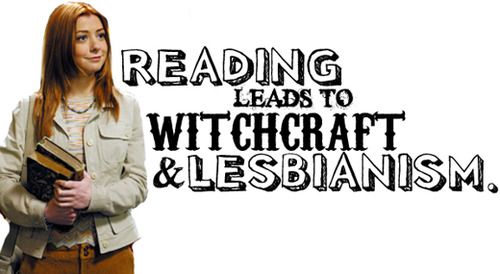
The New York Times Recommends Buffy the Vampire Slayer

Just sayin’.

Binders for Women

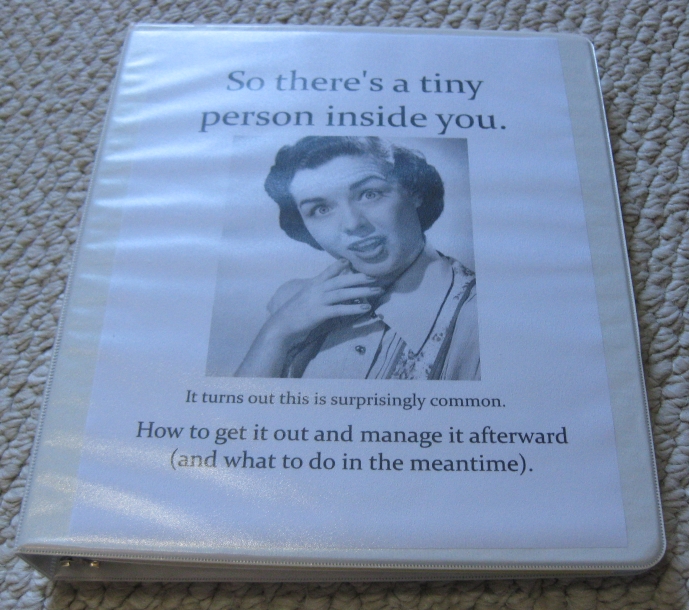
I made Betsy a binder for all the pregnancy papers, pamphlets, and forms we’ve accumulated over the past seven months.

binder

She’s so lucky to have me!

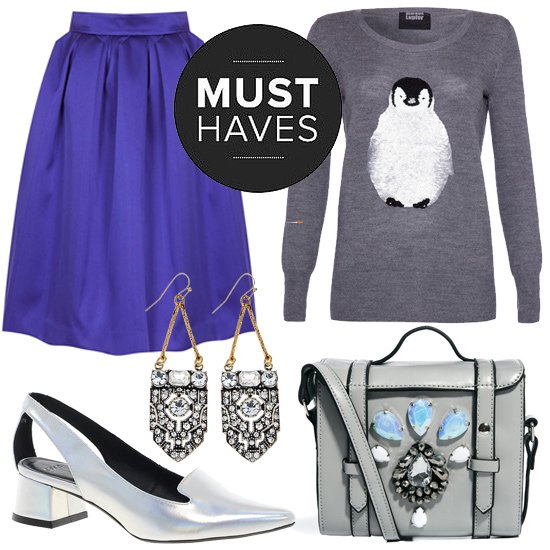
Must-Haves

Must-Have-Fashion-December-2013

This penguin shirt and faux-jewelry purse fall into the category of “needs” rather than “wants.”

I was with Betsy at Kohl’s yesterday, looking for baby clothes, when a sign caught my eye. It was advertising MUST-HAVE fashion accessories. I was shocked, then terrified, as I realized that I owned none of these strictly mandatory items. What would become of me? Nightmare visions flashed through my head: Cranial gout? Hair cancer? Inflammation of the homunculus? I simply didn’t know; the sign provided no details.

Betsy noticed me twitching on the tile floor and helped me to my feet, assuring me softly that I would be okay.

The sign, it turns out, was lying.

And thank heaven. Because it isn’t just those Kohl’s products that are labeled “must-have.”

That last link, with the tech toys, is from 2014 – and I don’t think I bought anything on that list. Two years later, I have yet to suffer duodenal implosion. Was the headline, perhaps, misinformed?

The really striking thing about the “must-have” label is that it’s never applied to anything that is actually must-have. When was the last time you saw an ad for “Water: The Must-Have Liquid of 2016”? Or “This Season’s Must-Have Parenting Item: Unconditional Love”? I studied my depression medication bottles carefully – you know, the things that prevent me from spiraling into a horrific pit of self-loathing and apathy – and was unable to find the phrase “must-have” on them anywhere.

In fact, this arrangement is rather convenient for you, the consumer.

Because “must-have” is never applied to things you must have, it follows logically that anything labeled “must-have” is automatically something you do not need to have. Think of it as a badly mistyped warning label that says “Unnecessary.”

It’s a public service, really.

Your Move, Leviticus

I haven’t written about it lately, but Betsy and I are still doing our Great Bible Read, working our way through the Book (or rather, books) one chapter at a time. Right now we’re reading Leviticus, which is a fascinating, enlightening, and surreal experience.

A few days ago we came to Leviticus 18:22.

You shall not lie with a male as with a woman; it is an abomination.

Thoughtful pause, and then Betsy said:

“So I guess that doesn’t rule out girl-on-girl, huh?”

Touché.

side effects may include

The Problem With “Whatever You Want”

A woman looks at her husband and asks something like:

  • Where should we go for dinner?
  • Do you think we can afford to buy this?
  • What kind of tile should we get?
  • Should we let our kids go to this party?
  • What kind of car should we buy?

The husband smiles and says calmly, “Whatever you want is fine.”

Maybe he wants to be flexible and easygoing, or maybe he has no preference, or both. He may even feel that, by offering her maximum freedom, he has given the best possible answer.

In a few cases, that may be true. But the vast majority of the time, “Whatever you want” is a lame answer, even a terrible one.

Here’s why.

First, it assumes that she has a preference in the first place. But she may have no strong feelings about what to do – she may even feel totally lost. If so, “Whatever you want” signals that she’s going to remain lost, and furthermore, you have no plans to help her with that.

Even if she has a strong preference, the answer is still problematic because it dumps the decision-making responsibility on her. She has to weigh the options and pick the best one. If the decision is wrong, she (and perhaps you) will feel that it was her fault. Rather than offering to share the weight of that responsibility, you have effectively told her to carry it alone.

Furthermore, because she is not completely selfish (we hope!), she would like to take your feelings into account. “Whatever you want” gives her no information about your own preferences, if any. Maybe you’re truly indifferent, or maybe you’re being polite, or maybe you’re sacrificing your wants or needs for hers. She doesn’t know.

Finally, “Whatever you want” is just a big turn-off romantically. Confidence is attractive. A take-charge attitude (not to be confused with a bossy or controlling attitude) is attractive. Shrugging your shoulders is weak sauce.

So what’s a better answer?

For starters, saying “I don’t have a preference at all” – if it’s true – is actually a better answer than “Whatever you want,” because it contains more information. It doesn’t just tell her that she can make the decision – it tells her why. This relieves part of her burden, since she no longer has to worry (as much) about making you unhappy with a bad decision.

Even better is “I don’t have a preference, but how about doing X?” Since you truly don’t care, it should be easy for you to suggest an option. This gives her a starting point, offers an option that you’re definitely okay with, and suggests that you’re willing to help with the decision-making.

What if you feel lost about what to do? Maybe you’re not clear what the options are, or you don’t understand the pros and cons, or it’s all just too complicated to get straight. Again, simply saying that you’re lost is much better and more informative than “Whatever you want.” Even better: Offer a path forward, such as “I could do some research,” or “Let me ask around,” or “Can you explain this for me?” All of these focus on turning words into action, and show that you’re engaged with the problem, although you may not know (yet) how to solve it.

Better still, be proactive rather than reactive. Don’t make her ask the question in the first place. Start a conversation: “Did you hear about that party tonight? The kids want to go, and I think that’s probably okay. What do you think?”

Or, if it’s a relatively small decision, you may not even need a conversation. If she doesn’t usually care where you eat, then rather than asking about dinner, just order takeout from Jumbo Gerald’s Bibimbap Emporium & Delicatessen. She’ll probably be fine with the food, glad to be saved a decision, and pleased that you were thinking about her. And if not? Worst case, you’re out a few bucks, and you’ll know for next time.

Plus, you’ll have bibimbap. And how could that be a bad night?

Note: I used a wife/husband relationship for simplicity, but the concepts apply just as well to husband/wife, or any other gender pairing, or all kinds of relationships.

Friday Link

It turns out that in 1946, Salvador Dalí and Walt Disney collaborated on a short film called Destino. Financial problems halted work on the project, and neither man saw it finished in his lifetime. But later animators took up the challenge and restarted work based on Dalí’s notes. The completed six-minute short was released in 2003.

It’s every bit as trippy and beautiful as you’d expect. Enjoy.

(Contains some artistic nudity.)

Wiki article.

Happy weekend!

Cynicism as a Logical Fallacy

Cynicism is simply the flip side of naïveté. You’re no more mature, just more burned.
—Karl Marlantes (Vietnam veteran, author of “What It Is Like to Go to War”)

I think a lot of people go through a cynical phase as they’re growing up, and that’s probably normal. The problem comes when you get stuck there, when it becomes your lifelong worldview. This isn’t just a problem because it’s dark. It’s a problem because it’s illogical and inaccurate.

Naïveté means seeing or imagining only the good side of human nature, being blind to humanity’s evil and its base self-interest. Cynicism means the opposite. When you spell it out like that, it’s obvious that both viewpoints are equally skewed. Yet somehow, many of us get the idea that cynicism is wiser, closer to the truth. But is it really?

Let’s think about some examples.

Say a politician is involved in a scandal. When pressed about certain key details, he says he “can’t remember.” A cynic rolls his eyes. Yeah. Can’t remember. Sure.

This reaction makes no sense.

Even if humans are 100% self-serving habitual liars (which is demonstrably untrue), we still know that people do sometimes forget important things. It’s happened to everyone. It becomes more likely as you get older. Someone could even have early-onset Alzheimer’s – we don’t know. So even in our “all humans suck” alternate reality, there’s still a chance, small but significant, that this person is telling the truth.

The same goes for people who are charged with crimes, but not yet convicted (or acquitted). “I’m innocent!” Cynics hear this and scoff. But again, even if everyone is scum, it may still be entirely reasonable that this particular person didn’t commit this particular crime. If every single person arrested were really guilty, that would imply an astounding degree of competence on the part of law enforcement – a notion that no self-respecting cynic would endorse. Like all logical fallacies, cynicism leads to contradiction.

A 100% guilty rate would also imply that trial by jury is unnecessary and should be abolished. Yet I know almost no one who really believes that.

And that’s just assuming that everybody is self-serving and crooked. In reality, we have good evidence that that isn’t the case. To cite just one example among millions: researchers have found that fewer than a quarter of riflemen in World War II were actually willing to shoot at their enemies. Their aversion to killing was so strong that they would miss on purpose most of the time, often at the expense of their own lives.

Obviously, people commit horrific atrocities and engage in mundane cruelties, too. The dark side is there. Of course it is. But it’s absurd to think that the dark side is the only side.

Cynicism is also linked almost universally to pessimism. There’s no necessary logical link between the two: it’s possible to think that humans are scum, yet life overall is improving; and conversely, it’s possible to think that humans are all wonderful, yet life overall is getting worse. But these pairings of belief rarely happen, in part because cynicism is an emotional reaction, not a logical one.

Cynics – in my experience, at least – are pessimists. They think the world is going to hell, and that we’re already most of the way there.

Again, this makes no sense. By almost any measure, the world is improving. Since World War II, war and murder have declined globally. Homicides in the U.S. have dropped by half over the past 20 years. Infant morality has dropped by half worldwide in the same time period. Literacy is rising. Computing power has grown exponentially, consistently, for 50 years. We’ve had a continuous human presence in space for over a decade. We eradicated malaria, and we’re getting close with polio. If you think I’m cherrypicking facts, by all means, do your own research.

And that’s just the recent stuff. Read about Elizabethan (16th century) England sometime: the horrific and unbelievably common use of torture in punishments; the primitive understanding of medical science; the lack of anesthetic for surgery; the cruelty to animals; the way government and church alike suppressed free speech; the overwhelming and universal prejudice against women, poor people, gays, other races, and other religions; on and on. Some of these problems do still exist, but they’re ghosts of their former selves. Nobody in their right mind would rather live then than now. (I’m not picking on England – the whole world is the same.)

Yes, of course we still have major, serious problems, including discrimination, torture, and suppression of free speech. Yes, they’re being solved far too slowly. But they are being solved. Our species is getting better.

By the way, the kind of human being that cynics evidently believe in – someone completely self-serving, self-interested, devoted to pleasure, with little or no empathy for other people – does actually exist. The clinical term is “psychopath,” and the tools for diagnosing this disorder are well-established. That is, doctors have gotten pretty good at distinguishing these people from everyone else.

Psychopaths are estimated to make up only 1-2% of the population. Even if they’re as high as 5%, that’s still 95% of humanity that is, by definition, at least moderately empathetic and concerned with the needs of others.

See, this is why I love science.

For myself, I find I become less cynical rather than more—remembering my own sins and follies; and realize that men’s hearts are not often as bad as their acts, and very seldom as bad as their words.
—J. R. R. Tolkien