Monthly Archives: January 2017

The Last Jedi — alternate titles

sw-tlj

It was recently announced that Star Wars Episode VIII would be titled (subtitled? sub-subtitled?) The Last Jedi. Given the quality of recent installments in the franchise, and the return of both Mark Hamill and Carrie Fisher (whose scenes were all shot before she passed away), there’s plenty to be excited about.

Even better, we at BrianDBuckley.com can now exclusively reveal this list of alternate titles for Episode VIII, all of which were very close contenders for the final name.

  • The Ocho
  • Master Skywalker or: How I Learned to Stop Worrying and Love the Dark Side
  • Gungan Style
  • There Is Literally No Title We Could Choose Which Would Cause You to Not Buy Tickets
  • The Force Gets Sleepy Again
  • C-3PO and Jar Jar’s Ewok Hijinks
  • Oh No It Is a Spherical Superweapon
  • Rey Doesn’t Like Sand Either but She’s Not Getting All Whiny About It
  • We Ship Kylo Rey
  • The First Order Retaliates (A Totally Original Storyline Bearing No Resemblance to The Empire Strikes Back)
  • Let’s Talk About Midi-chlorians
  • Kylo Ren Recites Some Poetry that Got a Really Positive Response on Deviantart
  • The Hanukkah Special
  • Title’); DROP TABLE Titles;–
  • Our Screenwriter Quit but We Found Some Pretty Good Fan Fiction
  • Pride and Prejudice and Droids
  • Han Solo’s Resurrection and Immediate Second Death
  • That’s Not How the Force Works
  • The Plural of ‘Jedi’ Is ‘Jedi’ Okay?
  • Whatever Fan Site Had ‘Finn Is Secretly Snoke,’ Good Job, You Guys Nailed It
  • The Non-Canon Adventures of Sith Lord BB-8 and His Apprentice Poe
  • The Penultimate Jedi

NBC News is often wonderful

I never realized I could get such warm fuzzies from quality journalism.

In case you haven’t heard, Trump’s press secretary Sean Spicer — in his first press conference as speaker for the President — told a few petty and easily debunked lies about crowd size, among other things. Showing a bizarre obsession with the minutiae of this subject, he also took time to attack the media for “deliberately false reporting” (i.e., debunking his boss’s wild assertions). He launched a particular attack on a single detail of a single report by a single reporter, which was found to be false (and which the reporter had corrected already, within minutes of publication, along with an apology).

Of course, he took no questions.

It now fell to Kellyanne Conway to defend the indefensible — a job at which she has a great deal of experience. The video above is Chuck Todd from Meet the Press grilling her on these absurd, childish, unnecessary, easily debunkable, Orwellian lies. Why did the President feel the need to do this?

Over and over, he told her: “You did not answer the question.” “You did not answer the question.” “You did not answer the question.”

When, at one point, she referred to Spicer’s lies as “alternative facts,” he helpfully clarified:

Wait a minute. Alternative facts? Alternative facts? Four of the five facts he uttered . . . were just not true. Alternative facts are not facts; they’re falsehoods.

I honestly have a hard time understanding this phenomenon.

It doesn’t matter how much you like Trump, or dislike the media, or anyone else. This is just basic, verifiable information. You don’t have to hate Trump for it, or say he’s a bad person. We’re just talking, at a very elementary level, about whether information is accurate or not.

You either care about the truth, or you don’t.

Many people don’t. But it’s incredibly gratifying that so many people, of so many political persuasions, still do.

Fox News is occasionally wonderful

It’s not often that I have anything nice to say about Fox News, but the video clip above is just glorious.

There’s a longstanding myth that anti-Trump protesters are largely paid professionals doing it for the money rather than from sincere belief. Like most such myths, there has never been any evidence for it, but that doesn’t stop people from believing.

A few days ago, on January 17, Fox’s Tucker Carlson interviewed a man who claims to run a group called Demand Protest, which supposedly pays people to go to rallies and demonstrations. Carlson delivers possibly the best opening I’ve heard for any interview, ever:

So, um, this is a sham. Your company isn’t real. Your website is fake. The claims you have made are lies. This is a hoax.

And that’s just in the first 60 seconds.

The Demand Protest guy makes a show of defending himself against these accusations, but as the interview goes on, it becomes obvious he’s just messing around. He says he was inspired by people like Julian Assange “and Peyton Manning,” which took my brain a second to process because he says it so casually.

Eventually the hoaxer explains:

It’s pretty darn easy these days to just say whatever the heck you want on national TV and have it passed off as truth. It’s pretty incredible to me how easy it was to get the coverage we got.

Indeed it is.

Two and a half hours till Inauguration. Now more than ever, let’s keep our eyes open for the truth.

Evan eleven

bloo contrast crystalline dark ghostly hues inkay  poster quads  splits z_final

Thought for the Week

I want to learn how to write the way babies learn how to talk: With constant practice, without dwelling on failure, certain of achieving a potential I can’t yet imagine.

Who & what did our President-elect attack on Twitter this week?

twitterump

With so much abuse flying out of one person’s mouth (er — keyboard) it can be tough to keep it all straight. Don’t worry. We’ve got you covered.

Sunday, January 1, 2017
(No tweets today!)

Monday, January 2, 2017
The mayor of Chicago (implied)
The media and “pundits”
China

Tuesday, January 3, 2017
General Motors
Obamacare
Congress
U.S. intelligence community (implied)

Wednesday, January 4, 2017
John Podesta
The Democratic National Committee
The media
The Democratic National Committee (again)
Hillary Clinton
The media (again)
Obamacare
Senator Chuck Schumer
Democrats

Thursday, January 5, 2017
Democrats
Senator Chuck Schumer
Obamacare
The media
Toyota Motor Corp.
The Democratic National Committee

Friday, January 6, 2017
The media
Hillary Clinton
Democrats
Arnold Schwarzenegger
The Democratic National Committee

Saturday, January 7, 2017
The Democratic National Committee
(…and it’s not even noon yet)

Oh well. He may be hotheaded. But at least he’s not, like, in charge of making treaties or launching nukes or anything.

Friday Link

Trump’s transition to power has been more depressing than I expected. His childish taunts, absurd boasts, and surreal tweets were mildly amusing when he was a candidate. Now that he’s actually taking the reins of the country … well, it’s sad.

So here’s something apolitical: a fan-made Majora’s Mask tribute video called “Terrible Fate.” The writing isn’t exactly stellar, but the animation is top-notch.

Have a good weekend.

The Federalist Capers — Issue no. 2

eagle

Here’s issue 2.

The front page includes a for-and-against opinion section about ad hoc deal-making like the Trump-Carrier deal. I had the easy job of writing the “against” opinion, while Paul had the trickier task of coming up with a “for” opinion.

The back page has a comparison (with graphs!) of Trump’s Cabinet nominees vs. Obama’s 2008 Cabinet nominees. This took a number of hours to research. I hope you’ll check it out.

You’ll also find the Quote of the Month, some ideas for actions you can take, and of course, that handsome eagle.

Enjoy!

Postmortem: A Monster Calls

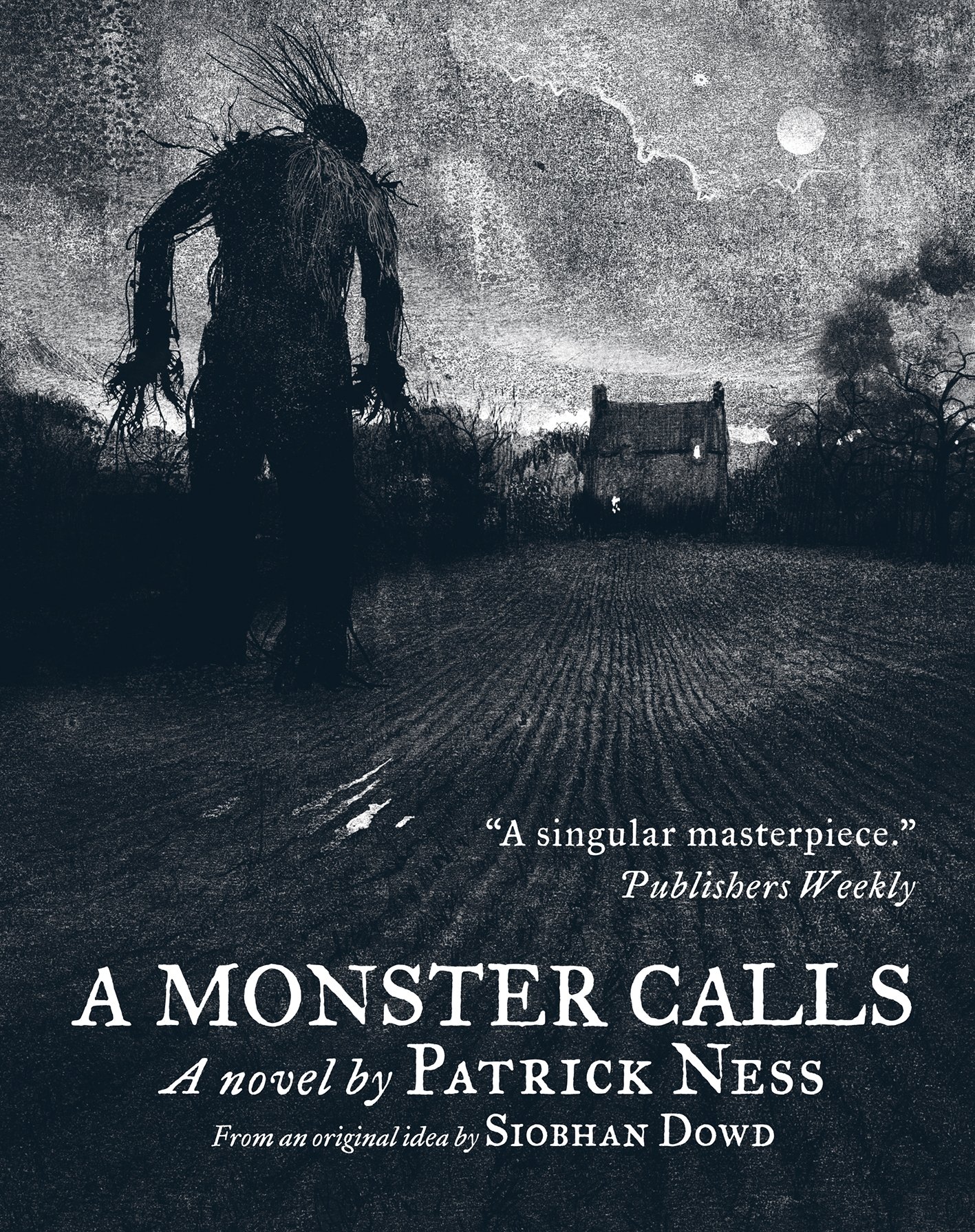
amc

Warning: Spoilers.

Published in 2011, A Monster Calls is a short novel by Patrick Ness, illustrated by Jim Kay. It’s billed as a “children’s book,” with a target audience somewhere in the 10-16 range. But it’s one of those children’s books that — like The Hobbit and Matilda and Harry Potter — is meant to appeal to young and old alike.

While Betsy and I were in Oxford, England, a little over a year ago, I picked up a copy. I had never heard of it, or its author, but the art looked beautifully grim, the story looked intriguing, and it seemed to have won lots of praise and awards. So I grabbed it and lugged it back to the States, where it sat on a shelf, unread.

Then yesterday, I saw an ad for a movie titled A Monster Calls, and assumed (correctly) it was based on the neglected book I’d bought. I figured it was the perfect excuse to finally read the thing. So I did. Or tried to, anyway.

I got a quarter of the way through and had to put it down. It was bad. Not scary-horror bad, just plain old bad-writing bad. Boring, unconvincing, unoriginal. I read the rest of the plot in a summary on Wikipedia, then skimmed through the rest of the book to confirm.

What’s wrong with it?

For starters, the monster — the one on the cover and in the title — isn’t scary. At all. He looks scary in the art, and he’s meant to be scary in the text, but it never happens. Physical appearance aside, the dude just isn’t very menacing. He never does much harm to anyone. Mostly, he talks to the main character (a 13-year-old boy named Conor). And he talks. And talks. In polite conversations where they take turns and consider each other’s points thoughtfully. Terrifying, right?

Books about non-scary monsters can certainly work. But when the art and the tone try so hard to convince you otherwise, it’s a pretty big letdown.

Conor himself says more than once that he’s not afraid of this oh-so-frightening creature. Why not? Because he’s scared of something even worse: real life. His mother is dying of cancer, and he has this recurring nightmare about her that he won’t tell anyone, that he can’t even stand to think about.

See, the book isn’t really about monsters outside. It’s really about the monsters within. Like, whoa. Who knew monsters could be symbolic of other things?

The actual purpose of the monster — and I am not making this up — is to offer therapy sessions for Conor, to help him work out his emotional baggage. To be fair, the book doesn’t call them “therapy sessions.” The therapy comes in the form of stories. The monster informs Conor that he will tell him three stories, and then Conor will tell him a story, revealing what’s in his dark and secret nightmare.

Look, I like stories. I’ve read thousands and written dozens. That’s why I bought the book in the first place. But I gotta say, reading a story about someone hearing a story is not high on my “exciting” list. It’s possible to make a story-in-story interesting, but the author has to make the reader care, and that just doesn’t happen here. The monster keeps insisting that stories are wild, dangerous things (which they can be), while Conor keeps saying it’s going to be boring.

Maybe Conor should have written the book.

Besides the unimpressed protagonist and the un-scary non-villain, other story bits include:

  • Conor’s mom, who (as we said) is dying of cancer, which is Very Sad.
  • Conor’s douchebag dad, Conor’s condescending grandma (who has a Heart of Gold), and Conor’s friend Lily, who serves no purpose I can see, at least in the first quarter of the novel.
  • A high school, which features such remarkably original characters as a Bully With Two Sidekicks and a Well-Meaning Teacher Who Just Doesn’t Get It, with “it” being Conor’s teen angst.

Most of the tropes above aren’t necessarily bad, and can often be good. Monster as metaphor, story-in-story, death of a parent, tough adolescent relationships — these are solid building blocks for a story. You can’t tell a story without tropes, after all.

But tropes only work if you recognize that they’re old, they’ve been done a million times, and you have to put a fresh spin on them. The problem with A Monster Calls, I think, is that it not only fails to dress up these old devices, it treats them as something brand-new and remarkable. “Look,” the story seems to say. “We’re using fantasy to deal with issues in real life. Did I just blow your mind, or what?”

Also, as I may have mentioned, the monster is about as scary as a bottle of mineral water.

Here’s the thing, though. People love this book. The New York Times called it “a gift from a generous story­teller and a potent piece of art.” The Telegraph hailed it as “a beguiling and heart-rending tale, tender and eviscerating in turn.” It’s won loads of prestigious awards, bestselling authors have praised it, and it has 4½ stars on Goodreads.

Why the disconnect between my experience and theirs?

Well, for starters, they read the whole book. I might like it better if I read the latter three-fourths of it. I doubt it, but it’s possible.

Another thing is expectations. They were (perhaps) expecting just another book, so any outstanding qualities may have shone extra bright. I was expecting something amazing (the cover alone lists five major awards, on my version), so I was bound to be harder to please. To be fair, I think the book is more mediocre than truly awful.

Yet another factor: The real-life story behind the novel itself is genuinely touching. A beloved author named Siobhan Dowd (who I’d never heard of before yesterday) came up with the idea for this book, but died before she could finish it. Like the mother in the story, she had cancer, so the book was very personal for her. The fact that another author took her idea and ran with it, and created something that so many people like, is really beautiful. So that might be part of it.

And of course, art is subjective, and people just have different tastes. I didn’t like it, but they did, and I’m glad they did. To each their own, etc.

Still, all that said, I do see this book as part of a larger pattern that I wrote about years agoAmerican Gods and The Graveyard Book by Neil Gaiman, Mistborn by Brandon Sanderson, The Last Unicorn by Peter S. Beagle, and above all The Name of the Wind by Patrick Rothfuss, are books that received universal, effusive praise. I forced myself to read them all cover-to-cover, and found that they ranged from mediocre (Gaiman and Sanderson) to awful (Rothfuss) to borderline physically painful (Beagle).

It’s odd, isn’t it? Opinions vary, as I said, but I do wonder why I diverge so sharply from mainstream and critical opinion in those cases, when my tastes are so “normal” in so many other areas. (I love Roald Dahl, J. K. Rowling, Robert Jordan, Isaac Asimov, and J. R. R. Tolkien, to name just a few.)

I don’t have an answer yet. Maybe I’ll figure it out someday.

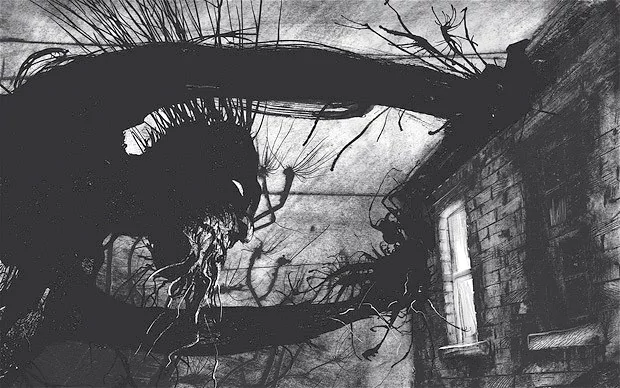
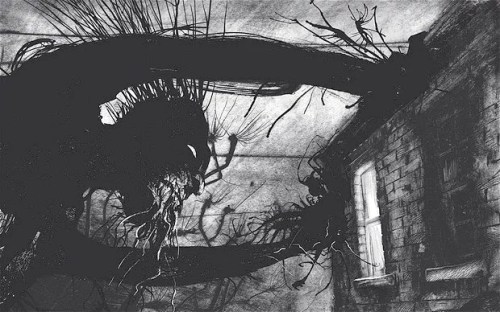
In the meantime, I’ll leave you with one last look at the art, which is excellent, as I said — definitely the book’s best feature.
amc2