Category Archives: Uncategorized

Poem: Four Seasons In Exile

I wrote this sonnet on July 17, 2008, then promptly forgot all about it. I happened across it again this morning. My journal entry for that date informs me that I wrote it for Betsy (my wife), though I’d long since forgotten that detail, too. Thinking about it now, I vaguely recall that she asked me to write a poem about the changing seasons – maybe? Not sure.

Anyway, here it is, on the Internet for the first time:

Four Seasons in Exile

Deep August branches lend their swaying shade
To children singing unfamiliar words
And playing games that I have never played
And tossing stones at unfamiliar birds.
But chilly autumn sharpens lazy dreams
Of autumns past, and cottages, and home –
Of young mistakes that only pain redeems,
And crimson leaves caught spinning by the foam.
But white shrouds every color, and the feet
Of now-familiar birds leave winding trails
That sometimes circle backward and repeat,
And sometimes break away to other tales.
And now I contemplate the end of spring
Which once I wanted more than anything.

Abandoning Enlightenment

I’ve blogged several times about how I was trying for Zen enlightenment, by practicing mindfulness and meditation. I’ve decided to give that up (for now).

Two reasons.

First, every time I try to live and think in the Zen mindset for an extended time, my mind begins to turn…dark, in a bad way. In the beginning I feel free, happy, peaceful, almost weightless. But after a few weeks, I seem to accumulate a kind of – how can I put it? – a counter-energy, that sends me spiraling into anger and despair. I don’t mean to suggest anything mystical by the word “energy.” I simply don’t know any other way to describe it.

No doubt there are strategies for dealing with the darkness. But I’ve been hurt by it too many times, and I’m wary. For now.

The second reason is that I’ve come to doubt the wisdom of enlightenment itself.

Far from being some abstract religious concept, enlightenment is a genuine mental state, a way of letting go of (and also embracing) yourself, your anxieties, your attachment to pleasures and your fear of pain. It is a supremely transcendent state. Novice that I am, I’ve still tasted a little of it here and there, and it’s truly beautiful.

But it has its problems.

Because enlightenment, for all its joy, is still just a mental state – a perspective, a way of viewing the universe. It does not by itself grant any additional knowledge or wisdom. Although it makes you feel connected and compassionate toward all beings, it apparently does not make you more likely to go out into the world and help people. For all its emphasis on giving up the self, enlightenment is an oddly selfish thing. It’s all about you: your peace, your compassion, your insight, your union with the rest of the universe. And so many Zen masters seem ignorant of this, leading their students to treat them with inappropriate reverence.

You may ask: so what? Why not seek enlightenment for what it is, knowing its limitations, and pursuing the other virtues (like knowledge and kindness) separately?

The problem is that the path to enlightenment is a long, arduous one, demanding enormous time, energy, and dedication that could be spent on other tasks. And even if you do achieve it, what then? What does it really mean to be free of passion and attachment? Doesn’t that mean you aren’t driven to pursue your dreams with the same fire as before? Isn’t that the price of inner peace?

How could it be otherwise?

Could Einstein have discovered relativity with a placid soul?

I’m young, of course, and ignorant about many things, Zen not least. It’s quite possible that I misunderstand the nature of the path. Indeed, the ideal of Zen enlightenment still has a strong appeal for me, and I may turn back to it someday.

But for now, this is where I am.

If you have any insight of your own, I’d be happy to hear it.

Passive Voice

In the business world, you hear this phrase a lot: “low-hanging fruit.” This is anything you can do easily, to get a lot of value right away.

If you’re a newbie writer, one of the lowest of the low-hanging fruit is to use active voice instead of passive voice.

For example:

Active Voice (good): Canada invaded Greenland.

Passive Voice (bad): Greenland was invaded by Canada.

Why is active voice better? Two reasons.

First, it’s simpler, more direct, and more powerful. Your sentence follows the natural flow of the language, putting the subject up front, where it belongs. The emphasis is on the action, not the one getting actioned. And it’s shorter. If you’re writing, “shorter” is your friend.

Those are arguments of style. The second reason is more practical.

Passive Voice (even worse): Greenland was invaded.

Now we don’t even know who’s doing the action. Passive voice makes this kind of ambiguity very easy, whereas with active voice, it’s impossible.

You see passive voice a lot in business writing. Sometimes people use it to hide ignorance. If you’re not sure who needs to submit the report, you can write “The report must be submitted.” More often, people write like this out of habit, and thus leave out information they assume the reader will know or figure out.

Either way, the lack of clarity leads to trouble. Often the mere act of writing in active voice forces you to think more deeply about your own topic.

Should you ever use passive voice? Yes, sometimes it’s appropriate. The main thing is to use it as sparingly as possible. Every time you begin to write in passive voice, your internal editor should demand you try the sentence in active, to see how it looks. Eventually, active voice should become your default mode of writing.

Any questions?

Friday Links

Paul

Pulitzer Prize-winning journalist Paul Salopek is going on a journey from Ethiopia to Argentina, a distance of 21,000 miles – by foot. He estimates it will take him seven years.

squid

A giant squid has been filmed in its natural habitat for the first time ever. The full footage will air on the Discovery Channel later this month, but you can see a clip right here.

gangs

The Onion reports that four copy editors have been killed in the ongoing gang violence between AP Style supporters and the Chicago Manual of Style.

pvp

PvP!

love

SMBC!

qc

QC!

Have a great weekend. See you Monday!

Image

I LIKE BANANAS

bananas

Is Star Wars Sexist?

Leia

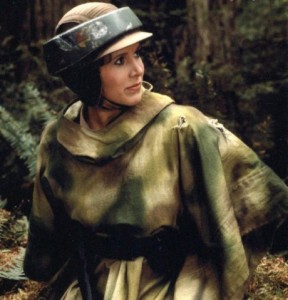
Is Star Wars sexist? Yes, it is.

I love the Star Wars movies, I think they’re amazing, I will watch them with my kids someday. But they are definitely sexist.

Perhaps you disagree. You might bring up Princess Leia, and argue that she’s a strong female character (which is true), and make other arguments, and then I’d counterargue, and it would turn into a big messy debate that solves nothing.

If only there was a simple, functional litmus test for deciding whether a movie is sexist or not.

Turns out, there is. It’s called the Bechdel Test.

The Bechdel Test: A movie passes the test if it meets the following criteria.
1. It contains two or more women who are named characters (i.e. not just extras)…
2. …who, at some point in the movie, talk to each other…
3. …about something other than a man.

In the entire original Star Wars trilogy – over six hours of film – there is not a single scene which passes the test.

Now try the Reverse Bechdel Test, looking for scenes with major male characters talking about non-female things. It’s easy. Pick almost any scene in the trilogy. Just off the top of my head:

  • The “Luke, I am your father” scene
  • The Obi-Wan vs. Vader duel
  • Han bragging about the Kessel Run
  • The “I find your lack of faith disturbing” scene
  • The “I am a Jedi, like my father” scene

To be clear: I’m not saying that Star Wars is anti-woman, or that George Lucas is a misogynist pig.

What I’m saying is that Star Wars has a massive, systemic, blatant bias toward men and against women, and that this same sexism is so universal in our society that few people even notice it.

The problem isn’t hatred. It’s blindness. If a movie is mostly about women, it’s a “women’s movie”; if a movie is mostly about men, it’s a “movie.”

And Star Wars is hardly alone. Other movies that fail the Bechdel Test include:

  • The entire Lord of the Rings trilogy
  • The Avengers
  • The Spider-Man movies
  • Blade Runner
  • The Godfather

If you’re curious, there’s even a website that classifies movies: BechdelTest.com. Yes, the site exists to make a point, so it’s likely somewhat biased too, but it’s very enlightening to browse there a bit. An enormous number of films fail. And even the ones that “pass” (like the Matrix movies and The Phantom Menace) often do so only on a technicality, or because of a single scene.

In fact, for you Trekkies out there, try this experiment. Can you think of a single episode of Star Trek: The Next Generation that passes the Bechdel Test? I can’t – and although a few probably do exist, I’d wager the ratio is something like 100:1, against. (Deep Space Nine and Voyager fare a little better on account of Kira and Dax, Janeway and B’Elanna.)

Granted, there are a few cases where a movie could fail the Bechdel Test and not be sexist. If your film takes place exclusively on the battlefields of the Civil War, there won’t be a lot of ladies. That’s simple history, and that’s legit. You could come up with other “acceptable failures” too. But such exemptions are rare.

So the next time somebody tells you that sexism is dead, or that feminism is obsolete, try doing a Bechdel experiment of your own on the next movie or show you watch, or book you read.

Or better yet: ask yourself, if you were directing a movie (or writing a book), would your own work pass the test? When I examine my own most recent novel, it isn’t easy to find such a scene. I spent a few minutes looking just now, and came up empty. Even if I do find one eventually, the scarcity is telling.

4 Reasons Your New Year’s Resolutions Will Fail

Every year, we see articles from experts claiming that the vast majority of people who make New Year’s Resolutions will abandon them, usually in the first few weeks.

And they’re right.

You may be tempted to say, “So resolutions are a waste of time.” But let’s take a closer look. Most resolutions fail because they make one of these four simple, easily correctable mistakes:

1. They aren’t measurable. I think this is the single biggest reason our hopes go down in fire. Many people resolve something like “I want to stress less over the little things.” That’s a great idea, but it’s still just an idea, not a goal. There’s no way to tell, at the end of a day, whether you’ve done it or not. You need something specific, something where you know exactly what to do, and whether you’ve done it: something like “Every day for ten minutes, I will listen to Calm Pacific Ocean Sounds With Bonus Humpback Whale Track™,” or whatever.

2. You don’t write them down. This seems trivial, but it’s not. The written word is transformative, giving your thoughts structure, clarity, and power. Take two minutes to write down, on paper, by hand, exactly what you’re planning to do, and then sign and date it at the bottom, like a contract. I think you will be amazed at what a difference this makes.

3. They’re based on outcomes, not actions. The biggest resolution in America is always, “I want to lose weight.” Unfortunately, that tells you nothing about what action you’ll take to get there. Instead, you need something like “I will burn calories by spending 30 minutes a day chasing whippersnappers off my lawn,” or whatever.

4. They’re too ambitious. When you have a  new idea, it’s easy to get fired up and launch a one-person crusade against the twin demons of laziness and apathy. But remember that you won’t always feel fired up. You’ll get tired, you’ll get busy, you’ll get angry, you’ll want to blow it off. Your friend will be in the hospital, your left big toe will get some kind of weird boil thing on it, you’ll start pursuing your heretofore unrevealed passion for high-altitude macramé. Regardless: start small, with something that feels a little bit easy. You can always build on it later. And consider committing to just a month at first, rather than a whole year. It’s less intimidating, and you can always extend it later.

There, now I’ve solved all your problems in life. Aren’t I helpful?

Postmortem: Anna Karenina

ak

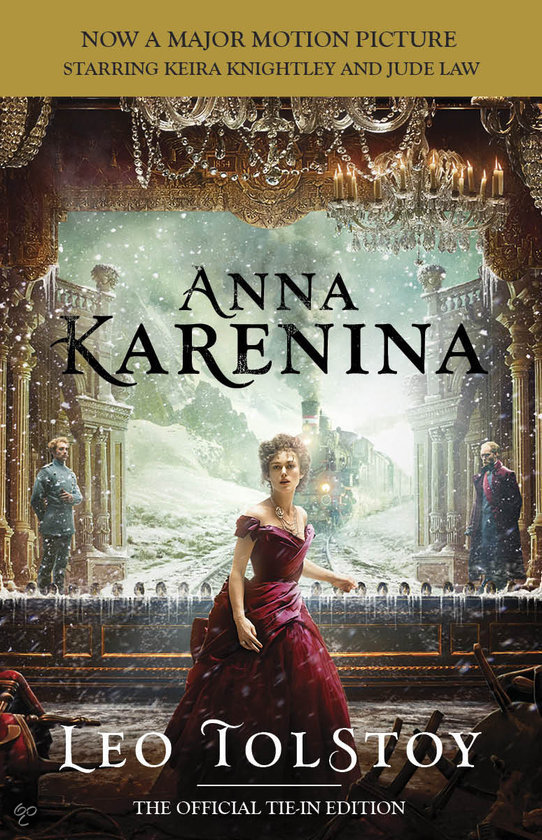
Anna Karenina stands beside War and Peace as one of Leo Tolstoy’s two great masterpieces. I’d been meaning to read it for a while, and I finally picked it up from an airport store a couple weeks ago to read over vacation. It wasn’t even a book store, just a newspaper-and-magazine place with a tiny book section, and they never would have had it except that the movie happened to be out. So I got the “official tie-in edition” – lucky me!

I was unprepared for how massive the book was, weighing in at just under a thousand pages. The story itself is likewise huge, spanning perhaps a dozen main characters and many more minor ones. I thought I’d have trouble keeping up with the names, but it turned out not to be too difficult. It helps to have a little knowledge of how Russian names work: characters are often referred to by their first and middle (patronymic) names together, omitting the last name, which is rarely done in English.

The novel takes place in 1870s Russia, mainly Moscow and St. Petersburg. There are three main threads to the story, corresponding to the three main couples:

  • Oblonsky and Dolly, who have a fairly happy marriage despite the husband being kind of a loser, having affairs and getting massively in debt. In spite of his immorality, Oblonsky is one of the most likeable characters, just because he’s friendly and cheerful and kind to everyone. As Tolstoy describes him in my favorite sentence of the book: “He was on familiar terms with everybody he drank champagne with, and he drank champagne with everybody.”
  • Anna and Vronsky, whose stormy passion is a stark contrast to the calm but tepid love of the Oblonskys. Anna herself transforms through the course of the story, from a tender and kindly young mother into something much darker. In the process, the gravitational pull of her personality attracts and alters everything around her.
  • Levin and Kitty, who find a kind of middle ground in their relationship, combining genuine love with the tolerance and patience necessary for a stable marriage.

One of the great joys of reading Tolstoy is how incredibly real the characters are. You never feel like the author is taking sides or preaching. You’re simply looking through a window at an incredibly detailed, shifting, multifaceted world. Characters frequently misunderstand each other’s motives, not just in big plot-altering ways, but in everyday conversation. The same person can be selfish, kind, caring, and cruel, sometimes all in the same moment.

Given the depth of the characterization, it was pretty cool to discover a character very much like me. I’m Levin. The love of reading, the obsession with abstract ideas and figuring out a system for life, the social awkwardness, the confusion about politics, the difficulty with practical matters, the intellectual pride, the reasons for agnosticism and the struggle with faith: it’s all there. Even his conversion to Christianity at the end, though unsatisfying to me philosophically, was still a lot more satisfying than many other reasons I’ve heard for believing in God (like the Ontological Argument).

I’m running out of time as always, so I’ll wrap it up. Anna Karenina is a good book and a great book, and if you ever want to get lost in a sprawling classic, you can’t go wrong with Tolstoy.

Friday Links

Today’s links include a selection of thoughtful treatises on global socioeconomic challenges in the 21st century, as well as a droll retrospective on Queen Victoria’s fiftieth –

Just kidding. Three SMBC’s. Enjoy them OR ELSE

1 2 3

uno dos tres

See you Monday!

Post-Vacation STATUS REPORT

Times I got sick: 2

Dog bites received: 1

Computers fixed: 1

Books read: 4

Pages read of Anna Karenina: 731 of  963 (almost there!)

Books started, and put down in disgust: 3

Books given for Christmas: 4

Books received for Christmas: 5

Video games beaten: 1

New Year’s resolutions made: 3

Relatives seen: 8

Wife’s relatives seen: 50+

Times I said, “Wish I were back in the office right now”: 0

Overall Vacation Evaluation Rating (OVER): epic

…and we’re back! How was your vacation (and/or last two weeks)?