In about a decade

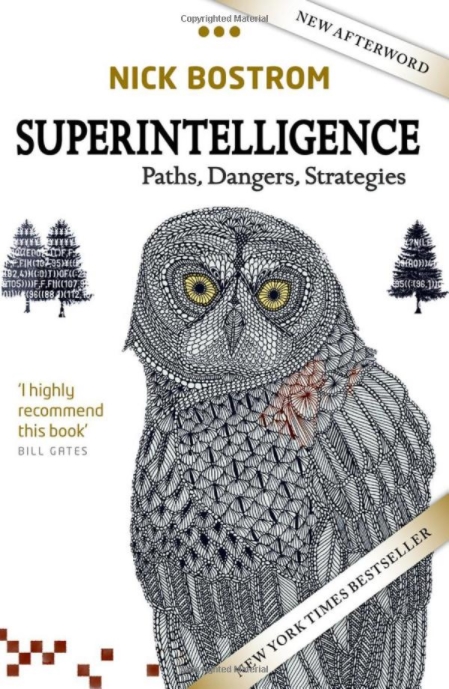
Having recently finished reading Other Minds (good book), I’ve embarked on a book called Superintelligence: Paths, Dangers, Strategies, by Nick Bostrom. As you’d guess from the title, it’s about what to do in the increasingly likely event that we create an AI that is much, much smarter than we are.

I’m still at the beginning, but so far it’s utterly fascinating. Usually when I talk to people about an AI exponential intelligence explosion, the whole conversation turns into a debate over whether that’s likely to happen at all. With this author, I feel like I’m finally talking (or rather, listening) to someone who really gets it, who’s gotten past the “Will it happen?” question and is ready to talk about “What happens when it (probably) does?”

One bit in particular struck me. He has a section on games — which ones AI can beat humans at, which ones they can’t. He notes that AI now performs at superhuman levels (beating even world champions) at checkers, chess, and Scrabble, among others. Regarding the game of Go, he says the best AI is currently “very strong amateur level” but advancing steadily, and makes this prediction:

If this rate of improvement continues, [AI] might beat the world champion in about a decade.

The book was published three years ago, in 2014.

A Go-playing AI beat the world champion four months ago.

Wherever AI is headed, it’s going to be a wild ride.

FDA-approved


I mean, I get what they’re saying. But … phrasing, y’know?

What it’s like being married to Brian

Betsy: I’m going to the store, you want anything special?

Me: Yep.

Betsy: What do you want?

Me: Doesn’t matter.

Double-feature postmortem: Kubo and the Two Strings & Interstellar

Yesterday I was sick and ended up with a whole day home alone (quite a rarity in this phase of my life). I watched two movies I’d been wanting to see for a long time: Kubo and the Two Strings and Interstellar.

Kubo is animated, ostensibly a kids’ movie, full of bright colors, Asian-themed, bouncing with energy, heavy on fantasy and magic, while Interstellar is very adult, bleak and somber, America-centric, slow-paced, heavy on sci fi. Very different films.

But also a lot of similarities. Both revolve around the parent/child bond; both have a lot of darkness; both are visually stunning; both have a twist at the end that redefines everything that’s come before, inviting a re-watch; both, strangely, star Matthew McConaughey (he’s the voice of Beetle in Kubo); both got fairly good Rotten Tomatoes scores (Kubo 97%, Interstellar 71%); both have more heart than brains; and both, ultimately, left me a little disappointed.

Let’s start with Kubo and the Two Strings.

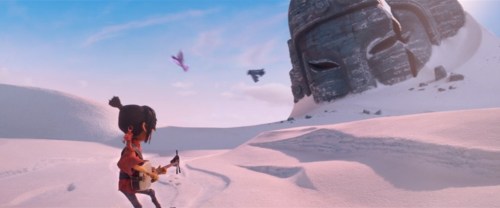
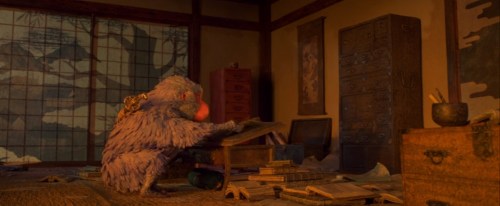
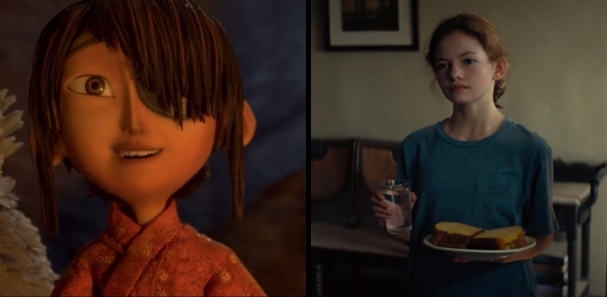
Kubo is a kid with one eye. He lives with his mom. She warns him not to stay out past nightfall, or else his evil supernatural aunts and his evil grandfather the Moon King will steal his other eye. (Ahem. You have my attention.) Of course he does, and the baddies chase him (with grappling hooks!), and a lot of stuff happens but he ends up going on a quest with a monkey and a human-sized beetle samurai thing. (The “two strings” of the title refer to his musical instrument, which has a variety of magical powers and comes to symbolize his family.) It’s probably not a spoiler to say that he triumphs in the end.

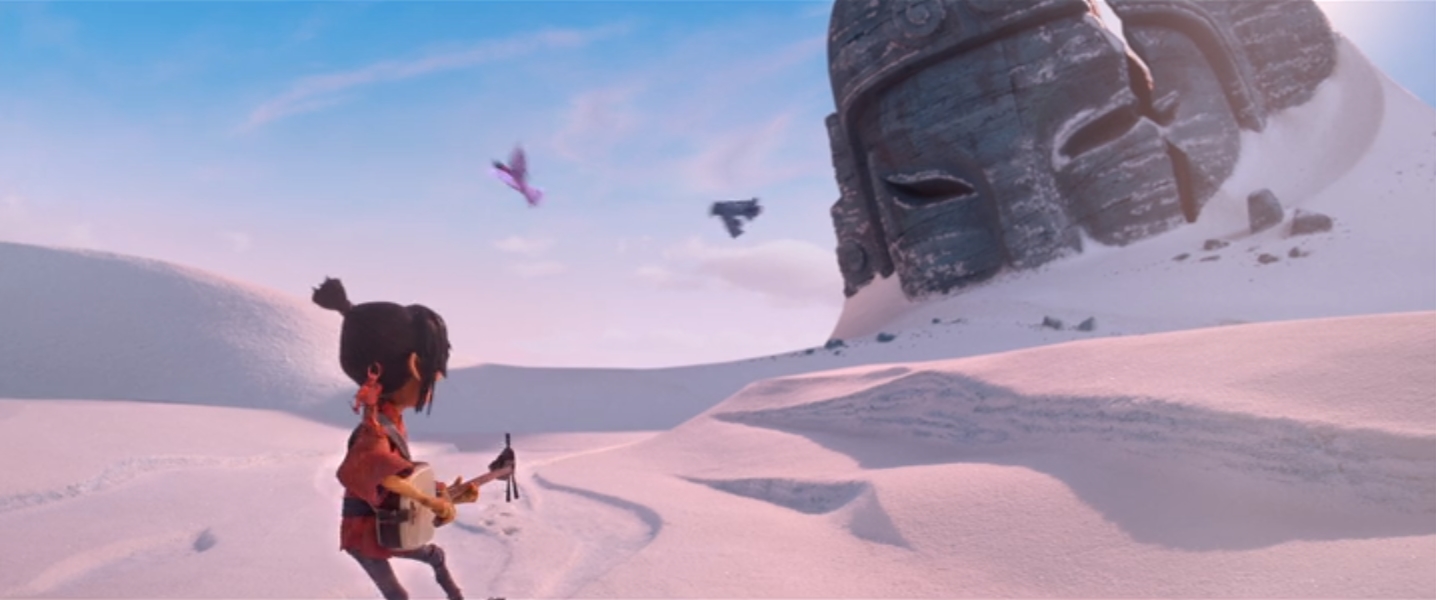
As I mentioned, the animation is just gorgeous:
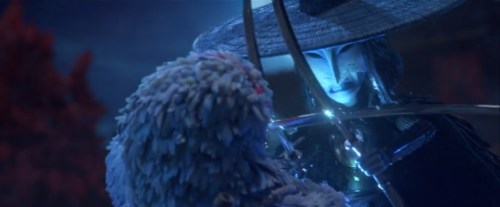
Kubo has magic of his own, which largely involves paper-folding (origami), and that’s cool to watch. The music is great too. And the story is pretty solid. In theory, it seems like an amazing movie.

One problem, for me, is that nearly all the dialogue is just … a little bit … off. It’s a subtle but persistent feeling that’s hard to describe. The rhythm of conversation, the timing, the flow, isn’t quite right. Pauses are just a bit too long, or something. It feels like the story is trying to move a tiny bit faster than the conversation, and it can’t. Legend of Korra had this same problem and it drove me bonkers. I doubt this will bother many other people, though.

Another problem: The way the story unfolds feels haphazard and arbitrary in a lot of places. Kubo and most of his family (good and evil alike) have magical powers of one kind or another, and the magic seems like it can do … well, whatever the story needs for that scene. Likewise, we move from one strange location to another without an overall sense of direction. It’s a problem because, the more arbitrary the story’s path becomes, the less the characters’ choices matter, and character choices are the heart of a story.

Also it gets really sappy near the end. I mean, it’s dark in a lot of places — I mean really dark, by “kids’ movie” standards — but by the end it’s so saccharine that even Disney’s like “Can you turn it down a notch?”

Okay, so. Interstellar.

This story is set in a dystopian, not-so-distant future, where we have (somehow) run out of food and (for some reason) cast aside technical knowledge, instead refocusing ourselves on traditional farming. It doesn’t make a lot of sense, but it’s a compelling premise: McConaughey plays Cooper, a pilot-turned-farmer who is raising his son Tom and his daughter Murphy on a dying planet, and yearning to use his engineering know-how to save the human race, and his kids in particular.

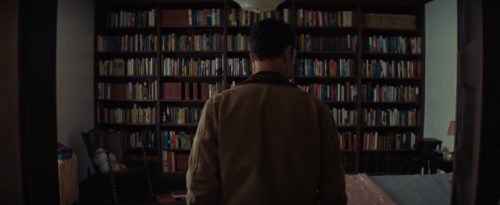
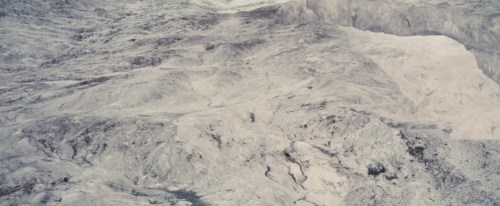
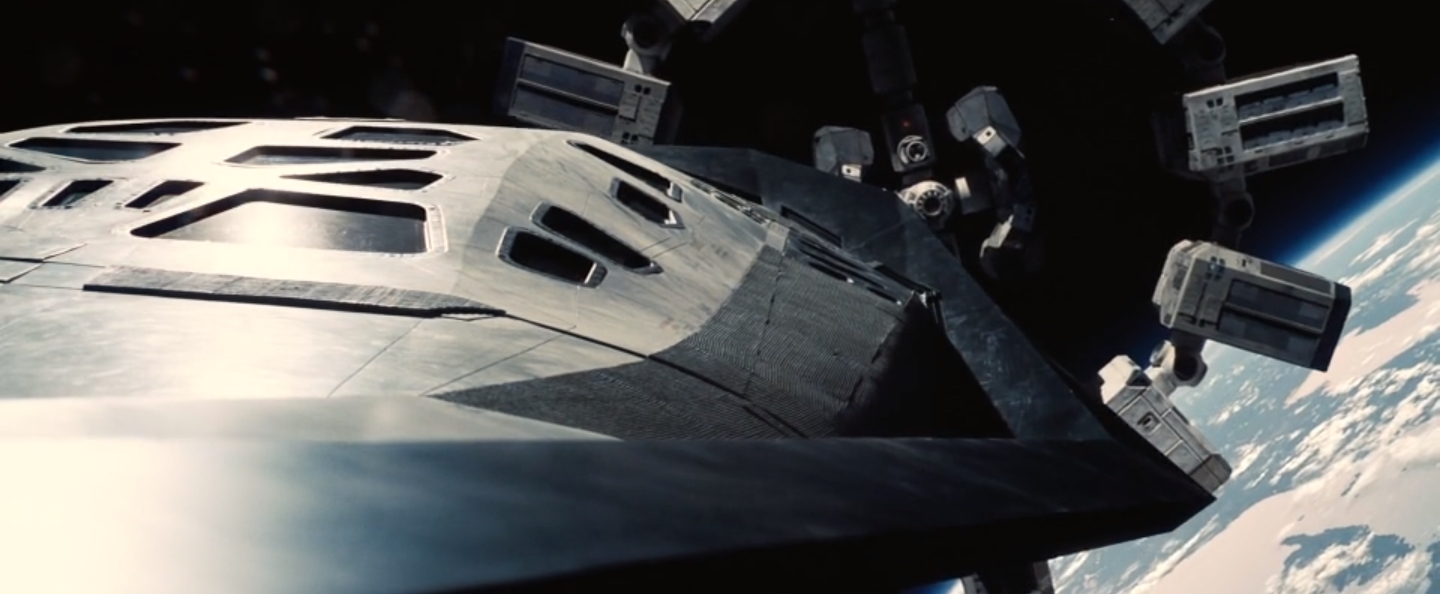
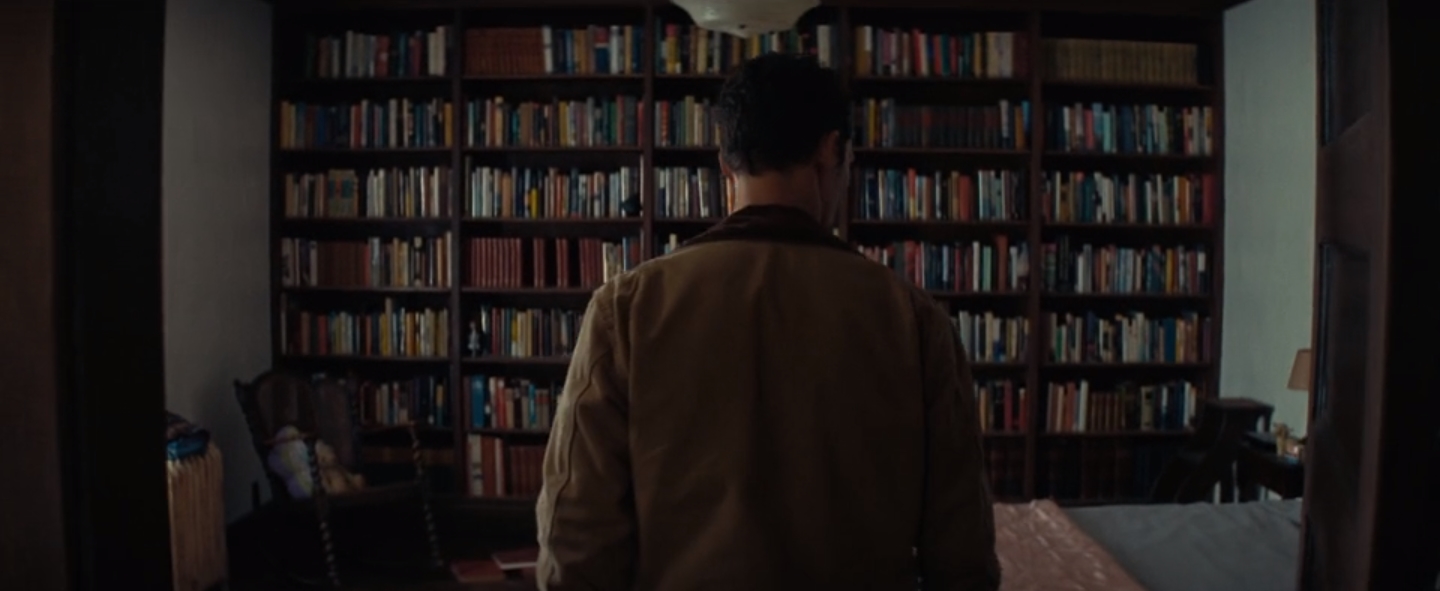
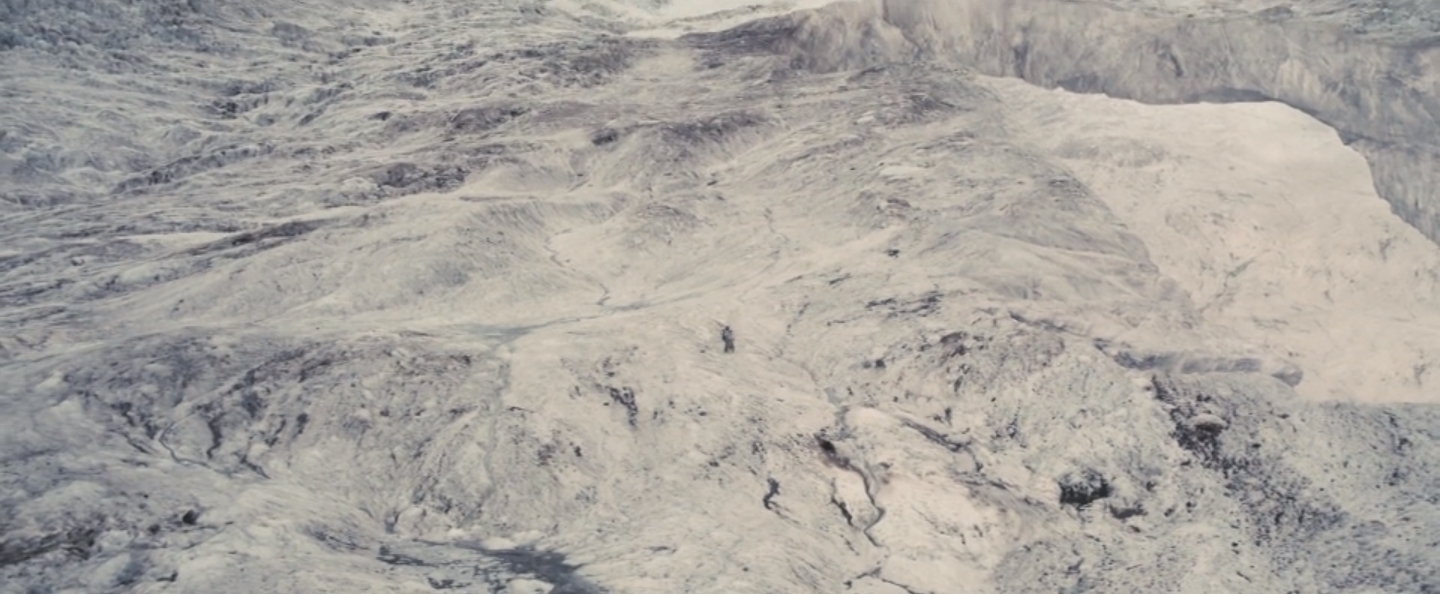
Again, the visuals are great:
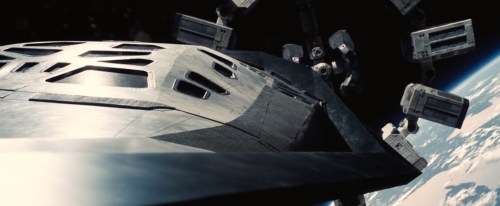
The plot gets complicated — this is a Christopher Nolan movie, after all — so I’ll just say that Cooper has to leave his daughter Murphy behind to fly this long-shot interstellar mission, and everything he does out there is really all about getting back to her.

It’s a stark, slow, deliberate film, which is both good and bad: It definitely drags in places, especially in the second half, but it also has a sort of unhurried grandeur that seems fitting for a movie about something as huge as a true interstellar journey. (In that third screenshot, the smudge in the very center is actually two astronauts in space suits locked in a fistfight to the death, in the middle of absolutely nowhere. The shot is a flash of genius from Nolan.)

It’s also harrowing to watch. The formula for an emotional gut-punch is (deceptively) simple: Just forge a bond of unfathomable love between two people, and then stretch that bond until it screams, and then stretch it some more. Interstellar does this repeatedly with devastating power, with Cooper and his daughter, and it never feels cheap. One scene in particular gave me a new appreciation for McConaughey’s acting abilities.

So there’s a lot to like. But also a number of problems.

For starters, as I said, it’s long — almost three hours — and it feels long. I definitely think some parts could’ve been cut. It also gets into a lot of weird semi-philosophical semi-scientific mumbo jumbo near the end, and the further they drifted into that, the less interested I got. I don’t mind a complicated movie, but it has to feel like a puzzle worth unraveling, and this wasn’t really it. These two problems are linked, and they were probably the biggest obstacle to enjoyment for me.

About the scientific accuracy of the movie — I guess I need to do some more thinking. Last night I subjected my poor wife to a rant about how bad the science was, but today I’m reading about how accurate it is, how painstaking the research was. So I may need to brush up on my own knowledge of relativity and see if some of my criticisms were wrong. None of that matters too much to the story, but I’m a science guy, so I’m interested (and apparently Nolan is interested too).

Anyway.

In summary: I wasn’t really impressed with either movie overall, but both were very impressive in certain particular ways, and both were clearly made with a lot of love. Also, I’m pretty weird, and a lot of my criticisms are things that won’t bother anyone else.

See how helpful I am?

Three facts

Uno, dos, tres:

  • Locals of Boise, Idaho, pronounce it “BOY-see,” not “BOY-zee.”
  • The octopus is the most intelligent invertebrate on Earth, yet it lives only two years or so on average, with an upper limit around five.
  • The world champion in competitive air guitar (yes, really) is Matt Burns. His nickname is “Airistotle.”

Please, go on with your day.

Getting the bird from a Toad

For my birthday, Betsy gave me — among other things — this:

My favorite thing about this Toad is that he is clearly flipping off the entire world with both hands at once, and looking pretty happy about it.

May your weekend be as joyful as his.

How to summon your Muse

Sometimes, as a writer, you may feel you have Writer’s Block. (That isn’t exactly a real thing, but it can feel real, if you let it.) You feel your Muse has left you, that you must wait for Inspiration to strike, and in the meantime, you are cursed to spend weeks or months or years contemplating a blank page with something like existential dread.

If you are such a writer, how can you entice the Muse to descend upon your humble keyboard/typewriter/notebook?

Traditionally, there are a number of methods:

  • Gaze at paintings, listen to music, read your favorite authors for inspiration.
  • Read your own past works for inspiration.
  • Meditate.
  • Change your Facebook status to “Writer’s Block :(” and hope you get that magic number of Likes that fixes your problem.
  • Get wasted, plastered, blasted, drunk, or otherwise intoxicated.

Do these methods work? Eh.

Some of them are good for adding extra oomph when you’ve already got the ball rolling. But as a means of climbing out of a rut, they’re hit-or-miss. Let me put it this way: If your car only started as often as these methods work, you’d say your car was pretty much crap.

So what do you do?

I know of only one reliable method. Lacking inspiration, just start writing anyway, and produce a first draft so awful that the Muse will look down from Mount Olympus, read over your shoulder, throw up in her mouth a little bit, and say to her eight sisters, “Be back later, I gotta fix this.”

Even then, I can’t promise your writing will be good. But I bet it’ll be better than a blank page.

Brian Dispenses Unsolicited Wisdom on the Occasion of His 32nd Birthday

Yesterday I wrote that I was turning 33. That wasn’t a typo — I really was mixed up about how old I was. (The years are starting to run together!) But no, I’m 32 now. That’s 2^5 years, or 100,000 in binary!

Anyway. Unsolicited wisdom:

  • The fuel gauge in your car has a little arrow that points to the side of the car that the fuel tank is on. You’re welcome.
  • Learn how your government works. If you’re American, learn about the Constitution, about legislative vs. executive vs. judicial, about local vs. state vs. federal. Know who your representatives are. Not only is this Fairly Important Stuff, it will also make you seem Fairly Smart.
  • When someone discovers something embarrassing about you, just own it. Trying to downplay or hide such things usually makes them worse. Just say, “Hell yeah, I posted My Little Pony fan fic for three years in college under the screen name PonyBro1337. Want me to read you a story?” You’d be surprised how quick the conversation usually turns to something else.
  • If you’re a writer, your mantra should be — like a heartbeat — keep writing, keep writing, keep writing. The best way to write an excellent novel is to write four bad ones and two mediocre ones first.
  • Take fifteen minutes and learn about Graham’s number. (There’s a good breakdown here, or check out the Wiki page or this Scientific American article.) The first time you read about it, you can almost hear the scraping and cracking as your mind is forced to expand its conception of what a number can be.
  • As blog reader Anthony Lee Collins pointed out last year, flossing is important.
  • Every now and then, enter a conversation and really listen to what the other person is saying. Very often we’re only half paying attention — either distracted, or bored, or planning what we’re going to say next. If you flush all that out and deeply pay attention, really engage, people notice — and you may be surprised at what you learn.
  • We keep using the word “hate” to refer to racism and other kinds of prejudice. Sometimes that’s justified. But I think less than half of all prejudice (in the U.S., at least) really involves hate. The majority, I think, comes from living your life on the default settings.
  • On Saturn’s moon Titan is an entire sea of liquid methane called the Kraken Sea. I don’t know if that fact counts as wisdom or not, but it’s pretty damn cool.
  • Hating yourself for being stupid or selfish or ugly is like being out at sea and cursing at your boat. First of all, your boat is probably fine; but more importantly, even if your boat does suck, you’re missing the point. It’s your boat. It’s the thing that makes you not-dead, not-in-the-abyss, and it’s the only one you have. Get out your compass, pick a direction, and start rowing already. (Obviously, this is much easier said than done; believe me, I’ve been there.)
  • When you’re writing, try this experiment. A phrase will pop into your mind. Rather than writing it immediately, think of another way to say it, then another, then another, and then choose from all your options. I find it’s relatively uncommon that my first idea is my best.
  • That said, if you do this constantly, you will make yourself crazy, especially on a first draft. Keep writing, keep writing, keep writing.
  • If you want someone to like something that you like — a movie, a novel, an album — always, always undersell. Just be cool, set expectations low. Nothing is more likely to cause disappointment than saying THIS IS THE GREATEST THING IN THE HISTORY OF THINGS.
  • Hate and love are not symmetrical. Ignorance tends toward hate. Understanding tends toward love. If you merely get smarter, you can remain loving or hateful; but if you get wiser, you will tend toward love.
  • At some point in your life, you will hear this advice: Dance like nobody’s watching. This works well as a metaphor. If we are talking about actual dancing, you should only follow this advice if you are good at actual dancing.
  • There’s always somebody out there who has it worse than you. That doesn’t invalidate your own suffering. Take care of yourself. (On the other hand, it doesn’t remove their suffering either.)
  • If you copy and paste text into a web browser (into an email, for instance), you can remove the formatting by doing Ctrl+Shift+V.
  • There’s a duplicate Psalm! No joke, Psalm 14 and Psalm 53 are almost verbatim the same. Again, I’m not sure if that counts as wisdom, but isn’t it wild?
  • Speaking of which: If someone says they understand the Bible, they are lying to you. Think about how hard it is to deeply understand the U.S. Constitution, and that’s only a page long, written in English, only a few hundred years ago, with a single authoritative and original manuscript. The Bible is thousands of pages, more than fifty separate texts, all thousands of years old, in three separate ancient languages, by many different authors, in many different genres, in many separate ancient cultural contexts, with no authoritative manuscripts. Even scholars who spend their whole lives studying the Bible still say things like, “My focus is on the New Testament, so take my opinion on Deuteronomy with a grain of salt …”
  • Babies are weird. Like, what is a baby thinking? Nobody knows.
  • Having a birthday doesn’t actually make you any wiser. Be careful taking advice from people on the Internet — they’re frequently wrong. Have a nice day!

Updates on the life of Brian

  • Evan’s a bit sick today, staying home from daycare and playing with Daddy. Fortunately I don’t have any urgent editing deadlines at the moment (just turned in MIT Press project #3 yesterday) so I can relax a bit.
  • Didn’t see much of the eclipse yesterday because (1) I didn’t have eclipse glasses, and (2) Ohio wasn’t in the path of totality so there wasn’t as much to see. But I’m told that we’re due for a 100% eclipse in April 2024, which is pretty cool. Evan will be seven years old by then!
  • I started reading a fascinating book called Other Minds: The Octopus, the Sea, and the Deep Origins of Consciousness. (A very cool & slightly early birthday present from my Amazon wish list from my parents-in-law — thanks!) The author points out that the octopus is the only animal to evolve intelligence on a completely different evolutionary path than humans (dolphins, chimps, dogs, crows, and so on, are all pretty closely related to us) and so studying the octopus can teach us a lot about the nature of intelligence in general. I mean, dude. You had me at “octopus.”
  • Excited to press on to the next phase of Crane Girl revision, but editing is busy and parenting is busy (both good things!) which makes it a bit tough. Gotta make the time, though.
  • The Trump Experiment continues to leave me encouraged with the strength and resilience of American institutions: the judicial and legislative branches, state governments, nonprofits, corporations, and the people in general. We’re far from perfect, but the sheer size and scope of our checks on executive power is more impressive to me than ever. Assuming we don’t blow ourselves to kingdom come, I think Trump’s tenure will diminish the power of the presidency, and I think that’s probably a good thing.
  • I’ve been seeing more of my friends lately, and that makes me happy.
  • Tomorrow I turn 32. If for any reason you’re itching to get me some sort of gift, I can think of nothing that would make me happier than a donation to Doctors Without Borders (or any other nonpolitical charity you prefer). I’m immensely fortunate to be at a phase of life where, if I really want something and I can buy it with money, I probably already have it. People are always reluctant to give like this, presumably feeling that such a gift doesn’t really “count,” so my biggest difficulty is in finding a way to convince them that it counts more than anything else I can think of.

Have an excellent day!

Who was Heather Heyer?

It is inevitable that the Charlottesville attack and its aftermath have become a political football. This is understandable. It’s even necessary, because politics is the mechanism by which government changes its mind, and we could certainly use some change.

Nonetheless, it’s easy to forget that a real human being lost her life on August 12.

Heather Heyer was 32 years old — my age exactly. She grew up in the little town of Ruckersville, Virginia, north of Charlottesville. A week ago, she was working as a paralegal at the Miller Law Group. She had previously worked as a waitress and bartender.

She lived alone. Her dog, Violet, was named after her favorite color.

Friends and family agree that Heather was a passionate believer in equality. She once broke up with a boyfriend when he disapproved of her friendship with a black man. She had often posted messages of love to Facebook — but this was her first time ever going to a protest. And she was scared to do it.

Her friend Courtney describes Heather as telling her: “I want go so bad, but I just don’t want to die. I’m so scared because these people are so serious.”

Her mother: “It was important to her to speak up for people who were not being heard.”

Her father: “With her it wasn’t lip service. It was real, you know.” He added, “She had more courage than I did.”

The car struck her at about 1:42 p.m. local time, an act of deliberate violence. Many others were injured.

The man charged with her murder lives less than an hour away from me.

Heather’s father told reporters, “I include myself in … forgiving the guy who did this. I just think about what the Lord said on the cross, ‘Forgive them. They don’t know what they’re doing.’ … I hope that her life and what has transpired changes people’s hearts.”

Amen.