Jason told his friend, “I wish I had an easy way to remember the fourth thru sixth days of the week, and months seven thru eleven.”
His friend said, “WTF JASON!”

Jason told his friend, “I wish I had an easy way to remember the fourth thru sixth days of the week, and months seven thru eleven.”
His friend said, “WTF JASON!”
Posted in Uncategorized
In Babylon 5, there’s a really shady dude named Mr. Morden. How shady? Well, he works for the Shadows and his name means death, so, y’know, pretty shady.
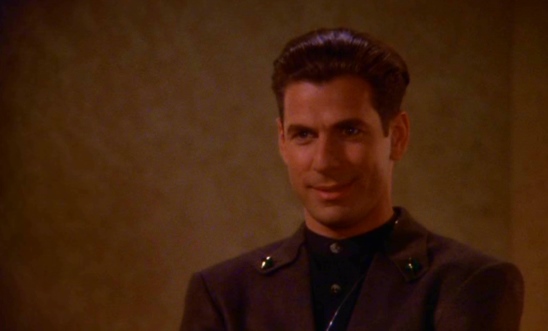
Mr. Morden would like to talk to you about his Associates.
Anyway, Mr. Morden goes around asking everyone the same question:
What do you want?
Sometimes, people don’t give the true answer right away. Sometimes they don’t even know. It takes time and patience and cleverness to dig up a heart’s profoundest desire.
Sometimes.
And then there’s the guy I saw this morning, driving a car whose rear window was emblazoned in gold letters with the following:
booty
n
pizza
That, I thought to myself, is a man who knows what he wants. I had to admire, just a little, the sheer clarity of vision.
Booty n pizza.
Can you and your Associates arrange that for me, Mr. Morden?
Posted in Uncategorized

Childlike and childish both mean “resembling a child,” but in very different ways. A childlike person has the positive aspects of a child: innocent, curious, open-minded; whereas, generally, a childish person has the negative aspects of a child: selfish, impatient, prone to outbursts. (Childish can have the positive meaning too, but it’s uncommon.) They’re not quite opposites, but it’s a stark contrast.
It’s strange how two adjectives can form in a straightforward way from a single noun, and end up in such different places. I was thinking about this recently, and being the kind of person I am, I wondered if there were other examples.
Spoiler: Yes.
Noun: sun
Adjectives: sunny, solar
A pretty simple example. A sunny day has a lot of sunshine (literally), and a sunny disposition means you give off lots of sunshine (metaphorically). Solar, by contrast, is more about the sun as an astronomical body: solar flares, solar eclipses. (I guess the moon’s equivalents would be loony and lunar, although loony means something a bit different.)
Noun: star
Adjectives: starry, stellar, sidereal
Continuing with the astronomical theme, we find that starry and stellar are pretty much equivalent to the sun’s sunny and solar. But star has a third trick up its sleeve: sidereal. This word is more focused on the “fixed stars” and constellations collectively, across the heavens, rather than any single star in particular.
Noun: king
Adjectives: royal, regal
Both words are etymologically related to king, or rather, the Latin rex. Royal means “related or connected to kings (and their families)” in a very general way: the royal crown, the Royal Air Force, royal blood, etc. Again, this is loosely analogous to solar and sun. But regal means “having the dignity or magnificence of a king.” It’s more about the feeling or appearance of kingship, rather than a connection to an actual king.
This is a much subtler distinction than, say, childlike vs. childish, partly because the meanings are more similar to each other, and partly because royal can also (sometimes) have the meaning I just gave for regal, and vice versa. Thanks, English!
Noun: water
Adjectives: watery, aquatic
Aqua is simply the Latin word for water, so these adjectives both come from the parent noun in a straightforward way, just like the other cases.
Aquatic covers anything that’s in or on the water: aquatic plants, aquatic sports, the aquatic sciences. But it doesn’t cover the use of water for other purposes — you wouldn’t use aquatic to talk about, say, water for drinking or for watering crops. By contrast, watery means “full of water,” or soaked, or wet, or waterlogged: watery eyes, a watery grave. Here again, the parallel between sun/sunny/solar and water/watery/aquatic is striking, though not 100% perfect.
Also, The Life Watery with Steve Zissou would just be ridiculous.
Noun: tree
Adjectives: treelike, arborescent
That’s right — arborescent is a word. English has two separate words for “resembling a tree,” and that’s all I’m gonna say about that.
There does seem to be a pattern here (putting aside the child and tree examples). Sun, star, king, and water all have one adjective that simply means “related to [noun] in some way,” and another that means roughly “full of [noun] or its attributes.” I don’t think I ever noticed that before, not even when I started writing this post — I only made the connection about halfway through. Neat.
By the way, my latest five posts have been: a love poem, an analysis of presidential approval ratings, a system for classifying degrees of fame, nuclear war, and now, the connection between nouns and adjectives. Can’t say I don’t give you variety!
Posted in Uncategorized
Today, for the first time in my life, I watched the idea of nuclear war shift from abstract concept to a thing that could really happen — from concern to fear. Not a whole lot of fear, but still, something that I feel in my gut instead of just my brain.
Can’t say I’m a fan.
I wonder if Mattis has thought up contingency plans for what to do if his boss gets trigger-happy.
Posted in Uncategorized
I really have no idea how or why this popped into my head, but a while back I started thinking about levels of fame — what’s the most famous and the least famous you can be, and what’s in between?
Of course in a strictly objective sense you could talk about the numerical quantity of people who have heard of a given person, for some definition of “heard of,” but that’s kinda boring. I’m thinking more about our everyday experiences and expectations.
I’m breaking it down into eight levels of fame. The number of levels is arbitrary, since you could divide it into more or fewer if you wanted to, but this is sorta how it is in my head.
Fame level 8: Incredulity
The highest level. Here, the person is so famous that if a coworker (let’s call him Bob) says he’s never heard of them, I literally will not believe him. I simply assume Bob is lying to me, because it’s unfathomable that anyone could get through life without hearing about this person.
Disclaimer: Obviously there are exceptions — I’m assuming Bob is an adult, is familiar with American culture, has not lost a big chunk of his memory, etc.
Examples:
Fame level 7: Reassessment
Here, it’s just barely believable that Bob has never heard of the person, but finding this out will make me reassess my whole opinion of Bob. He’s no longer “Bob, the quirky guy who works in HR” — he is now “Bob, the guy who’s never heard of so-and-so.” Any future advice Bob gives me will be viewed with heightened skepticism on the basis of this datum alone.
Examples:
Fame level 6: Hiccup
In this case, the person is famous enough that, if Bob hasn’t heard of them, it causes a hiccup in the conversation:
“I was reading about X the other day …”
“Who’s X?”
“… oh.” (Really? Wow.) “X is …”
There will probably be some reassessment too, but not as much as for level 7.
Examples:
Fame level 5: Ambivalence
At this level, I have no strong expectation about whether Bob has heard of this person. I won’t be surprised either way.
Examples:
(Making the list above was slightly depressing.)
Fame level 4: Hiccup
Just like fame level 6, only in this case, I’m surprised that Bob has heard of them.
“I was reading about X. That’s the person who …”
“Yeah, I know who X is.”
“… really? Oh, cool. So anyway …”
Examples:
Fame level 3: Reassessment
Parallel to fame level 7, if Bob has heard of this person, I am quite impressed and immediately reassess him as a human being. Generally this means that Bob and I both belong to some little group or fandom, or have some shared interest we can talk about. A person at fame level 3 is still “famous,” but we’re approaching the bottom of that label.
Examples:
Fame level 2: Explanation
A level-2 person is notable in some regard, but no longer famous per se, except inside some very specific niche. If Bob knows of someone at this level, it’s no longer enough for me to say “Oh, cool,” and move on. I’m going to need an explanation of why he’s heard of them.
Examples:
Fame level 1: Storytime
A level-1 person is a regular person, not the least bit famous. If Bob and I both know this person, we apparently share a personal connection at some level, and I’ll need to uncover the story behind it.
Examples:
Of course, these are all very subjective, and I’ve probably misjudged the fame of all sorts of people. But I’m going by what my own personal reaction would be.
Thoughts?
Posted in Uncategorized
It’s easy to get the impression that Trump’s supporters will stand by him no matter what he says or does, no matter how crazy his rants are, no matter how childish and incompetent he turns out to be.
Fortunately, the numbers tell a different story.
FiveThirtyEight keeps track of the President’s approval and disapproval ratings using a statistical model that looks at a lot of different polls. Here’s what it shows right now:
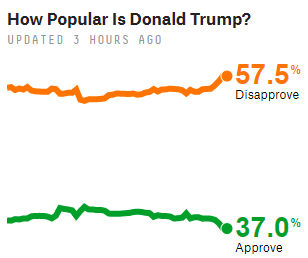
37% approval rating, 57.5% disapproval. As for the trend, you can’t tell from that screenshot (which covers a fairly short time span), but approval has been dropping slowly but steadily ever since he took office. 37% is the lowest it’s ever been.
And in fact, when you dig deeper, the data gets even more hopeful.
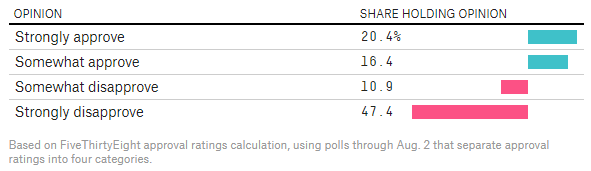
In other words, Trump approvers are split almost equally between strong and weak support — but Trump disapprovers overwhelmingly feel strongly about it. So Trump is actually doing worse than a 37% approval rating might suggest.
“May you live in interesting times.”
Posted in Uncategorized
Someday they will ask you what love is,
those quiet voices.
Maybe you will say:
That love is boundless and blistering
as the first day of August,
wrapping all trees and chimneys
in its light.
Or maybe:
That love is a long afternoon indoors,
cool blessed air, an icy glass of anything,
bare conversation and bare feet up.
And you cannot forget:
That love is ragged toil,
heartbeat to heartbeat and day after day,
till the weeks run raw,
till your spine shifts from the years of it.
And you know, too:
That love is a blade without a handle
that gleams like galaxies in the dark,
cutting through coffins and entropy
and your palm as well; and the dark
in which it gleams is also love,
patient, silent, perfect, and broken,
an embrace that needs and has no name.
But maybe
you will only say:
That love is right now,
it is right now,
it is right now,
and so disperse, you quiet voices,
and stop asking what love is
and I will practice
what it does.
Type a single letter into your browser’s address bar. What URL does autocomplete suggest?
If you try this for every letter in the alphabet, you get a neat little snapshot of your favorite Internet hotspots.
Here’s my alphabet.
A — [redacted] — Contains personal/family information.
B — briandbuckley.com — No surprise there.
C — Chicago Manual of Style — Yes, I’m a word geek.
D — dictionary.com — I don’t go there too often, though. Merriam-Webster is where it’s at.
E — etymonline.com — Online etymology dictionary. Amazing website. Yes, I’m a word geek.
F — FiveThirtyEight — Political analysis and commentary with an emphasis on using past data to predict outcomes. Their team is led by the brilliant Nate Silver, who was one of the few analysts to give Trump a (relatively high) 25% chance of winning on election night.
G — Gmail — Yep.
H — hoaxes.org — I was doing some research here for a nonfiction book I might finish writing someday about truth, lies, and how to tell the difference. Fascinating reading, regardless.
I — Imgur — Yep.
J — [redacted] — One of Betsy’s top visits, not mine.
K — [redacted] — Ditto.
L — [redacted] — Ditto.
M — merriam-webster.com/thesaurus — The M-W thesaurus is my favorite thesaurus. Yes of course I’ve tried other thesauri, what do you take me for? (Although curiously, this URL now seems to redirect to the M-W homepage/dictionary.)
N — New York Times — Alternates between this and Netflix, depending on how news-obsessed I am. NPR is also high on the list.
O — [redacted] — One of Betsy’s top visits, not mine.
P — [redacted] — Ditto.
Q — quackwatch.com — Totally forgot about this one, only went here a couple of times. Info on health-related pseudoscience, fraud, and other quackery. Also research for the aforementioned nonfiction book.
R — Reddit — Currently just the Reddit homepage. At various other stages in my life, it’s been reddit.com/r/politics and reddit.com/r/buffy.
S — smile.amazon.com — Adding the “smile” prefix means that Amazon donates a bit of money to a charity/nonprofit of your choice for each purchase you make. (We picked Doctors Without Borders.) Yes, it’s a really tiny amount. But it’s also no charge whatsoever to you, so there really isn’t a downside.
T — Twitter — I just reached the 1,000-tweet mark (@buckleyeditor) yesterday. What an odd mixture of pride and shame.
U — unabridged.merriam-webster.com — Now we’re talking. Paid-subscription, ad-free, unabridged M-W goodness.
V — verificationhandbook.com — Completely forgot about this one too. Haven’t been here in a long time.
W — Washington Post — My #1 source for news. Paid subscription, but worth every penny.
X — [no suggestions] — Huh. Guess it’s been a long time since I checked out xkcd.
Y — YouTube — Yep.
Z — [redacted] — One of Betsy’s top visits, not mine.
The browser alphabet: A journey of self-discovery. Any surprises in yours?
Posted in Uncategorized
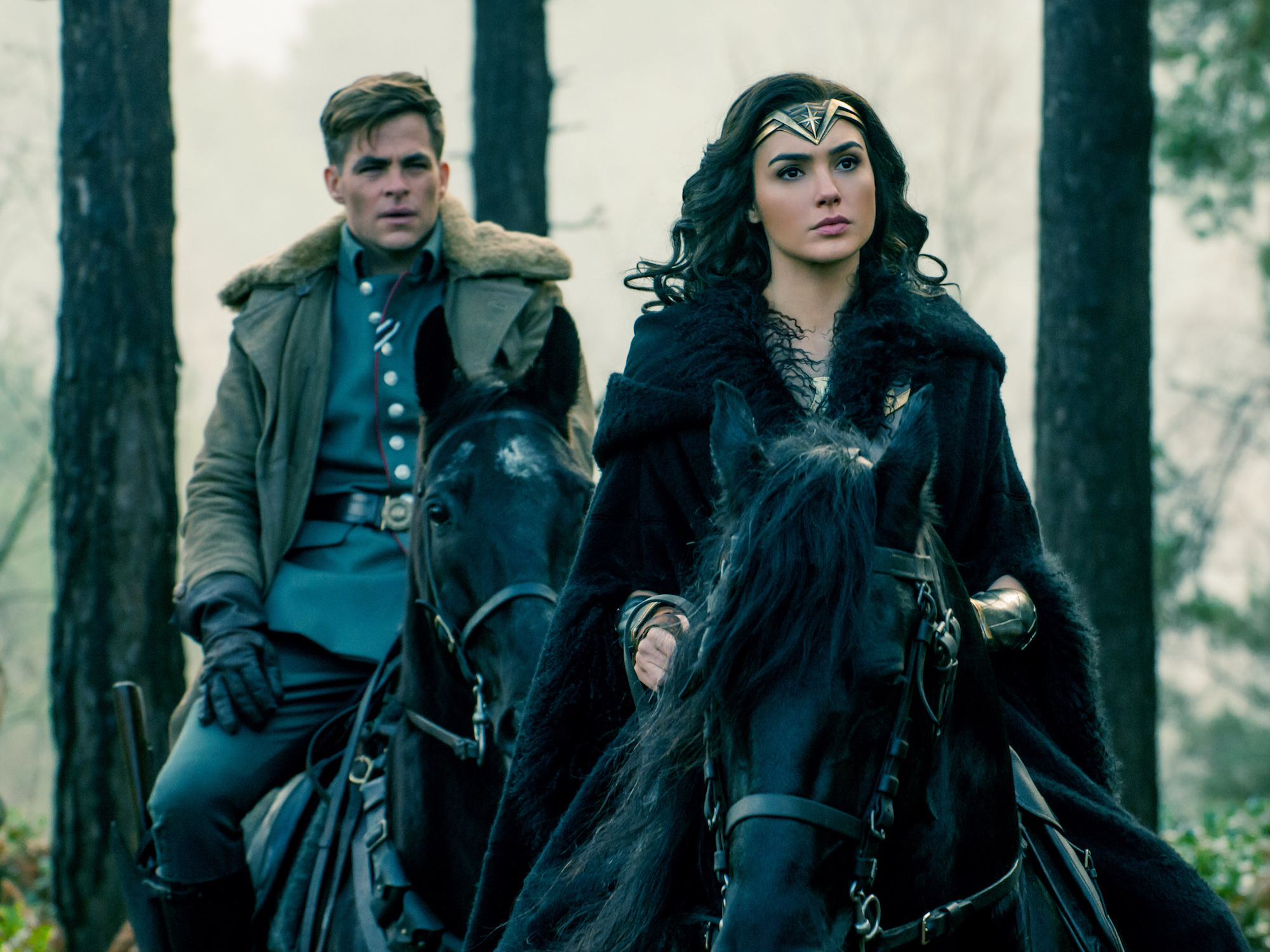
In our latest installment of Brian Finally Gets Around to Watching Stuff that Everyone Else Watched Ages Ago, we look at: Wonder Woman!
WW is a very good movie that is fun to watch, but also frustrating, because it could’ve been a great movie with some fairly minor changes.
We’ll start with the good stuff.
The strength of WW is its characters. Wonder Woman herself (who in the movie is thankfully just called by her name, Diana) has spent her whole life among the all-female Amazon warriors on a remote island, cut off from the rest of civilization, and has no idea that the whole planet is caught in the throes of the Great War (i.e., World War I). She is strong and brave and virtuous, but heartbreakingly naive, which puts her in constant tension with the modern world. All this is executed brilliantly.
Steve Trevor (who I mentally called “Captain Kirk” throughout the movie) is her opposite in many ways. Weary of fighting, of watching those around him suffer and die year after year, he is a cog in the great war machine, and he knows it. He has no super powers. He doesn’t feel very righteous. But, like Diana, he is strong and brave, and he still wants to make a difference.
Whether in the streets of London or on the front lines, they’re perfect together. Each of them would be lost without the other. Their dialogue has energy and conviction, and it’s genuinely funny when it’s trying to be. (WW has more humor overall than you might expect.) Their romantic chemistry is both believable and understated, which is a breath of fresh air compared to, say, Tobey Maguire and Kirsten Dunst in Spider-Man (not that I blame the actors; they did the best they could with the lines they were given).
Kirk’s Trevor’s ragtag band of misfits are surprisingly human and likable too. Each has a backstory that is touched on briefly, rather than hammered in; each is broken in his own way; each, in his own way, has turned his brokenness into strength. In many films, sidekick characters like these would be written, dully, as stock tropes: Crazy Guy, Ethnic Guy, and Ammunition Guy (or whatever). It’s a measure of WW‘s quality that the writers went deeper.
At the heart of the story is a philosophical question: Do humans fight wars because their pure hearts have been corrupted (as Diana believes) by Ares, the god of war? Or do we fight because (as Trevor believes) we were never pure to begin with? The film revisits this question, quietly but persistently, throughout. When Ares is finally revealed at the end, his true nature is more interesting and subtle than either of those two worldviews might suggest.
One more thing: There are some movies and shows whose approach to feminism is roughly, “Look! It’s a woman! She’s a hero! She’s doing hero things that are traditionally male! Did you see that she’s a woman? A woman hero! Did you catch that? Girl Power! Instead of a plot!” Thankfully, WW avoids this trap. Like Buffy before it, WW makes feminism a central theme of an excellent story, rather than putting a veneer of story over a Feminist Message™. So that was a good thing.
But, as I said, WW does have some problems.
For starters, the beginning … is … really … really … REALLY … slow. We spend 20-30 minutes just among the Amazons, and it’s pretty much all backstory. There’s no significant conflict, just some tired tropes that are very predictable and very boring. (Will the young girl end up with kickass hero superpowers, or not?! I’m on the edge of my seat.) A story without conflict isn’t much of a story. Things don’t actually get going until Trevor shows up, and the movie should’ve started there, or else given the Amazons something more interesting to do.
The ending is kinda tiresome too. When Ares is first revealed, it’s awesome, because he’s this quiet, unassuming little man, somebody you’d never expect to be the god of war, but who — in retrospect — is perfect for the role. Unfortunately, and inexplicably, the movie then throws away all that subtlety, puts Ares in a massive suit of armor, and makes him fly around shouting idiotic cliches. Incidentally, the key to defeating the living incarnation of conflict turns out to be, um, battling him to the death. So there’s that.
The other villains are a bit on the dull side too. There’s this sadistic lady who invents a new, super-deadly poison gas, and there’s a general who likes killing and poison gas and gets some minor super powers that don’t really accomplish much. They’re both Germans (of course), and they’re both pretty flat comic-book villains. I mean, I know it’s a comic-book story, but still.
Also, there are a whole lot of things in WW that don’t make any sense. This is true of pretty much all superhero movies, so I’m not picking on WW in particular, but they’re still annoying. Stuff like: Why do all the Amazons speak such good modern English, when they all learned it ages ago? (Why does Diana know the English word hydrogen when she’s translating from Sumerian? For that matter, why is there a Sumerian word for hydrogen?) If Diana’s mother is so obsessed with Diana’s safety, why does she let her go to the Great War without even considering giving her any Amazon backup? Why does Ares forget how to teleport as soon as he starts fighting her? How come nobody at the party notices that Diana has a sword lodged in her dress? Why does Diana, a trained warrior, walk around carrying her sword with the blade up by her face? And so on. Again, these are all relatively minor, but they don’t help the suspension of disbelief.
One scene in particular sticks out. Diana comes to the trenches for the first time, along with Kirk Trevor and the others. Trevor is explaining that nobody can cross the “no-man’s land” between the trenches because both sides have machine guns. Diana, brave and hopeful, ignores his warning, leaps out of the trench, and charges the German side, deflecting bullets with her bracelets (wrist armor?) and then repelling sustained machine-gun fire with her shield. This “distraction” gives Trevor and his men the chance to charge the enemy as well, and together they lead an attack that is ultimately successful.
The scene is memorable because it’s (1) incredibly cool, both on a visual level and a story/character level, and (2) completely ridiculous. Diana, who is just as vulnerable to gunfire as any human, has no covering at all over her arms or legs, and her shield is only big enough to protect her torso, yet somehow, a dozen or more soldiers with all manner of weapons firing from multiple angles can’t seem to land a single shot to her limbs. I know, I know, it’s just a movie, but the over-the-top absurdity does kinda undercut Diana’s whole you-can-succeed-if-you’re-brave-enough mentality.
On a more philosophical level: Diana seems to have no problem with killing humans, which is a bit jarring after seeing so many heroes from all different universes who so viscerally oppose it (e.g., Superman, Batman, Buffy, Aang). That’s not a criticism in itself. However, neither Diana nor the filmmakers seem to notice the hypocrisy in her position: That poor, weak-hearted humans fight wars because Ares corrupted them, whereas noble, strong-hearted Amazons fight wars because it’s the right thing to do. By the end of the movie, she’s decided to embrace a philosophy of love, but seemingly doesn’t even reflect on the many German soldiers she’s killed (most of whom would’ve given anything to escape the misery of the trenches). This values dissonance, like my other criticisms, is hardly unique to WW, but in an otherwise excellent movie, it stands out all the more.
Oh yeah, and one other thing. There are a lot of slow-mo action shots. I mean a lot. And that’s coming from someone who liked the Matrix sequels.
So, wow, I’ve rambled a lot.
In summary: If you’re at all interested in Wonder Woman, you should go check it out. It’s probably the best DC movie I’ve seen, apart from The Dark Knight. And if you do see it, let me know what you think!
Almost everyone’s writing is “bulky,” to one degree or another — it uses more words (or syllables) than necessary. It takes a long time to say something short. Bulky writing is nothing to be ashamed of. It’s the default setting for human beings. Slimmed-down writing is a skill that takes years to develop.
But it’s worth developing, because efficient writing is generally clearer and simpler. Your readers will benefit, even if they don’t notice, even if you’re just sending emails. In the end, you benefit too.
And there are a few simple things you can do right now to get you started. Below are some common examples of bulky writing, each with a suggested fix.
Of course, you can’t apply these “fixes” blindly — sometimes longer is better, and sometimes streamlining isn’t helpful, so use your common sense. But in my experience, these fixes are useful more often than not.
Before: We created this plan in order to help our employees.
After: We created this plan to help our employees.
Occasionally “in order to” is necessary, but only occasionally.
Before: Please note that the restrooms are closed.
After: The restrooms are closed.
In general, if you want to “note” something, or “it is important to note” something, or “it is interesting to note” something, you can save everybody a little time and just say the thing.
Before: Children and adults should use the red and blue doors, respectively.
After: Children should use the red doors, and adults should use the blue doors.
Okay, this one isn’t about slimming down, because the “after” version is slightly longer — but it’s also a bit clearer. (As I said, sometimes longer is better.) Whenever you start to type “respectively,” ask yourself if it might be simpler for your reader if you just write it out.
Before: We should submit a request for more funding.
After: We should request more funding.
If you’re using a whole phrase to describe an action, it can often be reduced to a simple verb. This problem is rampant in corporate, government, and academic writing. Other examples: “took action” can be “acted,” “carries out innovation” can be “innovates,” and “attended a meeting with” can be “met with.” Again, the longer version is sometimes appropriate, but you should use it when it’s necessary, not merely by default.
The rest of the examples are pretty self-explanatory, I think.
Before: We cannot begin at this point in time.
After: We cannot begin now. [OR: We cannot begin right now.]
Before: As a consequence of the audit finding, he commissioned a report.
After: Because of the audit finding, he commissioned a report.
Before: Our department has increased in size.
After: Our department has grown.
Before: We should utilize this discovery. [OR: We should make use of this discovery.]
After: We should use this discovery.
Before: I will attempt to prove this statement.
After: I will try to prove this statement.
Before: With this feature, the client is able to change the color.
After: With this feature, the client can change the color.
Before: Now we will decide whether or not we should proceed.
After: Now we will decide whether we should proceed.
Before: There are many resources available to us.
After: Many resources are available to us. [OR: We have many resources.]
Anyone want to initiate a discussion about discuss any of these?
Posted in Uncategorized


 Brian D. Buckley