Transcendence: After Life

Each week, we’ll look at another example of what I call a “moment of transcendence” – a scene from a show, a passage from a book, or anything else, that I find soul-piercingly resonant: joyful, sad, awe-inspiring, terrifying, or whatever. These moments are highly subjective, so you may not feel the same way I do, but nevertheless I’ll try to convey why I find the fragment so powerful. I hope we can enjoy it together.


Warning: Major spoilers for Buffy the Vampire Slayer.

My favorite episode of Buffy is an odd one, an often-overlooked story without much action: “After Life,” season 6, episode 3.

Buffy died at the end of season 5, and Willow has just resurrected her, but not everything’s gone according to plan. Buffy is more hurt, more damaged, than anyone expected. But she’s alive. It’s really her.

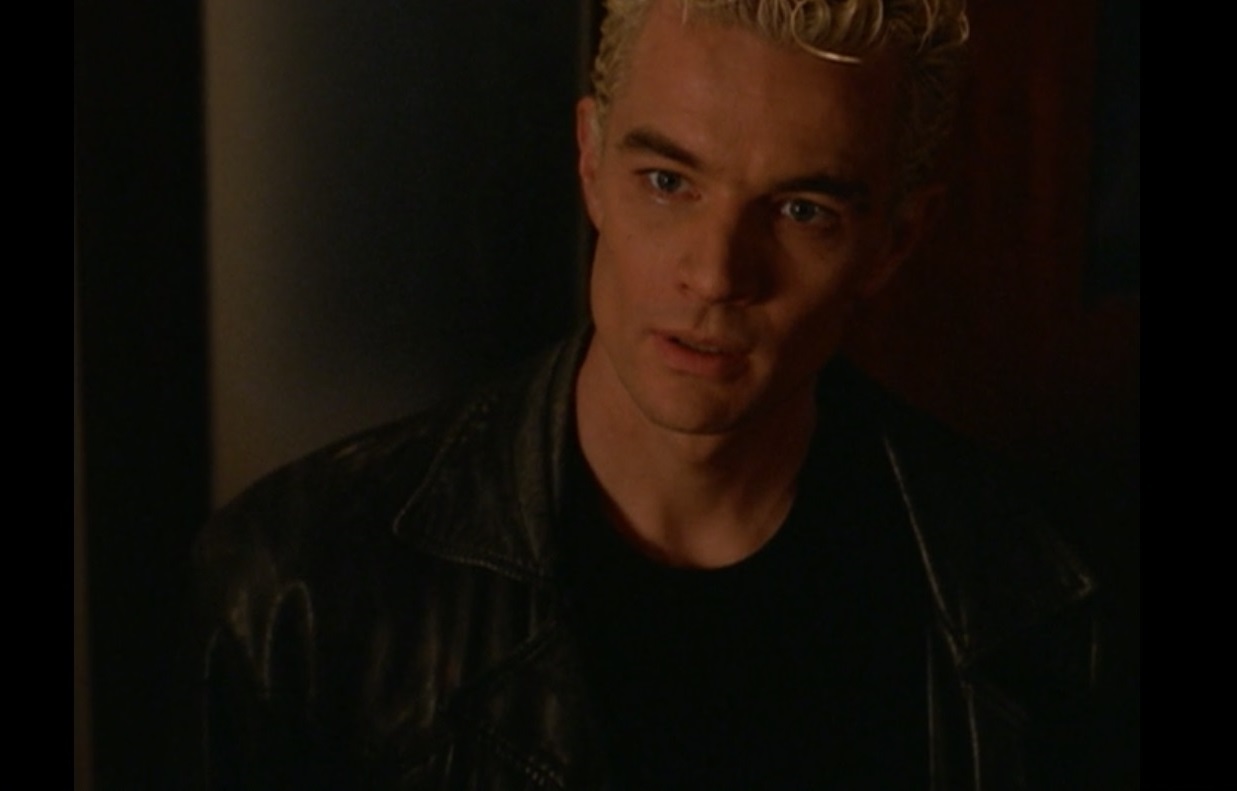
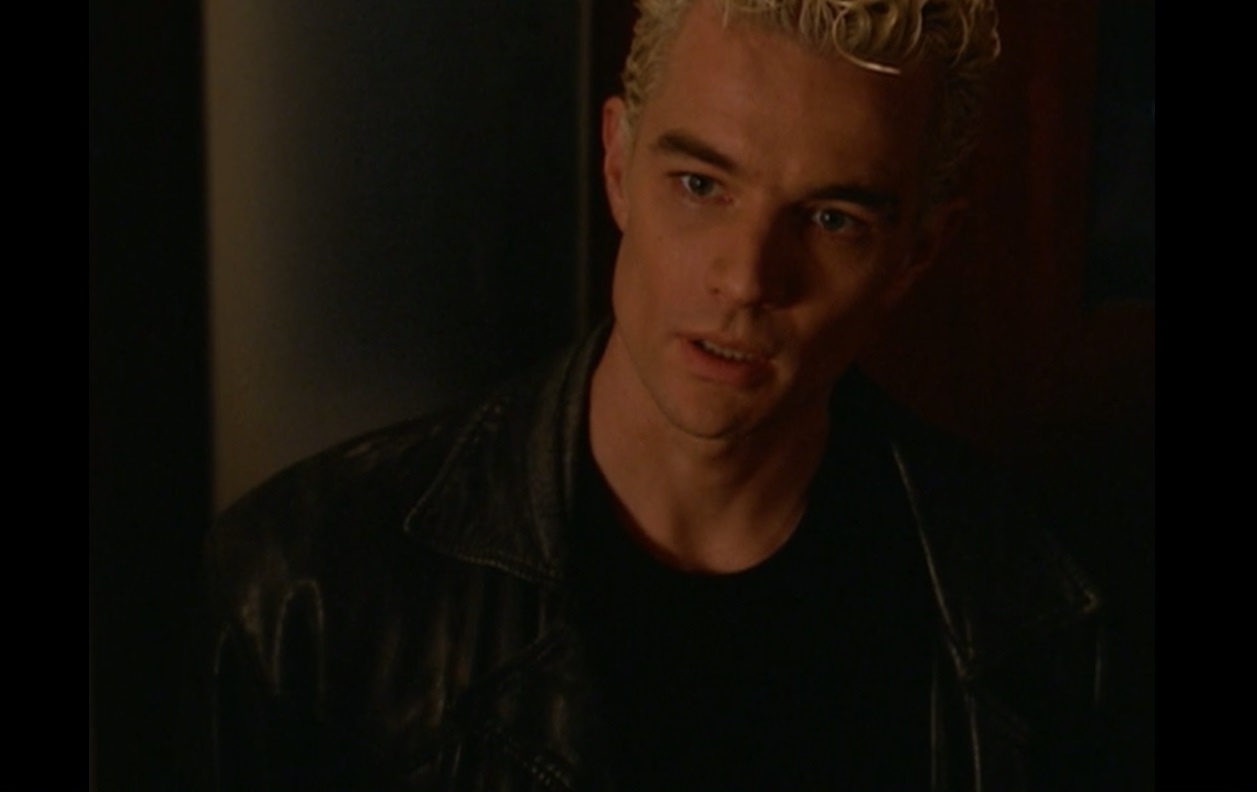
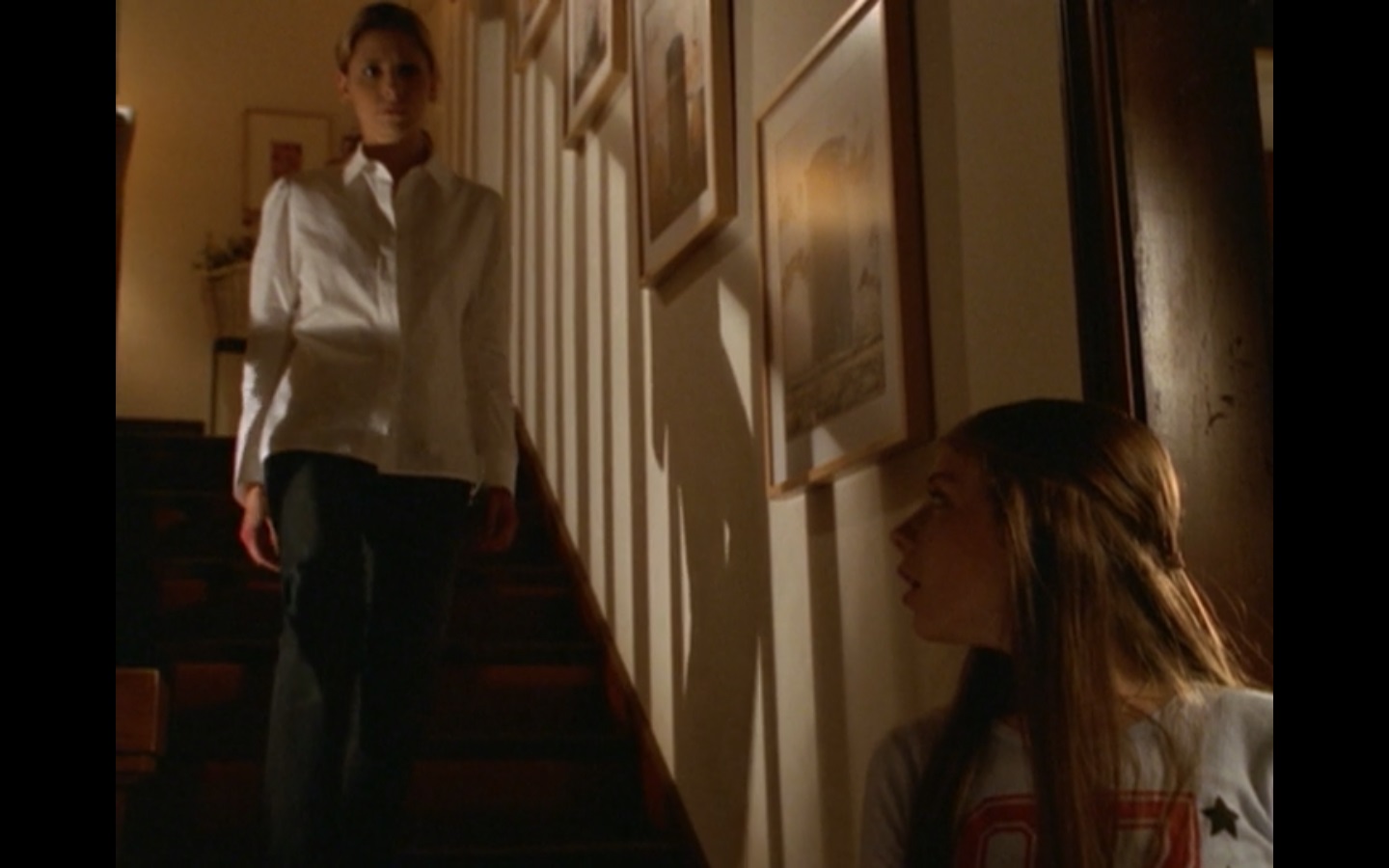
My favorite scene in my favorite episode is when Spike sees her for the first time post-resurrection. Spike, you see, loves Buffy more than anything on earth, and he’s lost her, he’s resigned himself to having his heart ripped out. Same old story. But he walks into the house, unsuspecting, distracted, worried about something else entirely – and there, at the top of the stairs, there she is.
btvs3

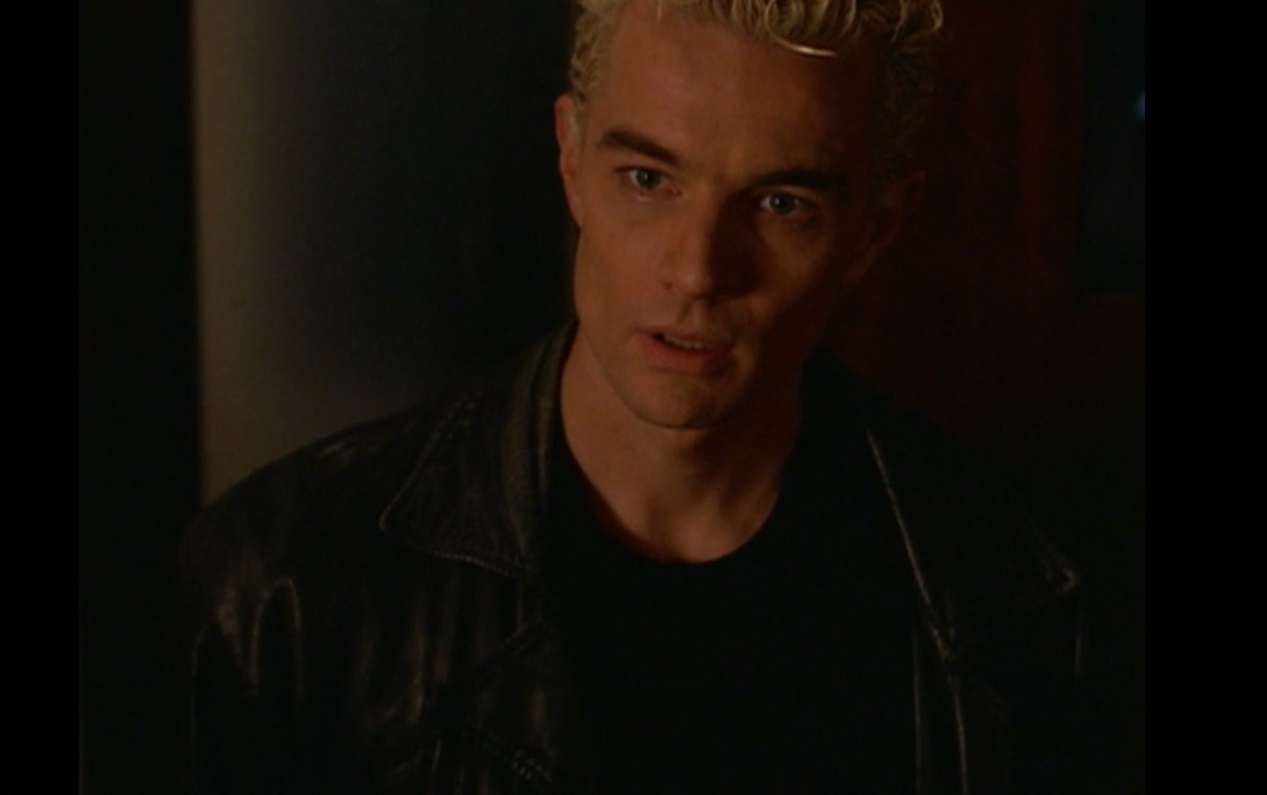
For the next ten seconds or so, he doesn’t say a word. He just – looks at her.
btvs7

btvs8

btvs9

The why and the how and the what next all come later. In this moment, he’s just drinking in the miracle.

Anyone else read Roald Dahl’s Matilda as a kid? (Or as an adult, for that matter?) Reminds me of a scene, toward the end, when Matilda tells Miss Honey she has magic powers – telekinesis. Miss Honey doesn’t believe her, of course, but being a nice person, she humors Matilda, lets her demonstrate. And then Matilda actually does it. Dahl describes the woman’s reaction this way:

Miss Honey’s mouth dropped open and her eyes stretched so wide you could see the whites all round. She didn’t say a word. She couldn’t. . . . [She was] gazing at the child in absolute wonderment, as though she were The Creation, The Beginning Of The World, The First Morning.

It’s very common in books, in movies, on TV, to see someone’s heart ripped out. But every now and then – much more rarely – the heart comes back again.

Friday Link

The coolest thing I’ve seen on DeviantArt this week.

Have an upstanding weekend!

Postmortem: Genesis

Betsy and I just finished Genesis. It’s … a strange book.

Chapters 1-11 cover primeval, mythic-type events: Creation, expulsion from Eden, the first murder, the Flood, the Tower of Babel. A lot of the best-known Genesis stories come from these early chapters.

But the vast majority of the book, chapters 12-50, are about four generations of rich patriarchs: Abraham, Isaac, Jacob (Israel), and Joseph, along with their families.

It’s striking, first of all, how amoral this section of Genesis is. People do all kinds of things – killing, threatening to kill, enslaving, banishing, lying, cheating, sleeping around – with very little judgment from the text on what is and isn’t okay. In some cases, as when Abraham lies to Pharaoh and calls Sarah his sister, we get the impression it’s a bad thing. Other cases, like when Jacob cheats Esau out of his blessing, feel more positive. In still other cases, as when Lot’s daughters get him drunk and sleep with him, there seems to be no textual judgment at all, positive or negative; it’s just something that happens. Such lack of judgment would make sense in a work of fiction, but in the Bible – which people use as a source of moral guidance – it’s more surprising.

Likewise, there isn’t much about what kind of relationship humanity should have with God. God actually doesn’t appear too often in these chapters, and when he does, his exchanges with humans are very transactional: command and obey, request and provide. Unlike Noah, who was chosen for his righteousness, Abraham seems to be chosen without any clear reason. God simply says, without explanation or preamble: “I will make of you a great nation, and I will bless you, and make your name great” (Gen 12:2). Likewise, Abraham’s descendants seem to inherit his blessing through blood, rather than virtue. Why has God chosen these people in particular? Why would God choose any people in particular? We’re never told, at least not in Genesis. Instead, God seems to be on Abraham’s side because, well, he’s Abraham.

So if Genesis isn’t primarily about laws, morals, or God, what is it about?

Mostly, it’s about inheritance. A lot of time and detail is spent on who marries who, who sleeps with who, sterility and fertility, birth order and birthright, the blessings of the father, and where people are buried. All this establishes the lineage and origin of the twelve tribes of Israel (and other tribes), the ancestors of King David, the blessings of God, and claims to ownership of various lands. It’s practical: I get this land, this blessing, this authority, not you.

From an ancient viewpoint, Genesis makes sense. People want origin stories, and they want to establish claims to what they have. For a modern Christian reader, though, the purpose of Genesis is less clear. A few passages are instructive (albeit troubling), like the Flood and Abraham’s willingness to sacrifice Isaac. And the book does provide important historical and cultural perspective for interpreting the rest of the Bible, including the teachings of Jesus.

But as a standalone book, it’s … well, it’s odd. Interesting and significant, of course, but odd.

That’s my, ahem, professional opinion.

On to Exodus!

Haiku 365: August

#215: 8/1/2015
Drinking an O’doul’s
is like walking a nice old
dog: no bark, no bite.

#216: 8/3/2015
Little clay bluebird,
thimbleful of dark coffee.
Fairy garden tour.

#217: 8/3/2015
Brown furtive rabbits
leap from dawn to dawn, round-eyed,
tracking dusk and dew.

#218: 8/4/2015
Hard, unripe apples
clutch their branches, then plummet
to the placid earth.

#219: 8/7/2015
Fence gets painted white,
becoming by slow degrees
ever more ghostlike.

#220: 8/7/2015
Writing a letter:
thoughts overflow, stain paper;
I send them away.

#221: 8/7/2015
Hourly miracles
sustain us. Scent of apples.
Knowing how to walk.

#222: 8/12/2015
Early morning work,
lunch, and pleasant afternoon,
make for easy rest.

#223: 8/12/2015
Betsy picks peaches.
Trees we planted together
yield up their reward.

#224: 8/12/2015
Jacob the trickster
has grown into stern Israel,
he who strives with God.

#225: 8/12/2015
Audacious squirrel
snatches what he wants, and eats
staring through window.

#226: 8/12/2015
Bullets are crucial
for police officers and
people who like lists.

#227: 8/13/2015
Shining afternoon:
pure sky, fences like beacons,
nearing summer’s end.

#228: 8/14/2015
My decaf coffee,
my non-alcoholic beer.
Faux buzz beats no buzz!

#229: 8/15/2015
Rising in darkness,
stumbling over blank bare tiles
in search of waking.

#230: 8/17/2015
Two o’clock a.m.
In between late and early,
witching hour’s prelude.

#231: 8/17/2015
Banana peel sags
on coaster. Even fruit dies.
Yellow, brown, and black.

#232: 8/18/2015
Brain has turned to mush.
Is it a safety hazard,
typing with mush-brain?

#233: 8/19/2015
Dead men tell no tales,
but living dead can edit.
At least, I hope so!

#234: 8/20/2015
Black six-legged speck
scuttles on screen’s flat landscape,
pixel-ignorant.

#235: 8/24/2015
Thirtieth birthday
passes softly, like a friend
showing me the way.

#236: 8/24/2015
The Empire Strikes Back
and Return of the Jedi.
Betsy’s one of us.

#237: 8/24/2015
Copyeditors
are paragons of English,
flawless at there jobs.

#238: 8/24/2015
A one-year-old walks
fearlessly: joyful, lurching,
heedless of her falls.

#239: 8/25/2015
Critiquing strangers:
an exercise in prose, grace,
and diplomacy.

#240: 8/26/2015
Let go, summer, peace.
Embrace autumn like a son.
Peace, summer, at last.

#241: 8/27/2015
Electric house-lights
enshrine my dim wakefulness
in a land of black.

#242: 9/8/2015
Behind on haikus!
Days late and syllables short,
my keys scramble back.

#243: 9/8/2015
First sip. The booze hits
quick, no obstacles in stomach,
proceed straight to brain.

#244: 9/8/2015
Old sun fades westward,
following its ancient call,
looking for deep rest.

#245: 9/8/2015
Dreams turn inside-out,
filling daytime with their hues,
softening twilight.

Ramune

Ramune

Betsy and I had dinner at a sushi place the other night.

I went hunting through the menu for something to drink. My criteria are kinda strict: I can’t drink much alcohol at the moment, I don’t drink much soda, and I don’t usually like caffeine in the evening. So I look for less typical stuff like smoothies and bubble tea.

I found something called Ramune, advertised as a kids’ drink. Had absolutely no idea what it was. Sure, let’s try that.

Ramune – the name is apparently a Japanization of “lemonade” – is much weirder than I expected.

The drink itself is sugary and forgettable (“MADE with REAL SUGAR”), but the container is … bizarre. The kind of thing that gives Japan its reputation for weirdness.

The glass bottle came with directions for opening. These directions advised kids to have an adult open the bottle, but maybe it should have said “adults,” because this Ramune container required both of us working together to figure out. (Admittedly, I am not very good at stuff like this.) Basically, you remove the plastic cap, snap out the middle, and use that small plastic piece (shown on the right in the photo) to pop the marble out of the mouth of the bottle.

Yes, the marble. Because why wouldn’t there be a marble in your bottle? You can still see it in the neck, above.

The world is full of things.

Friday Link

My friend Paul sent me this: Chief O’Brien at Work. You’ll get the gist after just a few comics, but it’s a valid point. What the hell does the guy do all day?

See you next week, hopefully with more posts than this week!

Status: SAWOLSBSNDPPFPRS

Still AWOL, Still Busy, Still Not Dead, Possibly Pining for the Fjords, Planning to Return Soon-ish.

Transcendence: Anime Musical Perfection

Each week, we’ll look at another example of what I call a “moment of transcendence” – a scene from a show, a passage from a book, or anything else, that I find soul-piercingly resonant: joyful, sad, awe-inspiring, terrifying, or whatever. These moments are highly subjective, so you may not feel the same way I do, but nevertheless I’ll try to convey why I find the fragment so powerful. I hope we can enjoy it together.


I admit it: I’m a sucker for perfection.

Most moments of transcendence – for me, anyway – are about powerful emotion or profound truth, or both. But there’s another side of me, call it the twelve-year-old boy in me, that’s more in love with technical perfection, something complex done precisely and beautifully right. It’s the side of me that loves Chris Bliss’s crazy juggling skills and the Millennium Falcon flying inside the Death Star. Something about it just feels exactly perfect.

There’s a particular scene in the anime Neon Genesis Evangelion that gives me that complex, perfect, “exactly right” feeling. I’ve loved it for a long time, and I happened to watch it again with Ben on Saturday. Basically, it’s two kids in giant mech suits fighting an equally giant monster, synced to music. Don’t worry too much about the details or the logic. Just watch and listen.

(Link here in case you can’t see the embedded video.)

I have a feeling that many people will watch that scene and see no appeal at all. Like Monty Python, it either scratches your itch or it doesn’t, and not everyone has that particular itch. But for those who do, it’s perfection.

By the way, I also love the technique of removing voices and sound effects and playing only the “background” music. Gandalf’s death scene in Fellowship does the same thing, and a lot of my other favorite scenes do, too. I guess I love it because it implies transcendence in an audio sense: for a brief moment, we’ve moved beyond the need for voices and into the purified realm of music alone. Something like that, anyway.

Hell, or maybe I just like giant robots. I wouldn’t rule that out.


Thoughts on Turning Thirty

I turned thirty last Sunday.

If you’re still in your twenties (I remember those halcyon days!) you may wonder if thirty really feels any different. Ah, the naivete of youth. Of course it’s different as a tricenarian. Among other things:

  • Overwhelming urge to purchase monocle and velocipede, vote for Grover Cleveland
  • Formally renamed to “Brion the Grey”
  • Automatically given six-month trial subscription to AARP Jr.
  • Taken aside and taught elaborate five-part secret handshake
  • Now 8% more racist
  • Bulk discount on birthday candles
  • Legally permitted to be U.S. senator under article I, section 3 of the Constitution
  • Navel-length salt-and-pepper beard
  • Now believe that the world is world is worse off currently (when I am reading the news) than how I remember it when I was a kid (when I was not reading the news and mostly playing with Legos)
  • One year left of being trusted by the “don’t trust anyone over thirty” crowd, depending on precise definition of “over thirty”
  • Distrustful of all new technology since 2010 (looking at you, Vine)
  • New outlook on the youth:

dem kids

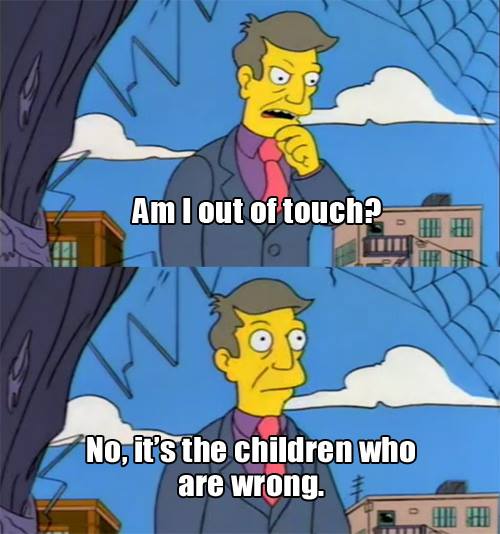
Just kidding. I thought the children were wrong when I was a child, too.

The Haps

Still pretty busy. I have two regular editing clients now, and I’m working on figuring out the business side of this freelance stuff: invoicing, taxes, incorporation, etc. Also looking into getting some more professional training.

Finished the second round of copyediting on Ben Trube‘s book, Surreality. Ben’s already started on the sequel, which I’ll be anxious to check out.

First draft of Part I of The Crane Girl (first 50K words) is complete and revised based on Betsy’s excellent feedback. More beta reading and revision to come. Will start on Part II one of these days.

Betsy just saw Empire Strikes Back and Return of the Jedi for the first time. She’s one of us now!

Speaking of, I am reading J. W. Rinzler’s The Making of Return of the Jedi, which is utterly fascinating. Lots of color photos, early drafts of the script, transcripts of story discussions between Lucas and the director, early concept art, and much more. An amazing book. Foreword written by Brad Bird, director of The Iron Giant and The Incredibles, two of my favorite movies ever.

tmorotj

What’s new with you?