Haiku 365: July

#184: 7/1/2015
Mozart pirouettes,
singing like bells. Beethoven
smashes and sinks deep.

#185: 7/2/2015
Lonely apple tree
stands, spine erect, while two more
bend like verdant crones.

#186: 7/6/2015
Young Sylvia Plath
smiling in Paris, as if
burdenless and free.

#187: 7/6/2015
The editor must
cultivate wild text, tending
jungles like gardens.

#188: 7/6/2015
Sirens caterwaul
and fade; my own life goes on,
glib, without crisis.

#189: 7/6/2015
To bed and to rise,
each day, with my wife. Fortune
radiates like stars.

#190: 7/7/2015
See the rains gather,
assembling as for council:
they judge, then disperse.

#191: 7/8/2015
Grand spiderless Web,
linking eyes to eyes, what prey
will you snare tonight?

#192: 7/12/2015
Old friend on Facebook.
What paths have you taken for
these decades apart?

#193: 7/12/2015
Handwritten letters,
inefficiently charming,
back and forth and back.

#194: 7/12/2015
This “gluten-free beer” –
gluten-free, I understand.
Are you sure it’s beer?

#195: 7/12/2015
Talk to us, Pluto.
Grant us your deep-space wisdom.
Teach us how to chill.

#196: 7/14/2015
Quiet streets are like
quiet lives, pensive and poised
to find the freeway.

#197: 7/14/2015
Tower, Hermit, Fool,
Emperor, Death, Justice, Moon:
what sayeth the cards?

#198: 7/15/2015
One slim rainless sky
beams triumphantly, and then
slinks back into gray.

#199: 7/16/2015
New book, virgin draft,
innocent of revision,
clean and paper-white.

#200: 7/17/2015
Sliver of lightning
slices gray paper heaven
like a razor-flash.

#201: 7/19/2015
Two cups of coffee
before speaking words aloud.
One thing at a time.

#202: 7/19/2015
Dusty oasis
glitters like frigid lightning,
sapphire on the sand.

#203: 7/20/2015
Verses and chapters
build a tower to heaven
strong with many tongues.

#204: 7/21/2015
Sunlight in my eyes.
Bright and dark blind equally.
Only gray can see.

#205: 7/22/2015
Balance in all things;
failing that, hearts are better
heavy than empty.

#206: 7/23/2015
Dinner with Betsy
and friends comes to a close: now,
hand in hand, alone.

#207: 7/24/2015
Writing a novel
is lonely symbiosis,
author and the world.

#208: 7/27/2015
Maps are devices
for turning cities to dots.
Travel turns them back.

#209: 7/27/2015
Tears are contagious;
when our basement pipe joints weep,
why then, so do we.

#210: 7/27/2015
What sage inventor
first melded PB and J?
Build him a statue.

#211: 7/28/2015
Pixels from Pluto,
gossipy tweets, alike are
Turing’s legacy.

#212: 7/29/2015
Plaintive beeping of
toaster oven; its sole job,
only song it knows.

#213: 7/30/2015
Secret nighttime talks:
words land softly on pillows,
hidden by darkness.

#214: 8/1/2015
Scrabble fast and loose:
bingo’s automatic win,
“wubo” is a word.

Transcendence: Another World

Each week, we’ll look at another example of what I call a “moment of transcendence” – a scene from a show, a passage from a book, or anything else, that I find soul-piercingly resonant: joyful, sad, awe-inspiring, terrifying, or whatever. These moments are highly subjective, so you may not feel the same way I do, but nevertheless I’ll try to convey why I find the fragment so powerful. I hope we can enjoy it together.


On my computer I have a file called “Quotes.txt”. I’ve collected quotes over the years from all sources – novels, letters, diaries, TV shows, poems, Internet chat logs, even stuff that people have told me. I’ve probably got a couple hundred by now.

Among my favorites:

There is another world, but it is in this one.

I have very little information about this quote. It’s from Paul Éluard. I didn’t know anything about Éluard until this morning, when I looked him up for this blog post. Evidently he was a French surrealist poet, a friend of Picasso.

The quote appears to be genuine (Wikiquote has a source for it, and the original French) but I have no idea of the context. So I don’t know what it meant to Éluard.

I can tell you what it means to me.

To me, as an agnostic humanist, it says that magic is real, but it’s not opposed to the laws of physics.

When New Horizons crosses two million kilometers in under ten years and tells us a story of the most distant land we’ve ever visited, that’s magic – woven by a team of sorcerers who spent years in sorcery school, where they learned that some magic is based on math and articulated by computers.

When a Zen Buddhist meditates for years and attains enlightenment, it’s not because the spirit of some bodhisattva reached out to impart spiritual wisdom and knowledge (at least not in any literal sense). It’s because the practitioner has, through endless hours of disciplined focus, rewired their own brain to allow for a new perspective on life.

When I say that I love Betsy more than anyone on Earth, and she loves me, it does not diminish that bond to realize that it evolved as a survival tactic, a way of strengthening groups of animals. Love is what it is, and its mechanism does not tarnish its message.

The sacred is an emergent property of the profane.

See? A moment of transcendence – about transcendence. Isn’t that fun?

Friday Links

A video of Ray Bradbury at a Caltech symposium in 1971, which also drew such luminaries as Carl Sagan and Arthur C. Clarke. (Can you believe none of them are around anymore?) Anyway, Bradbury talks for a bit – he’s really funny, and laughs at his own goofy anecdotes along with everyone else – then reads his poem, “If Only We Had Taller Been.”

This is one of those poems I had never even heard of, and then I read it, and all I could think was wow. Just brilliant. Here’s the text.

Have a prodigious weekend.

Bible Read: Descendants of Eve

So you’re reading Genesis, and you’re out of the Garden of Eden. What’s next?

An important milestone

Everyone knows about the first day and night, the first man and woman, the first murder (Cain and Abel). But never have I heard anyone mention the milestone that came just after:

The first sarcasm.

Then the Lord said to Cain, “Where is your brother Abel?” He said, “I do not know; am I my brother’s keeper?”
Genesis 4:9

On a more serious note, the Cain and Abel story – rather than the Adam and Eve story – is the first instance of the word “sin” in the Bible (Gen 4:7). God describes sin as something like a wild animal, “lurking at the door.” Abel’s death is described in likewise evocative terms; his blood “is crying out” to God from the ground (Gen 4:10).

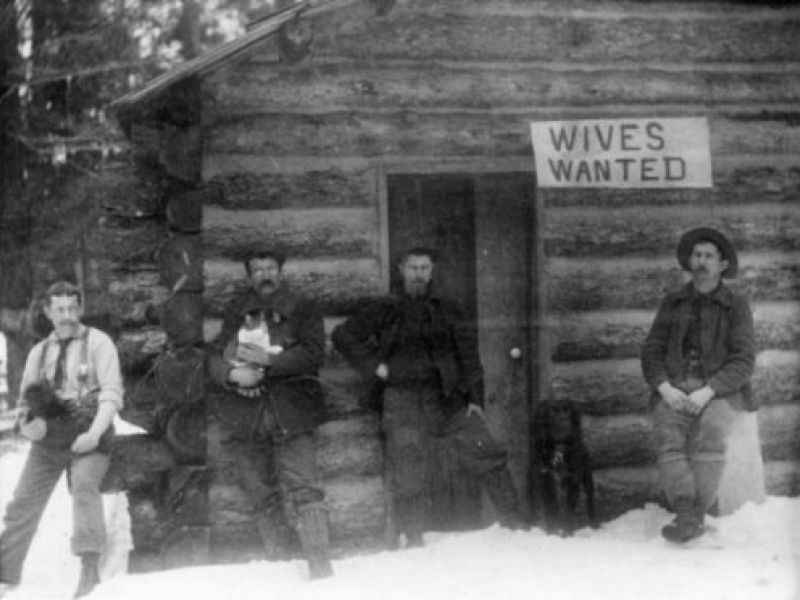
Wives wanted

Cain is cast out to the land of Nod, and then we read:

Cain knew his wife, and she conceived and bore Enoch…
Genesis 4:17

Back the train up.

So far, in the entire world, we have (counts on fingers) Eve, Adam, Cain…yep, that’s a total of three living humans on the planet. Who exactly is this wife of Cain’s, never introduced or named, casually first mentioned in the act of intercourse?

The simplest explanation, to me, is that other humans were around besides Adam’s immediate family. If you want the story to be literally true, you have to accept brother-sister incest, as well as a disjointed narrative, because Eve’s daughters haven’t been mentioned yet (Gen 5:4, Adam has “other sons and daughters”).

And you thought these guys had it rough.

Don’t forget about Seth

Adam, Eve, Cain, Abel. Everybody knows those names. But Seth remains far more obscure.

Which is odd, really, because Seth – Eve’s third child, the only one besides Cain and Abel mentioned by name – is the ancestor (through Noah) of every human alive.

Also, compare the descendants of Cain with the descendants of Seth. In order, they are:

Cain

  • Enoch
  • Irad
  • Mehujael
  • Methushael
  • Lamech

Seth

  • Enosh
  • Kenan
  • Mehalalel
  • Jared
  • Enoch
  • Methuselah
  • Lamech

These lists of descendants are awfully similar. Cain and Seth have similar-named sons (Enoch, Enosh). “Irad” sounds like “Jared.” And they both end with Methushael/Methuselah, followed by Lamech.

This is another case where the literal interpretation (the names happen to be similar) differs from what I’d consider the simple explanation (both are variants of a single traditional story).

Enoch and Methuselah

We’re talking about Enoch the descendant of Seth, here, not Enoch the son of Cain.

What does it mean that all of Enoch’s ancestors “died,” but Enoch “walked with God; then he was no more, because God took him”? (Gen 5:24)

The explanation I was taught growing up was that, because Enoch was righteous, God physically took him up into heaven rather than letting him die. This seems to be a common interpretation. If accurate, it puts Enoch in pretty exclusive company. If you go by what the Bible explicitly says, the only other person I know who was taken permanently, bodily into heaven, is Jesus.

How or why was Enoch so righteous? In what way did he walk with God? Why is it that Noah, who a bit later is described as “righteous” and “blameless” and who likewise “walked with God” (Gen 6:9), did not receive a similar honor, as far as we know? Like so many other curious fragments in the Bible, we simply don’t get much explanation.

By the way, Enoch’s son Methuselah is famous as the oldest man in the Bible, dying at age 969. It’s interesting, though, that the Genesis narrative itself doesn’t say anything special about him at all; it doesn’t mention that he is the oldest, or give any extra details about him. And Methuselah, by the way, had only thirty-nine more birthdays than Adam.

And now for something completely different

You’re reading Genesis. Creation, sin, descendants of Cain, descendants of Seth, okay, following the story so far…

And then you get to Genesis 6.

When people began to multiply on the face of the ground, and daughters were born to them, the sons of God saw that they were fair; and they took wives for themselves of all that they chose. Then the Lord said, “My spirit shall not abide in mortals forever, for they are flesh; their days shall be one hundred twenty years.” The Nephilim were on the earth in those days—and also afterward—when the sons of God went in to the daughters of humans, who bore children to them. These were the heroes that were of old, warriors of renown.
Genesis 6:1-4

What?

Sorry, I meant WHAT?

This passage comes with absolutely no introduction, explanation, or follow-up, so that little block of text is about all you get. And I have questions. So, so many questions. Questions like:

  • Who or what are the Nephilim?
  • Who or what are the “sons of God”?
  • What is the relationship, if any, between the two groups?
  • Just what, exactly, is going on here?

…to name only a few.

The most literal and obvious meaning of “sons of God” would seem to be angels, and indeed, this is the meaning assumed by the Oxford Annotated footnotes. Biblical context supports this. The same Hebrew phrase (or close variations of it) appears only a few other places, as far as I can discover: several times in Job, and once in Psalm 29. In all cases it appears to be talking about angels.

But if angels are really marrying human women and having children – I mean, wow, right? That’s certainly a striking little fact that doesn’t get much attention.

Incidentally, Jesus implies in Matthew 22:30 that “angels in heaven” do not marry. But maybe these angels, having descended to earth, no longer follow heavenly rules. Or maybe they’re fallen angels – that is, demons. That interpretation, by the way, is the origin of the incubus and succubus myths.

If all this sounds a little unorthodox, that’s because it is. These days, the standard Christian (and Jewish) interpretation is that “sons of God” refers to righteous men – that is, the descendants of Seth – marrying corrupt women, the “daughters of humans” – that is, the descendants of Cain.

The Nephilim are slightly less mysterious (but only slightly). They are explicitly mentioned in just one other place, Numbers 13:33, as giants, and “giants” is the standard English translation for this term.

But how do the Nephilim fit into the story? They seem to be distinct from the “sons of God.” But are they the offspring mentioned, the “warriors of renown,” as most interpretations seem to believe? Or are they a separate group altogether, as the Oxford Annotated claims?

For me, this little story is just the most striking example (so far) of a phenomenon all throughout Genesis, and indeed, throughout the Bible. The text says very curious, very difficult, very ambiguous things, often with little or no explanation. As readers, we must also be detectives, piecing together the clues as best we can.

Whatever their logical explanation, however, many such fragments are starkly beautiful, in part because of their mystery. I’ve already incorporated a passage from Genesis 6 into my current draft of The Crane Girl.

Next up: the Flood.

A Math PSA

G9510.20.indd

The latest issue of Time has an article titled “In praise of the ordinary child” about parents who push their kids too hard to excel, and the psychological harm it can do to children and parents alike.

It’s a good article. But at one point, there’s a box full of statistics, one of which says:

70%

Share of students who consider themselves above average in academic ability—a mathematical impossibility

That is, it’s impossible (says Time) for 70% of a population to be above average.

I’ve seen this idea other places. “Ninety percent of drivers think they’re better than average,” people laugh, amused at the absurdity.

Listen up, Internet. This is a public service announcement. Are you ready? *ahem*

Any percentage of a population can be above average (except 100%).

A simple example: say you have 100 students. Of those, 99 students score an 80 on a test, and the remaining student scores a 78. The average will therefore be slightly below 80, so 99 students will be above average.

That’s a trivial example to prove a point. But it can happen in more substantial ways. Say that wealth distribution for a community is a bell curve from $0 to $100,000. Then a relatively small group of multi-billionaires moves in. This jacks the average way up, and now most (or all) of the people from our original bell curve are below average.

The confusion seems to be between mean (average) and median. The latter refers to the middle of a sample, and it does indeed split the sample into two halves, one below and one above, roughly speaking. I say “roughly speaking” because even with median there are exceptions, though the exceptions are minor.

It’s an easy mistake to make, even for a magazine as venerable as Time, and I wouldn’t have said anything – except they specifically called it a mathematical impossibility. That means they didn’t just get their math wrong; they got their math wrong while claiming to be right with the power of math, and while using that math power to shoot down the supposed academic abilities of other people.

(Of course, I’m not saying 70% of kids are above average academically, just that it isn’t mathematically impossible.)

This has been a public service announcement. Remember, friends don’t let friends write math-impaired.

The Crane Girl – Spreading Its Wings

The path of The Crane Girl has not been a straightforward one. I wrote 60,000 words on an abbreviated first draft and 7,000 words on a second. (For comparison, a typical novel is in the neighborhood of 80,000-120,000 words.) Then all progress halted for over a year as I recovered from illness.

I started up again in April, rebooting the story, keeping a few core elements but otherwise starting over from scratch. I researched history, mythology, religion, alchemy, tarot, fairy tales, and languages, among other things. I still have plenty of research left to do, and honestly, I didn’t think I’d start writing the next draft for a while.

But ideas turn to characters, and characters turn to scenes, and once a scene comes to life in your brain, it demands to be written. So, two weeks ago, I started the first draft of the rebooted story. I’m up to 13,000 words, or about 50 pages.

It’s good stuff. I don’t mean the quality of the writing – though I hope that’s good too – I mean the act of writing, the process of getting it on (digital) paper. It’s not like it has been sometimes before, where I sat staring at a blank screen, sweating blood, wishing I were doing anything else. It’s fun, and it’s not any more difficult than writing a novel is supposed to be.

To paraphrase Dune: “The words must flow.” And they are. The Emperor would be pleased.

There actually is an Emperor in The Crane Girl, though we haven’t gotten to him yet. His wife, the Empress, is the insane homicidal ruler of the High City – and she’s one of the good guys. Their daughter’s job is to watch and wait for the imminent Last Battle, but she’s getting antsy. Ethan, a boy from Earth, is inciting her to rebellion (and – naturally – falling in love with her too). His adoptive little sister, Sara, is drifting toward omniscience. Meanwhile, back in Kansas, Ethan and Sara’s mother is on the brink of losing it because she doesn’t know where they are – and that’s before she gets her magic powers. It’s all leading up to everyone’s favorite shindig: the apocalypse.

See? It’s gonna be fun. Complicated, but fun.

Now, if you’ll excuse me, chapter 9 ain’t gonna write itself.

Friday Link

Here’s a link in case you can’t see the embedded video.

Have an exemplary weekend!

Image

Before eHarmony

get me a wif

Game Theory and the Garden of Eden

Look – I’m a logical guy. I’m a programmer, a copyeditor, and a math tutor. I have a signed, framed print of an xkcd comic on my dining room wall. I follow rules, and I create rules, and I like things to make sense.

So when I come across something puzzling in the Bible, I get…curious.

The discussion that follows is based on a reading of Genesis that’s probably too literal. I’m not trying for serious literary or theological analysis. I’m just letting my logical brain do its thing.

With that in mind, let me ask you: what would’ve happened if Eve and Adam hadn’t eaten from the Tree of Knowledge?

Ever wondered? I had never given it much thought. If you’d asked me, my answer would’ve been something vague: I guess they would’ve stayed in the Garden and been happy. And lived forever, maybe? Not really sure.

It turns out that Genesis gives a surprising amount of detail about the whole situation, though, and there’s enough information that it feels a little like game theory to me. (I know almost nothing technical about game theory, so math majors, don’t cringe too hard.)

You’ve got two “players.” One is God, the other is Adam and Eve. (The serpent is more of an influencer than a player.) Both players want the best outcome for themselves, but their interests don’t necessarily align.

You’ve also got two trees: the Tree of Life and the Tree of the Knowledge of Good and Evil.

The Tree of Life is simple. You eat its fruit, and you live forever (Gen 3:22). Adam and Eve can eat from this tree whenever they wish, because it’s not forbidden (2:16), but in the Genesis story, they never do. If you don’t eat from this tree, you remain mortal.

The Tree of Knowledge makes you “like God, knowing good and evil” (3:5). It grants other knowledge, too – for instance, they realize they are naked (3:7). In my view, this tree takes you from a childlike state into adulthood.

The way I see it, there are actually four different ways this scenario can play out.

Choice 1: Eat from neither tree.

Adam and Eve don’t sin. They stay in Eden, grow old, die, and presumably go to heaven. It’s implied that sex is a pre-Fall state of affairs, rather than a result of sin (2:23-24), so they will almost certainly have children, and Eden fills with their descendants.

By the way, as more and more people live in Eden over time, it would seem to be ever more likely that someone, sooner or later, will eat from the Tree of Knowledge. From this perspective, the Fall seems almost inevitable.

Choice 2: Eat from the Tree of Knowledge.

This is what happens in Genesis. They disobey, they eat, they become “like God,” they’re kicked out forever, they eventually die. The story we all know.

Choice 3: Eat from the Tree of Life only.

A variation on #1. Adam and Eve stay in Eden, sinless, living forever. They have lots of kids. One wonders if there would have to be some kind of population control after a while, or if Eden grows to accommodate additional residents. Maybe it eventually spreads to cover the whole planet. Wouldn’t that be cool?

Choice 4: Eat from the Tree of Life, then the Tree of Knowledge.

This is where things get really interesting.

See, God doesn’t want them to eat from both trees, because then they would be “like God” in knowing good and evil, and also immortal. (Why God doesn’t want this is not entirely clear.) So, in the Genesis narrative, when they ate from the Tree of Knowledge, he threw them out to be sure they didn’t eat from both trees.

If they eat from the Tree of Life, however, they haven’t broken any rules. That tree is permitted. They’re immortal, and they can still go anywhere in the Garden. And hey, the fruit on that other tree is looking pretty tasty…

God could do several things here.

First, he could do what he did in #2 and wait till after they eat from the Tree of Knowledge to do anything. Then Adam and Eve are both knowledgeable and immortal, which is what he didn’t want. The humans have “defeated” God. What happens after that? No one knows. (Although, if modern science can figure out a way to stop aging – and we seem to be getting closer all the time – then we may one day find out.)

Second, God could step in after they decide to eat from the Tree of Knowledge, but before they actually do, letting them stay immortal but preventing them from becoming “like God” (and presumably kicking them out of Eden). This option is also fascinating, because you’re now in a situation where humans have Fallen (they decided to disobey God) but they’re immortal anyway, and thus don’t need the sacrifice of Jesus to get eternal life. A very odd state of affairs.

Or finally, God could avoid the whole problem by removing or barring the Tree of Knowledge after they become immortal. This actually makes it impossible for Adam and Eve to sin, because there’s no longer any way they can disobey him (unless some new command or situation appears). In other words, the Fall is permanently averted. Adam and Eve “win.” The whole thing could have been avoided if they had just happened to eat from the Tree of Life first.

All three of these possibilities are very strange, yet all three follow directly from the humans taking the simple, obvious, and perfectly acceptable step of eating the fruit that will make them immortal. Funny, isn’t it?

Oh, well. Tomorrow’s post will be about something non-biblical. I promise!

Bible Read: Creation and Eden

As I discussed last week, Betsy and I are reading the Bible all the way through, a chapter a day. We’re still in Genesis at the moment. All Bible quotations in this and future Bible Read discussions are from the NRSV translation unless otherwise noted.

So let’s get started.

Talk to someone reasonably well-versed in Christianity and ask them about the Creation story. They’ll likely tell you something like this:

God alone created the universe in six days, making certain things on each day, in a fixed order, then rested on the seventh. Adam and Eve, the first humans, lived in the Garden of Eden. Satan tempted Eve with an apple from the Tree of the Knowledge of Good and Evil, which God had forbidden. Eve took a bite, and persuaded Adam to do the same. This disobedience was mankind’s Original Sin (which Jesus would later atone for), and as punishment, God cast them out of the garden and into the hard world.

Sound familiar? Nothing wrong with it per se. But it’s important to understand that the story recounted above is an interpretation of Genesis. The text itself says something rather different.

Let’s walk through it together, and I’ll point out whatever especially interests me, the strange and the beautiful.

In the beginning

I have long believed that the Bible has the best opening lines, the strongest “hook,” of any book on the planet. The version familiar to me is something like the one from the NIV:

In the beginning God created the heavens and the earth. Now the earth was formless and empty, darkness was over the surface of the deep, and the Spirit of God was hovering over the waters. And God said, “Let there be light,” and there was light.
Genesis 1:1-3 (NIV)

What we’re reading now, however, is the NRSV, and imagine my surprise when I found the opening lines rendered as:

In the beginning when God created the heavens and the earth, the earth was a formless void and darkness covered the face of the deep, while a wind from God swept over the face of the waters. Then God said, “Let there be light”; and there was light.
Genesis 1:1-3

The short, declarative sentence at the start is transformed into a mere clause, modifying what’s to come. The second version is far less elegant, in my opinion. That’s not a criticism of the NRSV, which is merely translating an existing Hebrew text; and a footnote in my edition does acknowledge that “scholars differ” on which translation is more correct.

Theologically, it doesn’t matter. But the lesson is clear from the very first sentence: the text of the Bible is what it is, not what I expect it – or want it – to be.

I’m fascinated, by the way, by that term – “the deep.” In Hebrew it’s tehom, implying primordial chaos, perhaps related to Tiamat the monstrous Sumerian chaos goddess. Tiamat is often depicted as a serpent, much like the biblical Leviathan, who in the Book of Job is described as an unworthy adversary of God during Creation. Remember chaoskampf? That’s what we’re talking about here.

I wonder if Leviathan was one of the “great sea monsters” God created in Genesis 1:21.

Who is “us”?

Then God said, “Let us make humankind in our image, according to our likeness…”
Genesis 1:26

This happens so quick it’s easy to miss it. We will make humankind? In our image? Who else is out there, anyway?

Nobody seems to know for sure; answers vary, all equally fascinating.

The most obvious answer for a modern Christian is that “us” refers to the three parts of the Trinity. If so, this offers a fascinating insight on the psychology of God: he actually thinks of himself, sometimes, as “us.” It’s also a reminder that (again, according to mainstream Christian theology) it wasn’t just God the Father there at Creation. The Son (Logos) and the Spirit were there too, and we are made in their image as well.

But Genesis is first and foremost a Jewish text. I greatly doubt the original author of Genesis had the Trinity in mind; at the very least, it’s not the Jewish interpretation. So what do they make of “us”? It seems they generally believe that “us” refers to angels. If that’s the case, it’s just as fascinating: angels were actively involved in creation! Humankind was made in the image of angels as well as God!

I’ve also heard the argument that the plural pronoun is merely an artifact of Hebrew grammar. Evidently the word for “God” used here (Elohim) has some aspects of a plural noun? My knowledge of Hebrew being nonexistent, I can’t begin to speculate on whether that makes sense, but the theory doesn’t seem to have a lot of defenders.

Creation happens twice

The seven days of Creation are described in Genesis 1:1-2:3. Creation happens in this order, day by day:

  1. Day and Night
  2. The sky
  3. Earth, sea, and plants
  4. Sun, moon, and stars
  5. Birds and sea animals
  6. Other animals, and then humans (male and female)
  7. Rest

Curiously, this is followed by a separate, seemingly contradictory account in Genesis 2:4-25. Here we are not told about separate days, and the story begins with the earth already created:

  1. The first man (Adam)
  2. The Garden of Eden (possibly these are the first plants, though it’s a bit unclear)
  3. All animals
  4. The first woman (Eve)

The scholarly view is that these two accounts indicate multiple sources for Genesis which have been stitched together. (Similar “hiccups” occur all throughout the book.)

The difference between these two accounts is striking in many ways. In the first story, God is simply called “God” (Elohim), and he is omnipotent, willing all things into existence with words alone. In the second, God gets a personal name: Yahweh, or YHWH, the Tetragrammaton, often translated as “LORD” (and occasionally as “Jehovah”). Yahweh is portrayed as less all-powerful and more humanlike; for instance, he creates animals in a failed attempt to find a mate for Adam, rather than for their own sake. (Of course, the usual Christian interpretation would be that God did this on purpose, but we don’t find that in the text.)

No apple, no Satan, no sin

The fruit of the Tree of Knowledge is simply called “fruit.” The word “apple” does not appear anywhere. This doesn’t matter theologically, but it’s interesting nonetheless.

Much more significant is the fact that the serpent in Eden is never described as Satan. The serpent seems to be, well, a serpent.

What does the text say?

Now the serpent was more crafty than any other wild animal that the LORD God had made.
Genesis 3:1

Than any other wild animal. So the serpent is explicitly described as a wild animal. But wait – what does the NIV say?

Now the serpent was more crafty than any of the wild animals the Lord God had made.
Genesis 3:1 (NIV)

Here, the serpent is explicitly not a wild animal. Large conclusions hinge on tiny differences in translation. Again we see that the Bible is a very difficult text that must be read with extraordinary care.

So Genesis 3:1 is ambiguous. And later:

The Lord God said to the serpent, “Because you have done this [tempted Eve], cursed are you among all animals and among all wild creatures…”
Genesis 3:14

Again, for the NRSV, the serpent is clearly an animal. But the NIV has:

So the Lord God said to the serpent, “Because you have done this, cursed are you above all livestock and all wild animals!”
Genesis 3:14 (NIV)

Again, the NIV indicates it’s not an animal.

Am I reading too much into small details? Maybe. But the serpent seems an ambiguous figure at best.

“Sin,” too, is a word that appears nowhere in the Eden account (much less “original sin”). You can infer that Adam and Eve sinned because they disobeyed God; but, since Original Sin is the reason for the sacrifice of Jesus, and thus the foundation of the Christian faith, it’s curious, at least, that the story describing it doesn’t speak of it in those terms at all.

God lies, the serpent tells the truth

And the Lord God commanded the man, “You may freely eat of every tree of the garden; but of the tree of the knowledge of good and evil you shall not eat, for in the day that you eat of it you shall die.”
Genesis 2:16-17

(The NIV has “for when you eat of it” instead of “for in the day that you eat of it.”)

But Adam and Eve do eat from the Tree of Knowledge, and they don’t die that day. They do eventually die – centuries later – but not because they disobeyed God. Genesis makes it clear that they were created mortal, and would only have become immortal if they’d eaten from the Tree of Life.

So what God said was incorrect, at least from a plain reading of the text. To make God’s statement true, you have to supply some extra interpretation, turning “die” into some sort of metaphorical or spiritual death.

By contrast:

But the serpent said to the woman, “You will not die; for God knows that when you eat of it your eyes will be opened, and you will be like God [or ‘gods’], knowing good and evil.”
Genesis 3:4-5

And, as we will see, this is exactly what happens.

Why are Adam and Eve expelled?

Anyone will tell you that Adam and Eve were removed from Eden as punishment for disobedience. That’s not what Genesis says, however.

They are punished for disobedience. Eve is given pain in childbirth, and Adam is forced to toil for his food, among other things.

But Genesis is quite explicit about why they’re expelled, and it has nothing to do with sin.

Then the Lord God said, “See, the man has become like one of us, knowing good and evil; and now, he might reach out his hand and take also from the tree of life, and eat, and live forever”—therefore the Lord God sent him forth from the garden of Eden, to till the ground from which he was taken. He drove out the man; and at the east of the garden of Eden he placed the cherubim, and a sword flaming and turning to guard the way to the tree of life.
Genesis 3:22-24

“See, the man has become like one of us.” Just as the serpent predicted. God’s concern here is that Adam – having gained one aspect of divinity already – might acquire another aspect, immortality. If you didn’t know better, you’d think God was worried. This theme will reappear with the Tower of Babel.

(Incidentally, note that Adam is expelled from the east gate of Eden; a chapter later, Cain is also cast out, this time into the Land of Nod, which is described as “east of Eden” – Genesis 4:16. That is the source of the title for the Steinbeck novel.)

Women, obey your men

Backing up just a bit. Among the punishments listed for the three sinners – the man, the woman, and the serpent – we find this punishment for Eve:

To the woman he [God] said, “…your desire shall be for your husband, and he shall rule over you.”
Genesis 3:16

This is said to Eve; but since literally every other punishment listed here applies to their descendants, it would seem this one is likewise. So not only does God create the idea of men ruling over women, he also makes it explicitly clear that this sexism is the woman’s fault. (As we’ll see much later, St. Paul is very much on board with this plan.) You stay classy, Genesis.

And lest you think that these are just harmless antiquated notions that nobody takes seriously anymore – Betsy and I went to a mainstream Christian church less than a year ago, right here in Ohio, that preached a whole sermon about how men should rule the family and women should obey, based solely on Scripture.

Obviously most Christians I know don’t think that way, because they’re not morons. The point, however, is that these verses can and do cause major problems in the world even today. If this is God’s Word, one is forced to think long and hard about why the verses are there.

Final thoughts

Does it sound like I’m nitpicking? I hope not. I certainly don’t mean to. I think the account of Creation and Eden is a beautiful story, poetic and insightful. It’s part of our shared heritage as a culture. It asks important questions and makes us think. Like many parts of the Bible, however, it is also deeply problematic. When it comes to biblical study, if you’re not confused (at least part of the time), then you’re not paying attention.

Also, wow this turned into a long post. I think this is my longest nonfiction post ever, by a wide margin. And that’s only the first three chapters. I’m past chapter twelve in my reading now, and believe, I’ve got thoughts on that stuff too!