Postmortem: Angel

(Warning: spoilers for Buffy the Vampire Slayer and Angel.)

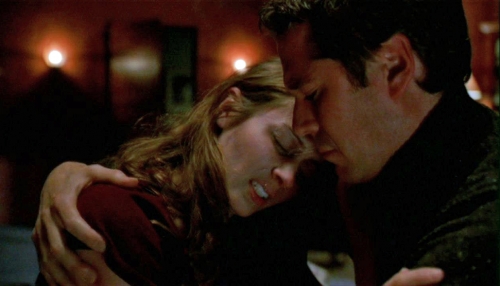
First there was Buffy the Vampire Slayer, and it was good. Then came its spinoff series, Angel. Not a sequel but a companion piece: set in the same universe, and mostly at the same time. Same creator, some of the same characters. Two stories, separate but linked, running in parallel.

I can hardly think about Angel without comparing it to Buffy. They’re similar in many ways: similar dialogue and humor, same crazy twists and sudden deaths, same general idea of kill-evil-monsters-for-Good. But they’re also very different, and it took me a while to figure out why.

I think, fundamentally, the difference is this. Buffy is a show about growing up, a journey from adolescence to adulthood, a bildungsroman. Because it shows life through a youthful lens, the hopes are brighter, the evils are darker, the line between them is clearer, the romances are more dazzling, the battles are more dramatic.

Angel, on the other hand, is a show about adults. It’s not a journey. It’s about figuring out what “good” and “evil” actually mean. It’s about exploring the vast, messy gray area between them. And it’s about understanding our purpose as human beings.

That’s all oversimplifying, of course. The distinctions aren’t as clear as all that. But that’s the basic vibe that I got.

And Angel does do an excellent job of grappling with these difficult questions. For instance, what does it really mean to be “good”? Is it about heroism, bravery, virtue – or is it about helping the most people, by any means necessary, even if you soil your hands in the process? And why, exactly, do we fight? Do we fight to win – or do we fight because it’s the right thing to do, because it’s our purpose, even if victory is impossible? These are adult issues, and they’re handled in an adult way.

Angel also has great characters (like every other Joss Whedon work I’ve ever seen). I give them props especially for taking three of the least likable Buffy characters – Angel (boring), Cordelia (shallow), and Wesley (prissy), and making me love them as much as anybody on television. The original characters are good too – Gunn’s cool, Fred is amazing, Lilah and Lindsey make you root for them in spite of their evil, and Ilyria is, well, Ilyria.

Oh and Connor sucks, but then everybody knows that already.

Gotta mention, too, the series finales. As I said in my other review, Buffy‘s finale left me flat. Full of sound and fury, signifying nothing. Angel‘s finale, on the other hand, was incredible: by turns touching, hilarious, ass-kicking, heartbreaking, and wise. This won’t mean anything if you haven’t seen the show, but Ilyria’s final line to Wesley – “Shall I lie to you now?” – is one of the saddest things I’ve ever heard in a story.

The last line of Buffy, spoken after a great victory, is: “What are we gonna do now?” Full of hope and possibility. By contrast, the last line of Angel, spoken in the middle of a great battle, is: “Let’s go to work.” This says a great deal about the difference between the two shows.

All things considered, I have to say I like Buffy better. The quality’s not as consistent as Angel, and the lows are lower, but the highs are definitely higher. No Angel episode can compare with Buffy’s “The Body,” “Once More With Feeling,” or “After Life.” (Oh, and Angel has more torture. Like way, way more. Really could’ve done with a little less torture.)

Nevertheless, Angel is an amazing show, and I recommend it to anybody. Even if you’ve never seen Buffy, you can pick it up without much trouble.

Anyone else seen Angel? What did you think?
Haiku for Wednesday

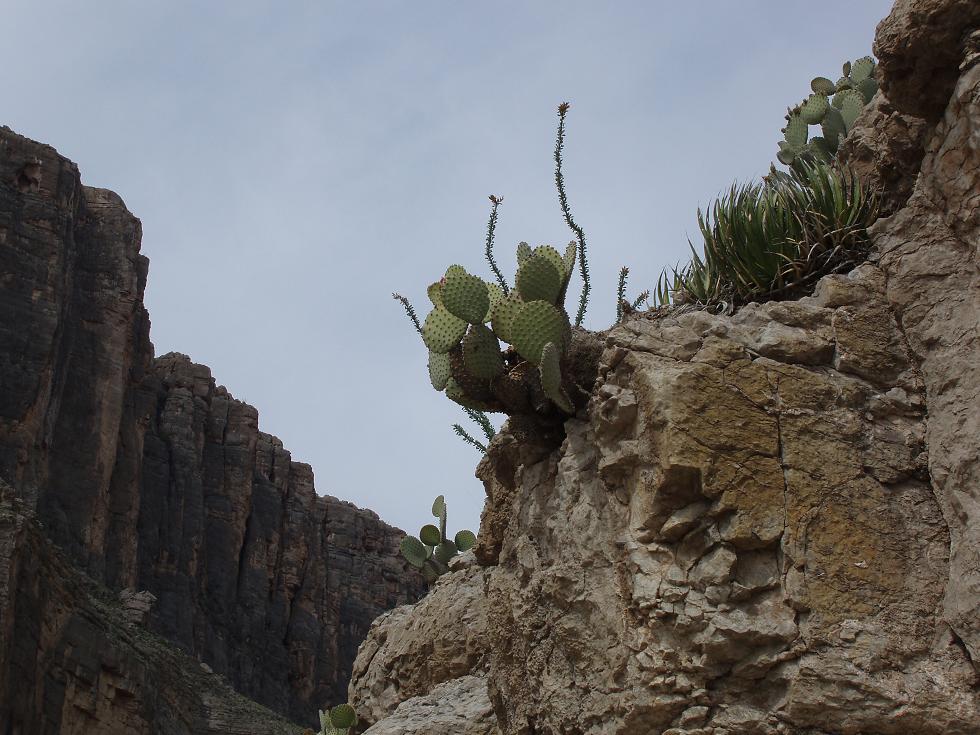
Another photo from a trip to Big Bend several years ago.

Another photo from a trip to Big Bend several years ago.

Rooted in dry rock,
flowerless under cruel sun:
little is enough.

Postmortem: The Professor and the Madman

tpatm

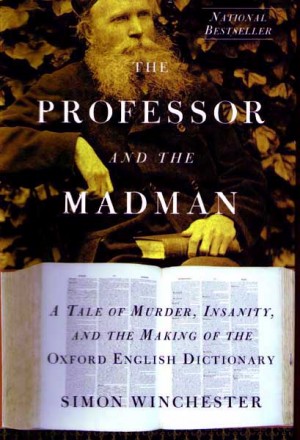
The Professor and the Madman, by Simon Winchester, is a history book – and probably the most gripping, page-turning, can’t-put-it-down, stay-up-till-2-am history book I’ve ever read. It tells the story of how the Oxford English Dictionary was made, and of two men who were instrumental in making it.

First off, the Oxford English Dictionary (or OED) is way more interesting than I ever suspected – and this from a guy who loves words. I had no idea how huge it is: over 300,000 entries, over 20,000 pages, 20 volumes, at last count. Literary quotations for every word. It’s like an encyclopedia for a language. The first edition took 70 years to make. A monumental work.

James Murray (the professor) was head editor of the OED’s first edition. Nothing like the OED had ever been attempted before, and he had no idea if he would succeed. But he knew he and his small team couldn’t possibly do it alone. So they sent out paper slips all over London and beyond, requesting volunteer readers to hunt out all different shades of meaning for all different words in all different works of literature. He was, in other words, crowd-sourcing – a radical idea at the time.

William C. Minor (the madman) was an American born in Sri Lanka, a brilliant surgeon who served in the Army and found himself exposed to the horrors of the Civil War. As he grew older, he struggled more and more with paranoid delusions and powerful sexual urges. He moved to London, shot and killed a man while in a delusional state, and was committed to an asylum, with a room full of books.

While he was there, he received a certain paper slip about creating a certain dictionary…and, with a brilliant mind and abundant free time, he became one of the OED’s most prolific contributors.

The two men’s paths converge from there, and they become close friends, their lives inextricably tangled.

Well-written, thoroughly detailed, meticulously researched, surprisingly suspenseful, The Professor and the Madman is simply a beautiful book. Read it if you can.

(Or, I mean, if you want to. I’m not the boss of you!)

Friday Links

All three links today contain strong language, if you’re worried about that sort of thing.

The best SMBC I’ve seen in a while.

An illustrated version of my favorite Louis C.K. routine ever.

And, uh, this:

Have a great weekend, everybody!

Postmortem: The Legend of Korra

(Warning: spoilers for Korra and Avatar.)

It hasn’t exactly been a secret that Avatar: The Last Airbender is one of my favorite shows of all time. It’s a mass of contradictions. An American cartoon – in an anime style. A kids’ show – featuring revenge, honor, Eastern philosophy, and political intrigue. An epic journey – squeezed into 22-minute increments. A colossal battle of good and evil – with bright colors and funny jokes.

When it ended, fans wanted exactly one thing: MORE. And starting in 2012, they got it.

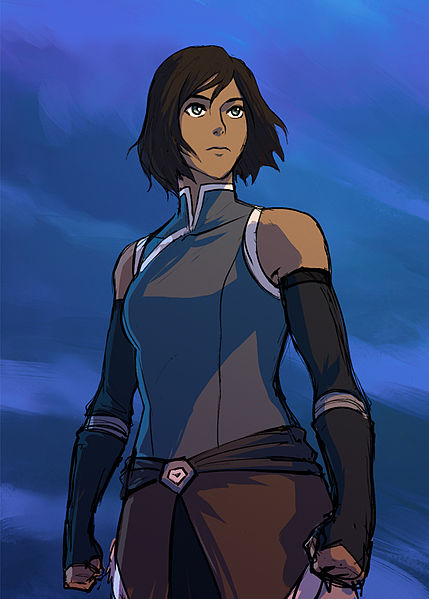
The Legend of Korra is a sequel series to Avatar, set seventy-ish years later in the same universe. As before, certain people can “bend” (manipulate) the four classical elements, earth, air, fire, and water. Most can bend only one, but the Avatar commands all four, and has some other pretty intense mojo to boot. The first show’s Avatar, Aang, has died, and the new one – Korra – has inherited the mantle of saving the world, keeping peace where she can, drop-kicking bad guys when necessary.

Korra has the same creators, the same premise, the same universe, the same style, even some of the same characters. But does it work?

Betsy and I – who watched both shows together – got to the Korra finale a couple weeks ago. The verdict is yes, it works…and no, it doesn’t.

First, the good:

  • The animation in Korra is much, much better than it was in Avatar. Not that Avatar‘s art was bad or anything, but Korra is simply gorgeous. The characters, the environments, the “special effects”…if they got a bigger budget (as I assume they did), they certainly knew how to use it.
  • The music is great. Not as memorable as Avatar, in my opinion, but still beautiful.
  • Most of the stuff that was cool in Avatar is still cool now. The bending, the Avatar State, the landscape and architecture design, the meticulous attention to detail, etc. And it’s cool to see what finally happened to characters you cared about (Aang, Zuko, Cabbage Guy) and how certain places have changed (mainly the Earth Kingdom).
  • The in-universe technology has advanced a lot since Avatar, and I give them props for keeping things fresh. The weaving of machinery and “magic” is well-executed.

But there are some problems…

  • In the first couple seasons, Korra just isn’t very likable. I know this was deliberate, as she needed room to grow emotionally (and she does), but that doesn’t make it any easier to watch.
  • The dialogue isn’t very good. In Avatar, it was snappy and creative. Now it feels mostly functional, people saying what the plot requires in the most obvious way possible. Example: “You’re an inspiration to the world.” -Tenzin. “I’ll always try to restore balance.” -Korra. (Yawn.)
  • There’s something wrong with the dialogue delivery, too. Not with the voice actors – they do a great job. I think the pauses between lines are a bit too long. I know that sounds like nitpicking, but it really drives me crazy.
  • Hate to say it, but Korra isn’t as funny as Avatar. The humor style is the same, but the jokes aren’t as good.
  • I just don’t connect with the characters. Not like before.

That last one is the biggest problem by far.

Don’t get me wrong – I like Korra, Bolin, Asami, Tenzin, even (I suppose) Mako. But who in Korra is as funny as Sokka? As purebred awesome as Toph? As wise as Iroh? As terrifying as Azula?

And when the old characters do show up in Korra, they’re ghosts of their former selves. Zuko is passive, Iroh is a mere caricature, and Toph has gone from smartass-and-cool to just plain, annoying smartass. Only Aang retains any of his former glory. I get that the writers can’t have old characters monopolizing the show, but that doesn’t mean they have to be cardboard cutouts.

Korra had its high points, certainly. The two-parter about Wan, the first Avatar, had a beautiful story and beautiful art. The death of the Earth Queen. The season 3 finale, when Korra went full-on wrath-of-god on Zaheer. The realistic, heartbreaking, and shockingly adult portrayal of what can only be called clinical depression in Korra. And her recovery in “Korra Alone.”

Besides which, this exchange is one of the funniest things I’ve ever seen:

“You amuse me. I will make you mine.”

“You mean like a boyfriend, or like a…slave?”

“Yes. Win me prizes.”

But for every great episode, there are four more that are just okay.

And then there are the villains.

I salute the creators for writing villains with complex, realistic motives, beyond the basic Ozai-style “I WILL DESTROY TEH WORLD.” The problem is, it never really works.

Amon starts off intriguing, as it seems like he might actually have some moral high ground…but then it turns out it’s all lies, and they just have a big fight. Unalaq becomes a Dark Avatar, which is an intriguing idea…but it turns into a spirit-fueled slugfest with no real deeper meaning. Zaheer – the best of the bunch in my opinion – just didn’t connect with me for some reason. And Kuvira’s basically a generic dictator.

Which leads me to the series finale.

In a technical sense it was great. Lots of well-orchestrated action, heroic sacrifice, “emotional” moments, lessons learned. The problem was, I didn’t care about any of it.

Look at Avatar.

When Sokka, Suki, and Toph took down the airship fleet, it wasn’t about the explosions. It was about Toph, hanging on for dear life to Sokka, the only real family she’s ever had – her tough veneer stripped away, not a cocky show-off anymore, just a twelve-year-old girl who doesn’t want to die.

When Aang fought Ozai, it wasn’t about the fireworks. It was about Aang’s ethical struggle, his determination not to kill the Firelord, no matter what the cost. And it was about him finally claiming his birthright, finally becoming a full-fledged Avatar. He wasn’t just a fighter anymore; he was a force of nature. But he never lost his compassion.

And when Zuko finally fought the half-insane Azula in the Last Agni Kai, it wasn’t about the charged-up firebending, or the hauntingly beautiful score, or even the Fire Nation throne. It was about Zuko redeeming himself; it was about sacrifice; it was the conclusion of a lifelong mortal rivalry. As they prepared to duel, the atmosphere was simply electric. (Metaphorically, I mean, though it turned out to be literally as well.)

By contrast, when Korra fought Kuvira, it was mostly about the logistics of taking down a giant mech. Yes, there was some sense of Korra trying to redeem herself, and yes, they tried to play up the similarities between hero and villain. But mostly, it felt like empty action.

One final note, the obligatory Korrasami comment. I don’t have any particular feelings about it, except I love that they threw gasoline on the already-intense shipping fire. We’re going to see a lot more fan art, and that always makes me happy. (That, and of course I’m always happy to see positive portrayals of gay relationships.)

Anyway – I’ve rambled on way longer than I ever intended, so I’ll wrap it up. Overall, in spite of all its flaws, I did enjoy Korra, I’m glad it exists, and I respect what they were trying to do. But for my money, it doesn’t hold a candle to Avatar.

What do you think?

Happy 2015!

Betsy and I spent a week with her family in Ohio and a week with my dad, stepmom, and other family in Texas. Lots of flying and driving, but also lots of good food and good times.

Also lots of time to read. In just the last two weeks, I read:

  • Across the Nightingale Floor, a pseudo-Japanese fantasy novel by Lian Hearn. Intrigue, honor, and forbidden romance, not to mention magic ninjitsu. Good stuff.
  • Adventure Time: The Art of Ooo, by Chris McDonnell, which has lots of juicy behind-the-scenes goodness. The art’s cool too.
  • The Rift by Gene Yang, the third graphic novel in the Avatar: The Last Airbender universe. Like the first two, this one is decent, but nothing special. I can’t pass up anything Avatar, though.
  • The Professor and the Madman, a nonfiction book about the making of the Oxford English Dictionary, by Simon Winchester. This book is AMAZING. I was up till one in the morning reading it.
  • The Man in the High Castle, an alternate timeline novel by Philip K. Dick. A cryptic and beautiful little story. I can’t say I understood it all, but what I did get, I liked.
  • The Tao of Travel, a nonfiction book about traveling and famous travelers, by Paul Theroux. Very interesting. The kind of book that makes you want to read fifty other books on the same subject.

Besides which, Betsy and I finished watching The Legend of Korra (good, but not great) and Angel (great – not quite as great as Buffy, but a vastly superior finale).

More thoughts on all these stories are likely to percolate into the blog all this week, so brace yourselves.

Friday Links

A little more Buffy goodness this Friday. First, we have Buffy’s Mom:

And then Buffy, Friends-style:

Have a great weekend! I’m off for two weeks for the holidays. The blog returns Monday, January 5.

Old Names

As mentioned previously, I’m working in the genealogy section of the library these days. Currently I’m typing up death records from the 1880s-90s.

It’s cool seeing all the old names.

Most are still familiar a century later: Mary, Peter, Sarah, William, Joseph, Daniel, etc. Some have alternate spellings that are much less common now: Catherine/Catharine, Elizabeth/Elisabeth.

But there are a lot of strange ones.

Here, for your viewing pleasure, I’ve collected the most unusual and interesting first names I’ve encountered as I worked through 3,000+ records. All of these belonged to people lived in Ohio, though not all were born here.

  • Erastus
  • Mahitable – female, Biblical. Variant of Mehetabel, who was the wife of an obscure king in Genesis.
  • Lodema
  • Philemon – male, Biblical. Received one of St. Paul’s letters.
  • Selestial
  • Hattie – female, seems to be a variant of Harriet.
  • Machias
  • Lucretia – female, based on a figure in Roman history and/or legend.
  • Theodosia – female, possibly based on a 7th-century Byzantine saint. Also a genus of beetle, so, you know, there’s that.
  • Belizur
  • Windfield
  • Malista
  • Absalom – male, Biblical. Son of King David.
  • Cora – female, pulled from Greek mythology. I like it mainly for other reasons.
  • Corvidell
  • Ebenezer – not just for Scrooges anymore.
  • Zelma
  • Alwilda
  • Effie – one for the Hunger Games fans. (I’m one of you. Shh…tell no one.)
  • Folly – really?
  • Delilah – besides being the love of the Biblical Samson, she’s also the subject of one of my favorite songs.
  • Lather – somebody’s mother really likes soap?
  • Lemuel – male, Biblical. A king mentioned in Proverbs.
  • Dayton – good name for an Ohioan!
  • Dimmit
  • Iona
  • Bertha – actually means “bright one,” but today, pretty much just means “fat.” The association seems to date back to World War I, when a type of German mortar was named the Big Bertha. Kind of unfortunate, as it’s an otherwise perfectly good name.
  • Horace
  • Criner
  • Parlee
  • Enoch – male, Biblical. Ancestor of Noah.
  • Hiram – male, Biblical. Shows up a lot in old records.
  • Rollin – they see him Rollin, they hatin’…no? I’ll be quiet now.
  • Actions – this is a really good name.
  • Flay – this is a really scary name.
  • Thaddens
  • Ingalee
  • Sophronia
  • Brazetta
  • Malawza
  • Ephraim – male, Biblical. Mentioned in Genesis.
  • Wall
  • Mythella
  • Israel
  • Hulda
  • Caldo
  • DeQuincy
  • Jemima – you thought this name was just for syrup, didn’t you? Well, now it is. It used to be for people.
  • Ambrose – I’ve heard of this one! Ambrose Bierce. I’m proud of myself. Also, Ambrose Burnside is the origin of the term “sideburns.” No, I am not joking. Go look at him. Guy’s a legend.
  • Drucilla – I was pretty pumped about this one, but then, I am a bit of a Buffy fanatic.
  • Radcliffe – not just for Daniel anymore.
  • Reziah
  • Verdia
  • Fordice
  • Lyman – I only know this one from old Garfield strips.
  • Cubbage
  • Zelotus
  • Tryphena – female, Biblical.
  • Orange – hey, orange you glad you didn’t make any dumb jokes about this one?
  • Leab
  • Mahlon
  • Alzina
  • Florilla
  • Harvel
  • Bass – I’m all about this name. Ha, do you get it? Because…sigh.
  • Comer
  • Augustus – sweet name, but I bet other kids made fun of him.
  • Augusliss – I don’t know what happened with this one. It’s like they were going to name the kid Augustus, but panicked at the last minute?
  • Noble
  • Inez – a variant of Agnes.
  • Uriah – male, Biblical.
  • Reason – a good name for a Vulcan.
  • Patience – a good name for anyone still reading this list.
  • July
  • Bessie – pretty much just for cows now. I’m not sure why.
  • Etna – do you hope your daughter will be a fan of active volcanoes? This is your way of saying, “You can do it, honey!”
  • Ione
  • Alpha
  • Florida – might be friends with Orange.
  • Nevada – still a better name than Idaho.
  • Winnie – a perfectly good name until A. A. Milne ruined it for everyone.
  • Fanny – variant of Frances. This is an interesting one, actually. Here in the U.S., “fanny” is an inoffensive and old-timey word for “butt.” In Britain, I have learned, it’s a much more offensive term for “vulva.” (Similar to the situation with “spaz,” which also has wildly different meanings on opposite sides of the Atlantic.) Both meanings of “fanny” seem to derive from the character Fanny Hill in the early, infamous pornographic novel Memoirs of a Woman of Pleasure. In any case, people apparently stopped naming their kids this once it started to mean “butt.”
  • Mercy
  • Felix – means “lucky.”
  • Mildred – still familiar today, but definitely sounds like an older name.
  • Granvil – allegedly means “big town.” Like gran(d) vil(lage), I guess.
  • Ursula – the name comes from a legendary saint and means “little bear,” but today it has other associations.
  • Delight – this is a cool enough name on its own, but I have to mention that the first time I encountered it, the woman’s full name was Delight Beard. That is, without a doubt, one of the greatest names of all time. It’s right up there with another woman I found in the records, Carrie Carrey (who was unmarried, meaning her parents called her that on purpose). I also knew of a guy at my old job named Thor Bruno, which is similarly high up in the hall of fame.
  • Mamie – President Eisenhower’s wife was named this, too.
  • Silas – makes me think of Silas Marner, a novel that I started reading, and then, uh, stopped reading.
  • Ada – an excellent name. Ada Lovelace was the world’s first programmer.
  • Hyman – a male name, no longer used, for obvious reasons. It’s derived, however, from the Hebrew “Haim,” and seems to be unrelated to “hymen,” which has its origins in Greek.
  • Flossia
  • Magdaline
  • Merlyn – a great name.
  • Aljern

And finally, who could forget…

  • Philander

Yes, there really were men named Philander, back in the day.

Have you ever wondered why “philanderer” and “philanthropist” sound similar, but mean such different things? Okay, probably not. But it turns out, it’s not a coincidence, and the meanings aren’t as different as they seem.

See, “phil” means “loving,” and “andr”/”anthr” means “man” or “mankind.” So a philanthropist is someone who loves mankind. Philander, as a name, used to mean something similar. But then it morphed into the other meaning of loving, er, mankind, and after that, people started picking different names for their baby boys.

Which is funny, considering how many babies exist solely because of philandering.

Anyway.

That’s, uh, that’s all I’ve got for now. Who knew working in a library could be so educational?

Cantaloupe vs. Honeydew Melon: What is the Deal?

Exhibit A: the North American cantaloupe.

Exhibit B: the honeydew melon.

Recently, I got curious about these two. Is the honeydew melon a type of cantaloupe? Or vice versa? Or are they completely separate species? What, in short, is the deal?

I fired up Google, expecting an answer in thirty seconds or less. What I found, instead, was a subject of astonishing confusion and complexity.

Part of the trouble is terminology. For instance: “muskmelon” can be either a synonym for “cantaloupe,” or a larger group that includes both cantaloupe and honeydew. Honeydew melons are also said to be a type of “winter melon,” but “winter melon” can also refer to an entirely unrelated Asian fruit. Even “cantaloupe” is confusing, because what Americans call a cantaloupe is different than the so-called “true” cantaloupe, also known as the European cantaloupe. Oh, and apparently “honeydew” is also an alternate name for cantaloupe.

You see the problem.

Let’s talk science. Botanists have official, unambiguous scientific names for everything, right? That should clear up the confusion.

Well, cantaloupe (both North American and European) and honeydew all belong to the same species: Cucumis melo. So they’re different subgroups of the same species. That’s good to know. But what kind of subgroups, exactly? And do they overlap?

Well, what are the biological taxonomic levels below species?

Turns out, it depends which kingdom you’re in. We’re talking about the plant kingdom – botany – and there, the taxonomic levels below species (the so-called “infraspecific” levels) are:

  • subspecies
  • variety
  • form

So honeydews and cantaloupes are both Cucumis melo, but different subspecies, maybe? Or different varieties?

Wiki gives the subspecies of cantaloupe as “C. melo subsp. melo.” This terminology is known as a trinomial name, because it includes three names: the genus (Cucumis, here abbreviated “C.”), the species, “melo,” and the subspecies, which is also called “melo.” The connecting word – “subsp.” – indicates that the third name is a subspecies, as opposed to a variety or form.

So the cantaloupe is Cucumis melo subsp. melo. That cover subspecies. What about variety?

Wiki has us covered there, too. The variety is “Cucumis melo var. cantalupensis” – but it also gives the variety as “Cucumis melo var. reticulatus.” What’s going on there? Why two names?

Wiki doesn’t say, but further research reveals that North American cantaloupes belong to C. melo var. reticulatus, whereas European or “true” cantaloupes belong to C. melo var. cantalupensis.

Cool! What about honeydews?

Wiki defines the honeydew melon as part of a “cultivar group” of Cucumis melo – specifically, the “inodorus” group. What in the world does that mean? We know about species, subspecies, variety, and form, but cultivar group is new.

A cultivar, I have learned, is a type of plant cultivated (usually by humans) for a specific characteristic. A cultivar group is, well, all the plants that belong to a particular cultivar. Logical enough, but where does “cultivar group” fit in with the taxonomy we’ve learned so far?

Turns out, the subspecies/variety/form stuff is all cooked up by the International Code of Nomenclature for algae, fungi, and plants, or ICN. Cultivar groups, on the other hand, are handled by the International Code of Nomenclature for Cultivated Plants, or ICNCP. That’s why the terms don’t match up – they’re governed by different organizations. A cultivar group can match up with any level of the ICN taxonomy from genus on down.

After doing yet more research, I think – I think – that cantalupensis, reticulatus, and inodorus are all varieties (in ICN-speak) and cultivar groups (in ICNCP-speak). In other words:

  • The North American cantaloupe belongs to species Cucumis melo, subspecies melo, variety reticulatus, which is also cultivar group reticulatus.
  • The European or “true” cantaloupe belongs to species Cucumis melo, subspecies melo, variety cantalupensis, which is also cultivar group cantalupensis.
  • The honeydew melon belongs to species Cucumis melo, subspecies melo, variety inodorus, which is also cultivar group inodorus.

Neat and tidy, more or less. The only thing that still bothers me is that inodorus doesn’t mean honeydew, it’s just a group that the honeydew belongs to. (Other members of inodorus include crenshaws and casabas.) Likewise for the two types of cantaloupes.

So what, precisely, is the official or scientific status of the North American cantaloupe, the European cantaloupe, and the honeydew melon? Is there any? Or do those terms belong strictly to the vernacular? That, sadly, I’ve been unable to determine, despite my best efforts. In the unlikely event that anyone knows, I’d love to hear from you.

And in the even-more-unlikely event that you’ve kept reading through all of this, congratulations! Hope it made sense. And yes, I am quite, quite mad.

Names

Comic by Jim Davis. Image source

Comic by Jim Davis. Image source

I have a theory – completely without proof – that “Elizabeth” has more variants than any other name. You have:

  • Betsy
  • Eliza
  • Elsa (for you Frozen fans out there)
  • Ellie
  • Lisa
  • Liz
  • Isabel
  • Libby
  • Bess
  • Beth
  • Betty
  • Buffy (no, really)

(Thanks to Baby Name Wizard for helping with that list.)

Other names have variants you might not expect. Peggy, for instance, is a diminutive of Margaret.

And John is fun to trace around the world:

  • Jean (French)
  • Johan (German)
  • Giovanni (Italian)
  • Juan (Spanish)
  • Ivan (Russian)
  • Sean (Irish)

…not to mention Jack.

James, meanwhile, is a derivative of the biblical Jacob, which means “heel-grabber.”

Crazy.

Coming soon: weird old American names that nobody uses anymore. Like “Philander.” No, really.