Alvennore (part 4 of 4)

Warning: strong language.

That night I played Vivaldi on my violin, No. 8 in G Major, one of the few pieces I could remember that I had never played for Dana. Over the strains of the instrument I heard the rumblings of the coming storm, the wind rattling the steel sheets that covered my compound’s windows. All sensors agreed it was going to be a bad one, maybe the worst in a decade. I worried about Hook’s safety. I had turned the forcebeams to maximum, and between those and his rock walls, he ought to be sheltered from the worst of the wind–or so I told myself.

Besides, the storm did have one major benefit. It was already impossible to move around out there. I had a reprieve for tonight.

But what about tomorrow?

I thought again about the guy she had shot.

The more I considered it, the clearer it became that giving Hildy some sort of accident was the only clean solution. I couldn’t kill her outright; I wasn’t capable of that, wouldn’t want to be capable of that. But were there other options? Might I drug her somehow, imprison her? And then what–keep her captive for the next fifty years? No, impossible. There was no way to incapacitate her without…without doing what I would never do.

But what did that leave?

Suddenly, over the screaming storm and the weeping of Vivaldi, I heard a loud banging on the door. A voice shouted my name. I froze in astonishment. “Rogan!” she shouted again, and there was no doubt it was Hildy. “Let me inside!”

I couldn’t believe she had gotten to me through the storm. She must be out of her mind.

Letting her inside right now was the last thing I wanted to do, and it occurred to me then that it would be very easy to just do…nothing. Leave her out there. I hadn’t heard her voice; I hadn’t heard anything. The problem would go away all by itself.

A neat solution to a messy problem. Except, as I’ve said before, I’m not a murderer.

I slipped a chem-pistol into my jacket pocket.

“I’m opening the door!” I called. “Get inside quick!”

I could barely get the door open because of the raging wind. Dust blew into my eyes and swirled into the compound. She slipped inside and I shut the door behind her.

She wore thick goggles and a breathing mask over her mouth. When she took these off, the skin there stood out much lighter than the rest of her face, which was caked with dust. She took her gloves off and removed her hood. Streaks of blood marred her face, places that pebbles had struck her. She was shivering.

“You might have opened a little quicker,” she muttered.

“You might have waited until tomorrow.”

“We said tonight.” Her voice was soft. She wouldn’t meet my eyes. “I’ve waited three years. I don’t want to wait any longer.”

I took her cloak and gloves and led her down the hall, into the main body of the compound. The first room we reached was the kitchen. She looked around curiously. “I haven’t seen this place in a long time. You never invited me over.”

“You’re here now.”

“She didn’t like me, did she?” Hildy tossed her hair. “She felt threatened by me. Well, that’s all right. She should have.”

“It’s still two hours till midnight, Hildy.”

She laughed. “Still worried her ghost is going to watch us while we do it? Come on, Rogan, you don’t believe in that stuff.”

“You believe in it.”

“I don’t care,” she said fiercely, looking at me for the first time. “Not anymore. I’ve waited, and now it’s time. We’re going to be together.”

I took a deep breath.

“No,” I said. “We’re not.”

She was shaking her head, starting to laugh. “You don’t understand. This is it. There isn’t any other option.”

“Look, I can imagine how you feel–”

She cackled wildly, spinning around. “I’m glad! I’m glad! I thought nobody else woke up and wanted to die and ate breakfast and wanted to die and repaired the thermal processor and wanted to die and went to sleep and wanted to die every day for fifteen goddamn years. I’m so happy I’m not alone in that, because I felt very, very alone.”

Gradually she went still, and the wild grin slipped away. “But you need me now, Rogan. You can’t survive on your own. Not without Dana–not out here. You need me, and you’re going to give me what I want.”

I put on my best poker face. If only I’d spent a little more time playing poker. “I’ll just have to manage the best I can without you.”

“Yeah,” she said. “I figured you’d say that.”

She reached into a hip pocket and dropped seven or eight small objects on the kitchen table. Metal cylinders, each about the size of my thumb. It took me a moment to realize what they were.

The batteries to Hook’s forcebeam generators.

I stared.

“I couldn’t figure out why you needed the spanner,” she said. “You were obviously lying about your foot being hurt, but with your old bitch dead, I couldn’t imagine who else you could use it on. Actually I figured you had some other woman–just shows you how crazy I am. So I followed you back after you left my compound.” She shrugged. “Would’ve just shot the damn thing, except my last chem-pistol jammed about a year ago…”

I pulled out my own pistol and aimed it at her. She only laughed again. “I’m crazy,” she said, advancing on me slowly as I retreated, still aiming at her. “I know I’m crazy. But I’m not stupid, Rogan. I know you don’t love me. I know you don’t like me. I know this will never work, but shit, there’s nothing else and I can’t take it anymore.”

In the end, I couldn’t make myself shoot her. I decked her across the face, and she fell, unconscious. I grabbed the batteries and ran out into the storm.

The cage was only fifty meters away from my compound, but in the hellish wind, it seemed I would never get there. Freezing air tore through my cloak, and grit slashed at my cheeks. Once, a golf-ball-sized rock hit my left shoulder and sent me sprawling. I could barely see a meter in front of my face. But I pressed on. Eventually I reached the cage.

The forcebeam generators were dead. I began searching for Hook, not bothering to put the batteries back in until I found him. “Hook!” I called, over and over, though I could barely hear my own voice over the wind. There was no sign of the beetle.

A rock in front of me suddenly melted. I whirled around and saw Hildy behind me, my own chem-cannon on her shoulder, hunting me as I’d hunted Hook that first day. I dove behind a nearby boulder, drawing my own pistol, and returned fire. We both missed by meters. The wind made it almost impossible to aim. But Hildy was closing the distance fast. I did my best to keep her at bay, firing again and again. A distant part of my brain was relieved that I’d finally found a situation where my conscience would let me out of my dilemma–assuming she didn’t kill me first.

“You’re crazy to come out here!” Hildy called. “The storm’s gotten him by now! There’s nothing you can do!”

“You don’t know that!” I shouted.

Another blast from her, and a droplet from the chem-cannon impact splashed on my hand, making me lose my pistol. She was towering over me now, weapon pointed at my heart, fierce and triumphant.

“Rogan–” she began.

But I wasn’t looking at her. I was looking to my left, at something I’d just noticed. Words, scratched on the rock. At first I couldn’t make it out through the swirling dust, but as I squinted, it became clear.

The original mark the beetle had made was not just a scratch. It was a letter: the letter “I.” The whole thing read:

I AM DANA

I stared in shock.

She was starting to say something else when Hook jabbed its claw into her from behind, the tip protruding through her shoulder. Her mouth opened wide, a thin line of spittle crossing it. A strange transformation took place on her features. Her eyes and lips moved as if she was figuring out how to use them all over again.

Finally the claw pulled out, and the beetle collapsed, never to move again. Hildy smiled gently in spite of her still-bleeding wound.

“I am Dana,” she said.


Re-reading it now, I’m much less happy with it than I was originally. But c’est la vie.
Blog Returns Monday

Taking Thursday and Friday off for Thanksgiving. I’ll post the Alvennore finale when I get back. Enjoy your vacation – or for you non-American types, enjoy your, uh, Thursday!

Alvennore (part 3 of 4)

Warning: strong language.

I made the trip that same day, in my crater buggy, the blue barrel of sulfur bouncing behind me under its straps. Sulfur was a luxury on Alvennore, though you wouldn’t know it from the smell. It was the main ingredient in a fertilizer that could be mixed with the soil to attract an odd but delicious kind of fungus, the only edible thing that grew on this inhospitable world.

It was my last barrel.

Two years ago a drifter had wandered onto Hildy’s property and tried to steal something. She had hunted him down and blown a hole in his chest with her chem-pistol. Sure, the guy had it coming, but I’ve never forgotten the wild look in her eyes that day, a look that said she was capable of anything.

I knew I was getting close when I smelled the incense in the air. She rushed out of her compound to meet me as I approached, twirling as she ran.

“Rogan!” she cried. “I had a vision you would come!” She wore a strange, dirty patchwork dress, with denim and corduroy and all other fabrics and colors worked into the garment. She reeked of incense.

“Hildy. I came like you asked. I came to pray.”

She cocked her head. “Now why would you lie to me?”

“I’m not lying, I want–“

“Of course you are. You’re not interested in God. You came because you want something.”

I frowned. “Did your vision tell you that?”

“My vision?” She giggled. “But that’s silly. Nobody owns visions. Won’t you come inside?”

I followed her into the compound, dodging the strings of beads and stepping around the piles of knickknacks she had everywhere: crystals, old yellowing newspapers, bizarre glowing sculptures. I tried to steady my breath, in spite of my nervousness. Hildy was dangerous as that storm to the south, and not half as predictable.

“What’s new?” I said.

“Every day of my life I’m alone,” she said casually, no anger in her voice yet. “But you know that, Rogan. Nothing is new. Why are you visiting, if not to pray?”

“I…um, I need to borrow a medi-spanner.” No need to mention the sulfur just yet, though she had surely seen it on the buggy.

“Well! That’s easy, of course.” She rooted under a pile of junk and retrieved the device, holding it up. “Ta-da! What do you need it for, anyway? Something happen to Dana?”

I restrained a wince as I heard the name. I had the lie prepared already. I felt bad about it, but I couldn’t risk letting her know the truth–not even about Dana. I didn’t want things to get…complicated. If you knew Hildy, you’d understand. “Yes, she dropped a cargo crate on her big toe. I don’t think it’s broken, but she’s in a lot of pain.”

“Aw, that’s too bad.” She grinned and waggled the spanner in her hand. “But why are you lying to me again, Rogan? Much more of that and I’ll start getting annoyed.”

“I…I don’t know what you mean.” It seemed things were getting complicated anyway.

She stepped forward. The spanner was only a meter away now. “I heard you screaming. After you left, I saw where you buried her. I’m not an idiot. Do you think I’m an idiot, Rogan?”

“I…” I swallowed. I tried to act like a confused, grief-struck husband. It wasn’t very hard. “No. I’m sorry. It was my toe that got hurt, not hers. I just didn’t want to say anything yet…”

“Shhh.” I thought she would ask how Dana had died, but she only took another step closer. “I understand. I understand. Like I said, I had a vision.” Another step. The spanner was in reach of my arm.

“You need something from me.” Her voice went soft. “And I need something from you.”

Oh, no. She had to be kidding. “No…I didn’t…”

“Rogan.” Whispering now. Another step, and we were practically touching. She took my arm. “Don’t speak. I understand.”

Did I dare just grab the spanner and run? Who knew what weapons she had lying around? I had a chem-pistol in my left boot, but I wasn’t sure how much good that would do; she might be too crazy to threaten. Even if I got away, it was no good. Obviously she knew where I lived, and we were the only humans for kilometers in all directions. That couldn’t end well.

Yet if I spurned her advances, no matter how gently, I would never get the spanner. I was sure of it. And I needed that spanner.

I decided to do a bad thing.

I let her kiss me.

She kissed me a long time, her lips dry and cracked, her breath smelling of basil and something else I couldn’t identify. I endured. At the end, I pulled away just a few centimeters.

“You know her spirit hasn’t left yet,” I whispered.

It was a desperate ploy, the only thing I could think of. Hildy was a Mallitonian, and she’d told me before of her belief that the dead remain behind for seven days before passing on to whatever netherworld Mallitonians believe in. But she was so mercurial, I had no idea if she would care about this. I held my breath and waited.

She examined me sharply, but finally sighed and nodded. I exhaled. “But don’t keep me waiting,” she ordered. “That harridan will be gone from this world at midnight, and I want you, Rogan, I want you then.”

I nodded hastily, not trusting myself to speak lest she catch me in another lie. I grabbed the spanner and fled as quickly as I dared.

* * *

I washed Hook’s wound with a wet rag, carefully scraping away as much of the crusted ichor as I could, laying bare the wide crater and the long, slim gash beneath. Each rag became filthy at once, and I tossed each into a bucket and picked up another clean one. As I cleared away this mess, the smell was terrible, like rotten fruit. I kept silent, to keep it from trying to turn toward me. All throughout this procedure its single leg stretched and folded restlessly, but it made no other motion.

Next I ran the spanner over the wound, starting with the long crack and finally running concentric circles around the big gash, gradually layering the shell tissue. When I finished, the wound was completely gone, replaced by a surface that was irregular but whole.

I sat down beside the beetle, laid the spanner on the rock, and sighed.

“I’m sorry,” I whispered, softly so as not to disturb it.

“I shouldn’t have thrown the rock. I need you and you need me, because we’re both trying to do the same thing: survive. You killed my wife, but you didn’t know what you were doing. Might as well get mad at the sky for a lightning strike. Hell, I guess even Hildy’s just trying to survive.”

Idly I picked up a pebble and tossed it aside.

“Christ, what am I going to do about Hildy? She expects me to go back there tonight–at midnight, I guess–and…and…” I shook my head. “I promised her I’d give her what she wanted, but I can’t, of course. I can’t. Even if I wanted to, even if I could make myself do it, you know I’d hear Dana’s voice the whole time–”

I twisted my mouth to keep from getting emotional again. Gradually the feeling passed.

“But if I say no, she’ll lose it. Even more than she’s already lost it. Who knows what she’d do? A man’s got to sleep sometime.”

There was a third option, of course. I had a chem-pistol. I could make my Hildy problem go away. But that wasn’t an option at all. I couldn’t be a murderer, couldn’t admit to thinking about it–not even to a beetle.

“You didn’t know what you were doing,” I said, more softly. “I can’t exactly use that excuse, now can I?”

I heard a scraping sound. I figured I’d gotten too loud, that it was trying to move again, but I was wrong. Hook was doing something else entirely.

Slowly, with unmistakable purpose, Hook’s single leg extended and dragged across the ground, moving back toward its body, scraping a single dark line in the reddish rock.

I waited, but no further marks were forthcoming. The hieroglyph lay where it was left, inscrutable and alone.

I thought again of the beetle’s strangely advanced nervous system, the ill-understood capacities it might possess, and wondered what it could be trying to tell me.

Alvennore (part 2 of 4)

Warning: strong language.

Next day I went outside planning to harvest lichen, but once I felt the cool air, collector in hand, I knew I couldn’t return to the old routine. Not yet.

I went back to see the beetle.

I thought it might have bled to death in the night–or else it would be gone entirely, an evaporated phantom from my impossible nightmare. But it was neither. Impossibly, offensively, it remained just as I remembered, gigantic and alive.

Its sole remaining leg had ceased its frantic spasms and now sagged limply against the ground, like a relic of some obscure ritual. Its other leg sockets had stopped oozing gore. It seemed at peace. It watched me eyelessly, feathery antennae leaning as it caught my scent on the dusty air.

I stood tired, empty, and looked at it without malice. “What am I going to do with you, you son of a bitch?” The first words I’d spoken all day. They hurt my throat, but it was good to talk.

And then I noticed the smell.

The pungent odor that made me wrinkle my nose wasn’t coming from the creature itself. Looking around, I discovered the source nearby: a runny white pile of dung on the rock, knee-high, already semi-crystallized under the morning clouds. Elephant beetle shit.

My science training kicked in, and I identified the chemical I was smelling. Ammonia. The creature was excreting ammonia. Quickly I ran through some compound diagrams in my head. If I pre-loaded the organiprocessors with sodium oxide from the soil, then fed in the ammonia…

Yes. A viable fuel source. A way to survive without Dana’s help. And without Hildy’s, for that matter.

I strode back and looked the beetle square in its eyeless face. I was staring at an immobile, never-ending supply of energy.

“I need to keep you alive.” My voice seemed to rush out on its own, my thoughts lagging behind. “Water won’t be a problem. Our well has never run dry in three years. Food is trickier, since I can’t exactly catch slagworms for you, but I suppose I can figure out something for you to eat.”

I started circling the creature once more. “What about those legs? Guess you’ve healed up okay. Will they regrow? Do I need to worry about you running off? But if they don’t grow back, if you’re stuck this way, sooner or later either the worms or another beetle will get you at night. Either way, I need a cage for you.” I paused. “But it’ll have to be somewhere that Hildy won’t find you. God only knows what kind of visions she’d have about that.”

It listened to all these requirements in silence, slowly opening and closing its giant mandibles. It was an ugly, ugly thing. But I sympathized. I was feeling ugly myself.

I left it there and went back to the compound for supplies.

* * *

The spot I chose was a rough depression in the rock, fifty meters behind the compound. Rock formations ringed the depression, forming a high-walled natural bowl that would both keep my captive from escaping and hide it from Hildy. I loaded half a dozen forcebeam generators into a trailer, hitched the trailer to my dune tractor, and carted them out to the ring.

I planted the first one into a low spot in the rock, where the natural enclosure wasn’t steep enough to act as a cage. Its tip fused with the rock, leaving a meter-long metal rod sticking up in the middle of the gap, crowned with a little circular control panel. A few taps on this panel, and a shimmering purple wall shot out on either side, twice my own height. I cranked a dial, fading the forcebeam to discreet invisibility.

A similar procedure filled the other gaps, forming a very adequate jail. The whole thing took less than twenty minutes. As with yesterday’s digging, the activity helped my mood. For a while, working in the cloudy daylight, I could almost forget the rawness in my eyes, could almost ignore the constant icy weight that lurked inside me, still creeping toward some release I couldn’t yet see.

After I finished, I inspected the jail inside and out, searching for holes in my defenses. I rapped my hand against the forcebeam barriers, testing their strength, feeling the tingling resistance that grew more solid the harder I pushed. Finally I was satisfied.

Jittery with nerves, I drove the dune tractor back to where the beetle still sat waiting, patient as a stone. I backed the trailer up to it, lowered it to the ground, then got out to ponder the question I still hadn’t solved.

“If I were a handicapped elephant beetle, how would I get into a trailer?”

It was a joke without humor, my voice dead as the rocky wasteland that surrounded me. But the beetle’s antennae perked up, noticing. Then it did something utterly astonishing.

It extended it sole remaining leg, stabbed the ground, and slowly dragged itself forward. It extended again, this time grabbing at the edge of the trailer, and dragged itself again. I watched as three more such motions got it entirely onto the flat surface. Its antennae brushed the trailer’s front rail.

The beetle sat silent, waiting.

“You can move,” I said.

I was surprised that the single leg alone could bear the weight of the gigantic carapace. I was even more surprised it had managed to figure out this entirely new method of locomotion. As for the way it had done exactly what I wanted it to, as if sensing my thoughts, I could form no explanation for that whatsoever.

It was the work of ten minutes to drive the trailer and deposit it, beetle and all, in its new home. I reactivated the entry barrier and stood outside for a moment, staring at the thing where it remained placid, an innocent murderer. It flexed its claw coolly.

“Captain Hook,” I murmured, and didn’t realize till the words were out that I had given it a name.

I drove the tractor back to Hook’s original resting place and got to work collecting the dung. Right away I carted it to the nearest organiprocessor, a little device in a metal hut a short way from the compound. I held my breath to avoid the stench as I shoveled the stuff into the hopper. Then I pressed the button, and in ten minutes I got more battery charge than Dana and I could have gotten from lichen, together, in two whole days.

I cried for a long time, though I couldn’t have said why.

* * *
It was going to be a hell of a storm.

It lurked on the southern horizon, swirling vast and slow, sending out tendrils of darkness into the lighter clouds that fled its approach. Weather on Alvennore was slow; it was morning now, and I guessed the storm wouldn’t hit till nightfall.

Dana loved storms.

I flicked off the forcebeam generator at the entrance and walked into Hook’s cage. Hook was over at the opposite end, just sitting there. I dumped out the sack of apples in a pile.

This was the fifth day of its captivity. I had figured out by trial and error that apples were its favorite food. Hook would have nothing to do with meat, which was just as well, since that took the most energy to create. It sniffed at broccoli, nibbled at carrots, but apples were the only thing it really seemed to like. Of course, there was no genuine Earth-grown food on Alvennore–or at least none I’d ever seen–but the synthesizer made reasonable imitations of quite a few items.

“Dinner,” I said. It dragged itself slowly across the rough rock, clack-scraaape, clack-scraaape. That was the really creepy thing I’d discovered. The only time it moved was in response to my voice. Other sounds didn’t faze it. What was that about?

This morning, as it settled down to breakfast, I noticed something new. Instead of guzzling its food straight from the ground, it was spearing each apple with its hook and raising the fruit to its mouth. It ate several bites at a time, turning its morsels awkwardly with the unwieldy arm to get at all sides.

I collected the dung and took it to a container outside the enclosure, then came back to watch some more. Hook was still doing it.

“What are you doing?”

It paused, antennae twitching, ready to claw its way toward the voice again. After a time it settled down and resumed eating in the same way as before, like some enormous fussy gentleman hunched over a table. The sight was utterly absurd. I laughed. The sound was edged with a sudden anger that surprised me.

“What are you doing?” I said again, still laughing, even as I felt the rage build inside me. Dutifully Hook turned toward me and began scraping in my direction again. I backed away, leading it in a circle. “You have a brain the size of a peanut. You’re a bug, for Christ’s sake. You’re not supposed to be learning.”

Except I remembered now that wasn’t quite true. Something in the old exobiology files about elephant beetles having a surprisingly sophisticated nervous system, even some of the structures that are normally associated with telepaths.

But I had certainly never expected anything like this.

“You’re not supposed to figure out how to move with only one leg. You’re not supposed to come when I call. And now you’re picking up your food like a goddamn person…”

I tossed a pebble at it. The beetle ignored it. “Why are you following me? Huh?” I was raving now, but I didn’t care. I threw another rock, and another. “Why am I stuck with you, instead of Dana? Why am I picking up your shit while she lies buried in the ground? What am I doing here?”

I clambered to the top of a modest outcropping and lifted a heavy rock. My voice went quiet. “I know you can hear me,” I said. “If you’re so smart, why don’t you answer? Why don’t you answer, you son of a bitch?” And then, with a final roar, the question I’d been cradling inside me all week: “Why did you kill my wife?”

I sent the rock crashing down from the height of my little mountain.

With a hard crunch the rock rolled away, leaving a terrible open hole in Hook’s armor. Thick purple fluid oozed from the wound, and a long line of purple droplets sprouted from a crack that reached nearly the full length of its shell.

My ragged breath slowed. I got down from my makeshift battlement and sat on the ground.

I expected to cry again, but no tears came. The ice inside me had melted, and in its place was nothing. I sat empty and silent. The monster, who had made no sound through the whole ordeal, stopped its own motion at last and sat beside me, waiting for me to speak.

* * *

Hook’s new wound didn’t heal as its legs had, and when I checked on it next morning the whole area was a mass of dry and blackened ichor. I couldn’t bear to call to it again, but I got as close as I dared to the pincers and rolled an apple toward it. The mandibles clacked weakly, but it didn’t eat.

I knew nothing about elephant beetle biology, but I felt pretty certain Hook would die if I didn’t do something soon. What I needed was a medi-spanner to fuse the crack in the shell and cover that awful hole.

I didn’t have a medi-spanner. But I knew who did.

Alvennore (part 1 of 4)

Warning: strong language.

I found Dana’s body in the greenhouse, pale arms limp on the red-stained ground. A broad gash lay across her stomach. Smaller wounds marred her face, her arms. Her green eyes lay open. I felt for a pulse at her neck, her wrists, her heart, again and again, though I already knew she was dead.

I sat and stared, absolutely still, as ice flooded my veins. In that first terrible moment I thought only: This is real. This is a true thing that is happening.

My second thought was a learned response to the first. I can’t panic. On Alvennore, panic is how you die.

And her killer probably hadn’t gone far.

I stood slowly, legs trembling. I knew what had killed her. It was the same thing that had smashed a three-meter hole where the greenhouse door had been. Only one creature on Alvennore could do this to a person.

Focus, Rogan. If ever there was a time to keep your cool…

I found Dana’s chem-pistol a few meters away, slid out the little cylindrical battery to check the charge. Almost empty. She’d put up a good fight.

I drew my own pistol and dashed to the supply hut, a squat metal building off the main compound. With shaking fingers I assembled the chem-cannon. Longer range than the pistol, and a hell of a lot more kick.

Time to go hunting.

Even then, a part of me whispered: What’s the point? If this thing doesn’t kill you, you’ll die in a few weeks anyway. It takes two people to keep this compound running, and now you’ve only got one.

I told the internal voice to stick it and backtracked to the greenhouse, where the dune buggy was still parked. Just as I was getting in, though, I realized it wasn’t necessary. I spotted the damn thing less than a hundred meters away, sitting by a low ridge.

If you’ve never seen an elephant beetle, picture a scarab the size of your dining room table, with eight legs instead of six, and serrated pincers as big as spears. Most of the time they stay deep underground, and when they do come to the surface, they’re skittish. You hardly ever see them. But they move quick as the devil when they attack.

I approached cautiously, circling around at a safe distance, getting a look at him from all angles. Gradually I realized this particular elephant beetle wasn’t going to be hurting anyone anytime soon.

You see, chem-guns are specially designed to dissolve the elephant beetles’ chitinous exoskeletons. It seemed Dana had managed to fire off a good spray, and the beetle hadn’t fled very far before all but one of its legs dissolved. It was now flailing its front right appendage uselessly while its vast curved bulk sat immobile on the barren rock.

Good for you, Dana, I thought, but the words were empty. I felt nothing yet except a distant icy monstrosity inside, and vaguely wondered when it would reach my heart.

I came within a few meters of the beetle. Its carapace was drab green, pockmarked with long, dim scars from its fights with other males. The stumps where its legs had been oozed purple ichor like gelatin. Wide serrated jaws clacked impotently at nonexistent foes, and long feathery feelers–its only sense organ–sniffed the air incessantly, rooted in its tiny bulb of a head. It had no eyes.

Under other circumstances, I might have felt sorry for it. I raised the chem-cannon to end its miserable existence, disgust and revenge and pity all mixed up together.

Yet something held me back.

To this day, I’m not sure why I didn’t shoot. I wish I could say that I had some premonition, that I knew what role the creature had yet to play. But I didn’t. I had no idea.

Maybe I was tired, maybe I was just stupid. But I didn’t shoot. I left it there, trapped, alive.

* * *

I couldn’t go back to Dana’s body. Not yet. To put it off, I dug the hole instead.
I picked up the shovel, feeling its solidness and weight, the cool carbon handle under my callused fingers. I dug the dirt: shovel down, stomp it deeper, lift, toss, repeat.

A positronic vibro-digger could have done the job in minutes, but those use energy, and recharging them drains precious watts from the compound’s central battery.

The battery was everything, here. The compound was highly automated, and it would keep me warm, provide me food, take care of all necessities, as long as its central battery stayed charged. But that wasn’t easy. The solar collectors were useless because it was cloudy all the time. No running water in our territory meant no hydroelectric. There was plenty of wind, but the storms were so strong they destroyed the fans. So the only viable energy source was the lichen that grew on the rocks, fuel for the compound’s organiprocessors. But it took two people working all day just to gather enough organic matter to break even. Without Dana–sure, it would halve the food required and I wouldn’t need as much heat, but the primary systems still had to run. Alone, I wasn’t enough. Alone, the power would run out sooner or later, and I would freeze to death in the night.

Well, I would just have to find some other way, that was all.

I began to sweat in the chilly air. Shovel down, stomp, lift, toss, repeat.

I remembered her dragging me out at night on the rare occasions when the cloud cover parted and you could see a patch of stars, or sometimes a whole quadrant of the sky littered with radiance, a token of happier times. It’s dangerous to go out on the crags at night, so she pulled me up on top of the roof and we sat together and watched the glimmers till the clouds hid them again. I don’t know why she had to drag me. I always loved those stargazing nights with Dana. Probably I was working on some experiment that seemed important at the time.

The sun was creeping dangerously low when I finished the hole. I closed my eyes a long time. Then I walked back to the savaged greenhouse where the body of Dana lay waiting.

It wasn’t until I caught sight of her again that it all broke inside me. I dropped and clawed the dirt and screamed and shook like a child, like a lunatic, like a fresh amputee. I was all those things. I had lost my Dana. The clouds had covered my stars.

When the shrieks and shakes had worked themselves out of my body and I was tired of lying there I crept to her on my knees, looked her all over, took her face in my hands, and wept. And I lay there a while longer, holding her cold hand.

But the sun was getting low, turning red through the layer of cloud, and I had to get inside soon. I lifted her body–it seemed so heavy then, though she’d been light when I lifted her a week ago–and dropped it into the hole and covered it with dirt.

“Dana,” I said, my voice raw and broken.

I wanted to say more. A prayer, a poem, something fitting. Nothing came. Her name was my oration. After that I only stood and stared, though it was dark now, though I knew I should be inside.

* * *

When I turned to leave, a voice stopped me.

“Rogan!”

No. Not her, not now.

Only one other human being lived within thirty kilometers of us–of me–and she was no one I wanted to see right now. But when you only have one neighbor in a thirty-kilometer radius on a planet like Alvennore, it’s best not to make enemies.

“Hildy. It isn’t safe this late. You should be inside.” Instantly I regretted this; she might want to come into my compound, and I could not in good conscience refuse her, not even someone like Hildy.

“Rogan, last night’s gale was an omen.” Her voice was stern, hoarse. “The stormy season is starting early, and such things do not happen without cause. Something terrible is coming, Rogan.” A sudden gust of wind emphasized her prophecy. Through the swirls of reddish dust, I saw her eyes were white with horror.

This strangeness from Hildy was nothing new. She had visited my compound every month or two throughout the three years of my exile, usually proclaiming some new vision of woe. What started out creepy had long since turned annoying, and I was in no mood for her antics today.

“I can’t really talk right now, Hildy.”

“Come with me,” she implored, stretching out long, dirt-smeared fingers with ragged nails. “Come with me and pray. God is judging His children. We must pray for our redemption.”

I looked at her again, at her dry, quivering lips, the terrible earnestness of her eyes, and for the second time tonight I felt a spike of pity. Hildy had lived on Alvennore all alone (so she said) for the past fifteen years, orphaned as a teenager when a rock avalanche claimed the rest of her family. Her own territory was blessed with an abundance of hot water springs, a bounty of free energy that allowed her to survive by herself in this hostile wasteland. Dana and I had tried to negotiate some of this bounty from her in the past, but always found dealing with her more trouble than it was worth.

But the situation had changed, and if I couldn’t figure out some better plan, perhaps an alliance was in my future after all.

A little guiltily, I nodded. “I can’t tonight,” I said. “But soon, maybe. Sometime soon, if I can, I’ll visit you and we can pray together.”

Without waiting for an answer, I turned and walked back toward the compound. It was rude, but I couldn’t stand to talk to her any longer, not right then. After a time I heard her in the distance behind me, getting into her crater buggy and driving away.

I crawled into my bedroom module and didn’t sleep.

Friday Link

Buffy vs. Edward. Funny, and pretty good video editing work too.

The Pleasure of Writing

An old quote from my archives. I don’t even know who Hari Kunzru is, but he sums up my thoughts on the matter perfectly:

I get great pleasure from writing, but not always, or even usually. Writing a novel is largely an exercise in psychological discipline – trying to balance your project on your chin while negotiating a minefield of depression and freak-out. Beginning is daunting; being in the middle makes you feel like Sisyphus; ending sometimes comes with the disappointment that this finite collection of words is all that remains of your infinitely rich idea. Along the way, there are the pitfalls of self-disgust, boredom, disorientation and a lingering sense of inadequacy, occasionally alternating with episodes of hysterical self-congratulation as you fleetingly believe you’ve nailed that particular sentence and are surely destined to join the ranks of the immortals, only to be confronted the next morning with an appalling farrago of clichés that no sane human could read without vomiting. But when you’re in the zone, spinning words like plates, there’s a deep sense of satisfaction and, yes, enjoyment…

Violins is not the Answer

I happened to see this in my spam folder today:

In a study posted in August, Brandeis University financial experts Kathryn Graddy and also Philip Margolis demonstrate how, in the duration from 2007 to 2012, uncommon violins were viewed as a superb alternate investment.
While that table has some of the highest-priced violins shown, it is most absolutely not the great 10 sales!

Well.

First: uncommon violins as an investment strategy. Quite honestly, this had never occurred to me before now; but I confess, the idea has a certain logic. You buy some violins, they go up in value (presumably?), you sell them. Just like stocks, right?

Except that you need to be a violin expert so that you can tell which violins to buy, how much to pay, when to sell them, how much to sell them for, and how to care for them while you have them. And you probably need a lot of money, because uncommon violins ain’t cheap (presumably?).

So maybe this opportunity isn’t for me. But let’s think.

Who created this spam? Someone who (1) has a lot of expensive violins to unload, (2) is shady enough to resort to spam, and (3) is tech-savvy enough to create spam in the first place. Can you…can you imagine such a person? The sleazy, corrupt, high-tech black market violin dealer? Do they sign into chat rooms as StringSeller239, stroking their curly mustache, chortling softly, reeking of gin? Are they married? Do they maintain a facade of legitimacy for the coppers? Do their children know about their WordPress-comment-based musical underground empire of sin?

Just as crucially, who’s the target audience? Rich but naive investors, swindled into questionable violin schemes by the tawdry allure of quick riches and sweet sonatas? Reclusive millionaires with a sophisticated knowledge of instrument markets, who have somehow never considered buying or selling, but are convinced by a two-paragraph comment on an unrelated blog post? Functionally illiterate computer users with money to burn and an itchy click finger?

Do you think this advertisement – and I use the word loosely – do you think it resulted in even a single successful transaction? Did this misshapen, desultory missive cause even a single dollar to change hands? Do amoral Internet dreams really come true?

Alas, we will never know. Such is the bittersweet mystery of life.

I should probably get outside today.

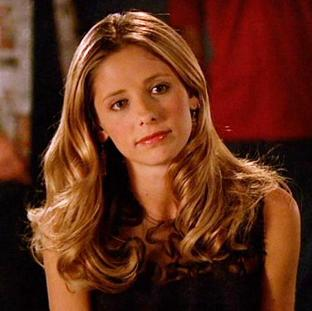
Postmortem: Buffy the Vampire Slayer

I had heard good things about Buffy. I knew it was created by Joss Whedon, the same guy who did Firefly and The Avengers, both of which I loved. And I noticed it was on Netflix. So I asked my wife – want to give it a whirl?

Sure, why not. Goofy title, strange premise, but we like weird stuff. Could be okay.

Then we blinked, and somehow, months had passed. We emerged dizzy and dazed from the living room. We had binge-watched all seven seasons. 144 episodes. Zero regrets.

Simply put, Buffy the Vampire Slayer is one of the greatest shows I’ve ever seen.

Saying that Buffy is about vampires and demons is like saying that Star Trek is about technology and aliens. It’s technically true, but it completely misses the point. The monsters in Buffy are lenses for exploring humanity. And explore it does.

How do I love this show? Let me count the ways:

  • It’s funny. No, I mean really funny. It’s got puns. (“We thought you were a myth!” “Well, you were myth-taken.”) It’s got British snark. (“Look at her shoes. If a fashion magazine told her to, she’d wear cats strapped to her feet.”) It’s got sarcasm – lots and lots of sarcasm. Buffy is funnier than most shows that describe themselves as “comedy.”
  • It has great characters. This is the heart of the show. How the writers convinced me to care this much about a group of fictional people, I really don’t know, but it worked. Which leads to my next point…
  • It will rip your heart out. Buffy deals with sacrifice. Depression. Unrequited love. Growing up. Betrayal. And death: not the comic book kind, but real, honest, brutal, unflinching death. There are times Buffy is genuinely hard to watch, in the best possible way.
  • It has great dialogue. Well, great writing in general, actually. But I guess I’ve sorta implied that already.
  • It has great acting. I’m overusing “great,” I know, but it’s true. Sarah Michelle Gellar (Buffy) and James Marsters (Spike) are real standouts in this department, though the entire cast is good. Some of my favorite scenes in the series don’t even have any dialogue – their faces say it all.
  • Rocket launcher. Why? Because they can.

Okay, you get the picture. Brian and Buffy, sitting in a tree, etc. So what are my criticisms?

  • The first season is a little rough. Low budget, cheesy effects, slow pace, and the writing hadn’t really hit its stride yet. Only twelve episodes, though, and even some of those are quite good.
  • The series finale. Most fans seem to like it. I thought it was extremely disappointing and deeply, deeply stupid. Sad for such a good show to end on a low note.
  • The occasional dud. Among so many quality episodes, the bad ones stand out all the more. “Beer Bad,” “The Killer In Me,” I’m looking at you.
  • Hit-and-miss special effects. And the earlier in the series you are, the more likely it is to be “miss.” Computer-generated graphics in the 90s? Best not to talk about it.

If you want even more analysis, try Critically Touched, which has an in-depth critical review of every single episode and season. Excellent stuff.

I’ve rambled enough. Your turn. Any thoughts?

Wherein Nothing is Actually Said

My brain is empty today. That happens a lot, actually. It’s not that I don’t want to write a blog post (or start a conversation, or write a story). It’s just that there’s nothing going on upstairs. And not for lack of trying. I’ve probably been sitting here for twenty minutes struggling to come up with an idea.

It’s snowing like crazy outside. Autumn, autumn, autumn, then BOOM, it’s winter. I suppose I could write something about that, but what? “Hey, look at that snow. That is some snow out there, I tell you what.” See? I’ve now exhausted the full extent of my analysis RE: the snow.

Now I’m writing about having nothing to write about and I still can’t think of anything. We are scraping the bottom of the barrel. Metaphorically speaking.

I don’t have any barrels.

So.

Um.

Let’s try this again tomorrow, shall we?