Monthly Archives: July 2013

Sleepless in Ohio

I’m not as rushed or tired as I was yesterday, but I still didn’t get a full night’s sleep. That seems to be happening more lately.

Sometimes (okay, a lot of times) I get to bed late because I’m working on stuff, or else just browsing the Internet, trying to put off tomorrow a little longer. But even when I do get to bed on time, I have trouble sleeping.

I’ll lie awake for an hour. Or I’ll fall asleep okay, then wake up at 3 AM and stay awake. Eventually I’ll give up, go downstairs, and do something till I get tired. If I’m especially ambitious, I’ll write tomorrow’s blog post.

This morning, my alarm was set for 5:00. I was downstairs by 4:30, and awake by 4.

Two reasons for this, I think.

First, I’m one of those rare and hideous creatures: a Morning Person. I’m most productive when I first wake up, even if I’m tired. I like my sunrise coffee, and it likes me. So if I do wake up at 3 AM, I have trouble convincing my brain that it’s Late Night Sleep Time and not Early Morning Go Time.

(I’m imagining Betsy reading this and shaking her head. She suffers from no such ailment.)

The second reason is that I think a lot.

Not necessarily smart thoughts or deep thoughts, but a lot of thoughts. I think about plans for FourthCon, or the anime I just started watching, or blog ideas, or story ideas, or…

I can’t always switch it off. I don’t always want to. I’m a schemer.

Still, it would nice to get a little more rest sometimes.

Do you ever have trouble sleeping? What do you recommend?

What Are You Working On?

I was up till midnight working on Restore The Fourth stuff, then woke up this morning at 5:30. Maybe some of y’all only need five and a half hours of sleep, but I’m still groggy. And I need to leave for work in six minutes.

You tell me: what are you working on these days? Personal projects, home renovations, new website? Reading or watching anything interesting? Leave it in the comments! Feel free to shamelessly self-promote, and leave a link if you want. (But if you leave two links in a single comment, WordPress will auto-flag it as spam, so stick to just one.)

And, go!

Author Interview: Ben Trube

FractalBookCover14

Today I have the privilege of interviewing my old friend and fellow blogger, Ben Trube. Ben likes fractals even more than I do, and he’s turned himself into quite the expert lately. His new book Fractals: A Programmer’s Approach is available right here for just $4.99.

BUY MY BOOK SO I CAN AFFORD A HAIRCUT

BUY MY BOOK SO I CAN AFFORD A HAIRCUT

Come along with me as we venture into his brain. Tread lightly, don’t touch anything, and don’t step in the cerebellum. He, uh, needs that to live.

A sales pitch for your book in six words or less. GO!

“Fractals for a new generation!” or “Fractal fun for everyone!”

You obviously have a deep love for fractals. What is it about them, exactly, that you find so appealing?

My mom’s a painter, and I’ve always had a bit of an artistic streak. Fractals allow me to express that streak in a medium that I’m very comfortable with. I’m also fascinated how the chaotic process of some fractals can give rise to order, and vice versa. And constructing certain fractals provides an interesting programming challenge, and I’m always looking for new challenges.

A lot of your past work has been fictional. How was the process different for writing long-form nonfiction? How was it the same?

Non-fiction work requires a lot more time doing things that are not writing. The fractal book in particular required research, design of programs, creation of figures, and of course generating the hundreds of included fractal images. There were fewer changes in structure than some of my fiction projects, which also allowed for longer drafting sessions. The main constant between both kinds of writing is music, which always helps my mood and the tone of my work.

How much does your beard weigh?

My beard is an unbounded infinite set. Thus it cannot be precisely defined.

As you well know, there’s no shortage of fractal books in the world already. What makes your book different than the rest?

Rather than do a broad overview of dozens of fractal topics, this book takes a deep look at six. I try to “show my work” both in the way the programs are constructed, and in the way the math is explained. The fractal books that have been the most helpful to me have emphasized the math less, and the logic of programming more, and that’s the legacy I try to continue.

The book also places a heavy emphasis on the artistic aspects of fractals, with both practical methods for creating image files, and coloring fractals, but also with an extensive gallery of images. And this book is one of the few available electronically, and you won’t find one as useful for this price (unless you speak Spanish).

What’s something interesting that you learned about fractals from writing this book?

I learned a lot more about affine transformations (Chapter 2) than I understood previously. Basically this is determining equations to simulate objects like trees and leaves, or more imaginative objects like seashells and fireworks. The trick to these seems to be lots of little adjustments and even more luck. After 80 attempts I got something that passably looked like a leaf from my backyard.

What is your wife’s pet nickname for your beard?

That does not happen to be one of the parts of my body she’s named.

What advice would you give to other authors thinking about self-publishing an eBook?

Self-publish a book because you want to, not because you’re afraid a publisher won’t pick you up. And don’t give anybody a reason to think that publisher would reject you. Edit the book well, and format it better. Avoid the self-published look. It will NEVER be perfect, but it can be professional.

What aspect of this book are you most proud of?

Well for starters finishing and publishing it. I am also quite pleased that a number of the fractal coordinates and images portrayed are unique to this book. Chapters 2 and 4 are probably my favorites, but it was also nice to explore all of the different ways to draw the Julia Set in Chapter 6, and revisit the Chaos Game in Chapter 1.

Now that the fractal book is done, what’s next for Ben Trube?

My next project is a noir/technological mystery called Surreality. We’re going to be working on it for the next few months with a planned release sometime at the end of 2013 or early 2014. I imagine there will also be some work on redrafting my latest novel Dark Matter as well, and of course a lot of interesting things are going on over at [BTW] Ben Trube, Writer including another short story serial.

Your name is an anagram of “Jabber In Me Nut.” How does that make you feel?

I’m not sure, but for some reason I believe the proper way to say that is with a cockney accent.
Fractal

Thank you, Mr. Trube, for enduring this humiliation with good grace. Hypothetical readers: the book is available here. You can also read Ben’s incoherent ramblings thoughtful insights every day on his blog, 100% free.

Oh, and if you want to suggest nicknames for his beard, you can do that in the comments! Personally I suggest “Chewbaccimus Maximus,” but that’s just me?

Friday Link

Stout

The fourteen geekiest beers on the planet. Enjoy.

Have a great weekend. See you Monday!

Yesterday’s House Vote, and What Comes Next

Restore the Fourth Cleveland's avatarRestore the Fourth Cleveland

OhioVote

Yesterday the U.S. House of Representatives voted on the Amash Amendment, which would have halted the NSA’s vast and unconstitutional program of phone record collection.

The amendment failed. And, of course, even if it had passed – and gotten Senate support too – the President would have vetoed it.

However.

The vote was much closer than expected: 205-217. If just seven more Congressmen had supported this bill, it would have passed. That’s remarkable.

Also remarkable is the incredibly bipartisan nature of the vote. 111 Democrats and 94 Republicans voted yes. One surprising “yes” vote was Representative F. James Sensenbrenner Jr., who co-authored the original PATRIOT Act. He says the law was never intended to give the NSA so much power.

Most remarkable of all was the deluge of public support, your support, for the bill. According to this New York Times article:

…a web of privacy activists, libertarian conservatives and…

View original post 132 more words

Like Shrapnel in the Brain

I did the spelling bee thing as a kid. I was good, too. Seventh and eighth grade I made it to the National Spelling Bee in Washington, D.C. I was on ESPN and everything.

It’s been a long time. I don’t remember much of the sightseeing or the newspaper interviews. I’ve forgotten most of the words I spelled.

One thing I do remember clearly, fourteen years later, is getting yelled at by a Bee official for running around at some party, chasing another kid as part of whatever game we were playing.

Isn’t it weird what sticks in your brain?

I’ve done a lot of reading on psychology. Apparently, the memories that get saved long-term are the ones tied to emotions. The stronger the emotion, the clearer the memory. (I’m sure it’s more complicated than that, but then, psychology always is.)

You see, I was one of those kids who always had a fragile ego. I needed to be told I was good. I needed to get good grades, to win awards. I wilted under criticism. Something I still struggle with today.

So getting yelled at – by an adult, no less – was emotional. It stuck in my brain like shrapnel. The homunculus upstairs decided this moment, this memory, must be preserved inside me for all time. I expect it’ll be there when I die.

In theory, this “strong feelings” system of memory storage makes sense. If something causes you to feel really good or really bad, that’s probably worth remembering, so you can seek/avoid it next time.

In practice, though, especially if you’re an anxious sort of person, you end up with a personal catalog of your own awkwardness and minor failings. Thanks, brain.

I have a lot of good memories too, of course. From the spelling bees, and from life. I’m not totally neurotic, thank you very much.

Still, it’s a strange thing, isn’t it?

What pieces of memory are still lodged in your skull, years or decades later?

Pumpkin Heads

PumpkinBrian

PumpkinBetsy

PumpkinPat

Me, my wife, and my best friend, having undergone radical cranio-pumpkin transplant surgery. I regret nothing.

Halloween 2011.

The Turnaround

Occasionally at work I’ll see somebody walking down a hall, a sidewalk, whatever, and then suddenly – for no visible reason – they’ll stop, turn around, and start walking the other way.

I can think of two causes for this curious phenomenon. First, they realized they forgot something and have to go back for it. Or second, they’re lost, and just noticed they’re going the wrong way. I’ve done both these things myself.

I find these turnarounds fascinating.

All throughout life, but especially in the business world, we try to project the image that we’ve got it together. Somebody may want nothing more than to curl up under their desk and cry, or be seething with fury, or feel utterly confused about what they’re working on, but they still act like everything’s cool. That’s part of being a professional. Hell, it’s part of being an adult.

As a side effect, though, we find ourselves surrounded by people who seem calm, cool, and collected. The only insecurities we see are our own. So it’s easy to be fooled into thinking nobody else has them.

The turnaround is a rare exception. It’s an unambiguous sign of confusion. There’s simply no way, if you turn around mid-stride, to act like you’ve got it all figured out.

So if it happens to someone else, it’s a pleasant reminder that we’re all just human, game faces notwithstanding.

And when it happens to me, it’s a little voice that says: “Don’t take yourself so seriously! We’re just a bunch of hairless monkeys, after all.”

Friday Links

fractal

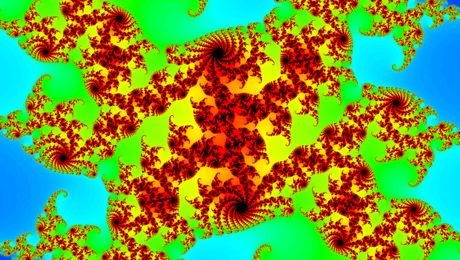
Fellow blogger, co-revolutionary, and all-around gentleman of quality Ben Trube has released his latest book! Fractals: A Programmer’s Approach can be yours for the low price of $4.99. And for a measly extra dollar, you’ll get a deluge of bonus content, including a vast gallery of gorgeous fractal pics like the one above.

Author interview forthcoming. RESPECT THE TRUBE

rt4c

The official blog of Restore The Fourth Cleveland – written and created by yours truly – is now live! My posting schedule there is the same as it is here: every weekday, rain or shine. Can one man juggle two daily blogs whilst retaining the affections of his wife?! WE SHALL SEE

xkcd

xkcd mastermind Randall Munroe answers two reader questions in exquisite detail: what would happen if we drained Earth’s oceans, and what would happen if we dumped all that water on Mars? The Martian island maps he creates are fascinating.

beetle

Questionable Content isn’t afraid to ask the tough questions, like: how many of your friends are secretly beetles?

2gag

Webcomic Two Guys and Guy will help aspiring writers find exactly the right word. (Their servers seem a little flaky today, so you may have to hit refresh.)

rock

Finally, this headline from The Onion: “Rock Apparently Factors Into Girlfriend’s Shower Routine.”

These are all the things I know. I don’t know any more things! See you Monday, and have a splendiferous weekend.

Winning Arguments and Losing the Truth

Listen carefully to an argument sometime.

It’s personal. Even the slightest disagreement (what’s the quickest way to get downtown?) is subtly transformed from a search for truth into a battle for being right, with the satisfaction and recognition that entails. It’s a social contest. We’re hard-wired for it. We want to win.

I’d like to propose the Argument Fallacy: the notion that winning an argument makes your position true.

Nobody would claim they think this way, of course. It’s absurd when you spell it out. We all know you can “win” an argument and still be wrong.

But we act like this fallacy is true. We judge the accuracy of our beliefs by how many battles they survive.

Not everyone does this to the same degree, but the tendency is always there. And you can’t fight the bias till you know it exists.

Arguments and debates can guide us to the truth, if we let them. An exchange of ideas, exposure to criticism, new perspectives, these are all excellent and vital things. We need arguments to challenge our ideas.

But winning an argument doesn’t make you right.

Maybe the person who lost simply isn’t as persuasive, as articulate, as quick on their feet. Maybe they don’t have all the information needed to defend their position. Maybe they just don’t care about winning the argument.

None of this has any bearing on the underlying truth. In the heat of discussion, that’s easy to forget. But remembering it will make us wiser.

What about you? Have you seen people seduced by the Argument Fallacy?