Monthly Archives: November 2013

Postmortem: Walden

walden

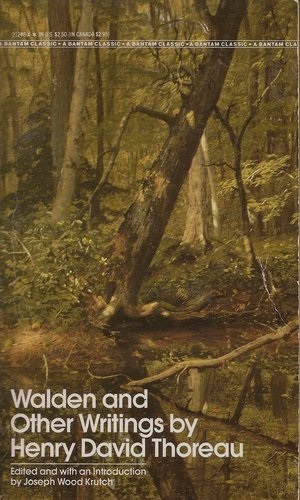
Around 1845, Henry David Thoreau went into the woods and built a small house for himself by Walden Pond (Concord, Massachusetts). He lived simply, frugally, and mostly alone, and then he wrote a book about it. His publisher having rejected Ramblings of a Bitter Man Beside a Pond, he settled on the title of Walden.

I’m very torn about this book.

It’s littered with many profound insights…scattered among long chapters of interminable boredom. It contains deep wisdom…if you can pick it out from the vast sea of his crotchety blathering. It seems to me that a misanthrope wrote a book about the essential goodness of humanity, and Walden is what we got.

The quotes I’ve scattered throughout this post were among my favorite parts of the book. They should give you a flavor of the good bits. I’ll spare you the longer, more soporific sections.

Why level downward to our dullest perception always, and praise that as common sense? The commonest sense is the sense of men asleep, which they express by snoring.

Let’s get to specifics.

First, I should be clear that Walden was and is an important book, the work of a gifted mind, the kind of book that rewards the reader for his time. I say this because I’m about to criticize it a lot, and I don’t want you to think that I don’t respect it. I do. It’s just that it also makes me very angry.

Many of the phenomena of Winter are suggestive of an inexpressible tenderness and fragile delicacy. We are accustomed to hear this king described as a rude and boisterous tyrant; but with the gentleness of a lover he adorns the tresses of Summer.

Walden is known for expressing a love of nature, of self-reliance, of economy, of the insight that can spring from silence and solitude. I’m 100% on board with all that, and it’s that sympathy with the core ideals which got me through the more difficult parts.

But Thoreau also (in my opinion) lets these ideas run away with him, which leads him to start spouting a lot of bullshit.

For instance, he says that he doesn’t read the newspaper, and he makes it clear that the trivial deeds of his fellow men are far less interesting than the comings and goings of the squirrels outside his house. Now, don’t get me wrong, I agree with this feeling, this idea that much of what we worry about is trivial, that nature is beautiful and too often unnoticed. But there’s also a great deal in the newspaper that does matter, because it can lead to joy or suffering for a lot of people. And if you stop caring about that, then in my opinion, you have left the path of real philosophy.

Yet some can be patriotic who have no self-respect, and sacrifice the greater to the less. They love the soil which makes their graves, but have no sympathy with the spirit which may still animate their clay.

Thoreau seems to give in to his romantic side too often. I don’t mean romantic love – I believe he got through the whole book without recognizing such a thing exists – but rather, he lets his feelings guide him too much. He romanticizes the idea of hunting animals, going on about the harmony of man with nature, the nobility of the circle of life. I hate stuff like this, because he says it having experienced only the good side of the aforementioned circle: hunting and eating animals. One wonders how much nobility he would find in being devoured by wolves himself, or in watching them eat his sister.

The light which puts out our eyes is darkness to us. Only that day dawns to which we are awake. There is more day to dawn. The sun is but a morning star.

It’s the same in his section about charity. He’s lukewarm on the idea of charity, preferring the ideal of self-reliance. Again, I’m all for self-reliance when it’s possible, but he seems to have no concept that sometimes, some people simply need help. So here we have a well-off white man in the era of slavery explaining that we shouldn’t trouble ourselves in the affairs of the world or try too hard to give to those in need. You’ll excuse me if I detect a whiff of hypocrisy there.

Standing on the snow-covered plain, as if in a pasture amid the hills, I cut my way first through a foot of snow, and then a foot of ice, and open a window under my feet, where kneeling to drink, I look down into the quiet parlor of the fishes, pervaded by a softened light as through a window of ground glass, with its bright sanded floor the same as in summer; there a perennial waveless serenity reigns as in the amber twilight sky, corresponding to the cool and even temperament of the inhabitants. Heaven is under our feet as well as over our heads.

I could go on, but I’ve rambled long enough already. In between the parts that put me to sleep and the parts that made me want to throw the book across the room, Walden was really quite beautiful – as the quotes indicate.

Read it if you can.
Vacation Day

durer

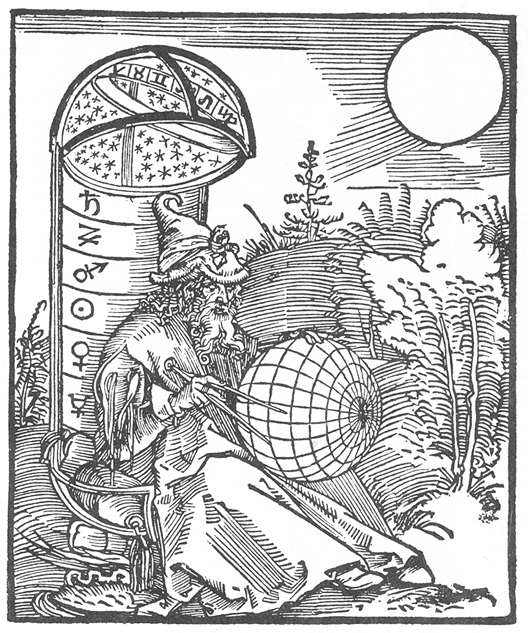
Excuse me while I ponder. Back tomorrow.

I Want to go to Siberia

baikal

It’s true. I want to go to Siberia.

Not, like, enemy-of-Stalin style. I like cold weather, but not that much. No, I want to go as a tourist, and I have a destination in mind.

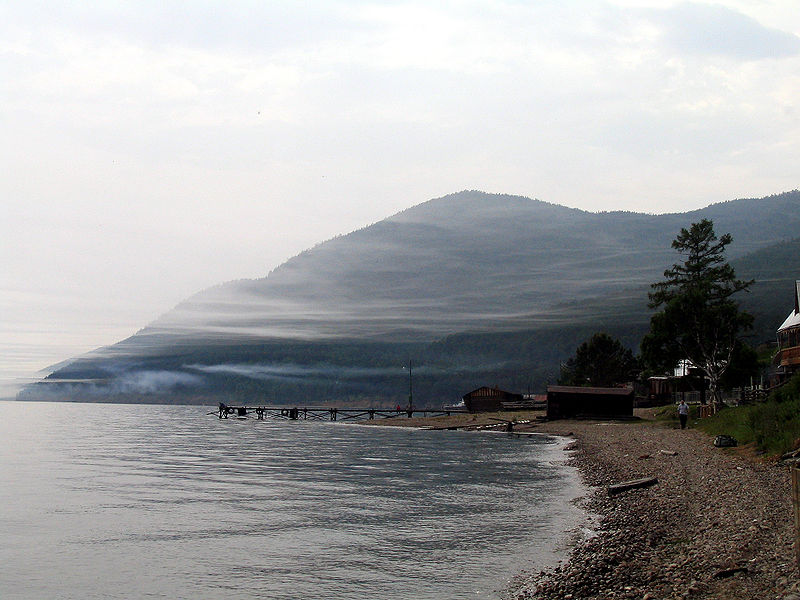
Lake Baikal.

You can be forgiven if you’ve never heard of this place, so let me introduce you. Lake Baikal is the oldest, deepest, and largest freshwater lake in the world.

I’ll break it down.

  • Oldest – Lake Baikal was formed 25-30 million years ago. To put that in perspective, 25 million years ago, South America was still full of nine-foot-tall Terror Birds. You think I’m kidding, but I’m not.
  • Largest – For sheer amount of fresh water, nothing competes. Check this out: you round up every drop of fresh water on the Earth’s surface, put it all in a big tank. One in every five of those drops is from Lake Baikal.
  • Deepest – We’re talking over a mile deep. Let’s put that in perspective. You get the best athletes on the planet and create some kind of physics-defying vertical track, and have them run top-speed from the surface to the bottom…and it’s four minutes before they get there. Dayumn.

Of course I could tell you all kinds of other things. Like, that Lake Baikal contains an island where shamans live, big enough to have lakes of its own…that it has fish that give birth to live young…that it’s home to its the only exclusively freshwater seal in existence, found nowhere else in the world…that in fact, 80% of the animals there live nowhere else in the world…that the ice in winter is so thick, they once drove a train over it.

But I wouldn’t want you to get bored. And I wouldn’t want to distract you from buying your tickets to Siberia!

Okay, I admit, I am a crazy person. But my enthusiasm for this place is real, and a visit there is actually on my bucket list.

Where would you like to go?

Friday Links

eff

In the battle against NSA hypersurveillance, we’ve found a new weapon.

Despite its insipid name, the “USA Freedom Act” appears to be the best chance so far of stopping our intelligence system’s massive overreach. The Electronic Frontier Foundation has an excellent analysis of the bill, which would stop the call records program and vastly increase transparency, among other things.

It’s supported by a broad coalition of supporters, including the EFF itself, the ACLU, Mozilla, Google, Apple, Microsoft, Facebook, Yahoo!, and many others.

But it still needs your voice.

Please call your representatives today, as I plan to, and ask them to support this bill.

pvp

Meanwhile, PVP has their own suggestions on how to handle the NSA.

Onion

And of course, the Onion has its own take on the issue.

Finally, I’m happy to announce that Mr. Benjamin Trube has accepted my challenge. I’ve added a word count meter on the right side of the blog, the same as his, so you can track our competition. Let the best man win! *cough* It’s me *cough*

The First Photograph

first photo

This is it: the oldest surviving photograph in the world.

It was taken by the delightfully alliterative Nicéphore Niépce in 1826, in the Burgundy region of France. It’s called View from the Window at Le Gras. The exposure time is believed to have been hours, or even days.

Cool, huh?

Bring It, Trube!

Dear Mr. Benjamin Trube, Esq., &c:

WHEREAS we are lifelong Friends, and gentlemen of impeccable Learning and unimpeachable moral Character;

WHEREAS were are engaged separately in the selfsame pursuit, namely, the creation of Literature;

WHEREAS we have both advertised our progress on our Web Journals of late, you having completed 13,242 words on the third draft of your novel Surreality, and I having completed 19,378 words on the second draft of my novel The Crane Girl;

WHEREAS we are both lazy Bums who desperately need a kick in the Pants;

THEREFORE BE IT RESOLVED that we shall pursue a Contest, wherein the first of us to achieve the goal of 80,000 words on his current draft, shall receive a Book of his choosing from Half Price Books, at the expense of the other, cost of said volume not to exceed a reasonable Amount. The winner shall furthermore have bragging rights for a period not to exceed three (3) days.

It might be objected, that I have an unreasonable advantage, possessing a head start. Likewise, it might be objected that our tasks differ; for whereas you are revising a complete draft, I am writing all-new material now (my first draft having comprised only a small portion of the to-be-completed story).

However, these two objections would seem perhaps to cancel each other out, or at least to give neither party a clear advantage; and even if one party were indeed advantaged, the other may surely overcome on account of Will and Determination; and anyway, it is all in the name of Writing.

What say you, sir? Shall we duel?!

Sincerely,

Brian D. Buckley

EDIT: Challenge accepted.

Exclaves!

Map courtesy of Google.

Map courtesy of Google.

So here’s the deal. There’s a little piece of Russia between Poland and Lithuania. The area is known as Kaliningrad Oblast. It’s not a “territory,” or a “special administrative region,” or a “protectorate.” It’s straight-up, 100% legit, a full-fledged part of Russia.

It’s just not, you know, attached.

Little bits of extra territory like this – not islands, but pieces of land hanging out with other countries – are called exclaves. And they’re hardly unique to Russia.

Spain has a town inside of France that’s “separated from the rest of Spain by a corridor about 1.6 km (1.0 mile) wide.” (Thanks, Wiki.) And at the risk of sounding obscene, there’s a little bit of Italy in Switzerland.

Why am I fascinated by exclaves?

There’s something so oddly casual about them. It’s like Russia – already the largest country in the world – managed to slip one by on the map-makers when they weren’t looking. “Hey, it’s no big deal, don’t worry about it. Poland and Lithuania, they’re totally cool. It’s just a million Russians hangin’ out with our western brothers and sisters. Forget about it.”

And I’m not the only one who’s raised an eyebrow on discovering this little easter egg on their world map. This drawing sums up my feelings perfectly.

But lest I be accused of showing unfairness toward the Russians (hi, Vlad!) I should point out that the United States has an exclave of its own. No, I mean besides Alaska.

Take a minute to read about the Northwest Angle, a chunk of Minnesota (1,500 square kilometers, population: 120) just chillin’ above the 49th parallel. She and Canada, they’re having a fine time up there.

But hey, listen, it’s totally cool. Really. Don’t worry about it.

Can’t Talk, Writing

I found a sweet new way to revise. I used to copy my old draft to a new file and make changes there. Now I split my screen, put the old draft on the left, and write a new copy on the right, starting with a blank file. Granted, “write a new copy” is just copy & paste for the parts where I’m satisfied with the old version, so functionally it works out to the same thing. But it feels different, and I’m lovin’ it.

The first sentence of my new draft is:

The Lady Rana Serago sat twelve years alone in a deep dungeon.

Thoughts? Suggestions?

Comparisons with your own revision process?

Anyway, leave me a comment and I’ll read it in a few hours. Too busy writing at the moment. 🙂

Friday Link

Capture

“Horrific FLESH-EATING PLATYPUS once terrorised Australia! Aboriginal tale says chimaera was result of non-consensual rat/duck tryst.”

Sometimes, the headline says it all.

Go Time

Goban

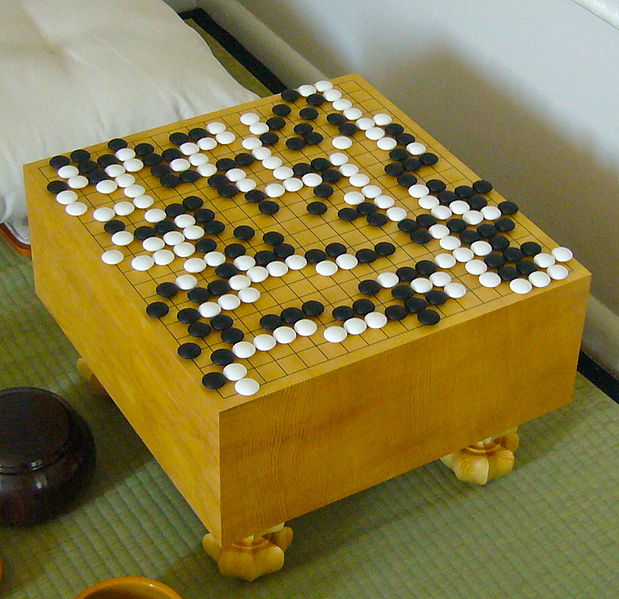
My all-time favorite game is called Go.

Go is a strategy game. Two players take turns making moves on the board. It originated in China around 2,500 years ago, which makes Go quite possibly the oldest game in the world still played in its original form. Coincidentally, it was invented around the same time as Buddhism, although in a different place (Buddhism was in India).

The closest Western equivalent to Go would be chess, but they’re not really all that similar. For starters, as you can see, the board is a lot bigger (although smaller versions exist to allow for quicker games). Also, instead of moving pieces around, you start with an empty board and take turns placing pieces. Once placed, a stone doesn’t move, unless it’s removed by capture. It’s all about territory, about making good shape and surrounding your opponent.

If chess is a battle, Go is a war.

Go is the reification of the phrase “easy to learn, hard to master.” The rules are profoundly simple and can be picked up in a matter of minutes, but learning to win takes a lifetime. In my opinion, there’s a primal elegance to Go, as if someone had taken the pristine beauty of logic and converted it directly into a game.

As you can tell, I’ve fallen in love.

I discovered Go in high school and played it with my friend Pat. Since then, I’ve rekindled my interest sporadically, usually for a few weeks or months at a time. The problem has always been finding opponents – there just aren’t that many people in my part of the country who are very excited about Go. (Yeah, you can play online, and I have, but it’s not quite the same.)

But just last week, two of my friends got back into the game as well, and we’ve started up a weekly, very informal, three-player “tournament.” We’re all about the same strength, so we learn from each other (and mock each other) constantly. It’s a hell of a lot of fun. It’s forcing me to improve quickly, because if I don’t practice, how am I going to dominate next week?

Life is good.

By the way, if you’re interested in learning more, you’ll find that googling “Go” isn’t the best way to find results. The Korean term is “baduk,” and searching for that is generally more effective. You can also start at the Beginner’s Page of Sensei’s Library, a dedicated Go wiki.

What’s your favorite game?