Monthly Archives: November 2013

Wednesday Haiku

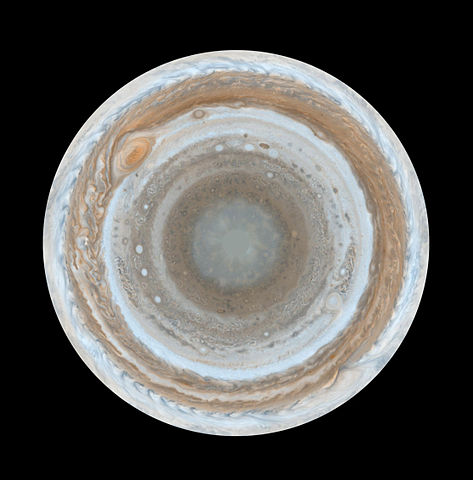
Planets all are eyes.
The universe watches you.
Return the favor!

The Proust Questionnaire

Here’s something I found just yesterday. Apparently in late 19th-century France, there was a survey that was supposed to reveal your true nature. (Hey, people had to do something before Facebook.) Marcel Proust didn’t invent the survey, but he did take it, so it bears his name today.

It seems that several different versions of the survey existed, but roughly speaking, the questions were:

  • What do you consider your greatest achievement?
  • What is your idea of perfect happiness?
  • What is your current state of mind?
  • What is your favorite occupation?
  • What is your most treasured possession?
  • What or who is the greatest love of your life?
  • What is your favorite journey?
  • What is your most marked characteristic?
  • When and where were you the happiest?
  • What is it that you most dislike?
  • What is your greatest fear?
  • What is your greatest extravagance?
  • Which living person do you most despise?
  • What is your greatest regret?
  • Which talent would you most like to have?
  • Where would you like to live?
  • What do you regard as the lowest depth of misery?
  • What is the quality you most like in a man?
  • What is the quality you most like in a woman?
  • What is the trait you most deplore in yourself?
  • What is the trait you most deplore in others?
  • What do you most value in your friends?
  • Who is your favorite hero of fiction?
  • Who are your heroes in real life?
  • Which living person do you most admire?
  • What do you consider the most overrated virtue?
  • On what occasions do you lie?
  • Which words or phrases do you most overuse?
  • If you could change one thing about yourself, what would it be?
  • What are your favorite names?
  • How would you like to die?
  • If you were to die and come back as a person or thing, what do you think it would be?
  • What is your motto?

I’m using these questions for character interviews as I’m working on The Crane Girl. I’ve been impressed with how well they work. I’ve tried the questions for two of my main characters so far, and I understood them both far better afterward.

Creating strong, deep characters has always been my biggest weakness as a writer, so this is an especially valuable tool for me. I’m going to use it for my other major characters as I continue.

By the way, I’ve found it useful to “talk” to my character and find out their life stories first, before launching into more personal questions like the ones above. (Where were you born? What were your parents like? Did you go to school? What was your relationship with your teachers? Etc.) That way, I have some context for the questionnaire, rather than inventing answers in a vacuum.

Of course, every writer’s process is completely different. I need tools like character interviews because I struggle with character-writing, but for those who write characters naturally, this would probably be overkill.

For me, it’s plot that seems to come naturally. I don’t use any special tools there (aside from an outline), and I haven’t needed to. No doubt there are tools to help with plot as well, but I haven’t worked with them much yet.

Do you use any special tools in your writing or pre-writing? Or does it all just come out naturally?

Postmortem: Avatar

In general, when someone describes a movie or show as “fun for the whole family,” they are lying. You’re lucky to get “fun for children and boring for adults.” If you’re unlucky, you get “fun for nobody.”

Rare exceptions do exist: movies like The Lion King or Beauty and the Beast or Toy Story. Kids’ stories where your appreciation only deepens as an adult.

On such story is the three-season cartoon Avatar: The Last Airbender, which I finished recently. (Note: do not confuse with James Cameron’s Avatar or M. Night Shyamalan’s horrific The Last Airbender. The former is unrelated, and we like to pretend the latter never happened.)

The world of Avatar: The Last Airbender features the four ancient elements: Earth, Air, Fire, and Water. (Evidently molybdenum hadn’t been discovered yet.) For each element, there are people who can “bend” it. Earthbenders can send rocks flying through the air, firebenders can breathe flame, and so on.

The Avatar, a child named Aang, is the only one who can bend all four elements. The story of A:tLA centers on Aang and his friends as they defend the world from a power-hungry Fire Nation bent on conquering everyone.

It’s a cool idea, but as any writer knows, the idea is the easy part. The challenge is in the execution. Fortunately, that’s just where Avatar shines.

Like Babylon 5, another of my favorite shows, Avatar was conceived with a fixed arc from the beginning. The writers had a story to tell, and it had a definite start, middle, and end. This shows in the tightness of the plot, which moves along briskly and brims with foreshadowing.

The world-building is no less impressive. Each of the four elemental nations is based on a real-world culture. The Water Tribe, for instance, is modeled on the Inuit of North America. The Airbenders are reminiscent of Tibetan monks. Much of the world is based on Eastern philosophy, fashion, or lifestyle in one way or another.

But the characters are the heart of the show. Aang himself is a bundle of paradoxes: a ten-thousand-year-old child, a humble demigod, fun-loving but occasionally grim as death, the most kick-ass pacifist you’ll ever meet. Meanwhile a Water Tribe boy named Sokka, a non-bender, offers comic relief that’s actually funny while still being a believable character. Prince Zuko of the Fire Nation is as brooding and whiny as Hamlet, while his tea-loving uncle Iroh is simply one of the best characters in any show, ever.

And then there’s Katara.

She’s the girl waterbending in the picture above. Katara is an excellent character – strong, compassionate, decisive, vulnerable, fascinating. She’s a rare example of a female character done right, and in a kids’ show, no less. Too often, women and girls in media fall into one of two categories: passive love interest for the hero (like Padme in Episode III) or sexy kickass uberhero (like Black Widow in Avengers). Katara, amazingly, is a woman who is also a genuine human being. She has friends, but a mind of her own; she’s in love, but that’s not her defining trait; she’s strong, but she’s weak sometimes too.

I’ve written before that Star Wars, although I love it, is sexist. Avatar: The Last Airbender is not sexist, and that’s remarkable in itself. It doesn’t (usually) beat you over the head with its feminism. It’s simply an excellent show that happens not to be gender-biased. It’s one of the best things I’ve ever seen on TV.

Don’t get me wrong, it’s still a kids’ show. It’s still goofy and colorful, so don’t go expecting Breaking Bad.

But when I have kids, I can’t wait to show them Avatar. And I can’t wait to sit down and watch it right beside them.

Friday Link

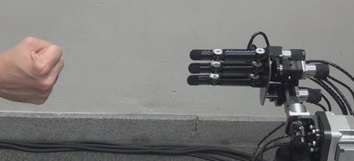
rps

The Singularity has arrived! Or at least, a robotic hand that can beat you at Rock, Paper, Scissors every time. Next up: THE SINGULARITY!

Turning Whovian

I’ve seen a total of three and a half Dr. Who episodes in my life. This is entirely the fault of my friend Paul, who’s been following the Doctor for as long as I’ve known him.

First was the one where everybody has gas masks stuck on their faces. Second was the Van Gogh one. And then last night, I saw “Blink,” the episode that introduced the Weeping Angels.

The gas masks were okay. The Van Gogh one was very good. “Blink” was brilliant.

God help me, I think I may be turning into a Dr. Who fan.

Wikipedia informs me that the list of Whovians includes Her Majesty Queen Elizabeth II, Peter Jackson, George Lucas, Joss Whedon, Patrick Stewart, Neil Gaiman, Stephen King, Jimmy Wales, Matt Groening, Tom Hanks, and Bob Dylan. It’s hard to argue with an invitation to a club like that.

One Dr. Who fan not listed on Wikipedia is my dad. He used to be a Doctor devotee before I was born, and he’s told me several times about the cheesy effects, the cheesy acting, the cheesy dialogue, and the genuine emotion that somehow transcends the cheese factory. Somehow we never did watch an episode together (our focus being more on Star Trek and Babylon 5), but apparently the fascination is genetic.

Anyone else out there dabbled with the Doctor?

Wednesday Haiku

Image source: Luc Viatour / www.Lucnix.beImage found here

Image source: Luc Viatour / www.Lucnix.be
Image found here

Miners delve for gems
Rubies polished, paid for, kept
What does the Earth hoard?

Arachnicide

I don’t kill spiders.

In the kitchen I have a spider-catching kit: a plastic cup and a folded piece of paper. If I find a spider in the house, I herd it into the cup with the paper, then hold the paper over the top so it can’t escape. (Spider Alcatraz!) Then I take the little mofo outside and set it free.

I inherited this quirk from my dad. He’s been a spider-saver all his life. Betsy, on the other hand, comes from a long line of spider-squishers, but she’s learned to accept my weirdness. When she finds a spider, she calls for me, and I catch and release.

Or at least, I try. I’d estimate my success rate around 70%. The fact that I fail to catch 30% of the spiders, and she calls for me anyway, is proof of her undying love.

We also get these nasty centipedes in our house – not the slow little reddish armored ones, but big gray fast ones with long, hair-thin legs. I used to shudder and murder the buggers on sight, but over time I migrated them to catch-and-release status too. I don’t hate them nearly as much anymore, even though some are so big they make a thump when they land on the ground. (I’m not joking.)

I’m very attached to this silly behavior of mine, even though it has no legitimate ethical foundation. I can’t claim it’s wrong to kill bugs, because I kill mosquitoes, bees, and fruit flies all the time. (Not coincidentally, so does my dad.) Besides, every time I mow the grass, legions of six-legged creatures fall prey to my blade. They’re bugs, and bugs die. No sense in getting sentimental. Hell, I even kill the occasional spider when saving it would be especially inconvenient.

Yet a part of me says that spider-saving isn’t entirely worthless. Part of me says that trying not to kill without cause, at any level, is a kind of compassion, and compassion is good for the soul.

Yes, I’m deluding myself. But then, we all have our delusions, don’t we?

Healing the Man and the Machine

I’ve lived with a chronic illness for a little over two years now. Lately it’s gotten worse, which accounts for the missed work days and the missed blog posts.

I can honestly say that the last few weeks have been some of the most difficult in my life. Not quite at the top of the list, but close enough.

Fortunately, I started on a new combination of meds last Tuesday (the seventh such attempt) and for now at least, it seems to be working. I’m in a lot less pain. Work is starting to feel possible again. Hope returns.

By an odd coincidence, my computer had also been getting worse lately. You’d boot up, and it would work for an hour or two, then slow down and lock up completely. I did a lot of rebooting. Finally I gave up on it and switched to using the PC in the family room, which we use more as a Netflix TV than a normal computer. I was sitting on the floor a lot, typing hunched over the keyboard. Not great for your back.

My friend (and local mad genius) Paul suggested extreme measures: reinstall the operating system from scratch. Yesterday I took his advice and embarked on the five-hour voyage of downloading and installing Windows 7.

It seems to have worked. I’m typing this on my old computer again, with no signs of the issues from before.

A healed computer, a healing body. Two things I’m very grateful for. It’s amazing how illness can change you, darken your world, contract the borders of your private universe into a little walled-off circle of pain. It’s amazing how feelings like hope and despair are so connected to getting the right combination of chemicals in the pills you take.

I’m a lucky man.

I don’t know how long this recovery will last. The illness has always been cyclical before, and it could be that I’m just in another temporary upswing. It feels different this time, but maybe it’s not. We’ll see.

In the meantime: I’m glad to be back.