Monthly Archives: November 2015

Transcendence: Security

Each week, we’ll look at another example of what I call a “moment of transcendence” – a scene from a show, a passage from a book, or anything else, that I find soul-piercingly resonant: joyful, sad, awe-inspiring, terrifying, or whatever. These moments are highly subjective, so you may not feel the same way I do, but nevertheless I’ll try to convey why I find the fragment so powerful. I hope we can enjoy it together.


I don’t have too much time this morning (surprise, surprise!) so I won’t get into a lot of analysis. Fortunately, this one’s pretty self-explanatory.

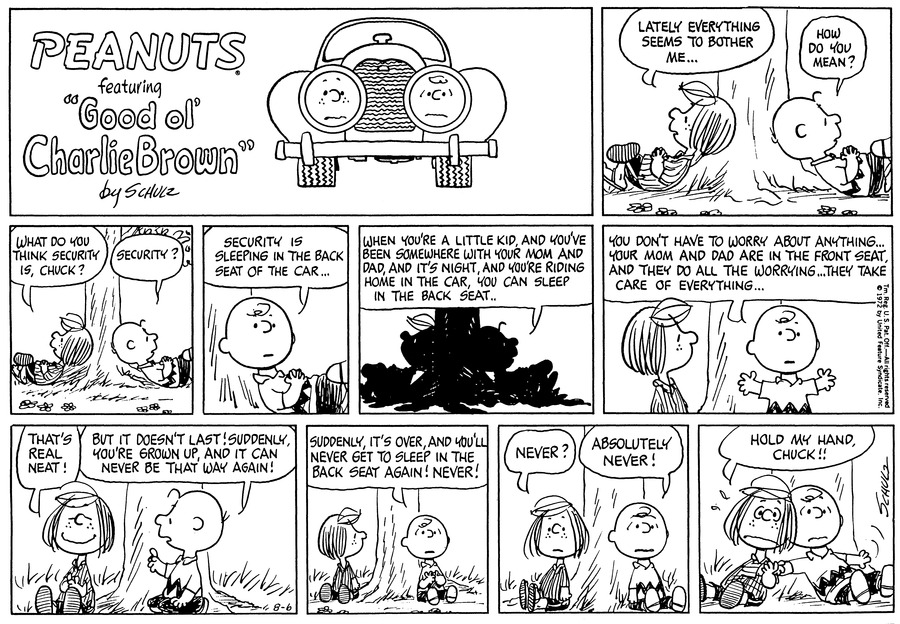
Here’s another of my favorite Peanuts comics, this time from August 6, 1972. Click to enlarge.

Peanuts - Aug 6, 1972

When you’re a kid, you think you’ll turn into this totally confident fearless adult someday. Then you grow up and realize that all those confident adults are still half kids inside.

C’est la vie.

Thanksgiving 2015

My favorite holiday is upon us. No decorations, no cards, no annoying music, nothing you’re expected to lie to kids about. Just get together with the food you like and the people you love, and remember what a sweet deal it is to have food you like and people you love.

Hey, that almost sounds like something you could do even without a holiday.

See you Monday! (Unless I don’t.)

I <3 Whirlpool

Mediocre customer service is so common, and so often complained about, that when a company does something really amazing, I want to run through the streets like Ebenezer Scrooge, casting aside my humbugs and proclaiming the good news to the entire Internet.

Let me tell you a story.

Betsy and I bought a Whirlpool washing machine five years ago when we got the house. It worked perfectly until several weeks ago, when it started having problems that made it basically unusable.

Now, we had never registered the product with Whirlpool. We had never bought a warranty. And it’s not like the product was brand-new anyway. So Whirlpool didn’t really have any obligation to fix this. I called them up, hoping – at best – for some over-the-phone troubleshooting and an estimate for someone to come look at it.

Here’s what happened instead:

  • A woman carefully wrote down all the details of the problem. She also made a point of asking whether anyone had been hurt.
  • She transferred me to someone else and also transferred the details I gave her. It’s astounding how rare that is.
  • The second woman asked a few more things, then scheduled a local appliance company to come inspect the appliance for free.
  • She then gave me her name, told me she was personally responsible for my case, and gave me a phone number to reach her directly. I’m not sure I can remember a single other time that’s ever happened.
  • The inspector came, inspected, and decided it was fixable. She ordered parts for free, and returned a few days later to fix it for free.
  • The washing machine is now working perfectly.

Whirlpool rocks, pass it on.

Friday Links

NPR has portraits of a few of those killed in Paris. A chance to look at the people and not just the numbers. I saved that article days ago, but only now read it carefully enough to notice that the girlfriend of one of the victims shares my last name (Polina Buckley).

I don’t want to end the week on too dark a note, though.

Here’s a great photo of Einstein I just found this morning.

Einstein slippers

Have a good weekend.

Men, Women, and Washing Machines

Our washing machine has been on the fritz, so last week I was on the phone to have someone come and look at it.

Afterward, I was telling Betsy that in spite of all the stuff we say about gender equality, I still assume – if I hear a woman’s voice – that she’s probably going to schedule the inspection, and – if I hear a man’s voice – he’s probably the one who will actually come look at the appliance. Betsy said she assumed the same thing, and we were laughing about that a little.

Not that we think men or women are more or less competent at either job, or “should” have either job; we don’t. But we do make assumptions about which job a man or woman is likely to have.

And these are not unreasonable assumptions, generally speaking, as long as you keep that word probably in there. We all know that many jobs, statistically, skew heavily toward one gender or the other (whether we’d like them to or not). In such cases, you might wish that the odds of a woman having one job vs. another are 50-50. But if you think the odds actually are 50-50, I’m afraid that says less about your ideals and more about your mathematical ability (or lack of it).

So Betsy and I were laughing about how, stereotypes aside, we both knew that the person who came to inspect our washing machine would be a guy.

The appliance guy came yesterday. She was, of course, a woman.

Friday Link

Let the soothing dulcet baritones of Ben Trube wash over you like the autumn tide as he describes how Starbucks has declared a War on Fractals. Remember, keep the “act” in “fractal.”

THIS CONCLUDES OUR MESSAGE

This Actually Happened Today

Our story is set at 6:58 a.m. The characters are my wife and me.

And – action!

Betsy: (standing in hall, wanting to know my opinion on the shoes she’s wearing for work today)

Me: (genuinely thinking about it rather than giving a knee-jerk answer) (being pleased with myself as a husband ) Good! Those look good.

Betsy: They’re different shoes.

Me: (getting on floor and squinting to verify the difference) Yes they are. (pointing) That one.

Betsy: (silently re-evaluates her life decisions)

I tell my clients I am “precise and detail-oriented,” so don’t spread this around.

The Unnecessarily Difficult English Quiz!

QUESTIONS

1. The symbol ¶ indicates a new paragraph. In MS Word, it is also an icon that turns formatting marks on or off. What is this symbol called?

2. Today, “dilemma” refers to any difficult situation. But traditionally, this word had a more precise meaning, which some writers still maintain. What is it?

3. When is it acceptable to end a sentence with a preposition?

4. Does “inflammable” describe something that can be set on fire, or something that can’t?

5. Which is correct?
The man who we met yesterday is secretly a robot.
The man whom we met yesterday is secretly a robot.


INTERMISSION

.

.

.

.

.

.

.

.


ANSWERS

1. The symbol ¶ is called a “pilcrow.”

2. Traditionally, a dilemma was a choice between two bad options (e.g. Sophie’s Choice) rather than just any difficult situation. If you observe this distinction, then the question “How can we raise $5,000 for the Fractal Appreciation Society?” is a predicament, but not necessarily a dilemma.

3. There is nothing bad whatsoever about ending a sentence with a preposition, and there never has been. This has always been a faux “rule” enforced by generations of misguided pedants. Among serious grammarians, this rule has about as much authority as a “No Square Dancing” sign in Austin.

4. In its original meaning, “inflammable” described something that could be set on fire. However, this was very confusing, because the “in-” prefix often means “not” (e.g. “indestructible”). This was especially unfortunate considering the possible consequences of getting those two mixed up. It’s much better to avoid the word altogether and use the unambiguous terms “flammable” and “nonflammable.”

5. According to the rules of formal grammar, the sentence should be:
The man whom we met yesterday is secretly a robot.
“Who” is a subject, and “whom” is an object, very much analogous to “he” and “him.” But although “The man whom we met yesterday” is the subject of the sentence, “whom” is an object within that clause, and that’s what counts.
Of course, this distinction doesn’t really matter, and English is gradually shifting toward using “who” everywhere, which is a good thing.

Also, if you met a man who is secretly a robot, grammar should probably not be the biggest thing on your mind.

How to Make Your Kids Hate You with Tools You Probably Have Around the Home

NPR ran an article today with the peppy headline: As Kids Go Online, New Tools For Parents To Spy.

My, doesn’t that sound promising?

It begins with the breathless revelation, “Before age 1 (ONE!), nearly half of kids play games or watch videos on a mobile device.” This is absolutely shocking to anyone who has not interacted with a baby in the last ten years. Tablets are bright, colorful, and have touch screens; babies like bright colors and touching stuff; and parents like to help their babies interact with the world. The idea that babies are somehow never, ever going to look at electronic rectangles is pretty strange, and if anything, I bet those numbers are low.

(To be clear, I’m not saying it’s good for little kids to be doing this all the time. That’s a whole separate conversation.)

Anyway, the gist of the article is that the Internet is dangerous and shocking and parents need software to block out the bad websites and watch their kids constantly but it turns out that getting that to really work is fairly difficult, and isn’t that sad.

Sigh.

Yes, of course there are things on the Internet that kids need to be protected from. The Internet shares that property with, you know, every other part of life. And yes, software can help with that, especially when they’re young. When I have children, I would indeed prefer that they not have to look at 843 million penises because they accidentally typed “dick” instead of “duck,” especially if said children are only seven years old.

But there’s a difference between taking some basic precautions and using 1984 as a parenting manual. Just listen:

Luma [blocking and spying software] lets you limit access by time of day: During homework time, just allow educational websites. During dinnertime, when there’s dead silence at the table, “you can press a button and it will pause the Internet. The kids have to look up and actually engage with their parents.” […]

Luma also lets you watch your kids and review every site they’ve visited. And that surveillance power is becoming common. Microsoft built Windows 10 to give parents a weekly browsing report. Apps like PhoneSheriff and TeenSafe let you remotely read your child’s call logs and text messages (even deleted texts).

Luma revamps the home Wi-Fi system. Using their smartphones, parents can see every wireless device attempting to use the network, block access and set levels of permission. Little Timmy just gets G-rated websites; Tina gets sites rated PG. […]

“I don’t trust teens. I was one once,” [mother Joy Wilson] says and laughs.

Wilson says she’d like to spy on her kids until they’re 18.

(Emphasis mine.)

Doing this kind of thing to your children is – how can I say it diplomatically? – deeply misguided.

Yes, you could only allow educational sites during homework hours (assuming you’ve structured your kids’ lives to the point that “homework hours” are a thing). Or you could teach them enough self-discipline that they can work even when there are distractions around. Ten points for guessing which is more useful in the long run.

Yes, you could turn off the Internet during dinner to force conversation. Or you could teach your kids to engage with other people to their faces, and to listen when you say “No smartphones at the dinner table.”

Yes, you could try to block out anything objectionable your children will ever see. That way, in the very unlikely event that you’re successful, it’ll all be dumped on them at once as soon as they leave home. Or you could have a conversation – maybe even several! – about what content is out there, what is and isn’t okay, and why, and how they might choose to react. This process could conceivably lead to them someday becoming adults themselves.

And then there’s the spying.

If you have, say, a fourteen-year-old, then tracking every website they visit and reading every text message they send would be (deep breath) a really, really, really, really horrible idea. Let me grab a thesaurus … yeah, atrocious, that’s the word. Here’s why.

Growing up is a process of growing independent, of exploring, of learning what freedom feels like. If you know your parents are always watching, then that feeling of freedom is as dead as Bobby Jindal’s presidential campaign. You never get the chance to make your own mistakes, to practice being an adult before you have to be one for real. You can’t even say what you want to your own friends without having to defend it later. You have to start censoring your own thoughts.

Or rather, that’s what would happen if any of this had the slightest chance of working. Because, as the article itself notes, any kid with a reasonably functioning cerebrum and a minimal desire for independence will find a way around the system.

How, you may ask? Hmm, let’s see. Your kid could:

  • Find holes in the software. Any software flexible enough to let the Internet stay remotely usable, will also have holes, at least until somebody invents a strong AI.
  • Access the Internet from a device you don’t control. There are over ten billion Internet-capable devices in the world, so this won’t be terribly difficult. A friend’s computer, a borrowed tablet, a Kindle Fire they bought for fifty bucks, even a school or library computer with holes in its defenses.
  • Figure out secret codes to use when texting their friends, so you don’t know what they’re talking about.
  • Communicate with their friends via other means, like payphones (for as long as those still exist) or passing notes on physical pieces of paper (for as long as those still exist).

Parents may point out that it’s their house, their rules, and their Internet connection, so they have every right to block or monitor whatever they want. This is true. Likewise, children have every right to resent and despise their parents, and cut them out of their lives as soon as it’s remotely feasible. Neither of these, however, is a good thing. It turns out that lots of things you have the right to do are not good things to do.

One last fun little quote from that article:

Another mom, Frieda Taylor, says spying is her right. “It is good. It should be done,” she says.

Asked until what age, she says without pause, “Until they get married.”

This is such a bizarre comment that answering it in full would take a whole separate blog post. I’ll have to content myself with asking: what if they never get married?

Fortunately, I’m not the only one who thinks Dad doesn’t need to be Big Brother. I was immensely gratified to see that the top comment read, in part:

I can think of very little that would have caused me to hate, despise, and never again talk to my parents than to find that they were monitoring my every move, opening my mail, etc. The teenage years can be rough enough as they are. They don’t need you piling more stress and anxiety.

TALK to your kids. Get them to trust you and TALK to you of their own free will.

(Yes, I’m quoting a comment from a news article. The other six signs of the apocalypse will be arriving shortly.)

Look – there’s a balance between safety and freedom. There’s always a balance. Parents want to protect their kids, and they should. It’s their job. And the dangers are real, online and elsewhere. But some dangers are subtler than others, and a decade of feeling stifled and angry is not what I would call “safe.”

If your kids have the slightest curiosity about porn, they will seek it out, and they will find it, well before they turn eighteen. Short of locking your kids in the basement or brainwashing them Duggar-style, you cannot stop this. Period. What you can do is talk to them about what’s out there, what it means, how they should think about it, and what kinds of decisions they should make about it. Ditto violence, swearing, bigotry, and manipulative advertising.

Your kids are going to grow up, whether you like it or not. You might as well teach them how to deal with that.

I know all this, of course, because of my zero years of child-rearing experience, and the PhD in developmental psychology that I don’t have.

Transcendence: Siege of the North

Each week, we’ll look at another example of what I call a “moment of transcendence” – a scene from a show, a passage from a book, or anything else, that I find soul-piercingly resonant: joyful, sad, awe-inspiring, terrifying, or whatever. These moments are highly subjective, so you may not feel the same way I do, but nevertheless I’ll try to convey why I find the fragment so powerful. I hope we can enjoy it together.


Warning: Major spoilers for Avatar: The Last Airbender.

Avatar isn’t perfect, but its season finales are pretty damn close. Each of the show’s three seasons ends with that mix of breathless emotion and precise plotting that you only achieve when you’ve thought your story through carefully in advance.

Season 3’s finale, set in the Fire Nation, is grand and operatic. Season 2’s finale, in the Earth Kingdom, is intricate and dark.

And season 1’s finale, in the Water Tribe – Siege of the North – is a master class in pacing, escalating tension, and pitch-perfect payoff.

The plot’s a bit complicated and I won’t try to explain it all, but basically, the Fire Nation (bad guys) is invading the Northern Water Tribe (good guys) with a massive army. The waterbenders (sorcerers, essentially) are stronger when the moon is out, so the Fire Nation general has a plan to kill the Moon Spirit, effectively destroying the moon itself and throwing the entire planet out of balance.

Things are looking bad – it seems like he’s really going to do it –

And then he really does it.

The moon vanishes. The world goes dark. Everything on the screen turns black and white. The Fire Nation is rampaging through the streets. Even the general himself seems horrified by what he’s done. As one character succinctly puts it: “There’s no hope now. It’s over.”

And then Aang, the goofy little kid who would rather braid necklaces than fight anybody, who never wanted to be the Avatar, steps forward, eyes glowing with pure light, and says, in a voice like a chorus of angels:

NO. IT’S NOT OVER.

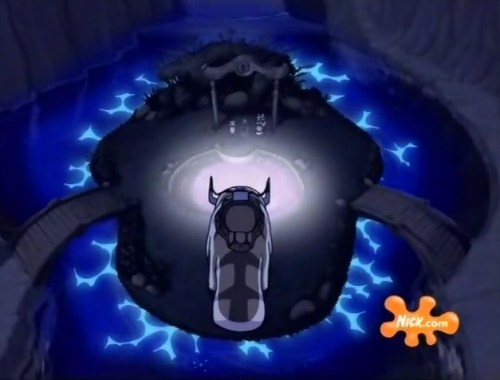
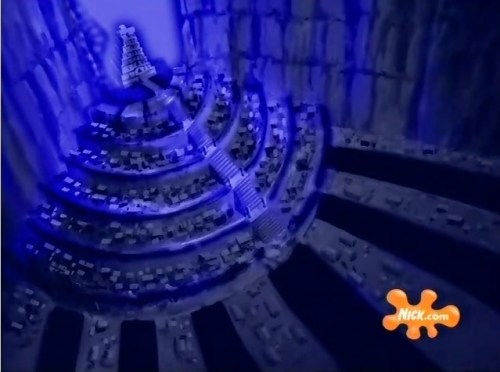
Avatar 1

Avatar 2

Avatar 3

Avatar 4

Avatar 5

Avatar 6

Avatar 7

Avatar 8

Avatar 9

The precise mechanics of what Aang does are less important than the triumphant music, the gorgeous interplay of color and light and dark, the climax of a conflict that has been brewing for three episodes (and, to a lesser extent, the whole season), that finally reaches its breaking point.

This is what we in the editorial world refer to, professionally, as “wicked sweet.”

Avatar is a criminally underrated show, and – at just 61 episodes of 22 minutes each – the time commitment is minimal. Aang is cool. Spread the word.