Category Archives: Uncategorized

The Unnecessarily Difficult English Quiz!

QUESTIONS

1. The symbol ¶ indicates a new paragraph. In MS Word, it is also an icon that turns formatting marks on or off. What is this symbol called?

2. Today, “dilemma” refers to any difficult situation. But traditionally, this word had a more precise meaning, which some writers still maintain. What is it?

3. When is it acceptable to end a sentence with a preposition?

4. Does “inflammable” describe something that can be set on fire, or something that can’t?

5. Which is correct?
The man who we met yesterday is secretly a robot.
The man whom we met yesterday is secretly a robot.


INTERMISSION

.

.

.

.

.

.

.

.


ANSWERS

1. The symbol ¶ is called a “pilcrow.”

2. Traditionally, a dilemma was a choice between two bad options (e.g. Sophie’s Choice) rather than just any difficult situation. If you observe this distinction, then the question “How can we raise $5,000 for the Fractal Appreciation Society?” is a predicament, but not necessarily a dilemma.

3. There is nothing bad whatsoever about ending a sentence with a preposition, and there never has been. This has always been a faux “rule” enforced by generations of misguided pedants. Among serious grammarians, this rule has about as much authority as a “No Square Dancing” sign in Austin.

4. In its original meaning, “inflammable” described something that could be set on fire. However, this was very confusing, because the “in-” prefix often means “not” (e.g. “indestructible”). This was especially unfortunate considering the possible consequences of getting those two mixed up. It’s much better to avoid the word altogether and use the unambiguous terms “flammable” and “nonflammable.”

5. According to the rules of formal grammar, the sentence should be:
The man whom we met yesterday is secretly a robot.
“Who” is a subject, and “whom” is an object, very much analogous to “he” and “him.” But although “The man whom we met yesterday” is the subject of the sentence, “whom” is an object within that clause, and that’s what counts.
Of course, this distinction doesn’t really matter, and English is gradually shifting toward using “who” everywhere, which is a good thing.

Also, if you met a man who is secretly a robot, grammar should probably not be the biggest thing on your mind.

How to Make Your Kids Hate You with Tools You Probably Have Around the Home

NPR ran an article today with the peppy headline: As Kids Go Online, New Tools For Parents To Spy.

My, doesn’t that sound promising?

It begins with the breathless revelation, “Before age 1 (ONE!), nearly half of kids play games or watch videos on a mobile device.” This is absolutely shocking to anyone who has not interacted with a baby in the last ten years. Tablets are bright, colorful, and have touch screens; babies like bright colors and touching stuff; and parents like to help their babies interact with the world. The idea that babies are somehow never, ever going to look at electronic rectangles is pretty strange, and if anything, I bet those numbers are low.

(To be clear, I’m not saying it’s good for little kids to be doing this all the time. That’s a whole separate conversation.)

Anyway, the gist of the article is that the Internet is dangerous and shocking and parents need software to block out the bad websites and watch their kids constantly but it turns out that getting that to really work is fairly difficult, and isn’t that sad.

Sigh.

Yes, of course there are things on the Internet that kids need to be protected from. The Internet shares that property with, you know, every other part of life. And yes, software can help with that, especially when they’re young. When I have children, I would indeed prefer that they not have to look at 843 million penises because they accidentally typed “dick” instead of “duck,” especially if said children are only seven years old.

But there’s a difference between taking some basic precautions and using 1984 as a parenting manual. Just listen:

Luma [blocking and spying software] lets you limit access by time of day: During homework time, just allow educational websites. During dinnertime, when there’s dead silence at the table, “you can press a button and it will pause the Internet. The kids have to look up and actually engage with their parents.” […]

Luma also lets you watch your kids and review every site they’ve visited. And that surveillance power is becoming common. Microsoft built Windows 10 to give parents a weekly browsing report. Apps like PhoneSheriff and TeenSafe let you remotely read your child’s call logs and text messages (even deleted texts).

Luma revamps the home Wi-Fi system. Using their smartphones, parents can see every wireless device attempting to use the network, block access and set levels of permission. Little Timmy just gets G-rated websites; Tina gets sites rated PG. […]

“I don’t trust teens. I was one once,” [mother Joy Wilson] says and laughs.

Wilson says she’d like to spy on her kids until they’re 18.

(Emphasis mine.)

Doing this kind of thing to your children is – how can I say it diplomatically? – deeply misguided.

Yes, you could only allow educational sites during homework hours (assuming you’ve structured your kids’ lives to the point that “homework hours” are a thing). Or you could teach them enough self-discipline that they can work even when there are distractions around. Ten points for guessing which is more useful in the long run.

Yes, you could turn off the Internet during dinner to force conversation. Or you could teach your kids to engage with other people to their faces, and to listen when you say “No smartphones at the dinner table.”

Yes, you could try to block out anything objectionable your children will ever see. That way, in the very unlikely event that you’re successful, it’ll all be dumped on them at once as soon as they leave home. Or you could have a conversation – maybe even several! – about what content is out there, what is and isn’t okay, and why, and how they might choose to react. This process could conceivably lead to them someday becoming adults themselves.

And then there’s the spying.

If you have, say, a fourteen-year-old, then tracking every website they visit and reading every text message they send would be (deep breath) a really, really, really, really horrible idea. Let me grab a thesaurus … yeah, atrocious, that’s the word. Here’s why.

Growing up is a process of growing independent, of exploring, of learning what freedom feels like. If you know your parents are always watching, then that feeling of freedom is as dead as Bobby Jindal’s presidential campaign. You never get the chance to make your own mistakes, to practice being an adult before you have to be one for real. You can’t even say what you want to your own friends without having to defend it later. You have to start censoring your own thoughts.

Or rather, that’s what would happen if any of this had the slightest chance of working. Because, as the article itself notes, any kid with a reasonably functioning cerebrum and a minimal desire for independence will find a way around the system.

How, you may ask? Hmm, let’s see. Your kid could:

  • Find holes in the software. Any software flexible enough to let the Internet stay remotely usable, will also have holes, at least until somebody invents a strong AI.
  • Access the Internet from a device you don’t control. There are over ten billion Internet-capable devices in the world, so this won’t be terribly difficult. A friend’s computer, a borrowed tablet, a Kindle Fire they bought for fifty bucks, even a school or library computer with holes in its defenses.
  • Figure out secret codes to use when texting their friends, so you don’t know what they’re talking about.
  • Communicate with their friends via other means, like payphones (for as long as those still exist) or passing notes on physical pieces of paper (for as long as those still exist).

Parents may point out that it’s their house, their rules, and their Internet connection, so they have every right to block or monitor whatever they want. This is true. Likewise, children have every right to resent and despise their parents, and cut them out of their lives as soon as it’s remotely feasible. Neither of these, however, is a good thing. It turns out that lots of things you have the right to do are not good things to do.

One last fun little quote from that article:

Another mom, Frieda Taylor, says spying is her right. “It is good. It should be done,” she says.

Asked until what age, she says without pause, “Until they get married.”

This is such a bizarre comment that answering it in full would take a whole separate blog post. I’ll have to content myself with asking: what if they never get married?

Fortunately, I’m not the only one who thinks Dad doesn’t need to be Big Brother. I was immensely gratified to see that the top comment read, in part:

I can think of very little that would have caused me to hate, despise, and never again talk to my parents than to find that they were monitoring my every move, opening my mail, etc. The teenage years can be rough enough as they are. They don’t need you piling more stress and anxiety.

TALK to your kids. Get them to trust you and TALK to you of their own free will.

(Yes, I’m quoting a comment from a news article. The other six signs of the apocalypse will be arriving shortly.)

Look – there’s a balance between safety and freedom. There’s always a balance. Parents want to protect their kids, and they should. It’s their job. And the dangers are real, online and elsewhere. But some dangers are subtler than others, and a decade of feeling stifled and angry is not what I would call “safe.”

If your kids have the slightest curiosity about porn, they will seek it out, and they will find it, well before they turn eighteen. Short of locking your kids in the basement or brainwashing them Duggar-style, you cannot stop this. Period. What you can do is talk to them about what’s out there, what it means, how they should think about it, and what kinds of decisions they should make about it. Ditto violence, swearing, bigotry, and manipulative advertising.

Your kids are going to grow up, whether you like it or not. You might as well teach them how to deal with that.

I know all this, of course, because of my zero years of child-rearing experience, and the PhD in developmental psychology that I don’t have.

Transcendence: Siege of the North

Each week, we’ll look at another example of what I call a “moment of transcendence” – a scene from a show, a passage from a book, or anything else, that I find soul-piercingly resonant: joyful, sad, awe-inspiring, terrifying, or whatever. These moments are highly subjective, so you may not feel the same way I do, but nevertheless I’ll try to convey why I find the fragment so powerful. I hope we can enjoy it together.


Warning: Major spoilers for Avatar: The Last Airbender.

Avatar isn’t perfect, but its season finales are pretty damn close. Each of the show’s three seasons ends with that mix of breathless emotion and precise plotting that you only achieve when you’ve thought your story through carefully in advance.

Season 3’s finale, set in the Fire Nation, is grand and operatic. Season 2’s finale, in the Earth Kingdom, is intricate and dark.

And season 1’s finale, in the Water Tribe – Siege of the North – is a master class in pacing, escalating tension, and pitch-perfect payoff.

The plot’s a bit complicated and I won’t try to explain it all, but basically, the Fire Nation (bad guys) is invading the Northern Water Tribe (good guys) with a massive army. The waterbenders (sorcerers, essentially) are stronger when the moon is out, so the Fire Nation general has a plan to kill the Moon Spirit, effectively destroying the moon itself and throwing the entire planet out of balance.

Things are looking bad – it seems like he’s really going to do it –

And then he really does it.

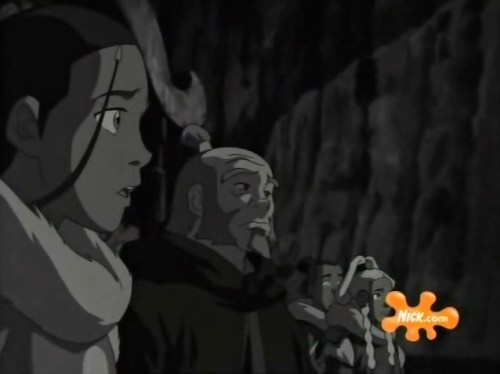
The moon vanishes. The world goes dark. Everything on the screen turns black and white. The Fire Nation is rampaging through the streets. Even the general himself seems horrified by what he’s done. As one character succinctly puts it: “There’s no hope now. It’s over.”

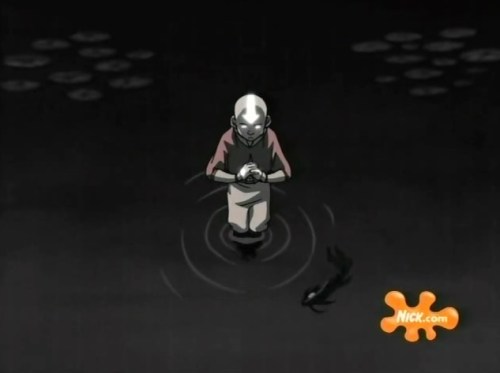
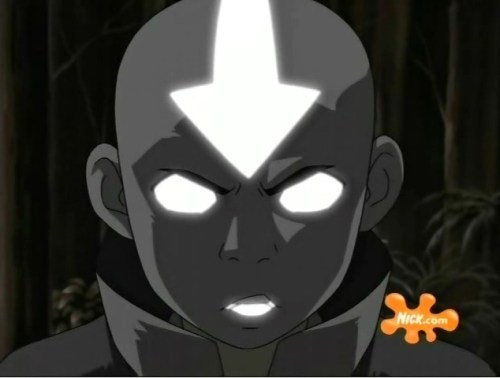
And then Aang, the goofy little kid who would rather braid necklaces than fight anybody, who never wanted to be the Avatar, steps forward, eyes glowing with pure light, and says, in a voice like a chorus of angels:

NO. IT’S NOT OVER.

Avatar 1

Avatar 2

Avatar 3

Avatar 4

Avatar 5

Avatar 6

Avatar 7

Avatar 8

Avatar 9

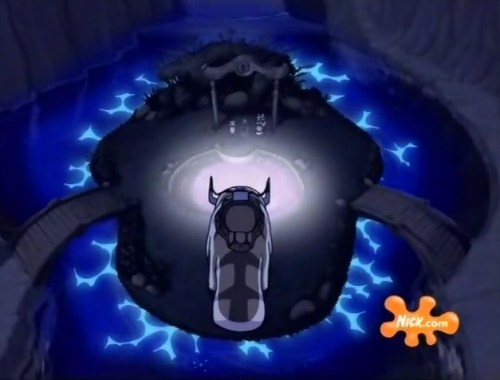
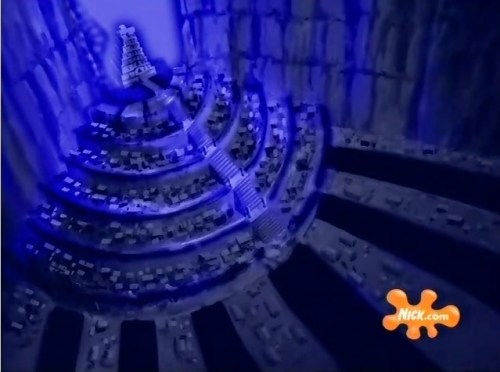
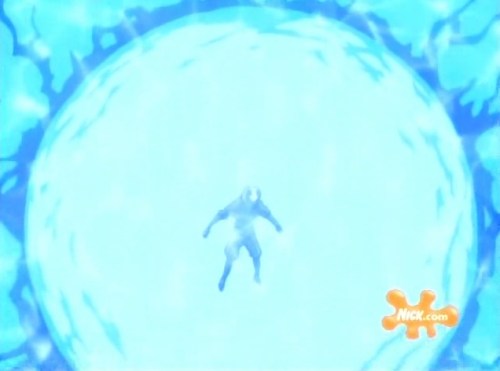
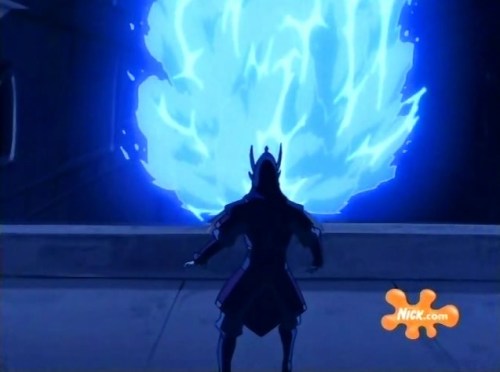
The precise mechanics of what Aang does are less important than the triumphant music, the gorgeous interplay of color and light and dark, the climax of a conflict that has been brewing for three episodes (and, to a lesser extent, the whole season), that finally reaches its breaking point.

This is what we in the editorial world refer to, professionally, as “wicked sweet.”

Avatar is a criminally underrated show, and – at just 61 episodes of 22 minutes each – the time commitment is minimal. Aang is cool. Spread the word.

Friday Links

Sent to me by a friend: Poorly Drawn Lines comic about, er, treasure.

A little old-style Disney animation for ya.

Have a redoubtable weekend!

Haiku 365: October

#276: 10/1/2015
Let’s hunt unicorns!
And if we can’t find any,
then let’s just hold hands.

#277: 10/2/2015
Sing an apple-song,
thank the tree for bearing what
our steel cannot build.

#278: 10/3/2015
Fluorescent airport
full of soft curving steel lines
far too posh for us.

#279: 10/4/15
Narrow antique walls
whisper old stories loudly
while we try to sleep.

#280: 10/5/15
Drizzling firmament
matches puddle-rich sidewalks
synchronized in gray.

#281: 10/6/15
Rippling red dragons
watch like sages from their poles
revealing nothing.

#282: 10/7/15
Night in the city,
doors barred – strains of old guitar
caress thinning crowds.

#283: 10/8/15
Juggling fire at dusk.
Torches arc above the throng,
illuminating.

#284: 10/10/15
Languages of stone –
whispering buttresses recall
silent centuries.

#285: 10/10/15
In what museum
will shards of our work lie still
under glass someday?

#286: 10/11/15
The wonders of Earth,
proud, bright, have this in common:
that they are not home.

#287: 10/13/15
Down the rabbit-hole,
curious, curiouser,
till sunlight wakes you.

#288: 10/13/15
Consider the hair:
deaf, blind, cut back endlessly,
undeterred it grows.

#289: 10/20/15
Stubborn evergreens
hold out against fiery fall:
traditionalists.

#290: 10/20/15
For your ears alone,
irrevocably private,
the neurons whisper.

#291: 10/20/15
Cold is not a thing
but an un-thing, lack of heat,
yet it sings like fire.

#292: 10/20/15
Dry plants in old pots
await a soil afterlife,
deep, and free of wind.

#293: 10/20/15
A cluttered house is
life in motion. Should home be
antiseptic, clean?

#294: 10/20/15
Shh! All-Hallow’s Eve
creeps near, pumpkin candles bright
like the eyes of saints.

#295: 10/20/15
Cars save us effort.
That’s why we drive them to gyms,
where we exercise.

#296: 10/21/15
Plans like doves fly forth,
now and then returning stained,
weary, branch in beak.

#297: 10/22/15
Voices and voices
press in through this box of light,
urgent, seductive.

#298: 10/25/15
Win yew lye a loan
awl knight, ore wok four daze, a
lass! Yore mined gits week.

#299: 10/25/15
Rebellious body:
knees complain, stomach grumbles.
King Brain’s restless serfs.

#300: 10/25/15
The best thing about
finishing a book is that
now you can start one.

#301: 10/26/15
Don’t listen to me.
Especially when I say
“Don’t listen to me.”

#302: 10/27/15
Chimney’s silhouette
gazes lean, benevolent,
over pre-dawn street.

#303: 10/28/15
A car, an airplane,
Google Maps, unite two friends.
Evening of laughter.

#304: 10/29/2015
Gale screams, thunder cracks.
Eerie grey portal unfolds.
Bats swarm free like ants.

#305: 10/30/2015
All Hallow’s Eve, Eve:
pumpkins grimace, spiders spin,
gramarye grows thick.

#306: 11/2/2015
Low-level sickness,
just enough to make you tired,
crawls inside and purrs.

The Happenings

  • Currently editing a novella for an author in Australia. Really fun, too.
  • In talks with at least three potential clients.
  • Submitted four articles to local magazine Run Life, with another due in the next few weeks.
  • Looking into organizing an Ohio chapter of the Editorial Freelancers Association (EFA).
  • Completed week 7 of a 12-week EFA course on developmental editing. Plenty of new information, but it’s also making me more confident in what I already knew.
  • Yes, I’m doing National Novel Writing Month (NaNoWriMo). A friend of mine (who may wish to remain nameless?) threw down the gauntlet at the Halloween party, challenging me to write a 50,000-word romance novel by the end of November. The incentive is that if (when) I succeed, he will record an audio book of himself reading the entire thing, doing all the voices, sound effects, accents, and everything, no matter how ridiculous I make it. Bear in mind, there will be sex scenes. I was like, done. Three days in and I’ve already got 8,000 words.
  • Finished season one of Gotham. Ba da ba ba ba, I’m lovin’ it. Betsy is too.
  • Mowed the front and back yards for what is hopefully the last time this year.
  • Going to visit my buddy Mr. Trube this weekend. We plan to have at least one hijink. Incidentally, if you’ve ever wanted to see a photo of Mr. Trube eating a live dog dressed as a taco, now you can.
  • That’s all. There are no more bullet points.
  • j/k

Election Day

A friendly reminder to any readers in the US that today is Election Day. So if you’re an adult, and a registered voter, and you’re familiar with the issues, consider going out and voting today. They give you a sticker (at least in Ohio), and free stickers are the engine of democracy. Pretty sure Thomas Jefferson said that.

Posts may be sporadic this week – I have a lot going on. Exciting new editing prospects, exciting new writing projects, all sorts of excitement all around. As always, it’s a good problem to have.

See you around.

Friday Link

This week on Reddit I did a post entitled “28 awful Buffy jokes. I’m not even sorry.” Title speaks for itself. Redditor comments include “I both hate and love you for this” and “Good God.” You’re welcome, Internet.

Hope your Halloween is full of corvids and gramarye!

Guest Post: Welcome to Surreality

The Notorious B. T.

The Notorious B. T.

Today’s post comes from author, blogger, programmer, gentleman, scholar, professional fractalist, amateur Twitterer, coffee-drinker, book collector, Trekkie, canine enthusiast, graphic novel connoisseur, co-conspirator, and very good friend Ben Trube. His latest work is the mystery novel Surreality, which he was brave enough to offer to me in my very first attempt at copyediting.


Writing a rough draft is actually pretty easy. It basically involves typing until you hit a certain word count. But revising and editing that draft into something that won’t make someone’s eyes bleed, that’s the tricky part.

During the many revisions of Surreality I tried just about every editing technique I could think of, and enlisted the help of two invaluable compatriots, my wife and my copy-editor, Brian. I think he writes a blog or something.

I had an algebra teacher who believed in something he called “Calculator Dependency Syndrome”. Basically, he thought that you needed to be able to work out a reasonable answer in your head or on paper before you should rely on technology. I think the same is true for revising your first novel, sometimes you have to go back to the basics of pen and paper. My first year of revising Surreality involved taking a double-spaced, 40 page section of my book out with me to Barnes and Noble, buying a cup of coffee, and marking those pages up with pen. This creates a very satisfying artifact, and actually meant that I revised my work at least twice, since I had to type all my changes back in. It was also very slow, since once again I’d had the brilliant idea of writing the first draft without chapters. Never again.

My wife and I collaborated on the second edit, a process that taught me how much an author can miss even when they’re trying to slow down and see everything. She questioned details I thought were well presented, and often employed the word “constipated” to certain sentences (in part because she knew of my fondness for the movie Finding Forrester, one of the few decent writing movies that actually has something to teach about writing). She was and is a real partner in the planning of the book, later being largely responsible for the cover design and a lot of the advertising. And, as I’ve written before, she’s the one who suggested the book be moved to Columbus, a city I actually know a little better than a place I’ve visited only once.

This kicked off the third and final edit. Well, that’s almost right, since there were actually two more after it. A year of writing a new draft with the original sitting on a Kindle beside me, or side by side on the computer. Now I had something I actually thought was worth sharing with people, after a vigorous copy edit from the aforementioned Brian.

After a few months of writing blog posts, ideas for other stories, and serial novellas about gravity behaving in completely illogical ways I got Brian’s edits back. Brian and I have a great friendship, meaning that he can tell me if something is working or not without much worry of my getting upset about it. And when he mentioned that he wanted to set one of my characters on fire, a character the reader is supposed to like and who had been one of my favorites to write, I knew there was still some work to be done. After all, Brian isn’t a man who tends to set many people on fire. Well … that one time, but that was years ago. [Ed. note: We said we weren’t going to talk about that!]

Revision at this stage involved me evaluating Brian’s comments, committing his changes and writing new material, then sending those sections back off for comments and final edits. Most chapters went through at least one cycle of back and forth, sometimes more. Working with Brian is probably the closest I’ll come to collaborating on writing. I’m not sure how two authors can get together and write a novel together, but the back and forth of discussing all of the little minutiae, the techniques and plot points, was probably the most fun I’ve had working as a writer, period. We traded comments, bad jokes, puns, and links to YouTube videos of auto-tuned Jon Hamm (there was a legitimate point we were discussing). We discussed whether a brothel or a bordello were actually different things (they aren’t). And it was especially gratifying when Brian said he now liked the character he was supposed to like and didn’t want to set her on fire even a little bit.

Writing a book is not a solitary activity, and revision is one of those things that feels really good when you’re doing it, until you realize you need to do it again. But that doesn’t mean that the next draft you write won’t be the best one yet. Writing is a process, one that takes time, collaboration, and honesty from others and with yourself.


Intrigued? You can learn more about Surreality and show it some love by nominating it on Kindle Scout. Play your cards right, and you could even win an autographed copyThanks for the post, Ben!

Also: arson is a felony in the state of Ohio, and, I suspect, a lot of other places too. Just FYI.

The Extras

Last night I got to have dinner with an old friend, Pat, who I hadn’t seen in far too long. We’ve known each other since elementary school, but since he moved out of Ohio, keeping in touch has been harder. Pat’s brain and mine operate on the same wavelength to an almost frightening degree.

Well, usually.

Here’s an actual exchange from halfway through dinner. We were talking about my copyediting.

Me: Can you believe I’m now paying for an annual subscription to the online Merriam-Webster unabridged dictionary?

Pat: Seriously? (in disbelief) What do you do with all the extras?

Me: The extras?

(we stare at each other in confusion)

Me: I said an online subscription.

(we both die laughing)

So, for those wondering: no, I do not receive a new, very slightly updated unabridged physical dictionary once a month in the mail. Although now I’m just thinking there has to be at least one person who would sign up for that, and I want to meet that person. Briefly.

I told Pat I was going to make this the blog post the next day. So here we are. If you’re reading this, buddy, it was good to see you!