Transcendence

Now that “The Witch and the Dragon” is online in its entirety, it’s time for a new Monday feature. So let’s talk.

Sometimes, when you’re reading a story, you come across a part that gleams in golden ink across the page. It isn’t merely insightful, or moving, or clever, or funny, or brilliant. At the risk of sounding dramatic: it leaps from the book and pierces your soul. You laugh, or shiver, or cry, or merely sit, transfixed. You remember this fragment long after you’ve forgotten the plot and the author and even the title. “This is it,” you say. “This is why we make art.”

I’ve been savoring and revisiting these little fragments for as long as I can remember. I don’t think I’ve ever heard a term for them, so I’m calling them moments of transcendence.

These moments can come from anywhere: books (fiction and non), poems, TV shows, movies, paintings, music, even video games. They appear in sources as lofty as Shakespeare, the Bible, and the Tao Te Ching, as humble as newspaper comic strips, as dry as textbooks, as sophisticated as Keats, as mainstream as car insurance commercials (yes, really).

You can find them in works you love, works you despise, works that are completely mediocre aside from that one shining moment. They can be as short as a few words, or (very rarely) as long as an entire TV episode.

Art can be good, even great, without such moments. By his own admission, Isaac Asimov consciously avoided them, so as to make his failures less spectacular; nevertheless, he achieved his share of both. Lord Dunsany, on the other hand, seemed to be trying for transcendence in every paragraph, which (for me) started off enchanting but very quickly grew tiresome. Tolkien, I feel, achieved a nice balance – but then, I’m awfully biased.

Each Monday, I’m going to feature a moment of transcendence. I’ll give you the background, the context, and the fragment itself, and then I’ll try to convey some sense of why it affects me as it does.

Moments of transcendence are, of course, utterly subjective. One reader’s awe is another’s cheesiness; what makes one viewer cry will make another yawn. I certainly don’t expect you to feel the same way about these bits and pieces as I do. But as I share them – and I hope you’ll share yours, too! – maybe we’ll get a better understanding of how to make great art.

Or, failing that, we’ll watch some sweet YouTube clips.

We start next Monday!

Friday Links

Congress and the President have finally ended the NSA’s bulk phone records collection program. It’s progress. Not the endgame by any means, but an excellent first step. Meanwhile, fresh revelations come to light.

Significantly, it appears that Congress has shifted its thinking on this key issue. The Senate approved the reform by a two-to-one margin, in spite of vocal opposition from Senate Majority Leader Mitch McConnell. It’s progress.

I commend Senator Rand Paul, in particular, for his firm stance in defense of civil liberties. Call it grandstanding if you like, but I’ll take it. I don’t agree with all his ideas by any means, but I think he’s a man worth listening to, as argued by Fareed Zakaria.

And of course, whatever you may think of Edward Snowden, it’s clear at least that none of this valuable reform would have happened without him.

I am very proud to say that my wife, my friends (including Mr. Trube), and I played some role, however small, in the fight to restore our civil liberties. In his farewell address to the nation, President Eisenhower said:

We must guard against the acquisition of unwarranted influence, whether sought or unsought, by the military-industrial complex….We should take nothing for granted. Only an alert and knowledgeable citizenry can compel the proper meshing of the huge industrial and military machinery of defense with our peaceful methods and goals, so that security and liberty may prosper together.

And, for what it’s worth, here’s the text of the Fourth Amendment, which is only one sentence long:

The right of the people to be secure in their persons, houses, papers, and effects, against unreasonable searches and seizures, shall not be violated, and no Warrants shall issue, but upon probable cause, supported by Oath or affirmation, and particularly describing the place to be searched, and the persons or things to be seized.

It’s clear, as I read the news now, that I’ve been out of the loop too long. I need to pay more attention to what’s going on in the world. I’ll do my best.

In other news: I found out yesterday that presidential candidate Lindsey Graham has never sent an e-mail in his life. Not one. Let that sink in for a minute.

And finally: no politics, just beauty. Some of the earliest color photos ever taken, pre-World War I. Enjoy.

Have a great weekend! I’ve got something fun planned for Monday.

The Witch Hunters’ Apology

Arresting a Witch - Pyle

Everyone has heard of the Salem Witch Trials of Massachusetts, 1692-1693. Nineteen people – fifteen women and four men – were found guilty of witchcraft, and hanged. A twentieth, Giles Corey, refused to enter a plea and was tortured to death. Two dogs were also killed.

What’s less often mentioned, though, is that many of the perpetrators of this atrocity later publicly repented.

In 1697, assistant magistrate Samuel Sewall asked for his apology to be read aloud publicly at a nearby church. Likewise, twelve of the jurors involved released a written statement admitting “that we ourselves were not capable to understand, nor able to withstand, the mysterious delusions of the powers of darkness, and prince of the air,” taking responsibility for “the guilt of innocent blood,” and calling themselves “sadly deluded and mistaken.”

And in 1706, Ann Putnam Jr. – one of the principal accusers, though only a child at the time, and likely manipulated by others – also publicly apologized, saying that she did “earnestly beg forgiveness of God, and from all those unto whom I have given just cause of sorrow and offense.”

This is not to imply that all guilty parties apologized; many central figures remained unrepentant, as far as I could discover. Nor am I suggesting that a mere apology can excuse the horrific pain and death their actions enabled.

The apologies do, however, suggest something hopeful: that people, and society, can and do change for the better.

Massachusetts has not, to my knowledge, executed anyone for witchcraft in quite some time.

Return of the Buckley

Brian, where have you been?!

Mostly, I’ve been in Texas, visiting my dad’s side of the family. It’s been an eventful week:

  • Severe flooding in our corner of the Lone Star State. Hardly a visible blade of grass in our entire front and back yards: just a deep, brown, giant, stagnant, stinking lake.
  • A corollary of the above: mosquitoes are now multiplying so fast, you’d think they had calculators.
  • On the plus side, I got to spend time with my grandma, dad, stepmom, aunt, uncles, cousins, and two adorable little kids whose relationship to me is – according to Google – first cousin once removed.
  • I also got to examine a giant family Bible that dates all the way back to 1882. In addition to the text itself, it has an atlas, a mini biblical encyclopedia, a concordance, a summary of parables, and lots of illustrations by Gustave Doré, not to mention some century-old family photos.
  • Lots of quality reading time. Among other books, I read Warriors Don’t Cry (written by one of the Little Rock Nine), ENIAC, and Magic, Supernaturalism and Religion. All three were fascinating, though I was disgusted to learn – only just now – that my copy of Warriors was an abridged version. Evidently, the fact that they’d cut out a large chunk of the text wasn’t deemed important enough to mention anywhere on the front or back cover.
  • As a follow-up to last week’s post on legendary places that are real, it turns out that the Tower of Babel may also have been based on an identifiable historical structure: the ziggurat Etemenanki.
  • And finally, if all goes well, I may have some very good news to announce soon. Fingers crossed!

The Witch and the Dragon – Chapters 31 & 32

Standard Disclaimer

This is fan fiction of Buffy the Vampire Slayer and Angel, which were created by Joss Whedon. If you like, you can read my thoughts on the ethics and legality of fan fiction.


[Start reading story from beginning]

[Go back to chapters 29 & 30]

Chapter 31

In the months after, a lot of things changed.

Willow returned to the San Jose College of Witchcraft, but it didn’t take long to realize she was making everyone nervous. Apparently they didn’t like getting performance reviews from someone who could kill them with a thought. Sad, but a little relieved, she resigned as President. By unanimous vote, the Board chose Emily to replace her.

With Cathy’s permission, Willow moved to Redwood Falls, Minnesota, to be closer to Xander. After some early friction, she and Cathy grew to be friends. She set up shop as an independent magic tutor, and never lacked for clients.

Buffy retired from Zeta Black. Some of its members left to work for the Watchers’ Council, or do other things, but most remained together, turning the team into an all-purpose demon-fighting unit. She gave the Scythe to its new commander.

She moved to London, where – to the surprise of absolutely no one – she and Spike found a flat together, just a few blocks away from where Spike’s childhood home had once stood. Spike left Peace Village in the capable hands of its assistant director. He and Buffy signed up to work at a local homeless shelter. They both insisted they had no plans to get married, but Willow expected a phone call any week now.

Giles got hired as a senior adviser to the Watchers’ Council, where he made a great nuisance of himself by coming up with better ideas than anyone else. He firmly declared that – with advances in modern medicine – he fully intended to remain a nuisance for another fifty years.

Dawn felt an enormous weight had been lifted from her shoulders. She had her whole family with her: the kids, Buffy, and Giles. Everyone who saw her agreed she seemed happier than she’d been in decades. She still refused to upgrade her prosthetic leg.

And one day, Willow got a message from Illyria, asking if they could meet.

Chapter 32

The place was a karaoke bar by the name of Comitas, a few blocks southwest of Union Square in San Francisco.

From the outside, it was a nondescript beige rectangle nestled between a Korean sushi joint and a discount grocery store. (A simple glamour spell made it invisible to anyone not looking for it on purpose.) Inside, Willow found a sleek, modern lounge with hardwood floors and mellow lighting.

Comitas was packed with demons and humans, all looking rich and sophisticated, wearing what she could only assume was the latest fashion. Willow felt distinctly out of place. She searched the crowd and found Illyria on a plush stool at the bar, examining a martini glass that held some kind of pale green liquid.

“There you are,” said Willow, standing beside her, since there were no open seats. She raised her voice over the beat of the music. “I didn’t know you drank alcohol.”

“It is for you,” said Illyria. “Something called an ‘Emerald City.’ A curious mixture of vodka, various juices, and a high proportion of melon liqueur. The ethanol content should be sufficient to induce mild intoxication.”

Willow grinned and took a sip. “Pretty good. Hey, some people just left, let’s take that seat over there.”

They claimed a fuzzy armless sofa in the back of the lounge. A blue-skinned bonesucker demon in a sparkling jacket was up onstage, doing a not-too-bad rendition of some forgettable pop number from the 2020s.

“I feel bad I’ve never come here before,” said Willow. “I knew Lorne had opened a new bar, I just never got around to visiting.”

“It is my first time here as well,” said Illyria. “I do not normally enter venues that are this…” She glanced around. “Distracting.”

Willow sipped her drink. “So why the invitation? No offense, Miss Burkle, but this really isn’t like you.”

“Would you consider us to be friends?”

“Um. Yes.”

“That was my assessment as well.” Willow laughed, and Illyria went on. “Since you have undergone emotional trauma, and – to a lesser extent – physical trauma, I felt obligated by our friendship to provide solace.”

“You were worried, and wanted to cheer me up. Illyria, that’s sweet.”

“Agreed.” Illyria was watching the demon sing. “But I am uncertain how best to comfort you. My talks with others suggest I could temporarily distract you from your trauma, or provide superficial, asinine reassurance. Would you like either of these options?”

“Uh, they sound really tempting, but I’ll pass.”

“In that case,” said Illyria, “I shall address the causes of your suffering directly. First, your interaction with Tara. The pain of losing her will never disappear, and I cannot alter that.”

Another sip of her drink. Willow ought to have been hurt, or offended, or something, but she couldn’t help smiling again. This was genuinely Illyria’s idea of comfort. And in a way, it was more comforting than the vague platitudes she’d gotten from others.

“Second. Your decisions regarding the use of magic. I do not believe you have cause for regret. You were guided by conscience and love, and thus, your actions were as ethical as can reasonably be expected.”

Willow’s eyebrows went up. “Really? That’s your standard for ethics? I figured you’d come up with something more…precise.”

Illyria looked at her. She never smiled, but she seemed pleased somehow. “I attempted to do so. I tried to define a set of moral axioms and deduce the rightness or wrongness of your action. But the choice of axioms proved difficult, and even with a given set, I found their application to real-world problems to be a nontrivial affair.”

“Logic is tricky,” Willow translated.

“Having failed in that, I next surveyed the pronouncements of traditional authorities. But I found most of these to be irrelevant or demonstrably false, and many of the ones that remained contradicted each other. For instance, I am told that ‘absolute power corrupts absolutely’ by individuals who worship an omnipotent, benevolent God.”

“The average IQ of the room has gone up ten points. Well?”

“Eventually,” said Illyria, “I returned to my original foundation for ethics. I asked myself what Wesley would do. Would he use a power like yours to dispense executions on a daily and global basis?” She gazed at Willow with piercingly blue eyes. “I do not believe he would. I believe he would be guided by conscience and love.”

Willow finished off the Emerald City and didn’t answer right away.

The song finished, and now Lorne walked onstage. He wore a suit – no surprise – garish crimson but otherwise classy. He didn’t look a day older. Willow seemed to recall that Pyleans aged very slowly.

She stood up and waved vigorously, dragging Illyria to her feet. He looked surprised at first, but he grinned and winked at them.

“A shout out to Red and Blue, the two lovely ladies in the back. Mike, their drinks are on the house.”

He tapped a few buttons on the karaoke stand. The music started, and he began to sing in a rich, effortless voice.

Fly me to the moon

Let me play among the stars

Let me see what spring is like on

Jupiter and Mars

Willow sat down with Illyria. She said, “Wesley was a good man, but you can’t just base your decisions on what someone else would do. Nobody’s perfect.”

Illyria tilted her head. “Not even Tara?”

She doesn’t know what she’s doing to me, thought Willow. She thinks we’re just talking.

“No,” said Willow. “Not even Tara.”

“If she is imperfect, in what ways do you wish to change her?”

Fill my heart with song

And let me sing forevermore

You are all I long for

All I worship and adore

Willow frowned. “I don’t want to change her,” she said. “That’s not what I mean.”

“You directly altered reality, creating a new reality better suited to her survival. In effect, you considered Tara more perfect than the universe itself.”

“I don’t…” She shook her head. “It’s not exactly…”

“I have hypothesized,” said Illyria, “that perfection is a relative trait. Wesley is perfect, relative to me. Tara is perfect, relative to you. Dawn – and later, the vampire project – were perfect to Buffy. The pursuit and defense of our ideals is the meaning of love.”

“You make it sound so romantic,” murmured Willow. But she was lost in thought.

In other words, please be true

In other words, in other words

I

Love

You.

Everyone applauded, though half the crowd had probably never heard the ancient song before. Lorne bowed and bowed again, then hopped off the stage and made his way to ‘the two lovely ladies.’

“Sugarcakes,” he said to Willow, “you ought to call first. I could’ve had a private room lined up and everything.”

She smiled. “I’m having a good time right here.”

“So what’s shakin’? What brings you to my humble establishment? Do you want me to read your aura?”

“No,” she said. “No, that’s okay. I think I finally know who I am.”

“Must be nice,” said Lorne. “So who are you?”

Willow was still smiling.

“I’m Tara’s girl.”

[The End]

6 Legendary Places (That Are Actually Real)

1. Armageddon

As I’ve mentioned before, the name “Armageddon” technically refers to the place the Final Battle will occur, rather than the battle itself. The word appears only once in the Bible, in Revelation 16:16:

Then they gathered the kings together to the place that in Hebrew is called Armageddon.

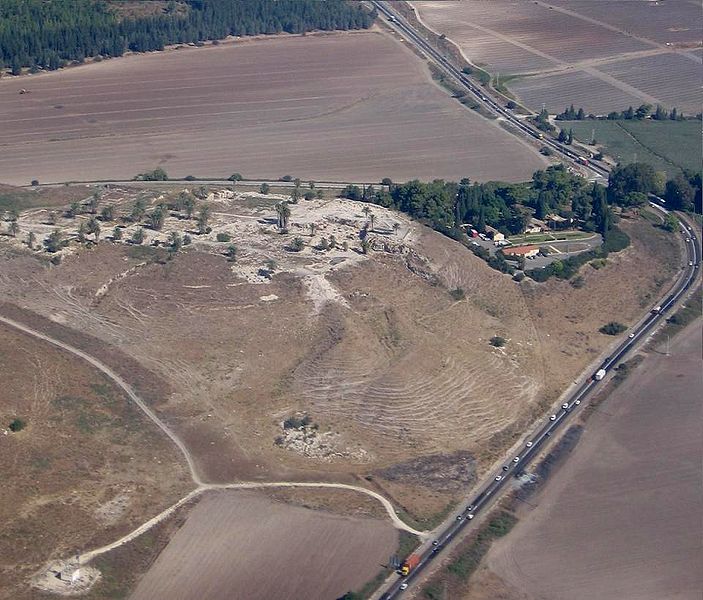
“Armageddon” is the Greek name for Tel Megiddo, a hill that still exists in modern-day Israel:

Tel Megiddo

2. Bedlam

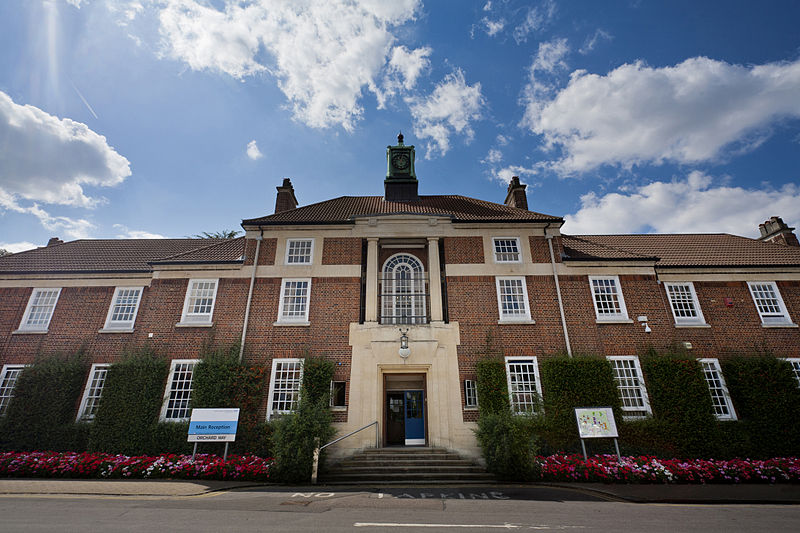
Like Armageddon, bedlam is something we consider a thing, not a location. It’s become a noun meaning a state of uproar, chaos, or confusion. But “Bedlam” is an old nickname for a real place: the Bethlehem Royal Hospital, in London. It’s the oldest psychiatric hospital (or insane asylum) in Europe, and it’s still around today.

The place was founded in the 13th century as a priory and converted to a hospital about a hundred years later. It has since moved around, occupying several different buildings in London, but the nickname has stuck.

Bethlehem Royal Hospital

Bethlehem Royal Hospital as it stands today. Link

3. Mount Olympus

The mythical home of the Greek gods is quite real. Today it remains the highest mountain in Greece, it’s part of a national park, and mortals are permitted to hike to its summit with minimal retribution.

4. Troy

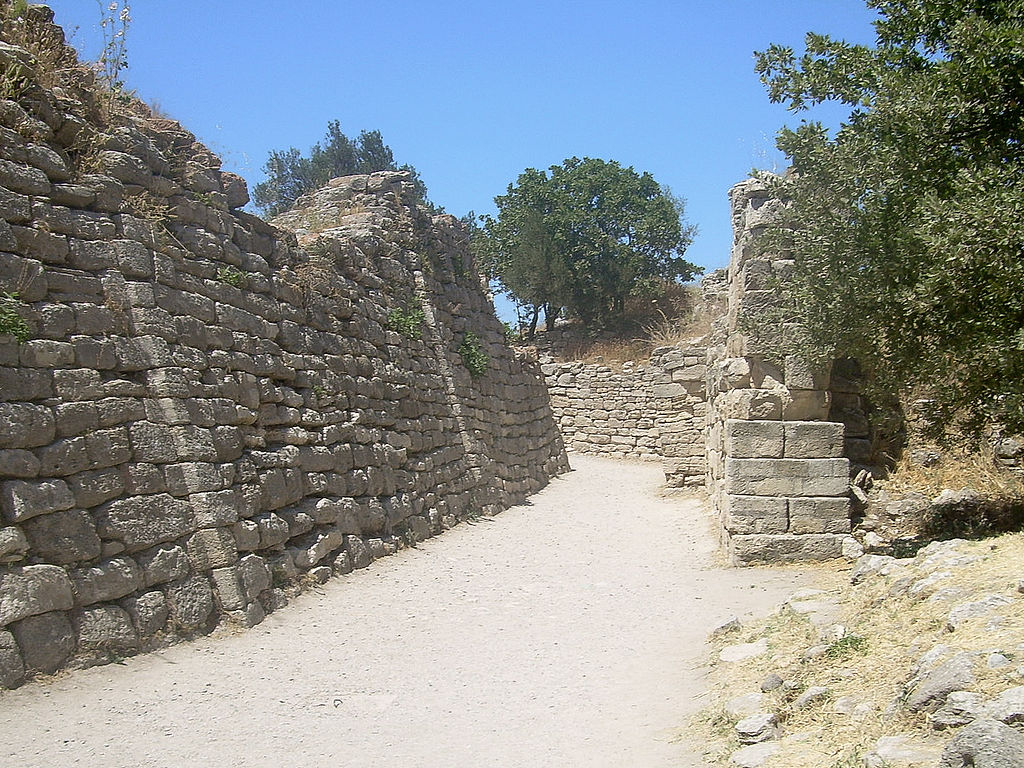
The city of Troy, site of the Trojan War and star of Homer’s Iliad, was long thought to be mythical. But in 1865, archaeologists uncovered a site in western Turkey that is now widely considered to be the place that opened its gates to a horse full of soldiers (even if the horse itself may be a bunch of bull).

5. Gehenna

“Gehenna” has long been a byword for a place of fiery torment. It is one of several terms translated as “Hell” in the Old and New Testaments. Jesus mentions it as a place of “unquenchable fire.” In the Quran, Jahannam is likewise a name for Hell. Rudyard Kipling, too, treated Gehenna as the opposite of Heaven:

Down to Gehenna or up to the Throne,
He travels the fastest who travels alone.

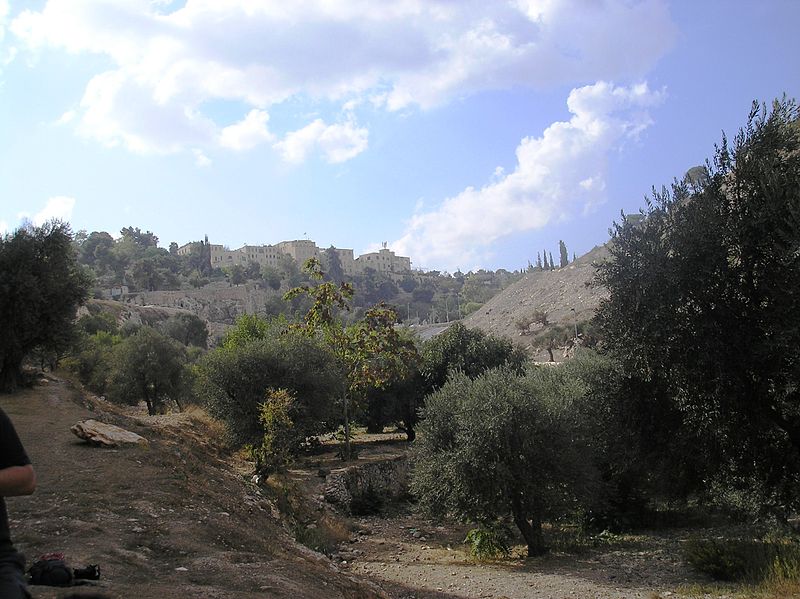
Before it became a metaphor, however, Gehenna was a real geographical location: the Valley of Hinnom, south of Jerusalem. It gained a reputation as an accursed place of fire, apparently because of ritual child sacrifices that happened in the area.

6. Xanadu

In Xanadu did Kubla Khan
A stately pleasure-dome decree:
Where Alph, the sacred river, ran
Through caverns measureless to man
Down to a sunless sea.

So begins Samuel Taylor Coleridge’s “Kubla Khan,” one of the most famous poems in the English language. Largely due to this poem’s influence, “Xanadu” has come to mean a place of physical delight, opulence, and luxury. It was the name of a mansion in Citizen Kane, and “Xanadu 2.0” is the name of Bill Gates’s mansion in real life.

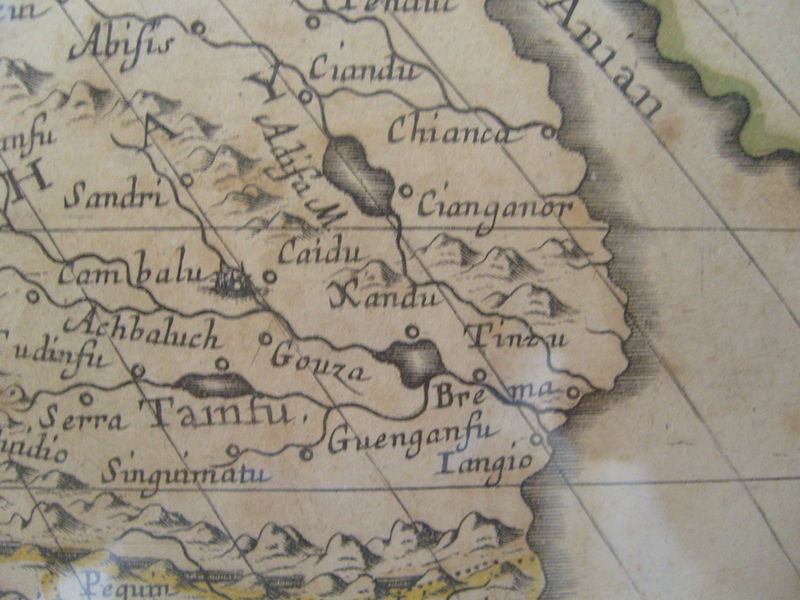
But just like Kubla Khan, Xanadu was very real. It was located in modern-day Mongolia, and it was the capital of Khan’s China before he moved his throne to the city that would become Beijing. The exact location of the city is still known today, though nothing remains.

Others

Other real places that have achieved legendary status include:

  • Transylvania
  • Timbuktu
  • Arcadia
  • Sherwood Forest

I’ve never been to any of these places. But I’m leaving for Texas tomorrow to visit family for a week. Texas counts as legendary – right?

The Witch and the Dragon – Chapters 29 & 30

Standard Disclaimer

This is fan fiction of Buffy the Vampire Slayer and Angel, which were created by Joss Whedon. If you like, you can read my thoughts on the ethics and legality of fan fiction.


[Start reading story from beginning]

[Go back to chapters 27 & 28]

Chapter 29

The rain stopped. Gradually, the stormclouds separated, and a little sun returned.

Spike and Illyria were helping tend to the wounded. Buffy and Dawn had never left their mother’s side, while Xander and Giles had gone back to search in the crowd of souls.

That left Willow and Tara. They held hands, sitting on the ground together so as not to hurt Willow’s leg.

“I’ve wanted this for so long,” said Willow. “But now that I’m finally with you…”

Tara waited, studying her.

“I can’t imagine what you must think of me. First Warren, now this. I don’t know if I’m good or evil, Tara. I’m not sure I know the meaning of the words. All I know is, when anything happens to you, I go a little bit crazy.”

Tara touched Willow’s hair. “I’m lucky, in a way. I’ve never had to make those choices. If someone had ripped you away from me, if I’d had your power…? I don’t know. It could’ve been me all black and veiny.”

“Don’t say that,” Willow whispered. “Even if it’s true. I’d rather think about what you actually did. You were so brave today.”

“Well, I learned it from you.”

“I learned it from Buffy.”

They sat together, savoring the sheer fact of each other’s presence.

“Illyria thinks the rift will close after today,” said Willow. “This is probably the last time I’ll see you until…you know.”

“Shh.” Tara squeezed her hand. “Don’t think about that. Be with me now, okay?”

Willow ran her thumb over the back of Tara’s hand. “It’s funny. I want so bad to say the perfect thing, to be profound and meaningful. I tried so hard to think of the words beforehand. But there’s nothing. And Xander, when he finds Anya, you know what he’s going to do? Just hug her, say ‘I love you,’ and cry. Can you believe it? I mean, how lame is that?”

Tara smiled. “Pretty lame.”

Willow hugged her.

Hot tears spilled from her eyes.

“I love you.”

“I love you.”

She pulled away…and Tara was gone.

“No,” she whispered, looking around, as if Tara might just be nearby.

She sagged to the ground, curled up tight, and sobbed for a long time.

Then she got up, dried her eyes, and felt the sunlight on her skin. She set out in search of the friends she still had.

 Chapter 30

The final death toll from the battle was seven. Five slayers, including Dana, whose real name was Charlotte. Olga had survived. Two witches: Marissa and Svetlana. Young, relatively new. With more training, maybe they could have…

Willow promised Emily she would tell their parents.

They called in a helicopter for the seriously wounded. The Slayers gave first aid to everyone else. It turned out they had a lot of practice with that sort of thing.

The witches piled the bodies of the demons into a great heap over Abaddon, and set the whole thing ablaze. It burned blue, and the flames licked far up into the afternoon sky.

By 6:00 everything was ready, and they filed back into their respective vehicles for the ride home. This time, Buffy rode the bus.

The mood was somber. Willow wondered if anyone else felt as uncomfortable as she did. Nobody talked for ten minutes or so.

Finally Spike broke the silence. “Good seein’ Joyce again,” he said. “Sweet lady. Not like you lot, forever runnin’ off to skewer one bogeyman or another. Shame about her dyin’ and all.”

“Really, Spike?” said Dawn. “My mother dying, is that a shame, in your opinion?”

“Don’t have to get snippy,” said Spike. “I just mean that was a right proper reunion for you Summers girls. Lot better than mine. Never knew how much I liked vampire Harm till I met human Harm. Eh – vampire Harm is dead, right?” Buffy stared at him in disbelief. “All right. Silly question.”

“I met Principal Snyder,” said Xander.

“No way,” said Willow. “Did he say anything?”

“Mostly he yelled a lot. Seemed to think there was too much lollygagging in general, and there was concern that some delinquent had pulled the fire alarm. He’s not a happy man.”

“What about Anya?” said Dawn. “You found her, right?”

“Yeah.” Xander smiled. “She said her afterlife was – and I quote – ‘acceptable.’ The pros are eternal bliss, the end of suffering, and no rabbits. Cons include the absence of any financial markets – she describes heaven as ‘Communist’ – as well as a complete lack of any special powers, demonic or otherwise. She was pretty vocal about that last one.”

“Did she say anything about me?” said Spike.

“Um, let’s see…yeah. Not by name, though. She called you ‘That vampire who did it on a table for about eight seconds.’”

Spike made a face. “A simple ‘no’ would have sufficed.”

“Giles?” said Willow. “Did you find Jenny?”

“Indeed.”

They all waited. He glanced up.

“Oh. I suppose you want details of my emotional, deeply personal, incredibly private experience?”

“Yes, please,” said Dawn.

“Well, she was happy to see me,” said Giles. “She told me to be careful. And she said, ‘Rupert, it’s 2035, so tell me you’ve figured out how to use a computer by now, because if not, I’ll haunt you till the day that you die.’” He looked thoughtful. “And then she described me as a ‘silver fox,’ which I can only presume is a term of endearment.”

“Well, you are pretty foxy,” said Xander.

“And with that sentence,” said Giles, “my life is complete.”

“Giles,” said Willow, “I have to ask. About the Almada spell. You never told us. Did I – did we – make the right decision?”

He didn’t answer for a while.

“All of you,” he said, “you went against my express wishes. You violated the sanctity of my mind. You interfered with the natural order of things.”

He sighed.

“And I am deeply grateful.”

They smiled. Willow said, “So you don’t think I’m a ‘rank, arrogant amateur’ anymore?”

“Well, you’re asking the question, so I don’t think you’re arrogant. And after today, no one could possibly mistake you for an amateur.”

“What about ‘rank?’”

“You know, I used that word because it had a certain gravitas, but I confess I’m not entirely sure what it means.”

He turned serious.

“When I was walking amongst all those dead souls,” he said, “I happened to come across Ben, the young man I killed in order to do away with Glory. He ran off when he saw me. But afterward, I couldn’t stop seeing his face whenever I closed my eyes.”

Giles took off his glasses, cleaned them.

“Willow,” he said, “if you’re looking for reassurance, or forgiveness, or redemption, or anything of that sort, I think that’s quite natural. But don’t look to me. I’ve just as much need of it as you do.”

She wanted to say something, but the warmth inside her refused to be translated to words. She only nodded.

Silence returned for a long while. Then Dawn reached for her sister’s arm.

“Well, Buffy? What are we gonna do now?”

Buffy looked at her, and smiled.

[Go on to chapters 31 & 32]

Friday Link

One of my favorite poems: Philip Larkin’s “Next, Please.” I find it wise and sad.

Which is, you know, just what you want on a Friday. I’m a lot of fun at parties, let me tell you.

Have a great weekend!

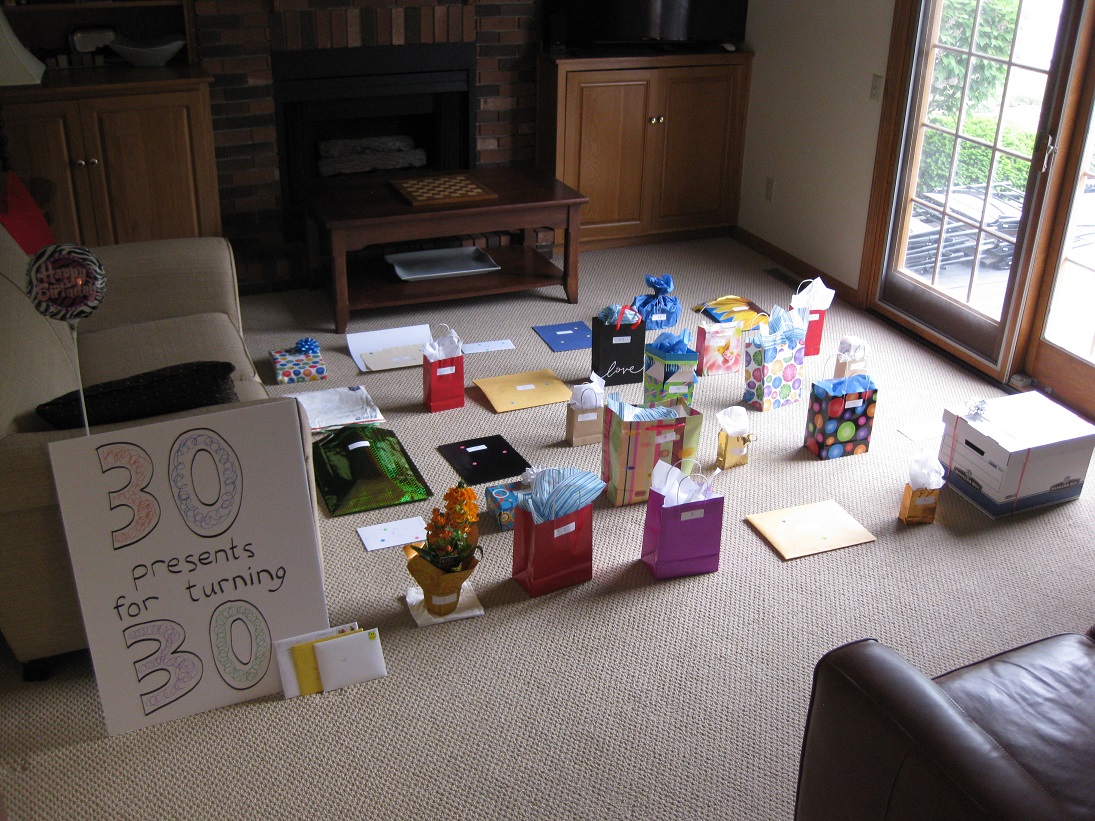
30 for 30

30 for 30

Betsy’s thirty presents included:

  • A subscription to This Old House magazine
  • Flowers
  • Thinking in Pictures by Temple Grandin
  • A poem
  • DVDs of The Iron Giant and Slumdog Millionaire
  • A mixtape, opening with “Ship Happens” (warning: contains strong language)
  • Action figures of Spike (from Buffy) and Thor
  • Wine
  • Chocolates, a lei, and a very thoughtful birthday card, sent by her old friend Jessica in Hawaii
  • An “About Betsy” Powerpoint, which includes such fun facts as: Betsy is the same age as Princess Peach (Super Mario Bros. was released in 1985)
  • A box of sealed envelopes containing fun date ideas
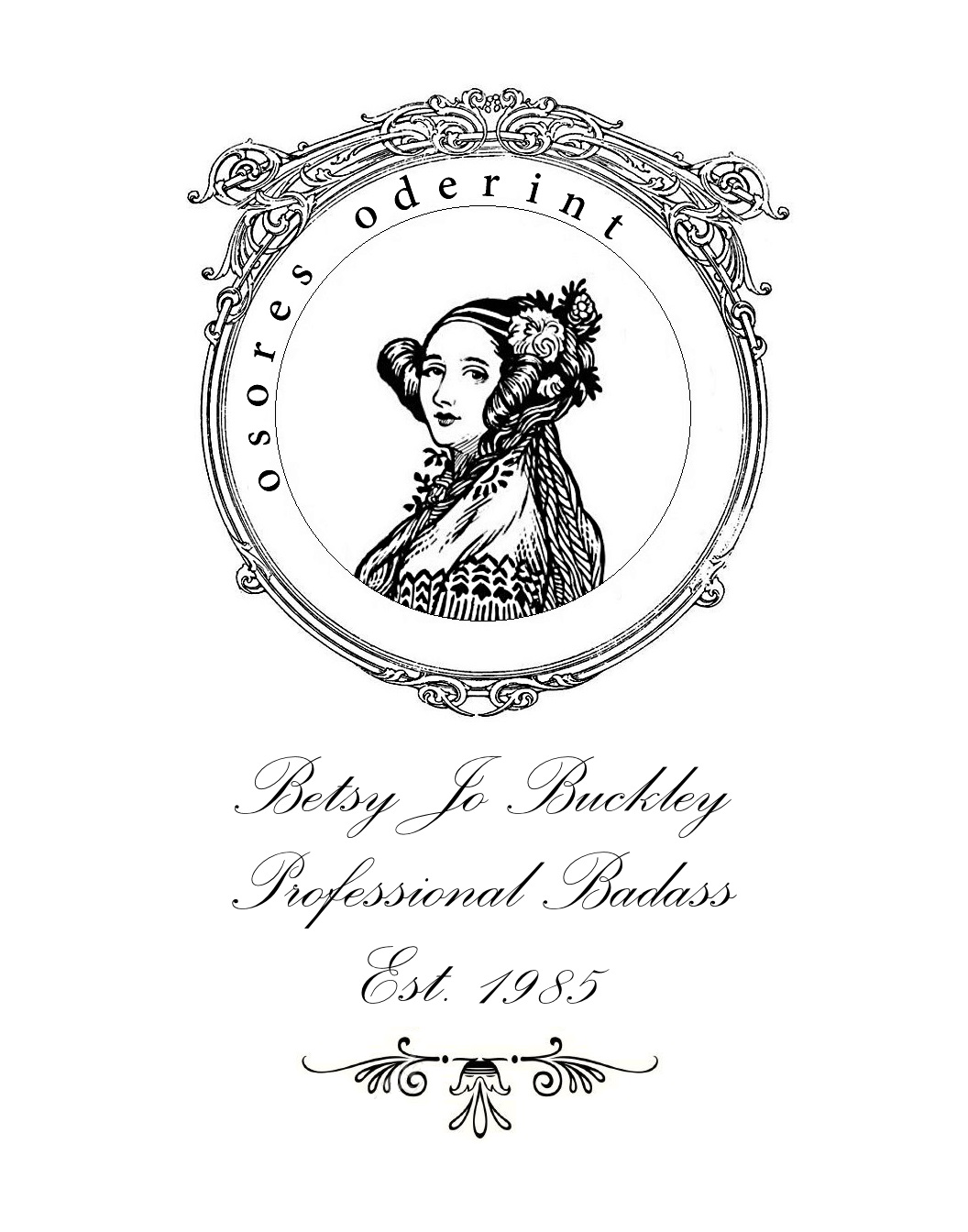
  • And a poster of this:

osores oderint

The woman is Ada Lovelace, the world’s first programmer (because Betsy is in IT). “Osores oderint” is Latin for “Haters gonna hate.”

Afterward we had dinner at Texas Roadhouse, where the waiter said he had never seen anyone eat that many ribs in his five years of working there. Not even joking.

Birthdays are fun. 🙂

Happy Birthday to Betsy!

candles

Betsy turns thirty today! She has a big birthday surprise coming, and (as often happens with surprises) she has no idea what it is. Very exciting. Full details tomorrow.

In the meantime, if you have any well-wishes, congratulations, pieces of advice, or anything else for Mrs. Betsy Buckley, leave ’em in the comments. 🙂