Christianity and Me, part 2

Yesterday I wrote that I find Christianity beautiful, wise, compassionate, and beneficial. Why, then, am I not a Christian?

It’s very simple. I don’t believe it happens to be true. That’s it; there is no other reason.

I have not yet seen a convincing argument that God exists. Still less have I seen a convincing argument that Jesus is the Son of God, or God Himself. Now, I also can’t show that God doesn’t exist, so I’m not an atheist. I just see no particular reason to believe He does. So I’m an agnostic.

(Yes, I know that faith has its role. But faith without reason is blind, so for me, reason has to come first.)

There are of course many proofs and reasons that defenders have offered over the years for the existence of God, so it’s only fair to look at a few of those, as well as one major obstacle (in my view) to God being real.

The reason most commonly given is the existence of the universe. How can we have a Creation without a Creator? Now, modern Christianity generally doesn’t argue with science over the validity of evolution or astronomy, so most Christians these days probably agree that the universe began with a Big Bang about 14 billion years ago, and evolution is a Real Thing that Happened. But we still need God for the Big Bang, right? The spark of the universe, the laws of physics, all that.

There are two problems with this line of thinking.

First, it says that the universe must have come from somewhere – but then it immediately says that its Creator did not come from somewhere, but always existed. Now, we’re talking about very metaphysical, hypothetical questions here, so human intuition is weak. Is it really so much easier to believe that God always existed, than to believe that we’ve always had some form of multiverse that spawns off little universes like ours constantly?

Or if that’s not intuitively satisfying, consider this. In a universe with no God, there would be no matter, no energy, no laws of physics. In such a place, why shouldn’t a universe spontaneously pop into being? It seems strange to us, but only the laws of physics prevent such a thing. Without them, what’s to stop it? (I’m not saying you have to believe this is true – I don’t necessarily either – I’m just offering it as another possible way of intuitively explaining the universe that doesn’t require God.)

You could also argue that the universe and Earth are perfectly calibrated for life, custom-built for humanity, and that this suggests God. But I think the idea of a multiverse, combined with the Anthropic Principle, obviates the need for God in such calibration. (Again, I’m not saying I necessarily believe in a multiverse, I’m just showing that there’s plenty of room for doubt about God.)

There are, of course, many more arguments for God. But time is limited this morning, and the arguments have all been hashed out a thousand times before. Suffice it to say that I’ve heard many of them, and personally, I’ve found none convincing.

Finally, there’s one major stumbling block to the existence of a benevolent God, and it’s the same one everyone talks about: suffering.

Understand, when I talk about suffering, I’m not thinking of some abstract metaphysical concept. I’m thinking about Robert-François Damiens, who in 1757 was executed in the following manner. (Warning: graphic.)

Fetched from his prison cell on the morning of 28 March 1757, Damiens allegedly said “La journée sera rude” (“The day will be hard”). He was tortured first with red-hot pincers; his hand, holding the knife used in the attempted assassination, was burned using sulphur; molten wax, molten lead, and boiling oil were poured into his wounds. He was then remanded to the royal executioner, Charles Henri Sanson, who harnessed horses to his arms and legs to be dismembered. But Damiens’ limbs did not separate easily: the officiants ordered Sanson to cut Damiens’ joints with an axe. Once Damiens was dismembered to the applause of the crowd, his reportedly still-living torso was burnt at the stake.

I’m hard-pressed to believe that an all-powerful, all-loving God couldn’t have found some way to help him out here, regardless of any other circumstances. And don’t say suffering happens for the sake of free will, because plenty of suffering happens because of natural disasters.

For me, this is not an abstract thing. I have literally wept with grief and anger and shame for the sheer volume of human agony that God has allowed to happen in this world. I’m not saying you have to agree with me. I’m just saying that I take this very seriously indeed.

That doesn’t mean, however, that we have to be serious all the time. So if you have anything to say in response to my long ramblings, feel free to keep it light. As always, I’m open and willing to talk.
Christianity and Me, part 1

Mr. Trube asked me to write this post.

He and his father (coincidentally, also named Mr. Trube) have been reading and discussing a book called You Lost Me, which is about 18- to 29-year-olds who have left the Christian church. In other words, me.

I am not a Christian. I am an agnostic. But I was raised Christian, my parents were Christian, and my wife is Christian. I have a deep respect for Christianity, and (I think) a fairly good understanding of it. My rejection of it is not something I take lightly, nor something I came to quickly. I am agnostic because that’s where my search for truth led me, and for no other reason.

I’m what You Lost Me would call a “prodigal,” someone who has left not only the church, but also the faith itself.

Since Ben and his dad are talking about this so much right now, he asked me to share my own perspective, and I was happy to oblige.

Although many of my beliefs about Christianity are highly critical, there’s also much that I admire. In the interest of mutual respect and understanding, I’ll start today with the admiration part, and move to the critical part tomorrow.

What I Admire About Christianity

  1. Jesus. Putting aside for today the question of his divinity, Ben and I agree on one thing: Jesus, as presented in the Gospels, was a remarkably compassionate and wise human being. I do believe that Jesus existed as a historical person, and that his attitude was more or less as the Gospels describe. Be wise as serpents and gentle as doves. Love your enemies, bless those who curse you. Ask, and it shall be given to you, seek and you shall find. You shall know the truth, and the truth shall set you free. Neither do I condemn you; go, and sin no more. I get chills – literal, genuine chills – reading these words. They form most of my own core philosophy on life.
  2. Forgiveness. Redemption lies at the heart of Christianity, and that’s deeply compelling for me. I believe people need second chances, and ten millionth chances, too. I believe we must forgive, as much for ourselves as for others.
  3. The Church as a community. I was never one of those people who hated “organized religion.” I think it’s great that so many people get together so often to do so much good. It strengthens interpersonal bonds, it strengthens the community, and it strengthens faith. Which reminds me…
  4. Faith. This is one of those words that has endless interpretations, and I believe my own interpretation is a bit different than the average Christian’s. Nevertheless, in my own way, I have a strong belief in the power of faith, and I think it is among the most powerful things we’ve discovered as a species.
  5. The idea of God and Heaven. I’ve got to hand it to Christianity: it makes a pretty amazing deal. Eternal bliss is hard to turn down. I love the idea that God could be real, that I could spend the remainder of Time co-existing with Him. It certainly makes me wish I could be a Christian.

So, with all these warm feelings, why am I not a Christian?

Stay tuned tomorrow.

Haiku for Tuesday

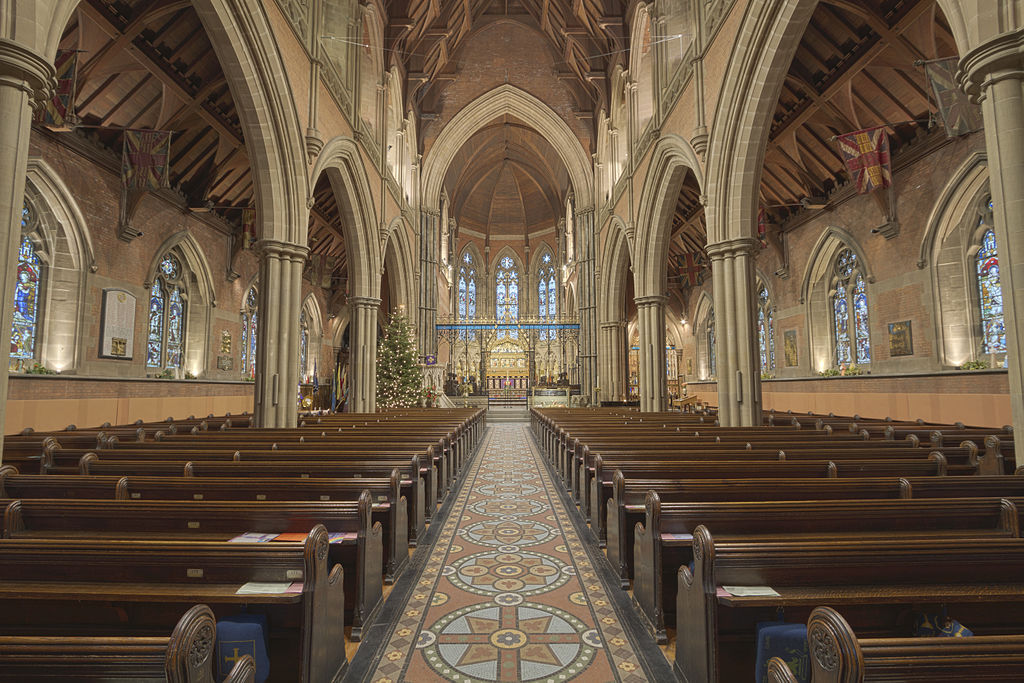
Hallowed pillars, vaults
like firmament. Bow; breathe; love.
Now, open your eyes.

New Book!

As Ben and I remain locked in mortal combat over our respective novels (Surreality for him, The Crane Girl for me), I’ve decided to launch another little project on the side. I plan to self-publish a book by the end of the year.

Not a novel, but a book of poems. I’ll call it The Witching Hour.

Although I’ve written three books (and counting) before this, none have ever seen the light of day. I’ve never had anything I felt was publishable quality, even for a self-publish. But the poems are different.

I’m told the poetry market is absurdly difficult to break into in the usual, “mainstream” way – much harder than the fiction market, which isn’t exactly a cakewalk. Reader demand is relatively low, and they tend to want established names, not newbies. And in the world of poetry, having an “established name” usually means not having a pulse.

So that’s one factor: self-publishing is the only viable option (that I know of) for poems. Another factor is that I’m human, and after three and a half novels in the dark, I want to see my name on the cover of a book, dammit.

And finally, I’ve got all these poems lying around, old and new, and it seems like a waste not to do something with them. After all, they represent a period of ten years, over a third of my life.

So, yeah: new book coming. The Witching Hour. Should be available before Christmas. I’ll keep you posted.

Questions? Comments?

Postmortem: Walden

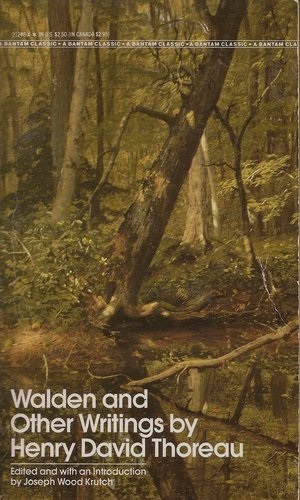
walden

Around 1845, Henry David Thoreau went into the woods and built a small house for himself by Walden Pond (Concord, Massachusetts). He lived simply, frugally, and mostly alone, and then he wrote a book about it. His publisher having rejected Ramblings of a Bitter Man Beside a Pond, he settled on the title of Walden.

I’m very torn about this book.

It’s littered with many profound insights…scattered among long chapters of interminable boredom. It contains deep wisdom…if you can pick it out from the vast sea of his crotchety blathering. It seems to me that a misanthrope wrote a book about the essential goodness of humanity, and Walden is what we got.

The quotes I’ve scattered throughout this post were among my favorite parts of the book. They should give you a flavor of the good bits. I’ll spare you the longer, more soporific sections.

Why level downward to our dullest perception always, and praise that as common sense? The commonest sense is the sense of men asleep, which they express by snoring.

Let’s get to specifics.

First, I should be clear that Walden was and is an important book, the work of a gifted mind, the kind of book that rewards the reader for his time. I say this because I’m about to criticize it a lot, and I don’t want you to think that I don’t respect it. I do. It’s just that it also makes me very angry.

Many of the phenomena of Winter are suggestive of an inexpressible tenderness and fragile delicacy. We are accustomed to hear this king described as a rude and boisterous tyrant; but with the gentleness of a lover he adorns the tresses of Summer.

Walden is known for expressing a love of nature, of self-reliance, of economy, of the insight that can spring from silence and solitude. I’m 100% on board with all that, and it’s that sympathy with the core ideals which got me through the more difficult parts.

But Thoreau also (in my opinion) lets these ideas run away with him, which leads him to start spouting a lot of bullshit.

For instance, he says that he doesn’t read the newspaper, and he makes it clear that the trivial deeds of his fellow men are far less interesting than the comings and goings of the squirrels outside his house. Now, don’t get me wrong, I agree with this feeling, this idea that much of what we worry about is trivial, that nature is beautiful and too often unnoticed. But there’s also a great deal in the newspaper that does matter, because it can lead to joy or suffering for a lot of people. And if you stop caring about that, then in my opinion, you have left the path of real philosophy.

Yet some can be patriotic who have no self-respect, and sacrifice the greater to the less. They love the soil which makes their graves, but have no sympathy with the spirit which may still animate their clay.

Thoreau seems to give in to his romantic side too often. I don’t mean romantic love – I believe he got through the whole book without recognizing such a thing exists – but rather, he lets his feelings guide him too much. He romanticizes the idea of hunting animals, going on about the harmony of man with nature, the nobility of the circle of life. I hate stuff like this, because he says it having experienced only the good side of the aforementioned circle: hunting and eating animals. One wonders how much nobility he would find in being devoured by wolves himself, or in watching them eat his sister.

The light which puts out our eyes is darkness to us. Only that day dawns to which we are awake. There is more day to dawn. The sun is but a morning star.

It’s the same in his section about charity. He’s lukewarm on the idea of charity, preferring the ideal of self-reliance. Again, I’m all for self-reliance when it’s possible, but he seems to have no concept that sometimes, some people simply need help. So here we have a well-off white man in the era of slavery explaining that we shouldn’t trouble ourselves in the affairs of the world or try too hard to give to those in need. You’ll excuse me if I detect a whiff of hypocrisy there.

Standing on the snow-covered plain, as if in a pasture amid the hills, I cut my way first through a foot of snow, and then a foot of ice, and open a window under my feet, where kneeling to drink, I look down into the quiet parlor of the fishes, pervaded by a softened light as through a window of ground glass, with its bright sanded floor the same as in summer; there a perennial waveless serenity reigns as in the amber twilight sky, corresponding to the cool and even temperament of the inhabitants. Heaven is under our feet as well as over our heads.

I could go on, but I’ve rambled long enough already. In between the parts that put me to sleep and the parts that made me want to throw the book across the room, Walden was really quite beautiful – as the quotes indicate.

Read it if you can.

Vacation Day

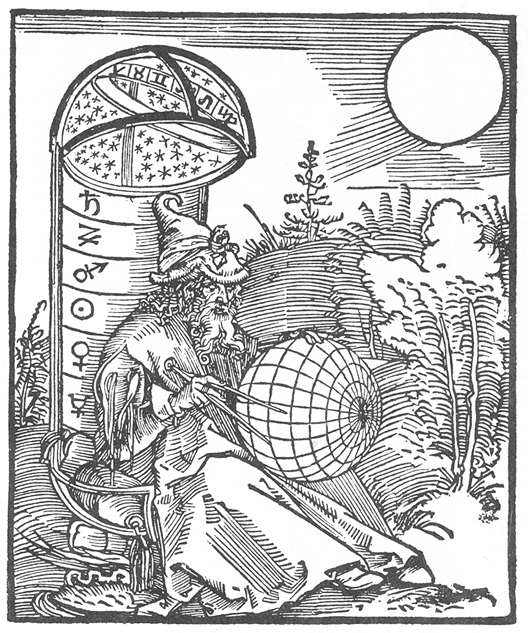
durer

Excuse me while I ponder. Back tomorrow.

I Want to go to Siberia

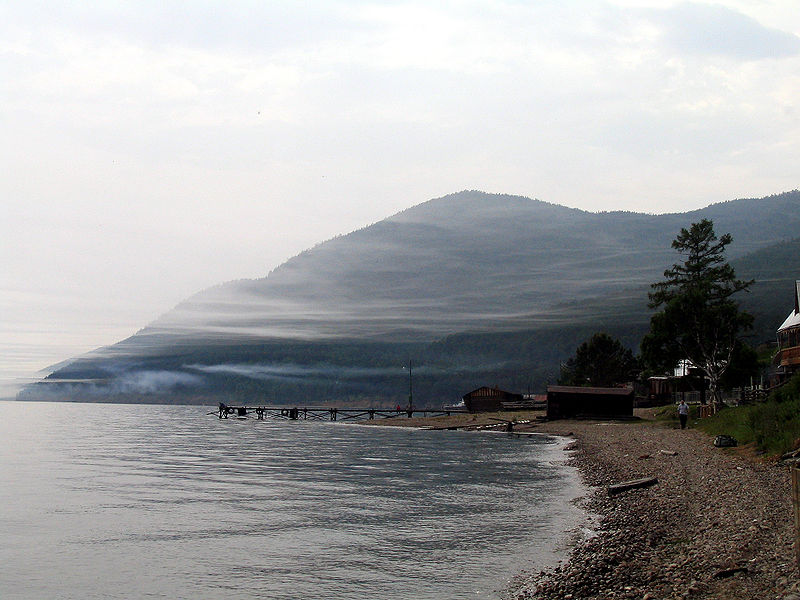
baikal

It’s true. I want to go to Siberia.

Not, like, enemy-of-Stalin style. I like cold weather, but not that much. No, I want to go as a tourist, and I have a destination in mind.

Lake Baikal.

You can be forgiven if you’ve never heard of this place, so let me introduce you. Lake Baikal is the oldest, deepest, and largest freshwater lake in the world.

I’ll break it down.

  • Oldest – Lake Baikal was formed 25-30 million years ago. To put that in perspective, 25 million years ago, South America was still full of nine-foot-tall Terror Birds. You think I’m kidding, but I’m not.
  • Largest – For sheer amount of fresh water, nothing competes. Check this out: you round up every drop of fresh water on the Earth’s surface, put it all in a big tank. One in every five of those drops is from Lake Baikal.
  • Deepest – We’re talking over a mile deep. Let’s put that in perspective. You get the best athletes on the planet and create some kind of physics-defying vertical track, and have them run top-speed from the surface to the bottom…and it’s four minutes before they get there. Dayumn.

Of course I could tell you all kinds of other things. Like, that Lake Baikal contains an island where shamans live, big enough to have lakes of its own…that it has fish that give birth to live young…that it’s home to its the only exclusively freshwater seal in existence, found nowhere else in the world…that in fact, 80% of the animals there live nowhere else in the world…that the ice in winter is so thick, they once drove a train over it.

But I wouldn’t want you to get bored. And I wouldn’t want to distract you from buying your tickets to Siberia!

Okay, I admit, I am a crazy person. But my enthusiasm for this place is real, and a visit there is actually on my bucket list.

Where would you like to go?

Friday Links

eff

In the battle against NSA hypersurveillance, we’ve found a new weapon.

Despite its insipid name, the “USA Freedom Act” appears to be the best chance so far of stopping our intelligence system’s massive overreach. The Electronic Frontier Foundation has an excellent analysis of the bill, which would stop the call records program and vastly increase transparency, among other things.

It’s supported by a broad coalition of supporters, including the EFF itself, the ACLU, Mozilla, Google, Apple, Microsoft, Facebook, Yahoo!, and many others.

But it still needs your voice.

Please call your representatives today, as I plan to, and ask them to support this bill.

pvp

Meanwhile, PVP has their own suggestions on how to handle the NSA.

Onion

And of course, the Onion has its own take on the issue.

Finally, I’m happy to announce that Mr. Benjamin Trube has accepted my challenge. I’ve added a word count meter on the right side of the blog, the same as his, so you can track our competition. Let the best man win! *cough* It’s me *cough*

The First Photograph

first photo

This is it: the oldest surviving photograph in the world.

It was taken by the delightfully alliterative Nicéphore Niépce in 1826, in the Burgundy region of France. It’s called View from the Window at Le Gras. The exposure time is believed to have been hours, or even days.

Cool, huh?

Bring It, Trube!

Dear Mr. Benjamin Trube, Esq., &c:

WHEREAS we are lifelong Friends, and gentlemen of impeccable Learning and unimpeachable moral Character;

WHEREAS were are engaged separately in the selfsame pursuit, namely, the creation of Literature;

WHEREAS we have both advertised our progress on our Web Journals of late, you having completed 13,242 words on the third draft of your novel Surreality, and I having completed 19,378 words on the second draft of my novel The Crane Girl;

WHEREAS we are both lazy Bums who desperately need a kick in the Pants;

THEREFORE BE IT RESOLVED that we shall pursue a Contest, wherein the first of us to achieve the goal of 80,000 words on his current draft, shall receive a Book of his choosing from Half Price Books, at the expense of the other, cost of said volume not to exceed a reasonable Amount. The winner shall furthermore have bragging rights for a period not to exceed three (3) days.

It might be objected, that I have an unreasonable advantage, possessing a head start. Likewise, it might be objected that our tasks differ; for whereas you are revising a complete draft, I am writing all-new material now (my first draft having comprised only a small portion of the to-be-completed story).

However, these two objections would seem perhaps to cancel each other out, or at least to give neither party a clear advantage; and even if one party were indeed advantaged, the other may surely overcome on account of Will and Determination; and anyway, it is all in the name of Writing.

What say you, sir? Shall we duel?!

Sincerely,

Brian D. Buckley

EDIT: Challenge accepted.