Tag Archives: Postmortem

The Avengers Postmortem (Spoiler-Free)

Where did Tony Stark get a palintír?

“Big man, in a suit of armor…take that away, what are you?”
“Uh…genius billionaire playboy philanthropist?”
-Captain America and Iron Man

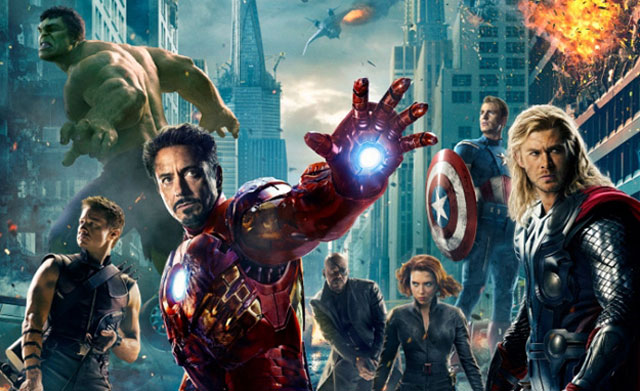
I saw The Avengers on Friday. For those who don’t know, the Avengers is a team of superheroes: Iron Man, the Hulk, Captain America, Thor, Black Widow, and Hawkeye. It’s no coincidence that most of these characters have starred in their own movies recently. Marvel’s been gearing up for this thing for years.

Beloved comic book franchise, enormous ramp-up, $220 million budget, and fan favorite Joss Whedon directing. Expectations were about as high as they could be – but this movie easily could have flopped. In less skillful hands, a story that combines six wildly different heroes might have spiraled into a CG-fueled mess of meaningless action.

There’s plenty of CG and action, but I’m happy to report that Avengers is a well-orchestrated adventure, cohesive and fast-paced from start to finish despite its 2 hour, 22-minute run time. The film charts a course between the gritty realism of Dark Knight and the goofy bombast of Green Lantern, finding just the right mix of drama and fun. For a superhero movie, Avengers has a lot of jokes, and it nails them with perfect timing. Often I couldn’t hear a line of dialogue because people were still laughing from the last one. It’s a good problem to have.

But the real reason Avengers works is that the characters are actually people. They seem to spend more time out of their superhero costumes than in them, and the interplay among their distinctive personalities is very believable. Tony Stark – the guy in the Iron Man suit – is particularly fun to watch as he pushes the buttons of others who take themselves too seriously (read: Captain America and Thor). Bruce Banner, the man who becomes the Hulk, was also a surprise favorite of mine. His soft-spoken intelligence and self-deprecating humor are a striking contrast to the terrifying creature he becomes – a creature that terrifies no one more than Banner himself.

As always, I’m running out of time, so I’ll wrap it up. Go see Avengers. You don’t need to like comic books, you don’t need to have seen the other movies. You just need to like laughing and watching things go boom.

What movies have you seen recently?

P.S. The questions for Ask Brian Anything are still coming in. You have three days left to submit your own question on any topic under the sun!
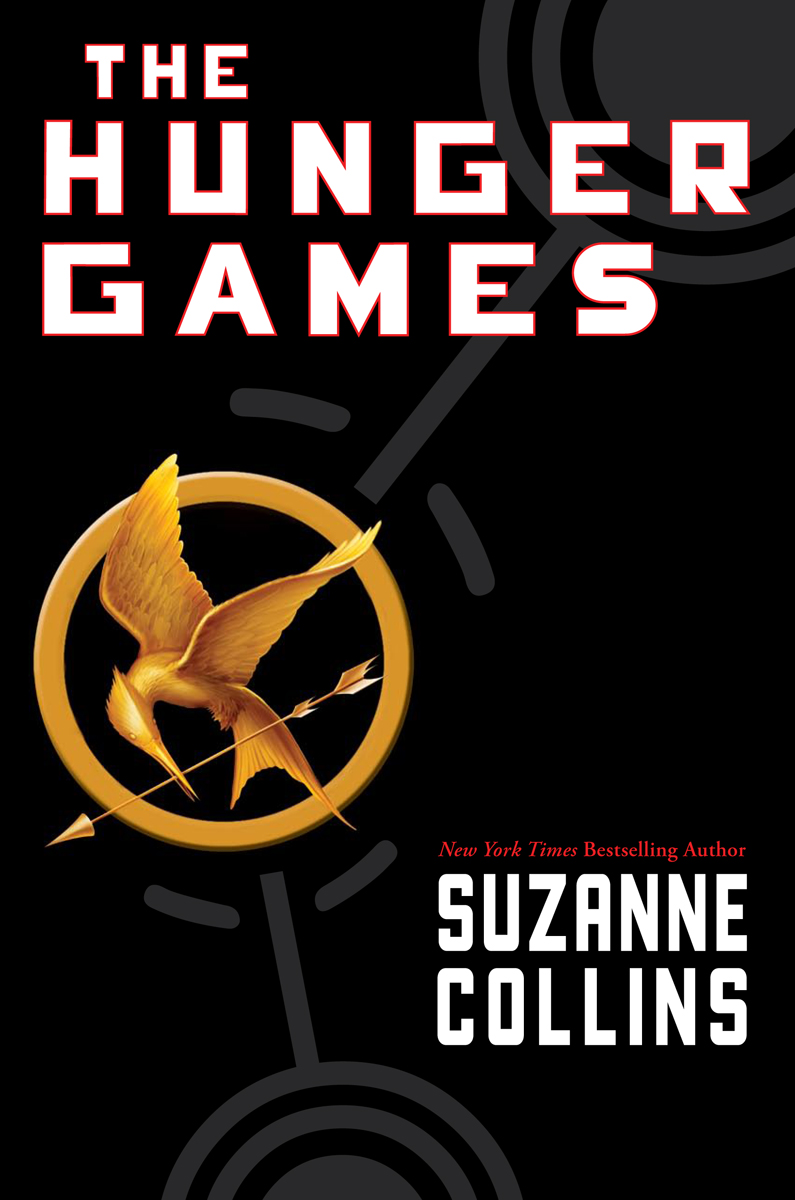
Hunger Games Postmortem (Spoiler-Free)

This book is pretty dark. Eh? Eh? "Dark"? Get it?

So I’ve finally caught up to the rest of Western civilization and read The Hunger Games. I haven’t looked at any other reviews, nor seen the movie, so this is my own, reasonably unbiased take on the book itself.

You probably know at least something about the story already, so I’ll spare you an in-depth summary. The premise is simple: 24 children, ages 12 to 18, fight each other to the death. The heroine, a 16-year-old hunter named Katniss Everdeen, saves her sister’s life by volunteering to take her place in the Games. The whole sadistic event is orchestrated by the Capitol, the elite rulers of a future North American country called Panem (as in panem et circenses, Latin for “bread and circuses“) to keep the masses under control. Political intrigue, a love triangle, and lots of violence all keep the story moving.

First things first: yep, the book is good. I read the whole thing in a weekend, which is saying something, since I haven’t made time for a whole novel in months. The formula sounds simple – take a likeable protagonist, throw her into impossible danger, watch her scramble her way out – but as legions of aspiring novelists know, it’s devilishly difficult to execute this well. Suzanne Collins nails it. From start to finish, the pages never stopped turning.

Of course, in a book that does so many things right, the flaws stand out all the more. For instance: as fast-paced as the story is, it does take a little while to get going. I found the first 60 pages, up until Katniss starts training for the Games, pretty slow. Especially tedious are a series of flashbacks, which set up Kat’s relationships with other characters but seemed like a distraction from the main story.

The language is also a bit clunky. You get sentences like this one, talking about a faraway pack of monsters: “Up close, I’m sure their more menacing attributes will be revealed.” She also overuses the word “somewhat.” I guess that sounds nitpicky, and certainly most writers have little tics like this (myself very much included), but I did find it distracting in places.

The biggest problem, though, is that I never really connected with Katniss. I liked her okay, I wanted her to win (and survive), but I never felt a visceral attachment to her character. I can think of two reasons for this.

First, she comes across as pretty mechanical in her thinking. She dismisses music and storytelling as useless, assumes other people’s feelings are cynical calculations, and spends surprisingly little time thinking about whether there’s any way she could survive without killing other innocent children. Even her love for her little sister – the whole reason she enters the Games in the first place – never felt especially believable. Katniss is a survivor, but not a lot else. Sure, that’s understandable and explainable and sensible, but compared to (say) a Frodo Baggins or a Harry Potter, she seems a little heartless.

And second – as crazy as this sounds – I never felt like she was in any real danger. Yes, she spends most of the book surrounded by people (and things) trying to kill her, and yes, she gets injured quite a few times, but I never got to a moment where I believed she was on the verge of losing. She always seemed to be in control, even when she wasn’t.

(By the way, “Couldn’t connect with the main character” was by far the #1 complaint my own beta readers had about The Counterfeit Emperor, so I understand how hard it is to get this right. Certainly she does a better job at it than I did. But still.)

I’m realizing now that I haven’t gotten into enough detail about the book’s positive aspects, and there are many, but unfortunately I’m running out of time. In lieu of that, I’ll simply go back to my earlier statement, which is among the highest praise possible for any book: it kept the pages turning. And since the story doesn’t really stand complete on its own, I may have quite a few pages left to turn in books 2 and 3.

Have you read The Hunger Games? What did you think?

Master and Margarita Postmortem

Master and Margarita

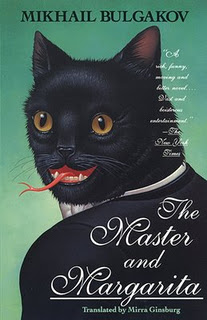
The Master and Margarita, by Mikhail Bulgakov. Translated by Mirra Ginsburg.

The Master and Margarita is considered one of the great masterpieces of the twentieth century. Its premise is simple and intriguing: Satan comes to Russia.

The first chapter, titled “Never Speak to Strangers,” opens in Soviet-era Moscow. Two men meet a stranger named Woland, who turns out to be the Devil. He gets them talking about religion:

The foreigner [Satan] threw himself back against the bench and asked, his voice rising almost to a squeal with curiosity, “You are atheists?”

“Yes, we are atheists,” Berlioz answered…

“Oh, how delightful!” cried the amazing foreigner…

Satan goes on to explain that God and Jesus are both quite real, and that he ought to know, because he was there for the Crucifixion. He then gives his own account of Pontius Pilate sentencing Jesus to death: the familiar story of the Gospels, with enough little twists to make it feel completely new.

I found the beginning utterly fascinating, and I tore through the first fifty pages. But as the book goes on, it gets more convoluted, and seems to lose its way.

We meet more of Satan’s retinue, including the giant black tom cat, Behemoth, pictured above. Satan & Co. wreak havoc in Moscow, framing people for crimes, inciting hysteria, generally causing confusion and trouble everywhere they go. We also meet the titular characters, the beautiful Margarita and the man she loves, a writer known only as the Master.

The novel is by turns beautiful, confusing, and laugh-out-loud funny. There’s much talk of redemption, for Pontius Pilate, the Master, and others too. I know that the author, Mikhail Bulgakov, is trying to tell me something about grace, but I’m not sure what it is. I’m also told that the story is a satire of Stalinist Russia, though I’m afraid that aspect of it went completely over my head. From my point of view, The Master and Margarita ended up feeling like a jumble – a lot of strange and pretty things, but I’m not sure what they added up to.

Sometimes you just have to give up and admit that a book is smarter than you are. I read Bulgakov’s masterpiece cover to cover, but I can’t say I understood it.

Gilgamesh Postmortem

The Epic of Gilgamesh

The Epic of Gilgamesh is one of the oldest surviving stories in the world. It was written in cuneiform on clay tablets that date back three thousand years, and many elements of the epic can be traced back another thousand years further than that. It makes the Iliad look positively hip and modern by comparison. For that reason alone I wanted to read Gilgamesh. Turns out, it’s a pretty good story, too.

I have to believe the concept of “spoilers” doesn’t really apply to anything with a “B.C.” in its copyright date, so I’ll give you a quick plot rundown.

Gilgamesh, the semi-divine king of Uruk, has a nasty habit of oppressing his subjects, so the gods create Enkidu, a “wild man,” to be his friend and distract him from his oppressin’ ways. After some early scuffles, the two become best friends, and go off to the Cedar Forest together to slay the evil Humbaba (who is apparently some sort of demon-ogre). Things get pretty intense:

At the heels of their feet the earth burst asunder,
they shattered, as they whirled, Mounts Sirion and Lebanon.
Black became the clouds of white,
raining down on them death like a mist.

But the good guys win in the end. After that is a seemingly irrelevant episode where they slay the Bull of Heaven (which I can only assume is the thing on the cover). And then Enkidu falls sick, and dies.

The loss affects Gilgamesh deeply. Not only does he grieve (and wow, is there some world-class grieving in Tablet VIII) but the reality of his own mortality sinks in for the first time.

How can I keep silent? How can I stay quiet?
My friend, whom I loved, has turned to clay,
my friend Enkidu, whom I loved, has turned to clay.
Shall I not be like him and also lie down,
never to rise again, through all eternity?

He goes on a long and dangerous quest to find Uta-Napishti, the only man ever to have gained immortality.

Mr. U-N is basically the Sumerian version of Noah. He recounts for Gilgamesh the story of how the gods unleashed the Deluge, which he survived by building a ship. The story is so similar to the Biblical account of the Flood (right down to some very particular details about releasing birds to search for dry land) that there’s no doubt they are two versions of the same story.

The upshot of all this is that the gods gave U-N immortality as a special deal for surviving the Deluge, but there aren’t going to be any other exceptions, so Gilgamesh can pretty much forget it. He returns to his home city of Uruk and gazes at the mighty walls he’s built around it, with the implication that those walls and that city are the best immortality he can hope for.

As you read Gilgamesh, one of the first things you notice is the repetition. You can see it in the second passage I quoted above. Often whole stanzas and sections are repeated, sometimes word for word, sometimes more than twice. This actually isn’t as annoying as you might think. It often lends the words a sort of dramatic weight that’s hard to describe, but works as you read.

Another obvious thing about the epic is that many fragments of it are missing. The surviving tablets are broken in places, and not all the text survives. These lacunae can be anywhere from a single word to dozens of lines in length. This, too, lends an odd quality to the reading. In a way, the brokenness actually enhanced the experience for me, as if glimpsing something through a veil makes it even more beautiful. I feel the same way sometimes when I hear songs on the radio with bursts of static. Maybe I’m just weird that way.

By modern standards, Gilgamesh is a strange beast, with a somewhat disjointed narrative and an ending that’s odd and a little anticlimactic. But of course the whole point is that modern standards don’t apply. If you read it with an open mind, you’ll find a human story told in bold strokes that aren’t always as simple as they seem. The fundamental themes of friendship and mortality still resonate today, and the book – if you’re so inclined – is definitely worth your time.

(Note: the version I read was translated by Andrew George.)

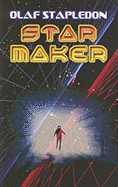
Star Maker Postmortem

Star Maker

Olaf Stapledon’s 1937 book Star Maker may be the most influential novel you’ve never heard of.

Arthur C. Clarke deeply admired it. Freeman Dyson credits it for giving him the idea for Dyson Spheres. Jorge Luis Borges wrote an introduction to one of its editions; Doris Lessing wrote an afterword for another. Brian Aldiss opined “Stapledon’s book embraces the firmament. Read it and you will be forever changed.” H. G. Wells and Virginia Woolf were fans, and C.S. Lewis felt strongly enough to write a letter condemning it as anti-Christian.

So what’s it about? And does it live up to the hype? I read it about a week ago, and I’m here to give you the answers.

Star Maker centers on an unnamed protagonist, an Englishman, who begins the story by standing outside one night pondering the Big Questions. What’s the point of life? Where is everything headed? Is there a God? If we’re all going to die, why does any of it matter?

He suddenly finds that he’s been transported, bodiless, into space, and that he can explore the galaxy. He heads to another planet, similar to Earth, with natives of its own, and gets to know one of these human-ish natives. Then he and his friend go bodiless-space-exploring together to yet another world, where they meet yet another friend, and gradually they amass more and more minds into a larger and larger group that explores more and more of the galaxy, and eventually, the universe. They travel back and forward in time, seeing the origin of the cosmos and its ultimate fate, witnessing the evolution of a single unified cosmic mind comprised of all its constituent organisms. Finally they reach an event Stapledon calls the Supreme Moment, when this cosmic mind comes face-to-face with its creator, a demiurge known as the Star Maker.

The story, such as it is, is mostly a vehicle for Stapledon to showcase his ideas about philosophy and science (emphasis on the philosophy side). The characters are entirely (and deliberately) plot devices. The only real conflict in the book consists of the philosophical questions mentioned above, so your reading enjoyment will come in direct proportion to your own fascination with Stapledon’s ideas.

For me personally, I got very excited as I started reading, because the first chapter seemed to phrase the central questions of existence in a very elegant and compelling way. I felt like Stapledon got it – he understood the real questions about life, and he had already rejected the easy answers. I settled in for the ride that would take me to his answer with a real sense of anticipation.

And now that I’ve read it?

Well, I’ve gotta say, I don’t find his answer(s) very compelling. Stapledon’s “Supreme Moment” gives a glimpse of God as the Star Maker, an aloof, non-loving, non-personal, endlessly creative spirit whom its creations (i.e. us) worship not because it promises salvation, but because worship is the proper response of created to Creator. For me, this is unfulfilling for a variety of reasons, not least of which is that I have no particular reason to believe his version of God actually exists.

So it’s a philosophical novel whose philosophy failed to move me; your mileage, of course, may vary. Yet I still think it was a good read. Star Maker is incredibly imaginative even by science fiction’s current standards; back when it was written, it would have been unprecedented.

The best thing about the book, by far, is its sheer audacious scope. Stapledon really pulls out the stops, painting a reasonably believable portrait of a universe (and eventually a multiverse) that encompasses the vastest possible ideas of time and space, in which aeons are smaller than pixels.

Star Maker wants to open your mind, and for the most part, it succeeds. For that alone, I’d say it’s worth the read.

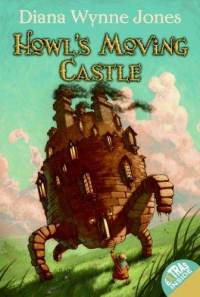
Howl’s Moving Castle Postmortem

Howl's Moving Castle

I’ll start with a slightly morbid confession: I heard about Howl’s Moving Castle because its author, Diana Wynne Jones, died. It happened four and a half months ago, and there was this flood of articles about what a wonderful author she was, and all the happy childhood memories she had created for people. She – and this book – received so much praise that I thought I’d better take note. I added it to my list.

(I should probably clarify at this point that the “Postmortem” in the blog post title refers merely to the book. No need to be any more morbid than necessary.)

Anyway, about a week ago, I finally began reading Howl’s Moving Castle, with high expectations. Maybe too high.

Because I’ll be honest: I lost interest and stopped reading halfway through.

To explain why, I’ll start by explaining what’s good about the book, because it does have a lot going for it. It opens with this wonderful first sentence:

In the land of Ingary, where such things as seven-league boots and cloaks of invisibility really exist, it is quite a misfortune to be born the eldest of three.

This suggests a world full magic and adventure, and on that score, the novel pretty much delivers. In addition to the seven-league boots (which you get to see in action) there is a Witch of the Waste, a fiery demon, a lively scarecrow, and of course the wizard Howl and his moving castle. So worldbuilding really wasn’t a problem.

The characters were good too. The main character, Sophie – who starts off as a young girl and gets transformed into an old woman – is fun to read, especially when you see how much her external change influences her thinking. Howl is also well-done: powerful enough to be intimidating, flawed enough to be human. I found myself caring less about Sophie’s sisters, but they were minor characters so it wasn’t a big deal.

Good world, good characters, and – I’ll add – good writing in general. So what’s left?

Ah, yeah. Plot. Or rather, lack of it.

The problem with the book, and the reason I stopped reading, is that there just isn’t that much going on. Let’s see, we’ve got the Witch of the Waste, who placed the aforementioned hex on Sophie; but the Witch doesn’t rear her head again for a while, and Sophie seems pretty much fine with her curse, so that’s not a big deal. We’ve got Howl himself, who also turns out to be much less scary than we’re initially led to believe. We’ve got an animated scarecrow who chases them a couple times but doesn’t really do anything. And we’ve got Howl courting one of Sophie’s sisters, which upsets Sophie quite a lot but doesn’t seem to matter to anybody else (including the sister).

A non-scary witch, a non-scary wizard, a non-scary scarecrow, and a non-problematic love affair. Unfortunately, this is pretty much it in the plot department – or at least it was halfway through the book, where I stopped reading.

I’ve mentioned before that I have a history of disliking beloved stories. American Gods did nothing for me especially, The Name of the Wind seemed tiresome, and I loathed The Last Unicorn. I’d say Howl’s Moving Castle was better than those three, but in the end, it just felt like it didn’t have any get-up-and-go. No disrespect, of course, to any of those authors, Diana Wynne Jones included; I simply didn’t love the books.

Have any of you read it? Care to share your own feelings?

Personally, I’m on to Margaret Atwood’s The Blind Assassin, which is beautifully written but seems to suffer from the same problem: no forward motion to the plot. I’m only about fifty pages in, so I’ll give it more time.

Tarzan of the Apes Postmortem

Tarzan book cover

Last night I finished Tarzan of the Apes by Edgar Rice Burroughs. This is the original 1912 novel that started it all: the countless sequels, the radio dramas, the TV shows, the cartoons, the movies – and above all, Tarzan himself, who went on to become far more famous than Burroughs ever would be.

By the way, the entire text of the novel is free online at Project Gutenberg, which is pretty cool. No, I didn’t read it there; I actually own the fabulous item pictured above.

All right, so Tarzan is not a Great Work of Literature (whatever that means) and a snotty critic could certainly find lots of things to be snotty about. For one thing, there’s the atrocious language, which features cringe-inducing sentences like the one below:

It was on the morning of the second day that the first link was forged in what was destined to form a chain of circumstances ending in a life for one then unborn such as has never been paralleled in the history of man.

Burroughs also says things like “commenced to realize” instead of “realized,” and his dialogue is laughably bad.

And don’t forget, this is 1912, so it’s no surprise to find a particularly pure and undiluted brand of racism and sexism. Friends, you don’t find many sentences like this anymore:

“Ah, John, I wish that I might be a man with a man’s philosophy, but I am but a woman, seeing with my heart rather than my head, and all that I can see is too horrible, too unthinkable to put into words.”

Jane, in particular, practically defines the term “Too Stupid To Live.” In one memorable scene, she faces down a lion with a gun in her hand, and her strategy – I cannot make this up – is to shoot herself in the head to spare herself the lion attack. I don’t think it’s a spoiler to say that Tarzan saves her.

Plot issues are equally egregious, with coincidences (one in particular) that strain credulity. Characters, too, are pretty flat. Tarzan himself not only has no character flaws whatsoever, he is also better than everybody at everything; so, I mean, that’s convenient.

Here’s the thing, though: I liked this book. It is even, dare I say, a good book.

Yes, the language is awful in a lot of ways, but for the most part it has one major virtue: it’s clear and precise. You get a good sense of what’s going on. And Burroughs uses a lot of vivid detail without dumping it on you in big chunks.

As for the racism and sexism, I should say – in the author’s defense – that you do find occasional, startling passages that break the mold: women behaving heroically, a condemnation of white colonialism in Africa. Granted, they’re only startling because the rest of the book is so bad in this regard, but they do exist.

And the plot and character issues? They didn’t actually bother me that much. Yeah, it’s a little ridiculous that Tarzan kills lions in hand-to-hand combat without breaking a sweat, taught himself to read and write, and learned fluent French in, like, a month. But on the other hand, it’s actually kind of nice to read about a character who isn’t forever grappling with some obsession or stumbling over his own Tragic Flaw or brooding about this and that. Tarzan, man. He gets shit done.

What it comes down to, really, is that Tarzan has a good story. Burroughs knows the formula – danger, action, heroic victory – and he uses it very well. The book is a page-turner, and frankly, that’s pretty high praise right there.

So tell me: what are you reading these days?

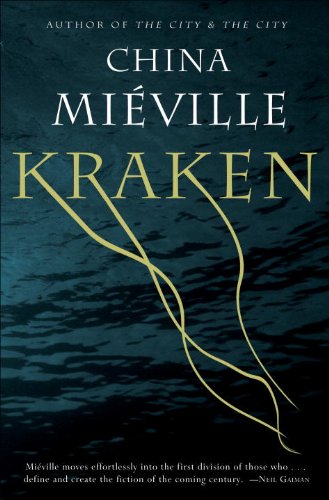
Kraken Postmortem (Minor Spoilers)

I said yesterday that I just finished reading Kraken by China Mieville. Check out that badass cover. Read me, it says, read me! So, you know, I did.

I also mentioned that I didn’t much care for the book. (In fact, I would’ve stopped reading halfway through, except that I had just previously stopped reading Clive Barker’s Weaveworld when it didn’t grab me after a hundred pages, and if you quit two books in a row, that makes you a book-quitter. Trufax.)

If you’re a writer, I think it’s important to consider why you don’t like a piece of writing. So let’s (ha! ha!) dive in…

The premise of the book is that someone has stolen a dead giant squid from its equally giant tank in a London museum, and the scientist in charge of caring for the specimen is trying to figure out whodunit. As he investigates, he delves steadily deeper into the bizarre underbelly of London, a world of squid-worshipping cults, Chaos Nazis, disembodied pigs, charmed iPods, sentient tattoos, and actual functional Star Trek phasers. The biggest question about the kraken heist is not who but why, and the whole thing is wrapped up tight with the impending apocalypse that everyone agrees is coming closer every day. Science, science fiction, fantasy, and the occult all swirl into a giant vortex of death by the time this book is over.

Now, if you’re like me, all that sounds pretty righteous so far. And I was hooked, in fact, for the first hundred pages or so. But the further I read, the more things fell apart, and not in that juicy W.B. Yeats kind of way. So what happened?

Style was an issue. Mieville’s style is light, playful, and sometimes fun to read, but he also leaves so much unsaid and uses so many difficult words and obscure references that he’s hard to follow at times. That’s a problem, but it’s not the problem.

Plot was an issue, only because there were so many layers of deception and conspiracy that it got hard to keep them all straight; but that wasn’t the problem either.

Characters were a much bigger issue; I didn’t especially like or dislike any of them, didn’t care what happened to them, didn’t get choked up when anybody died. But the characters are well-drawn, believable, likable, unique, and potentially very interesting. So why didn’t I care about them?

The real problem, I think, is that the book was just too much of a jumble. Too many disparate elements thrown together, without enough care taken to assemble it all into something coherent. Everybody says they’re worried about the end of the world, but nobody has any idea how to avoid it or even what causes it, so it’s just this disembodied plot element, floating there ominously but – pretty soon – uninterestingly. And the world is bursting with so many different kinds of weirdness, so many competing magics, that absolutely anything can happen, whenever the author wants it to. After a while it becomes a pretty much constant stream of deus ex machina, so you’re just sitting there waiting for Mieville to tell you what the answer to the mystery happens to be. By the time he finally did, I no longer cared.

The takeaway, I think, is that a story – even something deliciously crazy, where weirdness is the point, like Kraken – has to make sense. It has to have a system. The reader has to feel like he understands the rules to some extent, because if anything can happen, then he never feels like he’s backed into a corner, and then there’s no tension.

Thus sayeth Buckley.

By the way, new theme for the blog, you like it? I changed it because my friend pointed out that the old one didn’t have previous/next links on the posts, but I think the new one is just better visually, too. “Elegant Grunge,” it’s called. Classy.