Category Archives: Uncategorized

Friday Links

Suicide Squad is looking like a pretty sweet movie. Or at least a pretty sweet trailer.

I don’t think I’ve ever seen Harley Quinn on the big screen before, but this version nails her character perfectly IMO. Also, I didn’t realize till now that Will Smith was going to be in it.

Moving on…

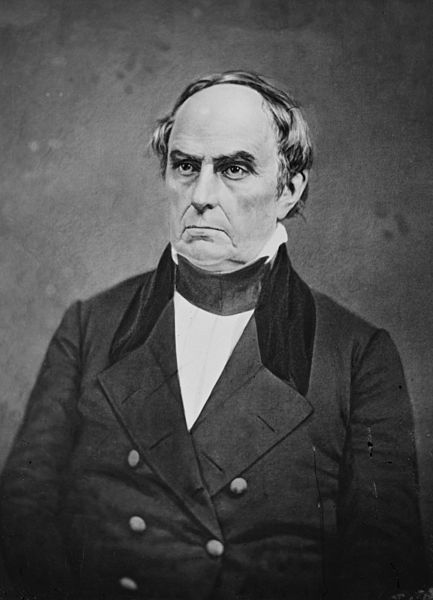
In the novel I’m currently editing, I came across a real historical person named Daniel Webster (1782-1852). He was a senator and a diplomat.

He was also, I’m fairly convinced, the human version of Grumpy Cat:

Daniel Webster

Or, now that I think about it, I guess Grumpy Cat is the feline version of Daniel Webster.

Have a non-grumpy weekend! (If you’re into that sort of thing.)

Writing & Editing Update

  • The Ohio chapter of the Editorial Freelancers Association (EFA) is officially up and running, with our own web page and everything. We had our first-ever meeting last night (video chat over Google Hangouts), which – as chapter coordinator – I organized and ran. A lot of discussion and enthusiasm. I’ve never done anything like this before, but it’s been a pretty good time so far. Forward!
  • Now editing my sixth book for publisher Pen-L.
  • Friend, fellow author, and distinguished gentleman Ben Trube has another project in the works, which I’ll be copyediting today.
  • This week I’ll be conducting several more local interviews for Run Life magazine. Never thought I’d get this much practice interviewing people!
  • Work on The Crane Girl has stalled a bit with everything else going on, but I hope to get that moving again soon.

Declaration of Interdependence

At some point in my K-12 education – maybe my high school health class? – they taught us that there are three stages of maturity.

  1. Dependence
  2. Independence
  3. Interdependence

The idea is that you start as a child, depending on someone else for all your needs. As you get older, you learn to provide for yourself. The last stage of maturity is to become part of a larger community or team and accept the idea of give-and-take.

Like all psychological models, it’s an oversimplification. In particular, I imagine many people go straight from #1 to #3. But it’s an interesting idea.

I was thinking about this yesterday as a kind of rough guide for helping me figure out my character arcs in Crane Girl. And it occurred to me that the independence phase can be further subdivided.

  1. Dependence
  2. Independence – caring for self
  3. Independence – caring for others
  4. Interdependence

Or, to use a metaphor I just made up: wolf pup, lone wolf, wolf mother (hunting alone), wolf mother (hunting in a pack).

I suggested this to Betsy, and she said there can be a fifth step, too: a return to dependency at the end of life. Good point, and something we might not like to think about.

Still working out precisely how all this applies to character development in the novel. We’ll see how it goes.

Friday Link

NPR agrees: singular “they” is cool.

I’m out!

A Woman’s Bar

Recently I was editing a story in which a man and a woman are having sex (as men and women are wont to do). The man is looking the woman over appreciatively, taking in her numerous attributes, with particular attention to…”her bar.”

Her bar?

I’m not ashamed to say I have a pretty dirty mind, and I have spent my share of hours in the nether regions of the Interwebs, but I had no idea what this meant. Some kind of odd sex slang I’d never heard? I went to Google.

The problem is that googling “bar,” “woman’s bar,” “her bar,” “sex bar,” and so on, is that you just get results about alcohol-serving establishments. Same for Urban Dictionary. Google, my trusty steed, could not avail me that day.

I racked (not wracked) my brains. What on earth…?

And then, as if struck by a bolt from on high, I had a literary epiphany.

It wasn’t obscure terminology. It was a typo.

It was, of course, her bra.

Haiku 365: December

And we’re done! A haiku a day, on average, for the entire year of 2015. (I will not be repeating the performance in 2016.)

People. Be impressed. Why aren’t you looking more impressed?

#335: 12/1/2015
Are there aliens?
Do they think we’re cool? Will they
notice our haircut?

#336: 12/2/2015
Winter is cliché.
Every year, more snow. It’s like,
really? Frost again?

#337: 12/3/2015
Koschei the Deathless.
With a nickname like that, you’re
just asking for it.

#338: 12/4/2015
Sky the color of
dirty mop water, cold wind,
grass still holding on.

#339: 12/6/2015
Monitor, world map,
picture frames, a desk, and books:
life of rectangles.

#340: 12/6/2015
Aluminum foil
sits crinkled and proud, corners
upraised like glad arms.

#341: 12/7/2015
Fresh start, clear cold day.
Frost is water: winter’s way
of cleansing old sins.

#342: 12/9/2015
Evil is not dark.
It curls up in warm faces
and becomes routine.

#343: 12/9/2015
Birds perch in fractals,
modulate their frequencies,
increase altitude.

#344: 12/10/2015
My house’s shadow
retreats inch by inch, serene.
Its time will return.

#345: 12/11/2015
Billowing purple
above city. Dim blue grass.
My new wallpaper.

#346: 12/14/2015
What is happiness?
Warm bowl of soup with noodles,
Betsy coming home.

#347: 12/14/2015
Sparkling Christmas tree.
Can I be nostalgic for
mem’ries never lived?

#348: 12/14/2015
Where is December?
To which month belong these warm,
wet, uncertain days?

#349: 12/15/2015
Post office, dentist,
Hobby Lobby, library.
Day of small journeys.

#350: 12/16/2015
Crosses of shadow
fall slanting on couch cushions,
bounding tracts of light.

#351: 12/17/2015
New Star Wars tonight!
Feeling like a kid again
(more than usual).

#352: 12/18/2015
Lines of blank thunder
course silent under clear sky.
Always there’s a storm.

#353: 12/21/2015
Friends and pizza come,
launching bright conversation
toward mirth and midnight.

#354: 12/21/2015
Children tiptoe to
Christmas, step by slow step. For
grown-ups, all too swift.

#355: 12/21/2015
Boxes and boxes:
rough cardboard, shining paper,
sought, prized, discarded.

#356: 12/28/2015
Bright garish TV,
squawking commercials, blank laughs.
Mute shade, come to me.

#357: 12/28/2015
Gentle, titanic,
obvious, necessary,
clean, warm, frigid rain.

#358: 12/28/2015
Polishing e-mails
to leap swift into the void
and come home laden.

#359: 12/28/2015
Five-inch thin red curve,
dry river, wrist to forearm.
Playful dog’s rough claw.

#360: 12/28/2015
I love “Kafkaesque.”
Shakespearean, Socratic –
make my name a word!

#361: 12/28/2015
Christmas here and gone,
wrapping unwrapped, stockings light.
Snowflake count: zero!

#362: 12/28/2015
Who forgot to lock
the great vault’s door? Who set free
these thick sky-broad winds?

#363: 12/29/2015
Sick wife stays at home.
Deploy Kleenexes and soup.
Rest for the weary.

#364: 12/30/2015
Penultimate poem.
One for each degree of great
circle, plus some spares.

#365: 12/31/2015
Farewell, Prospero:
Now your charms are all o’erthrown.
Ariel, ascend!

Friday Links

When Don McClean sings “And the jester sang for the king and queen” in “American Pie,” what is he talking about? How, precisely, does one “pop some tags” per Macklemore’s “Thrift Shop”? What the hell is going on in “Louie, Louie” anyway?

Enter Genius.com, which not only has lyrics (without the obnoxious popups), but annotations and explanations as well.

It’s crowdsourced, which means it has the same basic strengths and weaknesses Wikipedia – and I do like me some Wikipedia. In fact, Genius is taking this a step further and launching a projects to annotate the entire Web. You can write line-by-line notes on any web page, and other people can read them, via a Chrome extension. I haven’t tried it, but it’s an intriguing thought.

Have an intriguing weekend!

Postmortem: Exodus

Betsy and I are still making our way through the Bible, one chapter at a time. A couple days ago we finished Exodus. Some brief thoughts…

Whereas the God of Genesis does a lot of killing in vast and dramatic ways (genocidal Flood, raining fire on Sodom and Gomorrah), the God of Exodus seems smaller, more spiteful and cruel. Examples:

  • He repeatedly “hardens the heart” of the Pharaoh – who would otherwise have let the Israelites go free – explicitly for the sake of his own glory (e.g. Exodus 10:1).
  • He punishes the Levites by having them get out swords and run around and “each of you kill your brother, your friend, and your neighbor.” They do, and three thousand die. (32:27-28)
  • He believes in “visiting the iniquity of the parents upon the children and the children’s children, to the third and the fourth generation.” (34:7)
  • He orders that anyone who works on the Sabbath must be executed. (35:2)
  • etc.

Readers have commented for centuries that the God of the Old Testament seems shockingly bloodthirsty compared to the God of the New Testament, and I knew most of these examples already, so it’s not like this was a surprise. Still, it’s striking to see it spelled out so clearly in black and white.

I was surprised, however, to find that the golden calf created by the Israelites is so ambiguous in nature. I always thought of it as simply an idol worshiped instead of God, and in some respects that is how it’s described. But we’re also told: “When Aaron saw this, he built an altar before it [the golden calf]; and Aaron made proclamation and said, ‘Tomorrow shall be a festival to the Lord [YHWH].’ They rose early the next day, and offered burnt offerings and brought sacrifices of well-being; and the people sat down to eat and drink, and rose up to revel.” (32:5-6)

In other words, the calf-centered festival where they offered sacrifices was still considered a festival to their original God (at least in Aaron’s mind). I had never heard that before.

The revelation of the divine name “I Am” to Moses is poetic and beautiful, and seems fitting.

I’ve heard people claim that slavery in the Old Testament isn’t wrong, because it’s not like the Southern pre-Civil War slavery we think of today. Well, it may not be the same, but read this divine law and judge its morality for yourself: “When a slaveowner strikes a male or female slave with a rod and the slave dies immediately, the owner shall be punished. But if the slave survives a day or two, there is no punishment; for the slave is the owner’s property.” (21:20)

That is, it’s okay to beat your slaves to death, as long as it takes them at least twenty-four hours to die of their wounds.

There’s a single sentence that is ten verses long (35:10-19). I wonder if that’s the record, or if there are any longer sentences later.

A surprising amount of time is spent going over the precise physical details of the Ark, Tabernacle, altar, and so on. I mean, it’s really intense. Six chapters of description (25-30) of the design, followed by five chapters (36-40) of the construction, which is basically a near-verbatim repetition of the design part, except it’s what they built instead of what they’re planning to build.

I noticed, too, that Exodus had much less emphasis on women than Genesis. There was Miriam (sister of Moses and Aaron) and Pharoah’s daughter, and a few others, but all had brief and minor roles. Contrast with the roles of Eve, Sarah, Rebecca, and Leah.

I’ve been very critical of Exodus, but I have to stress that my criticism (and, let’s be honest, anger) is not from any dislike of Christianity. It’s the opposite. Because I respect Christianity and expect good things from it, I get very frustrated to see holy books that glorify death and cruelty. I think Betsy feels something similar.

It is a credit to Christians around the world that they can transform even books like these into a force for peace and love. (I feel similarly about nearly all other religious texts, by the way.)

Anyway – as mentioned before, we’re heading to Matthew next. A little New Testament reading will be a nice palate cleanser before we plunge back into the Old Testament again, and Leviticus in particular.

Same Blog, Different Year

Good morning, hypothetical reader. Happy 2016.

I’m going to switch to a Monday-Wednesday-Friday schedule for a while. Not that I was consistently posting five days a week before, by any means, but I’m making it official. Need to focus more on editing work this year. This also means Mondays are less likely to be “Transcendence” posts. And of course I still might do Tuesday and Thursday posts sometimes, if I feel like it, especially if it’s something short.

What’s that, hypothetical reader? You couldn’t possibly care less about the intricacies of my blogging schedule? Well, I get it, but you could’ve been nicer. It was the way you said it. I just felt it was rude.

On the plus side, Betsy and I finally finished reading Exodus, so I may have some thoughts about that Wednesday. We’re planning to jump to the New Testament for a bit and read Matthew next. After slogging through the absurdly detailed description of the Tabernacle – and then a later repetition, taken almost verbatim from the first description – well, we weren’t exactly clamoring for Leviticus. But we’ll get there eventually.

I’m off to do some (more) word-wrangling. Have a good year.

Not Literally

*gets on soapbox*

It’s no surprise that people are misusing “literally” a lot, and it seems to be getting worse.

At first, I mostly heard it used for the opposite of its true meaning – that is, people used it to mean “figuratively.” Something like, “He jumped out of the closet and literally gave me a heart attack.”

More recently, I also hear it used in a way that’s simply indifferent to its original meaning, in situations where literal vs. figurative use is not an issue. Sentences like, “I literally think it’s an amazing movie.”

In both cases, “literally” has lost its specific meaning and become merely an intensifier, similar to “really,” “honestly,” or (in the colloquial sense) “seriously.”

I think this is unfortunate, and not just because it drives me crazy.

Language nerds (who, me?) are always complaining that people write or speak “wrong.” Sins include using “who” instead of “whom,” “alumni” instead of “alumnus,” “lay” instead of “lie,” and on and on. In many cases, though, the rule is arbitrary – enforced only for consistency or for the sake of sounding smart. (Consistency does matter, but it’s generally not vital.) And in some cases – like “who” vs. “whom” – the rule is worse than useless, and its erosion is something worth cheering. Language changes, conventions evolve, and there’s nothing wrong with that.

But “literally” is different.

For one thing, it creates real ambiguity. Sure, if you say “She literally bit my head off,” I can be pretty sure what you mean. But if you say “He’s literally good enough for the Olympics,” do you mean he’s in fact a world-class athlete, or just that he’s really good? If you say, “She’s literally a witch,” do you mean she’s a horrible person, or do you actually believe in witchcraft? I either let it go, rendering your sentence useless, or I’m forced to ask a follow-up question, which is annoying and maybe embarrassing.

Worse, though, misuse of “literally” destroys a unique and practical word. There are lots of intensifiers already, with new ones added all the time. But there’s only one “literally,” only one simple, elegant way to distinguish metaphor from straightforward language.

And if you mangle it…you’re killin’ me, Smalls. (Figuratively.)

*gets off soapbox*

(Figuratively.)