A Poem for Wednesday

The witching hour
dribbles nightmares from her maw:
toddlers’ nightmares, gleaming onyx
draped in shards of shadow,
but also
nightmares the color of
empty Saturday afternoons,
crushed by the terror
of nothing in particular.
What would it be
to see these creatures?
Not to surrender, nor yet
to charge, brandishing creeds
and anthems:
but to meet them with open sail,
a Beagle among their Galápagos,
making notes and sketches –
and later,
stories for your daughters,
and maps to guide them
home?

AI Status Update

AI

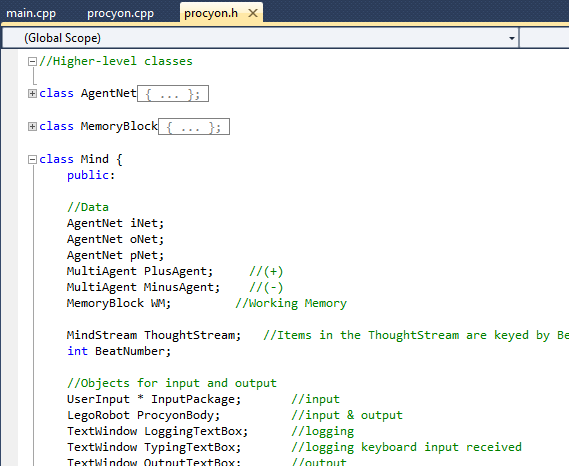
It’s weird: the artificial intelligence is my biggest project right now, the thing I’m most excited about. I’m putting in lots of work and making lots of progress. Yet I’ve barely mentioned it on the blog for the past few months.

Why?

Partly because my AI work these days is…abstract. The code I’m writing now lays the groundwork for cool, gee-whiz features later, but there isn’t a lot of “real” stuff yet that I can demo, or describe.

I could tell you about the abstract stuff, but I avoid that for two reasons. First, because I don’t want to bore you.

And second, because – crazy as it sounds – I think this thing might actually work. If it does, it could be dangerous in the wrong hands. So I want to keep the details secret for now. (The code snapshot above is real, but – I think – not especially helpful. Yes, I am actually paranoid enough to think about things like that.)

Having said all that, I can tell you a few things.

For starters, I really am working hard. I put in an hour and a half every day (or drop it to a half hour sometimes when my schedule’s tight). I’ve written over 5,000 lines of C++ and over 1,000 lines of C#, and created a database with 13 tables and 43 stored procedures (to say nothing of the XAML, Javascript, and Ruby components). I’ve filled two notebooks with designs and ideas. Not that those numbers are astoundingly high, but the code works, and I’m revising it constantly.

And as much time as I’ve spent on theory, design, and groundwork, the current program does actually do some fairly cool things. For instance…

  • You type to it, and it types back.
  • You can make it recognize arbitrary new commands. No hard-coding required, just click a few buttons in the MindBuilder interface and drop the new agents into the database.
  • It takes as input, not merely a stream of typed characters, but a stream of moments. So it can recognize words, but it can also notice if you pause while typing.
  • Right now, inputs are keyboard and robot sensors, outputs are text and robot action. But the framework is completely flexible. Any new input or output I want to add – a camera, a thermometer, whatever – it’s just a matter of writing the interface. The underlying architecture doesn’t change at all.
  • It can recognize words, phrases, sentences, even parts of speech. It can respond differently to later commands based on something you told it earlier. And likewise, none of this is hardcoded, so the exact same mechanism that recognizes a written phrase could also recognize a tune, or Morse code.

The history of AI is littered with the ashes of hubris. So although I’m still wrapped up in the joy of hubris today, I’m well aware it’s a delusion. I can honestly say that the path to a strong AI seems fairly clear, that I don’t see any major obstacles that will prevent me from creating a thinking machine. Yet I know the obstacles are surely there, and I’ll see them soon enough.

Still, it’s exciting.

Any questions?

A Year of Books

For no particular reason, here’s a list of the books I’ve read in the past twelve months, along with a few comments.

Links to postmortems where appropriate.

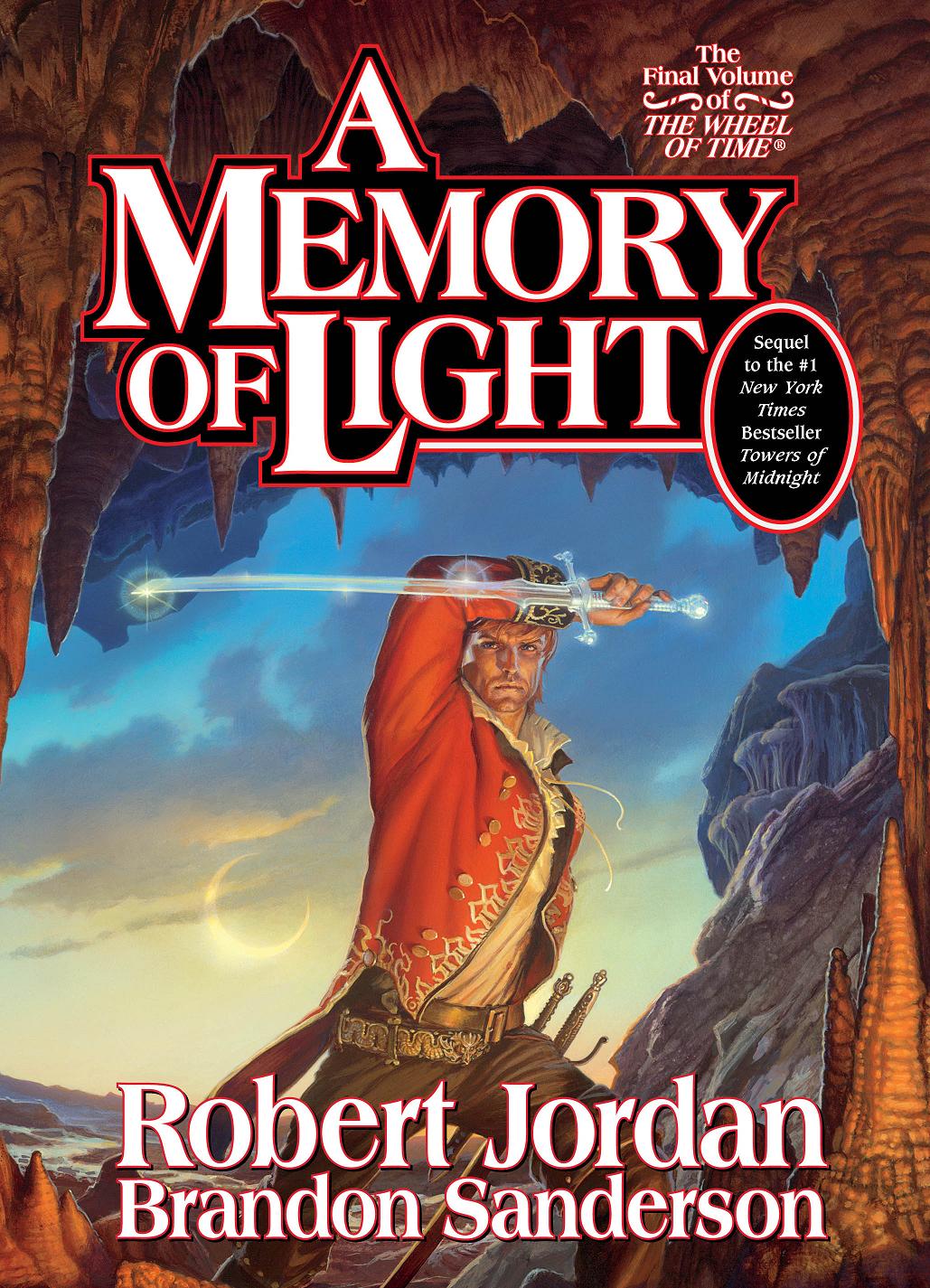
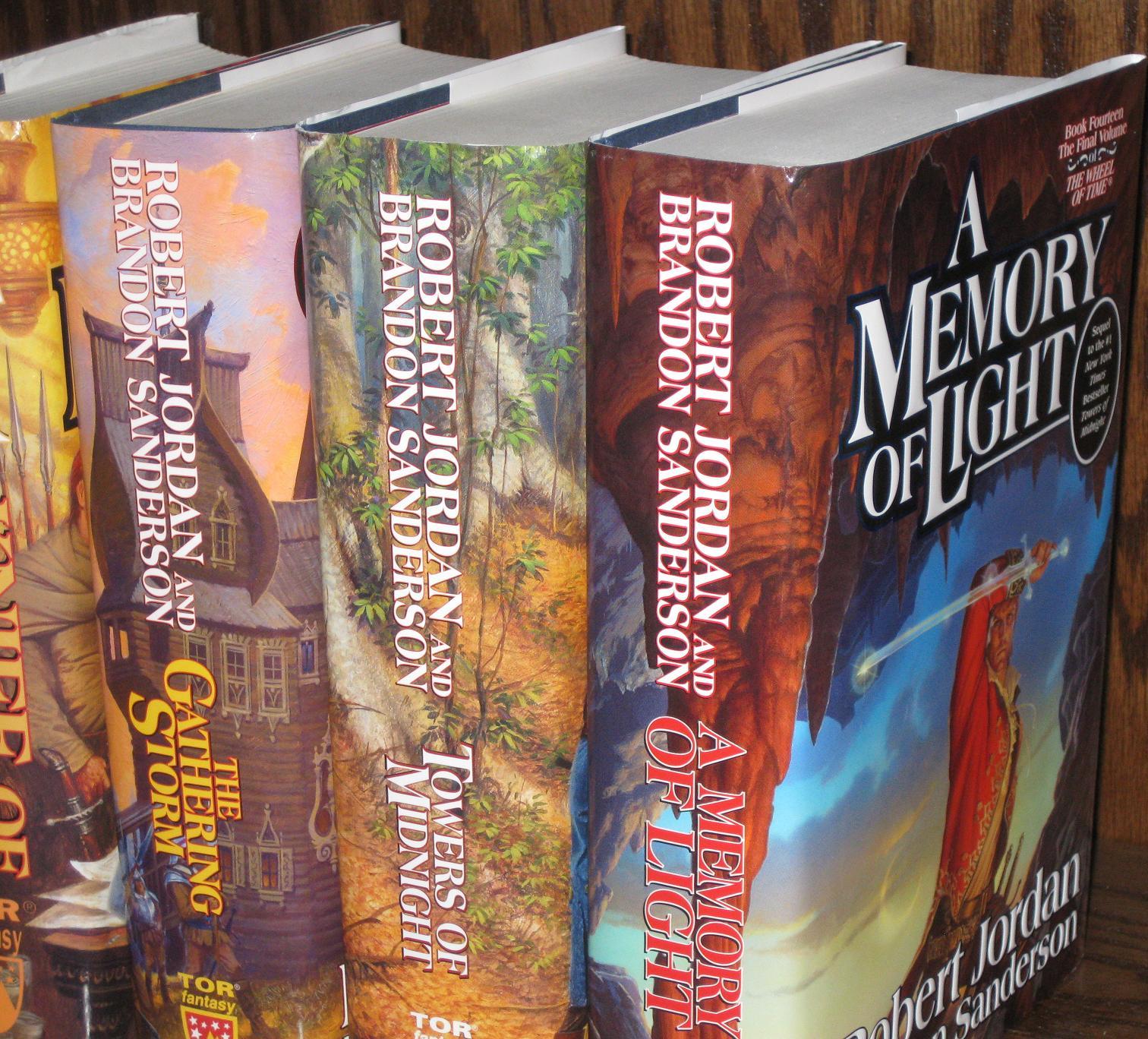
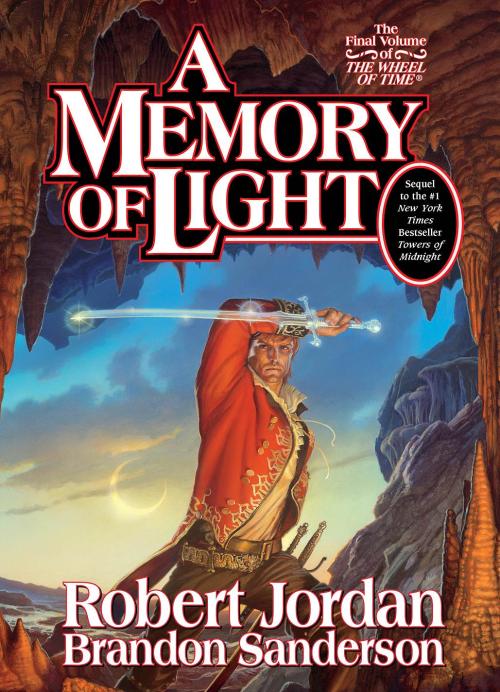
  • 1/27/2013 – A Memory of Light (Robert Jordan & Brandon Sanderson)
  • 1/6/2013 – Anna Karenina (Leo Tolstoy, translated by Louise & Aylmer Maude)
  • 12/27/2012 – Christian Science (Mark Twain) A gift from my wife’s grandmother. Twain takes a critical look at the Christian Science religion (newly founded, back then) and its founder, Mary Baker Eddy. It’s funny: he wrote the book 100 years ago, and he makes some very definite – and very wrong – predictions about what will happen in 100 years. He thinks the Christian Scientists will take over everything. One less thing to worry about, I guess.
  • 12/26/2012 – Freedom (Jonathan Franzen) Just as good as everyone says. A whole web of people with deeply messed-up and deeply interconnected lives. Believable, emotional, powerful.
  • 12/22/2012 – The King of Elfland’s Daughter (Lord Dunsany) Reading this book was like eating Godiva chocolate. The first bites are heavenly, but the more you consume, the sicker you get. After a while, you just want it to be over.
  • 12/16/2012 – The Post-American World, Release 2.0 (Fareed Zakaria) An insightful look at the future of geopolitics. Surprisingly optimistic, given the title.
  • 12/9/2012 – The Customs of the Kingdoms of India (Marco Polo, translated by Ronald Latham) I’m pretty sure this little book  is an excerpt from a much longer work by Marco Polo, though the book itself doesn’t bother to give you any context. Anyway, pretty interesting, though Polo’s writing style gets old quick. “And you must believe I am telling you the truth when I say…” Every other paragraph.
  • 12/8/2012 – The Final Solution (Michael Chabon) Playful style, and a great idea for a story: a Sherlock Holmes in his eighties comes out of retirement for one last case. Starts off strong, weak ending.
  • 12/5/2012 – Tao Te Ching (Lao Tzu, translated by Victor H. Mair) Beautiful.
  • 12/4/2012 – The Koran (Muhammad, translated by N. J. Dawood) Not what I had hoped.
  • 11/28/2012 – Dracula (Bram Stoker)
  • 11/18/2012 – A Canticle for Leibowitz (Walter M. Miller Jr.) Very good book. Difficult to follow sometimes, but it makes you think. Deserves its status as a sci fi classic.
  • 11/10/2012 – The Little Prince (Antoine de Saint-Exupery, translated by Katherine Woods) Disappointing. Came across as preachy.
  • 11/1/2012 – Being Zen (Ezra Bayda) Interesting.
  • 9/23/2012 – Thinking, Fast and Slow (Daniel Kahneman) Very insightful, very good. A sharp look at how our brains work, and how they fail. Reading about cognitive biases means learning your own blind spots. My only complaint is Kahneman’s bloated writing style, which reflects his academic background.
  • 9/23/2012 – Batman: The Long Halloween (Jeph Loeb, with art by Tim Sale)
  • 9/23/2012 – The War of Art (Steven Pressfield) A useful kick in the pants for creative types, though some of it gets pretty far into left field.
  • 8/14/2012 – Famine Diary: Journey to a New World (Gerald Keenan, edited by James J. Mangan) The actual journal of an Irish immigrant who came to Canada fleeing the great potato famine. The fact that it’s true makes it all the more heartbreaking. Unfortunately, the editor far overstepped his bounds (in my opinion), not merely selecting or abridging but actually rewriting most of the text in his own words.
  • 8/14/2012 – The Doors of Perception and Heaven and Hell (Aldous Huxley) If you’ve ever wondered what it’s like to take a hallucinogen (in this case, mescaline) then this is the book for you.
  • 8/11/2012 – Rashomon and Other Stories (Ryunosuke Akutagawa, translated by Takashi Kojima) Some stories were better than others, but the title story “Rashomon” was beautiful.
  • 8/10/2012 – Atonement (Ian McEwan) Very good.
  • 8/7/2012 – The Necklace and Other Short Stories (Guy de Maupassant, translator unknown) I picked this up because I’d read and loved “The Necklace” in high school, but his story “Boule de Suif” (literally, “Ball of Fat”) was perhaps even better. Depressing, but skillfully done and true to human nature.
  • 8/4/2012 – The Cathedral and the Bazaar (Eric S. Raymond) A sort of manifesto for the philosophy of open source, Linux, and hackerdom. Insightful. This was the first I’d heard about the idea of a gift economy.
  • 7/7/2012 – Regarding the Pain of Others (Susan Sontag) Sort of interesting, but not what I’d hoped.
  • 7/5/2012 – The Martian Chronicles (Ray Bradbury)
  • 7/3/2012 – Magnificent Desolation (Buzz Aldrin) The autobiography of the second man to set foot on the moon. After reaching the apex of his career, Aldrin has nothing left to achieve, and his life falls apart. Depression, alcoholism, one failed marriage after another. But he gets it together in the end, and today he’s living a reclaimed life.
  • 7/3/2012 – Twelve Angry Men (Reginald Rose) Exquisite. Very short. You can read this in a couple hours, and you should.
  • 6/16/2012 – Mockingjay (Suzanne Collins) Sort of disappointing.
  • 6/10/2012 – Catching Fire (Suzanne Collins) Good, but not great.
  • 5/8/2012 – Atlas of Remote Islands (Judith Schalansky) Not a normal atlas. All the islands in this short book give you a map and a brief, true story about them. This kind of thing just fascinates me.
  • 5/6/2012 – Outliers (Malcom Gladwell)
  • 4/8/2012 – Mimus (Lilli Thal, translated by John Brownjohn) A good book.
  • 3/26/2012 – The Hunger Games (Suzanne Collins)

Any thoughts? Questions?

What have you read lately?

Friday Links

Crude

Need to unwind? How about a long, relaxing bath of crude oil? This is a real thing in Azerbaijan. The article claims that the bath “looks, smells and flows like used engine oil.” Yes, well.

Doppler

For a show that’s all about nerds/geeks, The Big Bang Theory hasn’t gone over especially well with its featured demographic. Criticisms vary, from “it’s making fun of us” to “the laugh track is too much” to “it’s sexist.” Ryan Somma mounts a vigorous defense of the show, and though I don’t agree with everything he says, he makes some good points.

CodeGeeks

Speaking of geeks: 20 Kick-Ass Programming Quotes. #9: “Computer science education cannot make anybody an expert programmer any more than studying brushes and pigment can make somebody an expert painter.” -Eric S. Raymond

PA

Penny Arcade in classic form, mainly for the last two panels, which made my wife laugh even more than me.

maths

SMBC explains Fourier transforms, as only SMBC can.

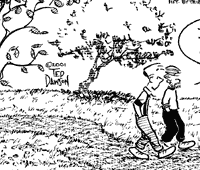
spooner1spooner2spooner3

And finally: an old favorite I rediscovered recently, the comic Spooner. He’s stopped drawing them these days, but dig through the archive, and you can still find some pretty good stuff.

Have a stupendous weekend. See you Monday!

Statuesque

BrianStatue

Back in 2009, my friend Paul was showing me around campus, when we discovered something that looked like (but definitely was not) a statue pedestal, bereft of statue. Because I am a goofball, I jumped up onto it and asked Paul to take my picture. The result was surprisingly…statuesque.

If they make a statue of you someday, how would you like it to look? What do you want the plaque to say?

Postmortem: A Memory of Light (Spoilers!)

Callandor, bi0tch.

Yesterday, I waxed eloquent verbose on the Wheel of Time series as a whole. Today, I’ll dive into the final book in detail.

The short answer? It’s pretty damn good. Robert Jordan’s a genius, and Brandon Sanderson did a fine job building on his legacy. A Memory of Light was epic, unpredictable, and satisfying, and that’s exactly what it needed to be. Overall, no big complaints, job very well done.

Having said that, the book has some problems. That’s inevitable: expectations for the Last Battle were impossibly high after over a dozen volumes and twenty years of waiting. And of course, Sanderson was grappling with a monumental task under intense time pressure. The problems are understandable, and they’re not showstoppers. But they’re there.

I’ll get my biggest gripe out of the way first: Sanderson’s writing style. He’s good at plot, characters, and story arc, certainly much better than I am. But his sentence construction is awful. It grates on me so much that I stopped reading his Mistborn series after the first book, mainly because of that. Partly this bothers me because, as Ben points out, I am OCD about writing. But partly it’s just awkward style.

Here’s a sample:

Gaul felt a pressure from his friend. Like the pressure of the sun at noon after four days without having any water to drink.

This is a great image, but Sanderson buries it in an avalanche of extra words. Compare with: “Like the pressure of the noon sun after four days without water.” From seventeen words to twelve, and that’s just by applying some quick fixes, without trying to alter the meaning at all. Most writers (myself included) trip over these kinds of mistakes occasionally, but Sanderson does it practically on every page.

But enough about my OCD internal editor. What about the story? I’ll take it character by character, since Wheel of Time always been about the characters.

Lan – Amazing. Not that we’ve ever had a book where he wasn’t amazing, but here, in his battle with Demandred, he finally gets the moment of glory he’s long deserved. When he remained standing after taking a sword to the gut, I initially assumed it was because he’d become a Hero of the Horn.

Nynaeve – I hated Nynaeve in the first book (and the second, and third, and…) but she grew on me toward the end of the series. Her own moment of glory came nearer the start of AMoL, when Talmanes reaches the Amyrlin’s camp, near-dead from a Myrdraal wound. By this time, Talmanes has been passed from one healer to another, and nobody can help him, he’s so colossally messed up. And then he gets within thirty feet of Nynaeve and she’s like FOOM.

One of my favorite things about WoT in general is how characters can grow to seem almost ordinary in their everyday lives, and then suddenly they’re in their element again, and you remember just how effing incredible they actually are. Perfect example for Nynaeve. Her contribution in Shayol Ghul seemed almost like a letdown by comparison.

Mat – Amazing. Perhaps the best-written character in the book. The moment where I realized he was going to be supreme commander of the Last Battle…epic. His dynamic with Fortuona was great too. My only real complaint, which others have mentioned too, is that his final showdown with Mashadar seemed kind of desultory after how well-orchestrated the rest of the battle was. But at least they wrapped it up, and anything getting wrapped up – ever – is pure joy for a longtime WoT fan.

Perrin – Eh. Don’t get me wrong, he’s a great character, but his arc in this book seemed a little boring. Mostly because I’ve just never cared about Slayer, or the World of Dreams in general, so I spent most of that battle waiting for it to be over. I did like his interaction with Lanfear, though.

Min – A kickass character who doesn’t get nearly enough screen time, Min actually had – in my opinion – the best Moment of Awesome in the entire book. It came when Fortuona, Empress of the Seanchan, threatened to torture her if she wouldn’t reveal her visions. Min, looking her dead in the eye: “Try it.” Boom. Subtle, but boom. Grab a napkin, Empress, cuz you just got served.

Egwene – So a main character actually dies. I wondered if it would ever happen. I was never especially attached to Egwene, but the reverse balefire thing was sweet.

Moridin – Probably the most disappointing character of the whole book. He had such a deadly mystique throughout the series, but when it came down to brass tacks in Shayol Ghul, he just did a little swordfighting and got strung up like a puppet.

Rand – Ah yes, Rand. I loved Rand in this book. Admittedly, the long-awaited confrontation with the Dark One seemed a little weak to me – partly because it was too abstract, I think. It seemed like Shaidar Haran would have been a better form for the Dark One than the giant black blob, at least initially. Reading over and over about how the Dark One “attacked” Rand, without any concrete idea of what the attack looked or felt like, got a little old. I realize it’s supposed to be abstract, but nothing spices up metaphysics like a metaphor, and we could’ve used more of that here.

But none of that is Rand’s fault. He came, he saw, he kicked ass in style, which is all we ever really wanted from him. And the very last scene of the book, where he finally, finally gets relief from his burden and his pain, is beautiful. I even liked the pipe-lighting moment, inscrutable as it was. It felt right.

There’s so much more to say (Olver and the Horn! Compulsion on the Great Captains! etc.) but I’m already running late. I’ll wrap it up here.

If you’ve read the first thirteen books, you’re going to read this one too. And it will make you happy.

Postmortem: The Wheel of Time (Spoiler-Free)

WoT

It’s over. The Wheel of Time is actually over.

Robert Jordan’s magnum opus. Fifteen books, including the prequel New Spring. 684 chapters. Over 11,000 pages. Four million words. (That’s five King James Bibles put together.) Thousands – literally thousands – of named characters.

The first book, The Eye of the World, came out in 1990. The final one, A Memory of Light, was published January 8 of this year. Twenty-three years from start to finish.

The road hasn’t always been smooth. It’s no secret that the series lost steam around books 7-8. Book 9 was very slow. In book 10, the plot’s momentum practically stopped.

Admittedly, it’s hard to recommend a series with a 3,000-page slump in the middle. A lot of fans lost faith, and who could blame them?

But in book 11, Knife of Dreams, the old Jordan was back. The story got moving again. The end was in sight.

And then – on September 16, 2007 – Robert Jordan died.

He had written the ending already, and left extensive notes. The finale was there, waiting for someone to bring it home. His wife (and editor), Harriet, picked author Brandon Sanderson to finish the job.

It took him three more books, but he did it, and did it well. We didn’t get some half-finished outline or harebrained spinoff. We got the final books of The Wheel of Time.

And a week ago, I finished the last one.

I personally started reading the series around the time book 10 came out, so I’ve been following the story for about a decade. And that’s what it is, at its heart, in spite of its massive, almost overwhelming size: a story. Not some dry history of fictional events. Real characters you could – and did – really care about.

When the series began to drag, a lot of people said Jordan was just in it for the money, that he was cranking out filler for as long as he could. I never believed that. Traveling in the world he created, I could never believe that something so intricate, so beautiful, so painstakingly crafted over a quarter-century, was a work of anything other than love. And now that it’s over, I’m more convinced than ever that I was right.

The Wheel of Time wasn’t huge for the sake of being huge. It was huge because the story, the characters, the world, demanded no less. That was the size of his vision. And I’m lucky to have been a part of it.

Lan, Nynaeve, Elayne, Birgitte, Egwene, Aviendha, Min, Fortuona, Mat, Perrin, Rand: I’ll miss you all. Let the Dragon ride again on the winds of time.

Tomorrow I’ll post a detailed, spoiler-filled postmortem of the final book. Non-WoT fans, take a coffee break and come back Thursday. 🙂

Suleiman the Magnificent

Suleiman

The Ottoman Empire was one of the great forces of history, lasting for over six centuries, till it was replaced by the modern-day nation of Turkey in the 1920s. And the greatest and longest-ruling of its sultans was this man, Suleiman the Magnificent, who reigned for nearly fifty years in the 16th century. The name is equivalent to the western Solomon, and aptly enough, since he is also called “The Lawgiver” for his comprehensive legal reforms. He was a poet, a patron, a polyglot, and a general who led his troops into battle personally. He also held the title of Caliph, leader (at least nominally) of the entire Muslim world.

By almost any measure, he was among the most successful rulers of all time.

And yet.

His firstborn son and heir-apparent, Mustafa, seemed destined to build on his golden legacy. Mustafa was a strong leader, an able commander, and well-liked by his men. But Mustafa’s mother fell out of favor with Suleiman, as he had his eye on a new concubine: Roxelana.

Suleiman the Magnificent became so tightly bound to Roxelana that he even took the unheard-of step of marrying her. She bore him more sons, and convinced him (so the story goes) that Mustafa was plotting against his reign. It was nonsense, but nevertheless – on Roxelana’s advice – Suleiman called Mustafa to meet him in his tent, where a group of professional assassins strangled him.

Suleiman’s new heir (and eventual successor) was his first son by Roxelina, a man named Selim. Suleiman the Magnificent’s son became known as Selim the Drunkard. Selim found battlefields boring, and much preferred orgies. He died after stumbling drunkenly on a wet floor and hitting his head.

Selim’s rule marked the beginning of a long, slow decline for the Ottoman Empire. The sultans who followed were pleasure-seekers, weak, obsessed with palace politics and their own concubines.

In a sense, the Empire’s greatest ruler was also its destroyer.

This is fascinating history (to me, at least), but it also seems like an excellent story, the framework for a brilliant tragedy. Yet as far as I’m aware, no major authors have tackled it. I wonder why?

Maybe I’ll give it a shot myself, someday. I’m not ready to try another novel yet, but it might make for a good short story…

Friday Links

air

The smog in Beijing is so bad, millionaire Chen Guangbiao is selling cans of clean air. Not sure if that’s funny or depressing. Probably some of both.

hot

We’ve long known the concept of absolute zero, the coldest possible temperature. But is there such a thing as absolute hot? Surprisingly, yes – or at least, maybe.

onion

We Raise All Our Beef Humanely On Open Pasture And Then We Hang Them Upside Down And Slash Their Throats. My wife and I try to buy meat made from ethically treated animals, so this made me laugh.

buttersafe

Buttersafe explores positive male role models.

pvp

Meanwhile, PvP shows the sordid depths one man will sink to for the woman he loves.

Have an excellent weekend, Hypothetical Reader. See you on Monday!

Yoda vs. Everybody 23: Outtakes and Deleted Scenes

The very last piece of Yoda vs. Everybody is finally here. Thanks to everyone who’s watched!