Back in December, my dad threw down the gauntlet.
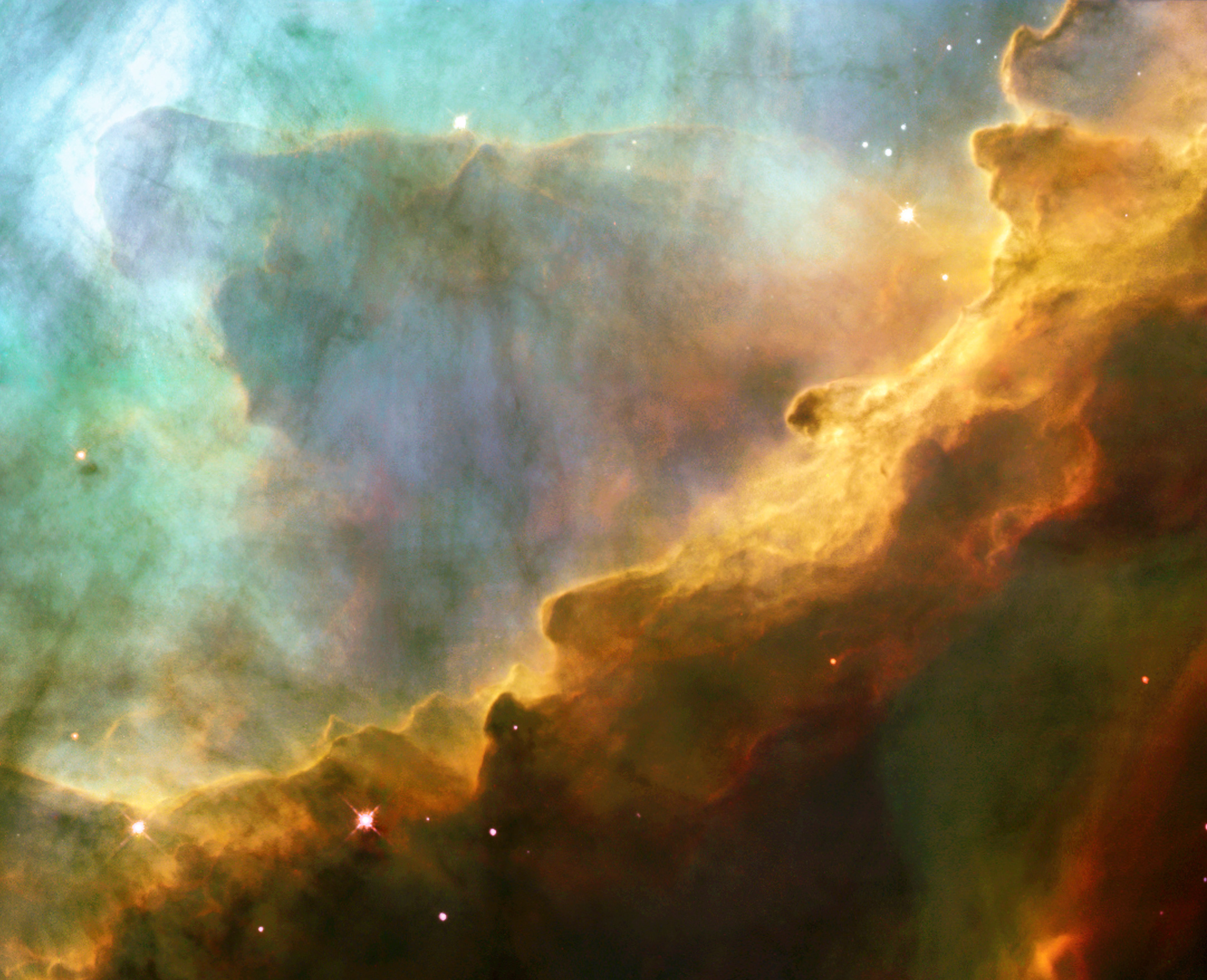
He was talking about the life cycle of stars, and the fact that all the building blocks of our world – carbon, oxygen, nitrogen, iron, etc. – were created in the hearts of supernovae. [CORRECTION: Strictly speaking, this is not true. The elements I named are actually the product of stellar fusion rather than supernovae per se. Supernovae are responsible for even heavier elements, like uranium. Ahem. Carry on.] The stars themselves forged the elements that make us up today.
Or, as Carl Sagan put it:
…we who embody the local eyes and ears and thoughts and feelings of the cosmos, we’ve begun, at last, to wonder about our origins. Star stuff, contemplating the stars. Organized collections of 10 billion billion billion atoms, contemplating the evolution of matter, tracing that long path by which it arrived at consciousness here on the planet Earth, and perhaps, throughout the cosmos.
But my dad said that although this view of the world is very beautiful, you don’t see many poems written about it. Let’s face it, most poets just aren’t that into astrophysics.
Or, as Richard Feynman put it:
Our poets do not write about it; our artists do not try to portray this remarkable thing. I don’t know why. Is no one inspired by our present picture of the universe? This value of science remains unsung by singers: you are reduced to hearing not a song or poem, but an evening lecture about it. This is not yet a scientific age.
You can see where this is going. Dad challenged me to write a poem celebrating the beauty of our stellar origins. For the right price, I accepted. I wrote the sonnet below on the last day of the year.
Starstuff
From stars we come, and to the stars return.
My hands, my wife, my Chevrolet, Milan,
The weathered heath, the dew-encrusted fern,
Aurora borealis and Cezanne:
Ambassadors of one ancestral realm
Where all, their duty done, alike retire –
One mother’s children drive one vessel’s helm,
And keep, in hearts and hulls, a common fire.
When downstairs in the stillness of the dark
My desperate chains of thought hold sleep away
And green electric digits glowing stark
Denote the drowning of another day,
I listen to the rush of distant cars
And tell myself I hear the song of stars.
In spite of its flaws, I like it pretty well, and was thinking I might send it off a few places, try to get it published.
Unfortunately, the first line was bugging me. I wasn’t sure I’d invented it; I thought I’d heard it elsewhere before. A little Googling revealed I was right.
From the stars we came. To the stars we return. From now, till the end of time. We therefore commit these bodies to the deep.
-Captain John Sheridan, Babylon 5
I’m not sure whether this would be considered plagiarism in the strictest sense, but I know the line isn’t my own work, so I don’t feel right keeping it. Unfortunately, I can’t think of any replacement that sounds half as good and still fits the rest of the poem.
So, lacking any other home for it, I’ll put it here.
I’m not sure I really fulfilled what Feynman had in mind with his quote above. I think he was talking more about celebrating the spirit of scientific inquiry, whereas I focused more on the vision that spirit revealed. But then, Feynman was kind of a dick, so I don’t especially care. My dad liked it, which means a whole lot more to me. And I’ll venture to say it might have made Dr. Sagan smile, too.
By the way, as a prize for this endeavor, my dad gave me a totally kickass Monty Python’s Holy Grail mug, shaped like, well, a grail. Good things come to those who write. Just sayin’.
What inspires you?



 Brian D. Buckley
