Tag Archives: Postmortem

Postmortem: Dracula

Get it? Dracula postmortem? Oh ho ho!

Ahem.

Bram Stoker’s Dracula is, of course, the quintessential vampire story, the grandaddy that spawned a genre still alive and kicking today. Stoker’s novel, published in 1897, didn’t invent the idea of the vampire – that was a much older myth – but it became the defining portrait of the creature for generations to come.

Reading it in 2012, therefore, is interesting for several reasons.

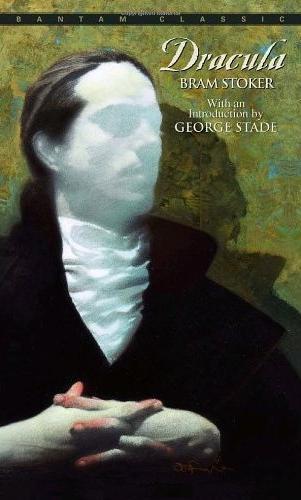
First, because it strips away a century of accumulated embellishment and returns you to the core tale. Most of the popular image of Dracula (tall, aristocratic, pale and creepy, East European accent) is accurate, but there are odd disparities. For instance: he has a mustache. This is so at odds with our modern perception that it isn’t even included on the cover, but it’s right there in the text. Dracula also has a host of supernatural abilities, including the ability to turn into a wolf or a large dog – which, today, would be more associated with werewolves, who are considered vampires’ enemies.

It’s interesting, too, because the novel presupposes a reader who no longer exists today: somebody who’s never heard of the Count. It’s hard to keep from laughing throughout the novel’s first fifty pages, as Jonathan Harker keeps thinking there’s something not quite right about this charming Count Dracula fellow. He lives alone in a castle, he only comes out at night, never eats, doesn’t have a reflection, is obsessed with blood…what could it be?

Putting aside the book’s status as a cultural icon, the novel itself holds up quite well even after a hundred years. It’s told in the form of diary entries, letters, telegrams, and newspaper clippings, which lends an air of verisimilitude to the work of fantasy. The first part – with Jonathan Harker traveling to Castle Dracula in Transylvania as the Count’s guest – is excellent, full of shadow and portent. Wolves – which the Count calls “the children of the night” – howl outside, and Harker becomes increasingly frantic as he realizes he’s trapped.

Dracula then travels to London, where the supply of blood is more plentiful. Here we acquire an ensemble cast of characters: Mina, Jonathan’s girlfriend; Lucy, Dracula’s first English victim; a handful of other, largely interchangeable, dudes who are all in love with Lucy; and of course, Professor Abraham Van Helsing, the only other character in the book that anyone remembers.

The London section of the book is also pretty good, with suspicions gradually increasing as nocturnal hijinx accumulate. Eventually, Van Helsing convinces everyone that Dracula’s gotta go, and the whole group works together to hunt him down. They eventually drive him back to Transylvania, where they finally (spoiler alert) kill him.

This final section of the book, which spans over a hundred pages, is also the weakest. The mystery is gone, replaced with the fairly complex mechanics of supernatural combat. Dracula himself spends most of his time not only offstage, but asleep in a box that other people are carting around for him. So, basically, they’re hunting a box. The climactic final scene? They open the box, find Dracula still comatose, and stab him. There’s a little more drama than that, but not much.

Still, a very solid read overall. For a book that’s over 400 pages, I tore through it pretty quick. Recommended to anyone who likes vampires or Victorian angst.

Or boxes.

Postmortem: American Election 2012

messy and complicated

Image by magnaen.

It’s been one week since Election Day. By now, of course, everyone in the world knows the results of our Presidential contest. But despite all the hype lavished on Obama and Romney, the election was about a lot of other people and issues than just them.

In no particular order, here are my Top 9 results from Election 2012:

1. Pot is legal now.

Well, sort of.

Two states – Washington and Colorado – voted to legalize marijuana. Lots of other states had already given the OK to medicinal use, but this was the first time it’s been green-lighted for, ahem, recreational purposes.

This is a huge win, because America’s war on marijuana is incredibly harmful and serves little real purpose.

It’s harmful because we spend millions of dollars making police chase down a drug no more dangerous than alcohol. It’s harmful because we spend millions more keeping thousands of pot users and dealers locked up. It’s harmful because it creates yet another black market, feeding even more power to gangs foreign and domestic. And it’s harmful because it deprives our governments of revenue from taxing pot in a time when deficits are nearing a crisis point.

Of course, federal law still prohibits all marijuana use, full stop, so it remains to be seen how the Washington and Colorado decisions will play out in practice. If nothing else, it should give the court-watchers something to talk about.

2. Ohio’s Issue 2 was defeated.

Voters in my state shot down – by a wide margin – a law that would have handed redistricting power to a nonpartisan commission, away from the politicians chosen by those districts. Not entirely sure why this lost, but I think it’s because the ballot text was incredibly long and complicated. In the future, simpler may be better when it comes to explaining the issues.

3. Gay marriage makes a clean sweep.

Another big win: same-sex marriage was on the ballot in four different states, and in all four, it got the best possible result. In Maine, Maryland, and Washington, voters decided – for the first time in the nation – to legalize same-sex marriage. (Other states have legalized this in the past, but never by direct democratic vote.) In Minnesota, gay marriage remains illegal, but voters nixed a plan to put the prohibition directly in the state constitution. You take what you can get.

I think about one of my good friends from work, who recently conquered her fear and came out as a lesbian, whose mother still hasn’t forgiven her. When I think that someday – hopefully a someday not too distant – she could have the same freedom to marry that I took for granted two years ago, it makes me very happy.

Similar to the marijuana situation, gay marriage is officially unrecognized at the federal level (regardless of state law), thanks to the Defense of Marriage Act. But with public support for gay marriage past the 50% mark nationwide, equality is only a matter of time. The question is, how much time will it take?

Speaking of which…

4. We elected our first openly gay Senator.

I know next to nothing about Wisconsin’s Senator-elect Tammy Baldwin aside from that landmark fact. Who knows if she’ll make a good legislator? Not me. But it says something encouraging about our society that homosexuality is becoming ever less of a barrier to public achievement.

5. Puerto Rico wants to be a state.

Well, sort of.

A ballot question in Puerto Rico asked voters if they favored statehood. 61% of those who answered the question said yes.

However, hundreds of thousands of voters left the question blank. When you include those too – and why wouldn’t you? – only 45% of Puerto Rican voters actually want to belong to a state.

The path to statehood requires a majority approval by both houses of Congress, plus the President’s signature. This tepid response is hardly a mandate for action in D.C. Moreover, Puerto Rico leans overwhelmingly to the political left, meaning that the GOP-controlled House is unlikely to approve a 51st star on the flag anytime soon.

6. Ohio was not the Decider.

So much importance was ascribed to my Buckeye State, you’d have thought we were the only ones voting. (It certainly seemed that way from the ad onslaught we were subjected to.) But in the end, Obama got 332 electoral votes, meaning that even without his razor-thin win in Florida, he still could have sealed the deal sans Ohio.

Maybe next time, they’ll forget about us and put Indiana in the crosshairs. (Yeah, right.)

7. Nate Silver is mathemagical.

The major news outlets, including CNN, CBS, ABC, NBC, and NPR, all deemed the Presidential race a dead heat, absolutely tied, anybody’s guess. Meanwhile, conservative commentators of all stripes – from George Will to Rush Limbaugh to Karl Rove – predicted a Romney win.

They were all wrong.

Nonpartisan statistician Nate Silver, on his blog FiveThirtyEight.com, predicted an Obama win. That’s hardly unusual in itself. But check this out: he not only predicted the popular vote percentages both candidates would get to within 0.3%, he also correctly called which way all fifty states would go, before Election Day.

Silver was widely skewered before the election as a tool of the liberal camp. He may be taken a little more seriously now. When math and politics fight, math wins every time.

8. Elections are utterly ridiculous now.

Not that they were paragons of ethics and transparency before. But look: the U.S. collectively poured something like $6 billon into these elections. That’s billion, with a “B.” That’s twelve times the amount taxpayers spent on the Corporation for Public Broadcasting this year. That’s twice the cost of the entire Curiosity mission to Mars.

Let me say that again: by switching off this year’s political ads, we could have afforded two extra Martian rovers. Talk about win-win.

Moreover, because of new court decisions and new loopholes, rich donors can pour as much money as they want into any race they want, and they can do so anonymously. Want to try your hand at buying an election? You don’t even have to sign your name!

Beyond that, there’s the toll on the candidates themselves. Mitt Romney announced his exploratory committee for the Presidential race on April 11, 2011. Not 2012. 2011. He has literally been running for President for more than eighteen consecutive months. And that’s not even counting his almost-as-grueling run in 2008.

I’m no fan of Romney, but I wouldn’t wish that hell on anybody.

No sane person would subject themselves to that kind of torture. And when your election process rules out the sane candidates, guess what kind of candidates you get?

9. Second verse, same as the first.

After all that time and money, we’ve finally seen the new face of Washington.

And it’s exactly the same.

Sure, a few seats have changed hands, a few issues have been decided. But like it or not, at the 10,000-foot level, we are exactly where we were beforehand: a Democratic Senate, a Republican House, and President Barack Obama.

“Well, in our country,” said Alice, still panting a little, “you’d generally get to somewhere else — if you run very fast for a long time, as we’ve been doing.”

“A slow sort of country!” said the Queen. “Now, here, you see, it takes all the running you can do, to keep in the same place. If you want to get somewhere else, you must run at least twice as fast as that!”

-Lewis Carroll, Through the Looking-Glass

Postmortem: Skyfall

Aw yeah. So brooding and pensive right now.

It’s been fifty years since the first James Bond film, Dr. No, was released to the world. This will be the twenty-third installment in the franchise, which – if you do the math – suggests they’ve been pumping them out like clockwork from the beginning. Daniel Craig is the sixth actor to play the legendary British spy.

All of which makes you wonder. Does the old showboat still have any gas left? Is 007 still good for anything besides making money?

In a word: yes.

Director Sam Mendes steps into the Bond universe for the first time, with a pedigree including such highbrow flicks as Jarhead and Richard II. But he strikes just the right balance with Skyfall – serious but not too serious, with the classic mix of intrigue, brutality, martinis, sex, and explosions.

Actually, I'm in a committed relationship and I have three kids. Why do you ask?

The plot starts out as typical spy stuff (which isn’t a bad thing, by the way). Someone’s stolen a hard drive full of ultra-top-secret data and Bond has to get it back. Car chases and fisticuffs ensue. Things get spoilery pretty quick, so I’ll just say that the stakes become more personal than usual. When I finally learned what “Skyfall” meant, it was cooler – and much different – than I expected. I was also pleasantly surprised to find that the plot wasn’t too convoluted to follow, and didn’t require knowledge of the last movie, Quantum of Solace, to understand what was going on.

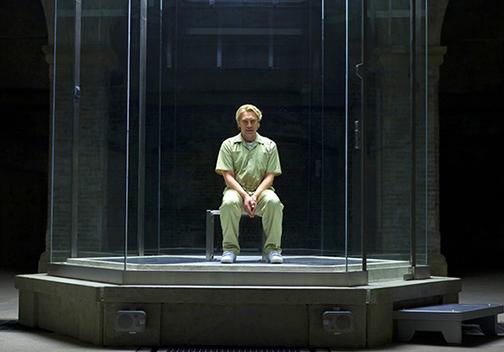
The villain is great this time around, just the right mix of creepy and deadly and pathetic. Skyfall also introduces a new and very likeable Q (sans omnipotence) who emphasizes sleek, low-key technology over fancy gadgets. The focus on gritty realism instead of hi-tech wizardry is standard fare since the Casino Royale reboot, and it continues to serve them well. One other well-known character returns in this movie, with a higher profile than usual, but you’ll have to watch it to find out. (Or, you know, read Wikipedia.)

Luckily, I have a black belt in kicking down plastic.

I can’t finish without mentioning the beautiful cinematography. Skyfall is simply a gorgeous movie to watch, with shot after shot perfectly capturing the Bond atmosphere: equal parts suave sophistication and brooding underworld. You could watch this film with the sound off and still enjoy yourself.

Well, for a while, anyway. It is two and a half hours long.

Seen any good movies lately?

Postmortem: Moonrise Kingdom

I now pronounce you

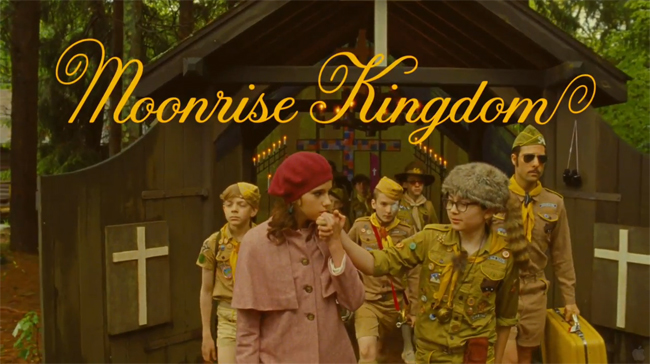
Moonrise Kingdom, released on DVD last Tuesday, is the story of a twelve-year-old girl and boy who fall in love and run away together.

Also, it has Bill Murray and Bruce Willis. In the same movie. Just sayin’.

The girl is Suzy Bishop (Kara Hayward), a “troubled child” who reads fantasy books and carries around a pair of binoculars because they give her a different perspective on the world. She’s mostly sweet and likable, and at one point stabs a dude with a pair of scissors. The boy is Sam Shakusky (Jared Gilman), an orphan who learned his wilderness skills in the “Khaki Scouts.” He paints landscapes and nudes.

Separately, these two kids are a couple of losers. Together, they are fearless and unstoppable, a force of nature. When they flee their respective homes and camp out in the woods together, the police, the Scouts, and Suzy’s family all join in a massive search effort. Part of the fun is watching the adults scrambling to catch up with them, and to cope with the new reality they’ve created, just by deciding it: we are going to be together, and there’s nothing you can do to stop us.

Wes Anderson’s directing, so you know this won’t be Hollywood as usual. It isn’t. The word magic genuinely applies here: to the tenderness of the young lovers getting to know each other in the forest, to the surreal mix of the ordinary and the bizarre (like a bunch of Scouts marching in formation brandishing clubs and knives), to the crashing crescendo of storm and lightning that builds through the entire final act. Moonrise Kingdom is dark and beautiful, lovely and strange.

And again: Bruce Willis, Bill Murray. Same movie. Just puttin’ it out there.

You can watch the trailer right here.

What movies have you seen lately?

Postmortem: The Long Halloween

Mind if I drop in?

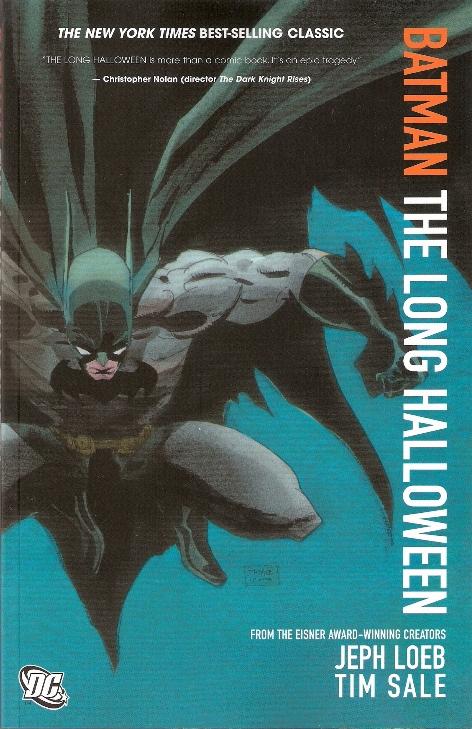
When you hear the phrase “New York Times best-selling classic,” you don’t normally think of a comic book. But then, Batman: The Long Halloween isn’t your average comic book.

Originally published as thirteen separate comics from 1996 – 1997, and now bound together as a single volume, the Long Halloween story continues to resonate fifteen years later. Christopher Nolan, director of the Dark Knight trilogy, calls it an “epic tragedy,” while Dark Knight Rises screenwriter David Goyer names this book “the preeminent influence” on the first two films.

But enough hype. Is it any good?

I just finished reading it yesterday. The answer is a resounding hell yes.

Black is so in this year.

The story revolves around a mysterious killer, called “Holiday” for the timing of his murders: Halloween, Christmas, Valentine’s Day, April Fool’s Day. Each of the thirteen parts centers around a different holiday, starting and ending with Halloween. The identity of Holiday is a mystery through most of the book, and trust me, when you finally learn the answer, it will be a surprise.

Long Halloween also tells the story of Harvey Dent’s transformation into the villain Two-Face, and boasts an impressive rogue’s gallery besides: Catwoman, the Joker, Scarecrow, Poison Ivy, the Mad Hatter, and the Riddler are all here, not to mention a few of the more exotic villains, like Solomon Grundy. But it isn’t just the supervillains on display: the story also features high drama in the mafia world, with two competing families battling for dominance of the Gotham empire.

Wayne Enterprises is going green.

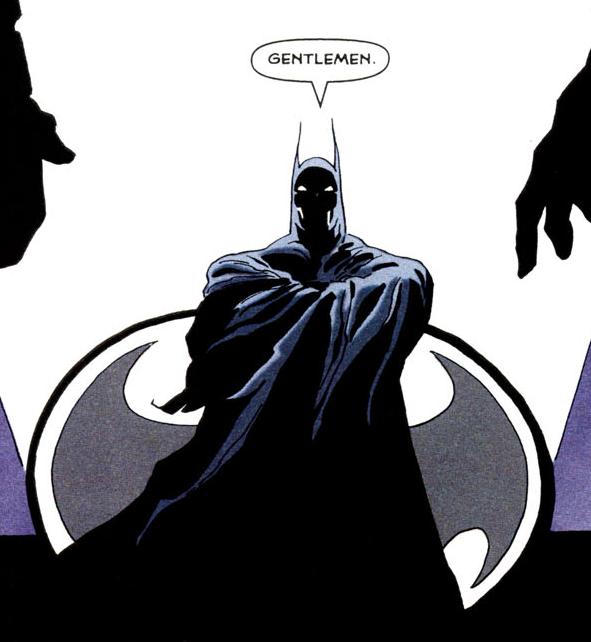
That’s a lot of story to pack into one comic book, even one that’s 384 pages long. But dizzyingly complex though the plot may be, writer Jeph Loeb weaves the many threads together with surprising dexterity. The writing is the best I’ve ever seen in a comic book or graphic novel: far better than Kingdom Come, better than The Dark Knight Returns, and even better than one of my all-time favorites, The Killing Joke. The dialogue is snappy, the characters well-drawn and distinctive. From the very first line – a grim-as-death “I believe in Gotham City,” delivered by a Bruce Wayne shrouded in night – Long Halloween takes off running and never looks back.

But Batman’s strongest impact has always been visual, and here, Tim Sale’s artwork does not disappoint. His gorgeous use of color and darkness makes Gotham City come alive in all its shadowy glory. And Long Halloween‘s distinctive take on its characters’ appearance – from Catwoman’s unique costume to Poison Ivy’s leafy, prehensile hair – makes old names seem fresh again.

You two ever thought about cubicle work?

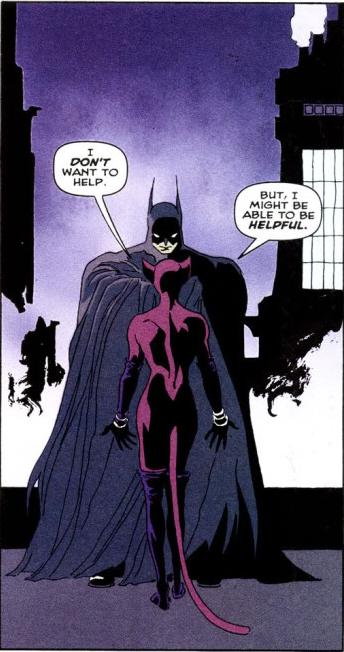
Speaking of Catwoman, her relationship with Batman is pitch-perfect here: just the right mix of flirty and felonious, never drifting too near the neat categories of hero or villain. In that respect, at least, Long Halloween completely upstages Dark Knight Rises.

If you’re waiting for a downside, there isn’t one. Sure, the plot can get a little tangled at times, but that won’t dampen your enjoyment. Buy this book, or borrow it from the library. Tear through it in a weekend. See how wonderfully gothic Gotham can be.

Read anything good lately?

Postmortem: The Dark Knight Rises (Spoiler-Free)

"Gotham City, moar liek Gotham Sh*tty amirite? OH!"

To keep this post spoiler-free, I’ve put all the spoilery parts in white text in brackets, like this: [what’s up now peeps]. Just highlight the text if you want to read it.

So. Dark Knight Rises. This is a strange one for me, because it’s hard to separate out the movie I saw from my personal reaction. Of course, nobody can be 100% objective, but I ought to at least give it a try. With that in mind, here goes: Dark Knight Rises is a movie with many good things about it, a movie many people will like, that I personally did not especially enjoy.

That’s not to say I hated it. Certainly there was a lot of cool stuff to watch: epic destruction, complicated chase scenes, fun new costumes. I think the problem for me, though, was that it felt empty. I didn’t connect, emotionally, with any of the three main characters: Batman, Catwoman, or Bane. (And yes, it’s possible to connect with a villain, even if you don’t like him: see Dark Knight‘s Joker.) When they got into danger, I wasn’t on the edge of my seat. It was just stuff happening on a screen.

I’m not exactly sure why. It’s hard to quantify the mechanics of emotional attachment. Maybe part of the problem was that they didn’t seem to grow as human beings. Yes, Bruce Wayne does eventually change [letting go of the Batman persona] but that’s all at the end of the movie, after the action has died down. Throughout most of the film’s three hours, he’s just a tough guy in a mask. One sequence in particular [where he climbed out of the prison] was apparently meant to show some kind of personal triumph, but it didn’t come across that way to me. He was the same person before and after. Yes, he demonstrated that he never gives up, and yes, that’s commendable, but it’s not exactly new – either for Batman, or every other superhero story from the dawn of time.

Beyond all that, I never felt like the threads of the story ever tied together into a satisfying climax. Almost all the (spoiler-free) reviews I read in advance said that the ending was spectacular, and deeply satisfying, but I never got that. One part of the story in particular, which had been building for a full two hours, ended in an especially weak and anticlimactic way [Catwoman shooting Bane]. And the giant plot twist [that Miranda Tate was Talia al Ghul] just didn’t matter to me at all. I’m sure it will have more effect on others. As I said, hard to separate my personal reaction from the film itself.

Of course, there are plot holes and logic gaps by the barrel, but those didn’t bother me for the most part. Hell, I enjoyed Star Trek IV, for Pete’s sake. The only one that really got under my skin was the way Batman went about fighting Bane – it just didn’t seem very, well, Batman-like. [You get your spine broken in a fistfight, and when you finally climb your way back to a rematch, your only strategy is…another fistfight? Utility belt broken, or what?] But that wasn’t a huge deal.

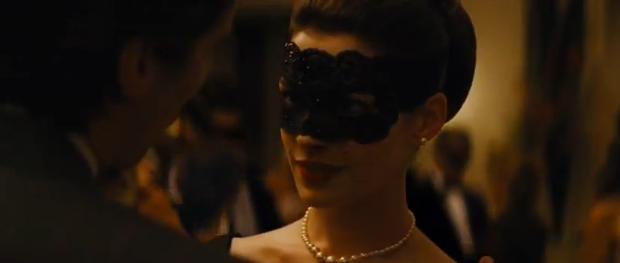
Let’s see, what else? Anne Hathaway as Catwoman: pretty good. It was tough to separate her stereotypical “nice girl” image from the Catwoman character, but that wasn’t her fault. Bane as a villain: eh. He got the job done, but it was hard to take his “sweeping out the corruption” schtick seriously, maybe because it was so simplistic. Which, by the way, makes it all the more surprising that Batman never offered any kind of rebuttal, aside from the fist-to-face variety.

As I said, there were things to like about Rises. Aesthetically, for instance, it was very well done. Gotham has a look all its own, majestic in its bleakness, that I liked. And the non-costumed characters – Commissioner Gordon especially, but also police officer John Blake – were very enjoyable.

Plenty of good stuff in this one. But it just didn’t quite do it for me.

If you’ve seen it, what did you think? If not, are you planning to?

Postmortem: The Martian Chronicles

Little green men are *so* mainstream.

As I recently noted, Ray Bradbury died last month. At the time I heard the news, I hadn’t read much of his work beyond Fahrenheit 451, but the articles about his death kept mentioning The Martian Chronicles as another of his masterpieces. So when I happened across it at the library the other day, I grabbed it.

I’m glad I did.

The Martian Chronicles tells the story of humanity’s exploration and settlement of Mars. The fictional timeline spans from 1999 to 2026, a period which – at the time of the book’s publication in 1950 – was far future. Of course, as with any old sci fi, many of the ideas seem dated now. At one point the Martian colonists receive messages from Earth in Morse code. But if you can put aside such anachronisms, the writing holds up remarkably well.

Chronicles is billed as a novel, but it takes the form of a short story collection: twenty-seven stories, some no longer than a page, each one separate but intertwined with the others, each telling its own little piece of the journey to Mars. The overall effect is that of a mosaic, a pleasant fracturing of the narrative into many close-ups. You get to see the Martians themselves, with their masks and sand ships and telepathic premonitions of the coming human invasion. You meet Benjamin Driscoll, a modern Johnny Appleseed determined to invigorate the thin Martian air by planting trees. You read about a Poe fanatic who constructs his very own House of Usher on the Red Planet, thumbing his nose at the Fahrenheit-style censors. Each story is vivid and unique.

The version I read – the 40th anniversary edition – has an extra story, not included in the original, called “The Fire Balloons.” Normally I’m wary of such bonus material; if it wasn’t good enough for the editors back then, I’m skeptical I’m going to like it now. But this story, about a group of missionaries who must bring Christ to a community of spherical blue fire-spirits, turned out to be one of my favorites. Even if you’ve read Chronicles before, I’d recommend grabbing the new edition for that story alone.

Bradbury’s style is poetic but practical. Here’s a sample:

The wind hurled the sand ship keening over the dead sea bottom, over long-buried crystals, past upended pillars, past deserted docks of marble and brass, past dead white chess cities, past purple foothills, into distance. The figures of the Martian ships receded and then began to pace Sam’s ship.

I was worried, toward the beginning of the book, because the style threatened to be too much: too much lyrical sadness, too much melodrama, too much insistence on weeping for a lost world.

I’m glad I stuck around. The worry passed, the mosaic unfolded, and the book was brilliant.

I just got back from a five-day vacation in Florida, where I was able to do a lot of reading. Besides this book, I also finished Buzz Aldrin’s autobiography Magnificent Desolation, the excellent short play Twelve Angry Men (about a jury deciding a murder case), and Susan Sontag’s Regarding the Pain of Others. Now I’m on Ian McEwan’s novel Atonement, which is great so far.

What are you reading these days?

Brave Postmortem (Spoiler-Free)

Help! Her head's being mauled by a carrot monster!

When it comes to Pixar movies, my hierarchy goes something like this:

  • Amazing: Finding Nemo, The Incredibles, Up
  • Great: All three Toy Stories, Ratatouille, Wall-E
  • Pretty Good: A Bug’s Life, Monsters Inc., Cars
  • Didn’t Actually See It Because the Trailers Looked So Lame: Cars 2

I just saw Brave last Saturday. Where does it fit into the Grand Order of Pixar Movies? I’d say somewhere between Great and Pretty Good.

First, the “Great” stuff. The visuals, of course, are just as impressive as ever. You can see that from the poster. Apparently Pixar had to write a whole new graphics engine to handle the explosion of carrotness going on at the top of her head. Whatever they did, it worked, and not just for the curls. One of the stars of this movie is the Scottish landscape, with its moody forests and wide, gorgeous panoramas. It wouldn’t be a Pixar film without stunning graphics, and Brave is no exception.

Another Pixar staple: Brave is bursting with energy, packed with colorful, vibrant characters, all tugging the story in their own direction. There’s Princess Katniss Merida herself, her kind but disapproving mother, her giant of a father, a witch, and (ahem) at least one bear. You’re never sitting around waiting for something to happen. The whole story moves at a breakneck speed.

Most surprisingly, Brave may be the funniest movie Pixar’s ever made – and that’s saying something. I was laughing out loud practically from beginning to end.

So what drags it down into “Pretty Good” territory?

For one thing, not all the places I laughed were supposed to be funny. Some of the giggles came at allegedly dramatic moments, where the script leaned a little too heavily on cliches. I understand this is an all-ages movie, so you’re supposed to Learn A Life Lesson, but it doesn’t have to be pounded in with a Life Sledgehammer. The idea of a princess who breaks the mold, rejects her prince, and saves herself, is not exactly new (see: Tangled and a thousand others), but Brave acts like it is. A little more creativity would’ve helped certain spots in the script.

A larger problem is that, for all its energy, Brave never really takes off. The heroine’s just as courageous as the title suggests, but for all that, her biggest crisis throughout most of the movie is – gasp! – that her mom wants her to do something she doesn’t like. Yes, some real danger’s thrown in toward the end, but it feels sort of incidental. Even the villain – the aforementioned bear, lurking between the B and the R in the movie poster – turns out to be kind of lame, despite a needlessly elaborate backstory.

Merida keeps saying she wants to be free, wants to make her own fate. But she doesn’t seem to have any particular goals in mind, beyond rebelling against her mother. There’s just not a lot to get fired up about.

All of which is to say that Brave, while not exactly earth-shattering in its brilliance, is still a pretty fun way to spend an hour and a half. Monsters University, on the other hand – the sequel to Monsters Inc. whose trailer we saw beforehand – I have my doubts.

What movies have you seen lately?

Dyriel Postmortem

Two weeks ago I posted the Dyriel story (parts one, two, three, and four). Dyriel was an experiment. I thought it would be fun to do a story where you, the readers, got to decide what happened next. Interesting for you, challenging for me, a good time all around.

The result, I think, was a little weak.

A couple reasons for this. The biggest reason is that it’s very hard to structure a story so it has meaningful decision points every 500 words or so. That kind of structure tends toward an over-emphasis on plot, on the mechanics of moving the story forward, with less focus on the characters themselves.

Another reason. There seem to be two main writing styles: the free-flow, see-where-the-story-takes-you style, and the plan-it-all-out-beforehand style. (You’ll sometimes hear these two kinds of writers called “pantsers” and “plotters,” but I’ve made my feelings clear about those names.) The point is that the choose-your-own-adventure format wrecks both these styles. It’s tough to follow the natural flow of the story when you’re working under external constraints, and it’s tough to plan out a story in advance when you don’t know what your hero will do.

I’ve said before that writing under constraints can actually make the story better, and I still believe that. But certain kinds of constraints are more helpful than others, and it may be that write-by-democracy is among the less helpful ones. That, or I just didn’t do it effectively. But either way, I don’t feel compelled to try it again anytime soon.

There were some positives. For one thing, I avoided the two main things I personally hate about choose-your-own-adventure stories. The first thing I hate is that certain choices end up being “wrong” for ridiculous reasons you could never have predicted. With Dyriel, I decided from the beginning that there would be no wrong paths, just different ways to get to the ending. The second thing I hate is that, to get the full experience of the book, you have to keep flipping back and trying all the different paths to see what you missed. Using online polls to choose the path meant that no other paths existed. Less annoying for the OCD types among you, and less work for me.

So that’s me. What were your thoughts on the Dyriel experiment?

Outliers Postmortem

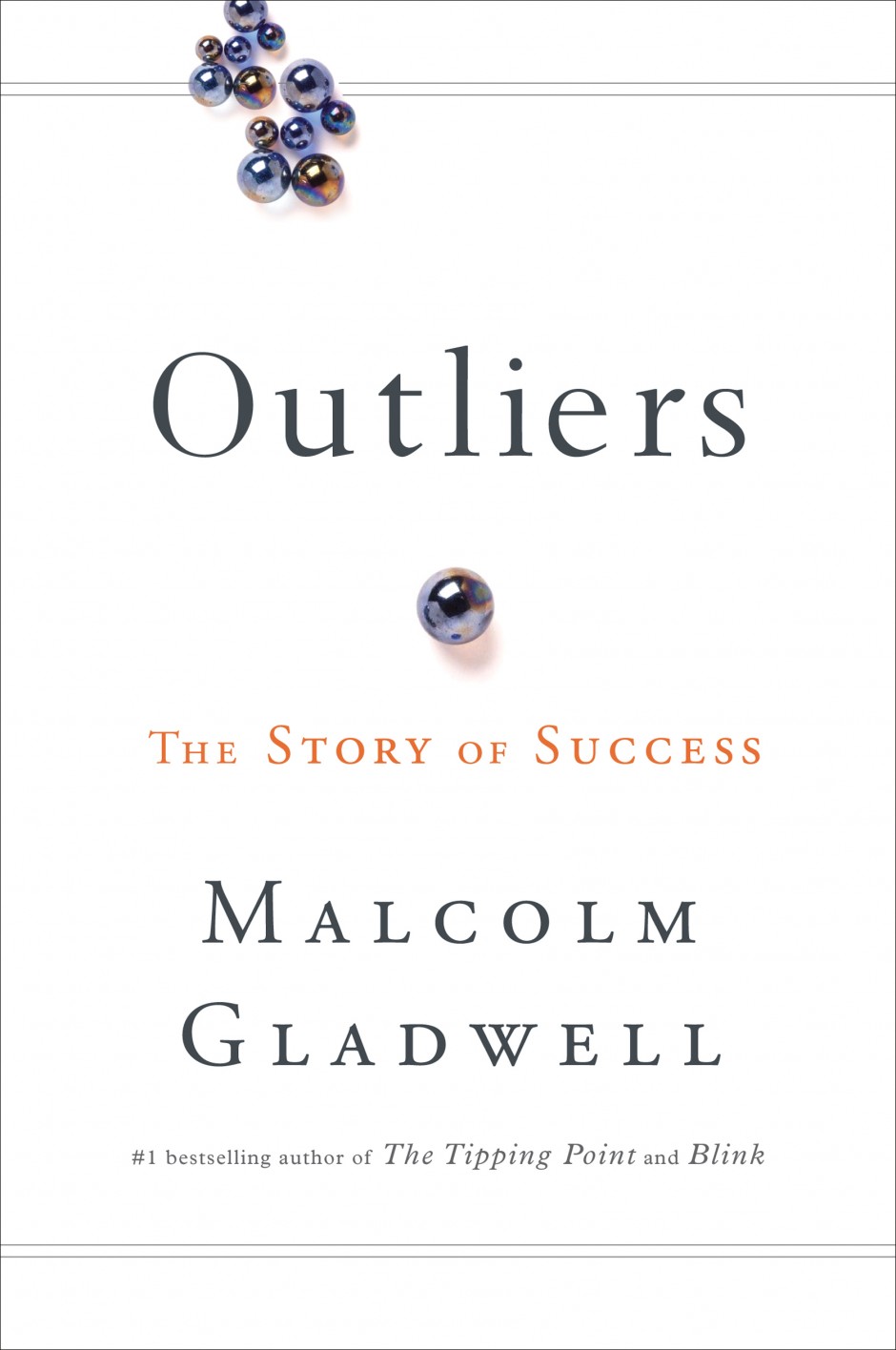
Malcom Gladwell has...lost his marbles? OH HO HO

Malcom Gladwell’s Outliers was published in 2008, landing at #1 on the New York Times bestseller list. Ever since then I’ve seen references to it all over the Internet. In particular, blogs keep mentioning Gladwell’s “10,000-hour rule.” So when I happened across it during an otherwise dull trip to Walmart, I snapped it up.

Outliers bills itself as “The Story of Success.” Gladwell examines a series of, well, outliers, people and companies notable for either extreme success or extreme failure. On the success side are the Beatles, Bill Gates, Robert Oppenheimer, and some of the best hockey players in the world. On the failure side is Korean Air, which at one point was crashing so many of its planes, that a report on its crashes had to be amended because another plane had crashed before the report was finished. (Gladwell assures us they’re better now.)

His thesis is that success works differently than we expect. Typically we imagine success as a deeply personal phenomenon, a function of raw talent, passion, and work ethic. And while Gladwell acknowledges the importance of all these traits, he points us to other, less obvious factors.

Yes, Bill Gates was brilliant and driven. He also happened to be born at just the right time to take advantage of the computing boom (according to Gladwell, anyway). And he was one of the very few kids in the country with access to a mainframe terminal, which allowed him vastly more time for programming practice than his peers.

Gladwell returns to this theme over and over: success springs not just from who we are, but from our circumstances, the opportunities we’re given, even (to a surprising degree) our cultural background. He attributes the failure of Korean Air to a tendency in Korean culture to defer to authority, leading copilots to be less vocal about problems they notice.

When it comes to raw intelligence, he finds that mostly, you only need to be “smart enough.” Past a certain point, he says, extra IQ doesn’t correlate to extra success. (He cites Chris Langan, whose IQ soars in the 200 region, as an example of such a failed genius, though frankly that section of the book comes across as pretty condescending to Langan.)

A better indicator – according to Outliers – is the 10,000-hour rule, which says that to truly master any particular skill, you generally have to put in about 10,000 hours of practice. The Beatles and Bill Gates both succeeded by virtue of this rule.

I found the book insightful and provocative, but I had some problems with it.

First, it went a little slow for my taste. In every chapter, he pushes on and on with one example after another, delving into more and more details long after he’s made his point.

Second, in spite of the mountains of anecdotes and scientific-sounding data, I never felt like he was really testing out his hypothesis with any kind of systematic rigor. In the first chapter he talks about the surprising reason that so many hockey players are born in the first three months of the year (and it is an interesting reason), but his examples feel cherry-picked, overly specific. I expected him to say something like “In fact, if you examine the records of all NHL players over the last 30 years…” But he never did. That research seems like it would be pretty easy to do, which makes its absence even more surprising.

But the book lacks something else, even more important. I kept waiting for the moment when Gladwell would turn from his statistics and analyses and say, “Now, here’s how you can apply these principles to achieve success in your own life” – or even the more pessimistic, “So that’s why you’ll probably never succeed no matter how good you think you are.” Neither of these ever happened. Gladwell apparently feels that his readers want a book on success that does not tell them how to be successful.

Yes, I can look at his principles and figure out some ideas myself. The 10,000-hour rule, for instance, stands out as one of the few factors he mentions that I can actually apply (i.e., work hard). And understanding the role of cultural background might lead me to examine my own unconscious cultural biases, looking for ways they may be holding me back.

But I’ll have to do all that on my own, because Outliers isn’t interested in taking me there.

I don’t want to trash the book or its author. It was definitely an eye-opening read, and if you get a chance to check it out, you’ll learn a lot. I just think it could’ve been a lot better.

What have you been reading lately?

P.S. This is the last day to submit your question on Ask Brian Anything. No question is too strange, so ask now!