Monthly Archives: November 2016

Rethinking the Three-Fifths Clause

If you’ve spent much time reading or talking about the Constitution, you’ve probably come across the Three-Fifths Clause. It’s a little piece of Article I, Section 2, that says slaves are each counted as 3/5 of a person for the purposes of representation in the House. (Needless to say, this clause is no longer in effect.)

I remember hearing about this in high school. Like most people who hear about this, I thought it was unfair. All people should count as full, 100% human beings, not 3/5 of a human being. Right?

Well, it is a deeply unfair and horrible rule — but that’s not the reason why. In fact, slave owners of the day wanted their slaves to count as “full” people, while principled opponents of slavery wanted slaves counted as nothing.

Why?

Well, remember, we’re talking about a formula for calculating how many House Representatives a state gets. No matter what number we pick, or what formula we use, slaves are never going to be represented in the House (or Senate, for that matter). They can’t vote, they have no legal rights. The Representatives of a state represent slave owners, and other citizens (who are overwhelmingly pro-slavery).

So we’re really talking about how much power (in the form of Congressional control) slave owners are going to get.

With that in mind, the picture becomes clearer. Slave owners would count each slave as 30 people, if they could, and dominate the House. Meanwhile, not counting them at all means they only get “credit” for free citizens.

It’s just strange to have an idea in your head a certain way for over 20 years, then suddenly find out you’ve got it exactly backwards.

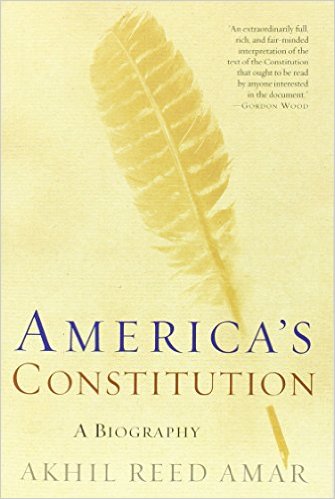
By the way, none of the reasoning above is a result of my own cleverness. It came from a book I’m reading, America’s Constitution: A Biography by Akhil Reed Amar.

acab

Weighing in at more than 600 pages, it’s the kind of book you can use to have a debate with someone, then cudgel them into submission if they won’t change their mind. It’s a really careful, insightful work, taking you through the Constitution itself and all 27 Amendments almost line by line, and explaining the history and the logic behind every single piece.

So far I’m only on Article II. I’ll keep you posted (unless I don’t).

How Trump used 7 logical fallacies in 49 minutes

I follow Trump on Twitter. (Generally I try to ignore internet trolls, but when one of them gets the nuclear codes, I figure we’re well past the “ignore” stage.) Reading this man’s tweets is bewildering, infuriating, disturbing, and hilarious, sometimes all at the same time. The word that keeps coming to mind is surreal.

On the plus side, he does offer an endless supply of what you might call “teachable moments.”

Consider the five-tweet barrage below, posted from 6:14 to 7:03 p.m. on November 28. The context here is that Trump claimed he would’ve won the popular vote if not for voter fraud on a massive scale — about 3 million fraudulent votes — and CNN journalist Jeff Zeleny pointed out that there’s zero evidence of that. (The sequence goes from bottom to top.)

tweetz

Of course this rant is childish, bizarre, and utterly unbefitting the President-elect of the United States. But let’s look a bit deeper. Let’s take this as a chance to learn about how logic works.

A logical fallacy is an argument that might seem sensible on the surface, but isn’t actually valid. Some are pretty obvious, while others are extremely subtle. Everyone uses logical fallacies sometimes, and everyone believes them sometimes, myself included. But if we can learn to recognize them, we get better at resisting their allure.

By my count, Trump has managed to fit at least 7 different types of logical fallacy into a span of 49 minutes. That’s one new type of fallacy every 7 minutes on average.

Ready? Here we go.

Appeal to Ignorance fallacy

Appeal to ignorance (a.k.a., shifting the burden of proof) means declaring that something is true because we don’t know, or haven’t proven, that it’s false. He says, “you have no sufficient evidence that Donald Trump did not suffer from voter fraud.” But Trump is making a remarkable claim — that 3 million people voted fraudulently — so the burden is on him to prove it. There is no burden on anyone else to disprove such a claim.

This is closely related to the principle of Occam’s Razor, which says that you generally shouldn’t assume a complex explanation when a simple one works just as well. Since the simple explanation (no significant level of voter fraud) seems to work, Trump’s more complex claim (an elaborate scheme that went largely undetected) is the one that requires defense.

The funny thing here is that we actually do have good evidence that no such fraud took place. So even if Trump’s invalid logic were valid, it still wouldn’t prove his case.

Ipse Dixit fallacy

“Ipse dixit” is Latin for “He himself said it.” It means that someone just asserts that something is true and expects it to be believed, either because they said it, or because someone else said it. Sometimes called an appeal to authority.

Trump says “There is NO QUESTION THAT #voterfraud did take place,” but he provides NO EVIDENCE THAT this is true. This is the kind of thing that happens in kindergarten a lot. “My dad could beat up your dad!” “Nuh-uh!” “Yeah-huh!”

By the way, appeal to authority isn’t inherently wrong. You can never use it as 100% proof of something, but if an expert on astronomy tells you something about how stars are formed, it’s reasonable to think that it’s probably true unless you have evidence to the contrary. But Trump is not an expert on how voting works (to put it mildly), so his opinion carries no weight, Caps Lock notwithstanding.

Ad Hominem fallacy

This means you attack your opponent directly, as opposed to attacking their argument. Insults are an example of ad hominem. Another one that’s popular in kindergarten. “You got this problem wrong.” “Oh yeah? Buttface!”

Trump has a lot of pratice with this. Here, his attacks on Zeleny include “shame! Bad reporter” (what is the guy, a dog?) and “part time wannabe journalist !”

(Incidentally, “bad reporter” and “wannabe journalist” are mutually exclusive, but that’s not really a fallacy, it’s just inherently wrong.)

Appeal to Emotion fallacy

Just what it sounds like. You fire up your audience’s emotions (anger, pride, fear, whatever works) in lieu of logic. Trump’s entire tweet sequence is aimed at making people feel a certain way, rather than think a certain way. Actually, I think that summarizes his campaign, too.

Of course, there’s nothing wrong with appealing to emotion in addition to using logic, and pretty much everybody does. It’s when you use emotion as a smokescreen that you run into problems.

Genetic fallacy

Despite the name, this has nothing to do with DNA. Genetic fallacy means arguing that a claim is wrong because its source is untrustworthy or otherwise bad. Sort of a variation on ad hominem, I guess. Trump says: “just another generic CNN part time wannabe journalist ! @CNN still doesn’t get it. They will never learn!” The goal seems to be casting doubt on CNN’s claims by casting doubt on CNN generally.

The genetic fallacy can seem reasonable on the surface — after all, if someone’s not trustworthy, why should you trust them? Well, you shouldn’t, of course. But the point is that someone can be right even if they’re usually wrong. Even a pathological liar can tell the truth sometimes. (For instance, Trump recently said, “Happy Thanksgiving!” and he was right.) So even if CNN is totally full of crap, it’s still possible that they’re right about this particular argument.

Overgeneralization fallacy

This one is also just what it sounds like.

Whether or not you think CNN has a strong liberal bias, I’m gonna go out on a limb and say that their “total (100%) support of Hillary Clinton” is not a real thing that really happened.

False Dichotomy fallacy

Also known as the excluded middle. This means that you see the issue as black and white, all or nothing, one or the other. Like: “She’s not a saint, so she must be a criminal.” In reality, the truth can often be somewhere in between the two opposing arguments, or it can even go in a different direction entirely.

Of course, sometimes one side really is totally right, and here, the facts seem to vindicate CNN completely. But the point is that even if CNN’s claim is wrong, as Trump is saying, that doesn’t prove that his claim is right.

In conclusion

Listening to Trump speak can hurt your brain. But figuring out exactly why he’s wrong can be enlightening.

Also, I’m not sure Trump realizes he actually won the election. I mean, he’s attacking CNN because they’re upholding the validity of the process that will make him President.

I think somebody might get his Twitter access revoked again…

“What can I do?” Here’s what.

Millions of Americans are concerned (or worse) about the upcoming Trump presidency, but don’t know how they personally can help. What can we, as citizens, do to make sure our country stays safe, sane, tolerant, and free?

The answer is, a lot. After thinking this over for several weeks, I’ve put together a detailed guide. Please check it out. And because I think this is fairly important, I’ve added a permanent link in the website header as well, and I’ve made it a permanent “page” rather than just another blog post.

Now, I’ve given you the link (two links, in fact) and encouraged you to click. Theoretically, my work here is done.

The problem is that I’ve learned, from personal and professional experience, that people are reluctant to click links. If the information is right there in the article, they’ll scroll down and read, but if they have to click a link, readership declines dramatically. It’s some kind of psychological hurdle. I do the same thing myself, when I’m reading.

So how do I entice you to actually click?

Let’s try this:

George Takei + button

Now if you’re thinking that I’m exploiting the celebrity of a venerable man for my own petty purposes, well, you’re right. But somehow I don’t think he would mind very much.

Seriously though. Push the button.

A somewhat different letter

letter2

So, this is a thing that happened.

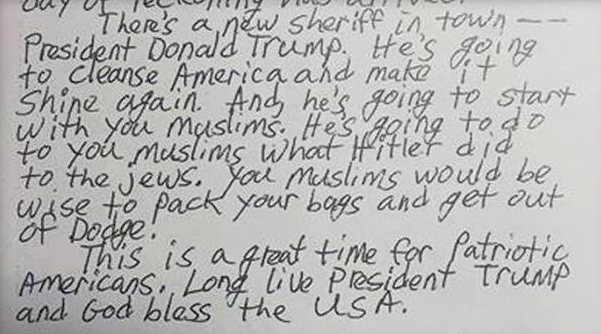
CBS is reporting that a mosque in northern California received a threatening letter (see above). And this is not an isolated incident.

Right now I’m not incredibly interested in assigning blame for this. To what degree Trump and/or some of his supporters may be responsible — directly or indirectly — for threats like this, I don’t especially care. Whether it was sent as a serious message or as a prank, I don’t know. It’s even possible that some disgruntled crackpot liberal sent the letter to make Trump look bad — although I should emphasize that there’s no evidence of that.

Regardless. Blame is beside the point.

The point is: If you’re a Muslim, how does this make you feel?

Forget “offended,” forget “politically correct.” We’re talking about roughly 3 million Americans who see stuff like this and have to wonder if they and their husbands and wives and children are safe — and if they’re welcome here.

The one good thing about all this is that most Americans, I think, do believe Muslims are welcome here. To quote that CBS article again:

Faisal Yazadi, who is president of the [Islamic] Center’s board of directors, said there has been an outpouring of support from neighbors and from Police Chief Eddie Garcia, a Catholic bishop and the NAACP, the San Francisco Chronicle reported. The support made him feel unfazed, he said.

“Without their support I don’t think I’d be talking to you so strongly now,” he said.

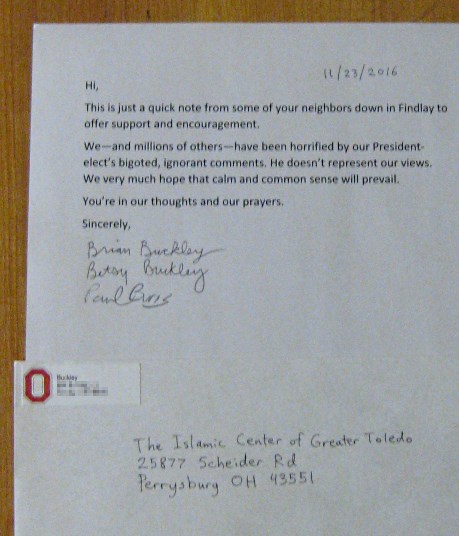
I didn’t know anything about this story when my friends and I sent our own letter, but it makes me glad we did.


I sent this letter recently

letter

And for what it’s worth, it seems I’m not the only one thinking this way.

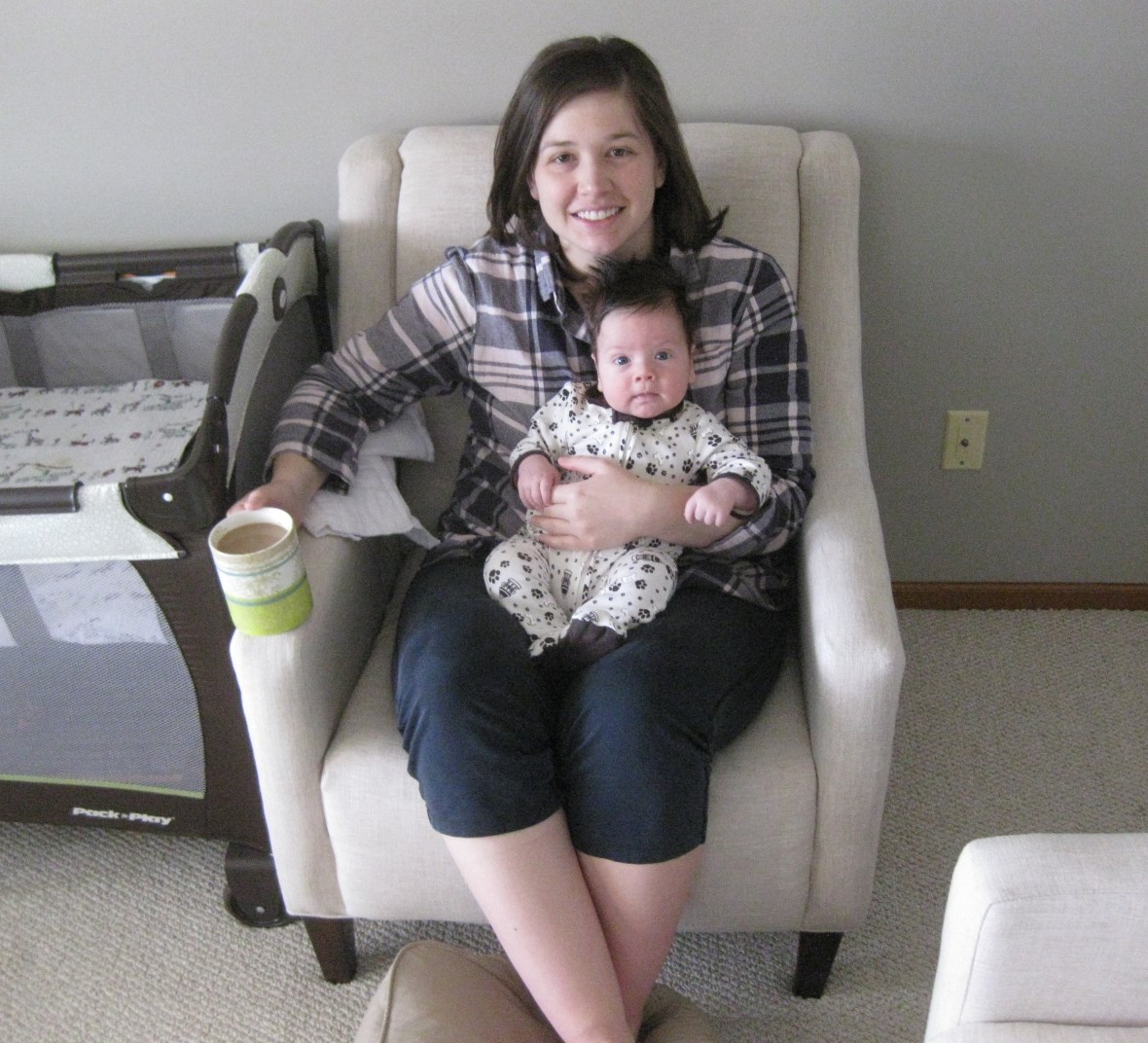
Happy Thanksgiving!

11-22-evan-2-months

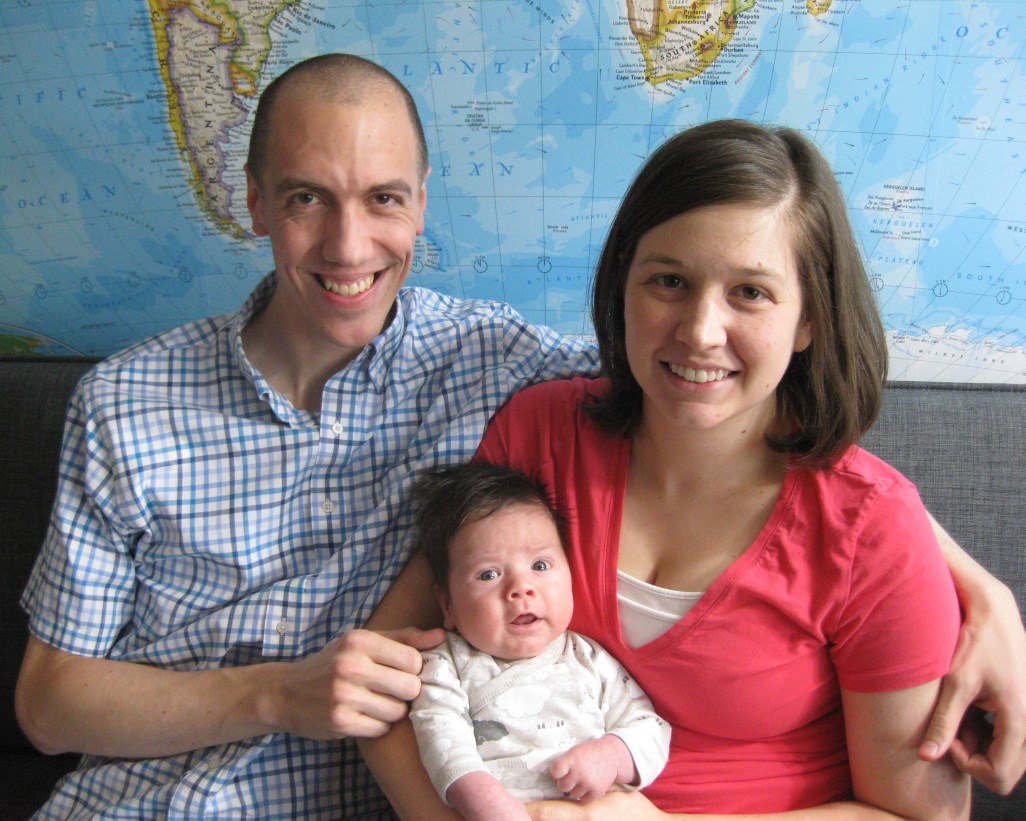
Stay safe, eat good food. And as a great philosopher once said: Be excellent to each other.

See you Monday!

Dark secrets of the grapefruit — REVEALED

grapefruit

Okay, admit it. You’re a little bit curious.

Today I’m going to ask the question that Big Citrus doesn’t want you to know about. That question is:

Where did the grapefruit come from?

“From the supermarket,” you say? Fair enough. But let’s dig deeper. Let’s delve into the shadowy, shady — one might almost say seedy — history of the grapefruit.

If you’re like me, you never thought much about this before. If someone had asked, I would’ve guessed that the grapefruit had been around in more or less its current form, pretty much forever (or at least the last million years).

But that’s just a comforting myth. A fairy tale. A vast fruit-wing conspiracy. A Vitamin-C-onspiracy. A convenient facade that —

What? Oh, sorry.

Anyway, here’s the real deal. Sometime in the last 500 years, somewhere in the Caribbean, an orange got crossed with another fruit called a pomelo. “By accident,” the scientists would have you believe. The result of this unholy union (or at least, this secular union) was a thing so terrifying that biologists of the day called it THE FORBIDDEN FRUIT.

(By the way, this is all actually true, more or less.)

But even that shiver-inducing spawn was only the beginning. It had not yet developed into the ruby-red grapefruit that Americans fawn over today. For that, we needed…

RADIATION.

Yes, scientists working in dark (or perhaps well-lit) laboratories in the 1970s deliberately bathed this pale fruit in radiation, hoping to induce MUTATIONS. And their horrifying experiment in playing God was all too successful. The ruby-red grapefruit was born.

(Also all actually true.)

Also grapefruit are safe to eat and none of this was unethical nor has it ever been secret BUT now you know!

And what is known cannot be un-known!!

I mean, unless you forget or something.

In conclusion: I like typing the word GRAPEFRUIT!

22 Americans tell you why they voted for Donald Trump

My friend Ben has said more than once, and quite correctly, that we (people on the left) need to understand why our fellow Americans voted for Trump. We need to keep that conversation going.

So I was gratified to find this list from the Washington PostA useful and enlightening read.

Most of the reasons are about a paragraph long, but the one that struck me most was a single sentence from a 66-year-old Pennsylvania man. His reason:

Because the part of America that grows your food, produces your energy and fights your wars believes the country needs a course correction.

I could write a whole blog-post-length rebuttal to each and every one of these 22 reasons, including the one above. (I’ll spare you that.) Most, but not all, make me angry in one way or another. (I’ll spare you that too.) But that’s not the point.

The point is that (1) even if Trump voters were “the enemy,” it would be strategically necessary to understand how they think; and (2) Trump voters are emphatically not the enemy, nor are they all racist, sexist, or Islamophobic.

We’re all Americans, remember? In fact, that’s kind of the point.

I want to fight hard, nonviolently, to defend my country. And I want my country to be a place where neighbors can disagree, and remain neighbors.

Image

Buckley, Buckley & Buckley

11-13-evan

A closer look at the ACLU

aclu

I’ve pointed to the American Civil Liberties Union as one of our best champions during the upcoming Trump administration. But who are they, exactly, and why am I throwing all the cash I can spare in their direction?

Time for some Q&A.

What is the ACLU?

They are a nonprofit organization, headquartered in New York, with offices in all 50 states. Website: aclu.org

What do they do?

They fight to protect civil liberties, especially the ones guaranteed by the Bill of Rights: freedom of speech and religion (1st Amendment), freedom from unwarranted search and seizure (4th Amendment), right to due process in court (5th Amendment), and so on.

How do they do that?

Well, they go to court a lot. Their team of lawyers will challenge any law or government action that they believe is unconstitutional. Since its inception, the ACLU has appeared before the Supreme Court more often than anyone except the Department of Justice. And they win more often than they lose.

They also talk to lawmakers, expressing concerns as necessary. And they publish materials to educate the public about the rights of all Americans.

How are they funded?

Entirely by individuals and private groups. They have never, and will never, accept government money — this helps them remain independent, and challenge the government without fear of having their funding removed.

How big are they?

They have about 100 staff attorneys, 2,000 volunteer attorneys, and 500,000 members (i.e., people who donate).

How long have they been around?

Since 1920. So, almost 100 years.

What kinds of things have they done in the past?

  • In the Scopes “monkey trial” of 1925, it was the ACLU that recruited biology teacher John T. Scopes to challenge the state ban on teaching evolution in science classrooms.
  • After the attack on Pearl Harbor, the ACLU was virtually alone in opposing Japanese internment camps.
  • In 1954, the ACLU and the NAACP challenged racial discrimination in schools, leading to the famous Brown v. Board of Education decision that ended “separate but equal.”
  • More recently, the ACLU has fought against the Patriot Act, waterboarding, and the NSA warrantless surveillance program.

I’ve heard they’re a liberal organization. Is that true?

Yes and no. It depends what you mean by “liberal.”

Certainly they are nonpartisan — and I mean really nonpartisan, not just technically. They went after the Obama administration many times. Before that, the Bush administration. Before that, the Clinton administration. So they’re serious about holding accountable those in power, no matter who they may be.

They also have a policy of never formally endorsing or opposing any candidate for any office, although certainly they raise a lot more red flags if a candidate has a history of civil rights violations.

The ACLU has fought strongly and consistently for a woman’s right to have an abortion. If that issue is your main barometer for conservative vs. liberal, then certainly they’re liberal on that score.

They also oppose the death penalty, for a variety of reasons. And they’re against torture. Again, those tend to be more liberal stances.

On the other hand, they oppose gerrymandering, which is (or should be) a nonpartisan issue. And they oppose “big government” in the form of domestic mass surveillance, which is a conservative stance (at least by the traditional definition of “conservative”).

So I’d say, rather than picking one label or another, take a look at their stances on the issues — and their history — and decide for yourself.

…So basically, they’re a liberal organization?

Yeah, I’m not gonna lie, they are sorta liberal. But they’re very much an independent group. And as I said, they’ve opposed Democrats as well as Republicans on countless occasions, and will continue to do so.

Are they considered a charity?

No — the main ACLU organization is a nonprofit, but not a charity. They’re a 501(c)(4) “social welfare” organization, which primarily means they’re actively working with/against the government on issues. Donations are not tax-deductible.

There is also the ACLU Foundation, which basically does the same thing except minus the lobbying. Because of this difference, they’re a 501(c)(3) charitable organization, and donations to them are tax-deductible.

Are they gearing up to oppose the Trump administration if & when it’s necessary?

Oh hellz yes. In just the first 6 days after Trump was elected, the ACLU got 120,000 donations. (That’s donations, not dollars.) Their first big conference call post-election was delayed by 10 minutes because of the sheer volume of people calling in (I was one of them). The ACLU has already done extensive research on the legality and constitutionality of Trump’s major proposals, and they’re lawyered up and ready to go.

If you love the ACLU so much, why don’t you marry it?

Betsy said no.

But you really think these guys are among our top champions of liberty?

Yes I do.

What was that link again?

aclu.org