Category Archives: Uncategorized

“Let’s See How Measured You Are.”

You may get the impression I’m a solitary creature: blogging, reading history books, meditating, thinking way too hard about the music I listen to. But I assure you, hypothetical reader, I do in fact – how you say – “socialize with persons,” and on occasion I even venture outdoors.

Just a couple week ago, in fact, I was best man at a friend’s wedding. I went full tuxedo. And you know I was rocking these bad boys:

Ahead, warp factor CLASSY. Engage!

Star Trek cufflinks. Does it get any more stylish? I submit that it does not.

Ahem.

In order to rent a tux, one must try on a tux, which is why I was in a Men’s Wearhouse the Thursday before the wedding. (Get it? Men’s Wearhouse? Because you wear the suits? Oh, aren’t they clever!)

As I was standing outside the changing rooms, trying to look like I knew the difference between a cummerbund and a pocket square, a little girl (maybe four years old) was playing nearby. Someone had given her a measuring tape, and she was determined to use it. She marched up to her mother, held the tape to Mom’s arm, and said with unfettered confidence:

“Let’s see how measured you are.”

Let’s see how measured you are. Nonsense, yet totally sensible. And because I’m geeky enough for ten regular human beings, this innocent phrase got me thinking about AI.

You hear sometimes about computer scientists writing language parsers, programs that pick apart a sentence into subject, verb, object, subordinate clauses, adverbial phrases, and all those fun high-school-English-class terms. Then they look at the meaning of each word, and construct an overall meaning by putting everything back together. They discover that their method doesn’t work with idioms, so they build a database of those and add to it constantly. Pretty soon their program can figure out a few simple sentences, and they feel like they’re making progress.

Let’s see how measured you are. What now, language parser?

The girl’s comment made it blindingly obvious that human beings don’t work that way. We don’t build precise meanings out of precise structures. We learn to use language the same way we learn to use any other tool: by trial and error, and by imitation. She had heard these words before in a similar order, so she gave it a shot. And even though it wasn’t “right,” I knew what she meant.

After making this revelatory remark, she started messing with the measuring tape. She held it up to different parts of Mom’s body, not actually measuring anything, just going through the motions. No definite goal, no organized plan. Playing. Imitation, trial and error.

The same thing she did with her sentence.

I’ve said before that in the Neats vs. Scruffies AI debate, I fall squarely in the Scruffy camp. This is just another reason why.

Of course, the Neats might counter that an AI need not learn or think in the same way a human does, and they’d be absolutely right. But I say, if you’re going to understand a language, you’d better remember what kind of minds created it.

So that’s me. What questions have you geeked out about lately?

Why I Love Eminem

OSHA does not recommend this.

Every human life has two parts: Spectator and Actor.

The Spectator reads, watches, analyzes, debates. He is sometimes rational, sometimes emotional, but always separated from reality by a glass wall of abstraction.

The Actor does things. He lives moment by moment in the real world, riding the highs and lows of joy and terror, impossible pleasure and unspeakable pain. While others watch, the Actor survives.

Everyone plays both these roles, switching from one to the other and back as each new situation arises. Both are necessary. Each informs and strengthens the other. Spending too much time as a Spectator locks you in an ivory tower, makes you write bad complicated poetry that only academics read. Spending too much time as an Actor makes you wild, undisciplined. As the proverb says: “Vision without action is a daydream. Action without vision is a nightmare.”

I grew up as a Spectator. I read books, watched movies, played video games, did homework, avoided sports. Even the areas where I did compete – Science Olympiad, National Spelling Bee, Quiz Team – were abstract and intellectual. A childhood of Spectatorship has advantages, certainly: it’s safe, and it gives you time to think, and those are both wonderful things. But it does leave certain weaknesses.

I’ve written recently about getting my first IV as a needlephobe. Facing a phobia leaves little room for Spectatorship. It makes you an Actor. That afternoon, confronting my terror in the hours before the procedure, I meditated and I worked out. And I listened to Eminem.

Zen Buddhism and Eminem may not have much in common, but they share this: they both dismiss Spectatorship. They demand you become an Actor.

I’m not afraid
To take a stand
Everybody
Come take my hand
We’ll walk this road together

The editor in me complains this is a string of cliches. I don’t care. Whatever his flaws, Eminem creates music that reaches out directly to the world of experience, of living reality. This is the world that my academic side shrinks from, the world I tried to embrace by choosing to skydive and learn karate.

I’m afraid of it. I need it.

I’m getting better at it.

Are you a Spectator or an Actor?

Three (More) Grammar Mistakes Smart People Still Make

Welcome back, friends and neighbors, to another installment of Buckley Clarifies Minor, Obscure Issues™! Last time, we cleared up three prickly English problems – mistakes so subtle that even astute readers like yourselves might have stumbled over them. Today, we’ll tackle another three, rendering each and every one of you that much smarter. You’re welcome!

1. Comprised Of

“The Jedi Council is comprised of twelve members.” Does that sound right to you? If you answer “yes,” it’s because just about everybody writes this way. But, as with so many other questions, just about everybody is wrong.

Here’s the real deal:

RIGHT: “The United Federation of Planets is composed of over 150 member worlds.”

RIGHT: “The United Federation of Planets comprises over 150 member worlds.”

WRONG: “The United Federation of Planets is comprised of over 150 member worlds.”

See what happens? People confuse the first two (correct) constructions, making the freakish hybrid in the third example.

Yes, English is stupid for making “compose” and “comprise” sound almost the same and mean almost opposite things. Feel free to sue William the Conqueror for the Norman Invasion. In the meantime, if you want to be a master writer, you must be smarter than the language.

2. With Regards To

Here, the rule is a bit simpler:

WRONG: “I have some concern with regards to your pet velociraptor.”

RIGHT: “I have some concern with regard to your pet velociraptor.”

Of course, just to make it confusing, there are phrases where “regards” with an S is correct. For instance, you could say, “Send her my regards.” But unless you want to send your regards to a razor-toothed killing machine, leave the S off “with regard to.”

(Grammar Girl also points out, correctly, that the whole “with regard to” phrase is a bit awkward anyway. You’re usually better off avoiding it altogether.)

3. Possessives With S

Quick, which is right?

Thomas’s hovercraft is in the shop for repairs.”

Thomas’ hovercraft is in the shop for repairs.”

Definitely the second one, right? HA! Okay, the first one then? No? What’s going on here?

The answer is, they’re both right. One of the confusing fun things about English is that there’s no single, universally accepted authority for what’s proper and what isn’t. Our friends at CMOS, AP, and elsewhere may agree on 99% of the language, but that last 1% is a bitch for the rest of us. Long story short, nobody quite agrees on the best way to handle this, so either one is correct. Just make sure you’re consistent; don’t go switching back and forth within a single document.

(Note: plurals are a different story. If you want to say, “My kids’ nanny flew away with her umbrella,” the way I wrote it is the only correct way. You’d better not be throwing a “kids’s” in there.)

I suppose that’s enough linguistic legerdemain for one day. Got any other sticky grammar questions? Leave ’em in the comments, and we’ll get you sorted out!

Celebrating ONE YEAR!

I started this blog a year ago today. My first post was March 30, 2011.

This is my 255th post, which is a lot further than I got on either of my two previous blogs. That’s an average of 4.9 posts per week. With a few minor exceptions, I’ve consistently posted every weekday for 52 weeks. I’ve gotten a grand total of over 500 comments: a.k.a., you guys are outstanding.

I spent most of the year trying to focus exclusively on writing about writing, but I finally gave that up. Now I can (and do!) just ramble on about whatever I want, and I think the blog is better for it.

You and I have covered a lot of ground together, hypothetical reader! We’ve examined whether a career can be made of badassery (answer: yes). We’ve looked at how you can (and should!) make good art even if you don’t believe in yourself. I’ve subjected you to a wide assortment of my own fiction (of which this story was perhaps the best), and you’ve suffered through it bravely. We’ve thought about how Zen bubbles up into all sorts of non-Buddhist writing. We’ve asked whether writing can be elemental, like fire or water. We’ve answered the question of free will vs. destiny. And, of course, to the continual delight of Googlers everywhere, we’ve come up with 28 words you can use instead of “awesome.”

Can I say something? Y’all are amazing. (That’s the Texas in me coming out.) You really have been wonderful. Your reading makes the blog worth writing. At the end of my other two blogs, I felt drained, relieved they were over, even though I remain very proud of the work I did in writing them. But right now, I feel energized, excited to keep going, and curious to see where the next year will take us.

I hope you feel the same.

In celebration of this momentous event, by the power invested in me as Supreme Dictator of This Tiny Website, I hereby declare this post an Official De-Lurking Post. All you readers out there who normally slip away silently without leaving a comment, today is your day! Say hello, tell us your name, type a wordless angry face – whatever. Just de-lurk! You can go back to lurking tomorrow, I promise.

(Non-lurkers are also welcome to comment, of course.)

Thank you so much for reading. Here’s to many more years of This Sort of Thing. Have an excellent weekend, and happy Friday!

How to Write a Sonnet, Part 2

Yesterday we started by explaining what a sonnet is, and by giving some guidelines for pre-writing. Today we move on to the more interesting part: actually writing the thing.

Actually Writing a Sonnet

You’ve got a topic in mind, a general idea of how you want to approach it, and a feel for the tone you want to strike. Now what?

Now write your first line.

Remember, it’s iambic pentameter, so it should have a certain rhythm to it: da-DA, da-DA, da-DA, da-DA, da-DA. This rhythm (or meter) is called the iamb, and it’s the most natural of all the poetic meters. People tend to talk this way without even realizing it. For instance, I did it a few sentences ago, completely by accident: “so IT should HAVE a CERtain RHYthm TO…” That’s iambic pentameter right there.

Your first line can be a complete thought in itself, or it can spill over into the next line. Either way is okay. But write your first line, check that it’s got good rhythm, and then start thinking about rhyme.

How do you think about rhyme? Well, let’s say my first line is:

I gently tried massaging the giraffe

(It’s possible you can do better than this.)

If your rhyme scheme is ababcdcdefefgg, then your third line will have to rhyme with your first. So you’d better have some idea of what words rhyme with your first line, so you can start taking your second line in the right direction.

What words rhyme with giraffe? The easiest method I’ve found is to run through the alphabet: A-ff (no), B-aff (n0), C-aff (calf!), D-aff (no), E-aff (no), F-aff (no), G-aff (gaffe!), and so on. (At the end of the alphabet, don’t forget to try other starting sounds like th-, sh-, and ch-.) This method only supplies one-syllable rhymes, but it’s a decent start. You can also try a rhyming dictionary, or whatever other method works for you.

Maybe you’ll find that your line has no good rhymes. In that case, change your line. Don’t feel like the words you’ve written are set in stone.

Let’s say I settle on “laugh” as a good rhyme for “giraffe.” Now I have a little better idea of where I’m headed. Then I can write a second line (thinking about rhymes for the fourth line), and follow it up with a third line ending in “laugh.”

I gently tried massaging the giraffe.
His knobby kneecaps shivered with delight,
And as I worked, I couldn’t help but laugh

Now my fourth line can tell you why I’m laughing, and it should rhyme with “delight.” You can see how the structure of the sonnet helps guide you, even as it limits you. (By the way, this phenomenon is true of more than just sonnets.)

So the rest of the sonnet goes the same way. The only extra wrinkle is the volta, or change, that I talked about yesterday. My advice there would be to try writing a few sonnets without a volta to get used to the general feel, and only tackle it once you’re more comfortable. Read some sonnets to get a better idea of how the volta works and what it looks like, and then try it yourself.

Bam! You’ve written a sonnet. Or at least, you’ve read up to this point. Either way, nice work.

Revising

Revision is just as important in poetry as in prose, if not more so. All the usual revision tactics apply: cut out cliches, make every word count, murder your darlings, etc.

But sonnets in particular lead to a certain type of mistake: compromising your language to fit the structure.

The rules of the sonnet are demanding enough that it’s tempting to feel like you’ve “won” if you just write a poem that follows the structure. But the structure is only the starting point, the price of admission into Sonnetpalooza 2012. Once you’re in, you’ve still gotta shine.

So be on the lookout for two specific types of mistakes. First: words (or whole lines) that don’t really help the poem, but only exist to give you a rhyme. Rhyming is no excuse for limp writing. And second, similar to the first: words that don’t really help the poem, but only exist to make the iambic pentameter work. Filler words like “very” or even “the” can be suspect here. I’m not saying you should never write “the,” but ask yourself whether your writing serves the poem, or just the structure. If it’s only there as scaffolding, revise.

There’s no room for fluff in sonnets or any other kind of writing. Stretch every word till it screams.

Be Amazing

Most of my advice so far has been technical, and that worries me a little. I don’t want to imply that writing a sonnet is just following a bunch of rules. The rules are nothing more than the starting point, and if all you do is follow them, you’ll fail every time.

The rules are the body of the sonnet, but its soul is poetry.

Experiment. Be different. Be outrageous. Be fearless. Be amazing. And if you’re not amazing, try it eighty thousand more times, because that’s what writers do.

Good luck!

How to Write a Sonnet, Part 1

Last week, blog reader Evlora left me a comment:

Also, I have a bit of a question/request. I want to know how, when you write a sonnet, you go about it. What is your procedure, or does it vary from sonnet to sonnet? Do you write it start to finish, or the ending first? Do you plan out every line or does it just come as you write it?
I’ve been writing a few of my own, and I’m curious about how others, particularly such talented writers as yourself, write, and whether or not the way that you write them in affects the quality of the outcome. Basically, might using a different method make my sonnets better? Or is experience now the only way I can better my sonnets? (In which case… *cringe*)

A sonnet-writing guide sounds like an excellent excuse for a blog post or two. So, today and tomorrow, I’ll explain my method.

Let’s get to some sweet sonnet action!

Caveats

Two things. First, I am not William Shakespeare, Percy Bysshe Shelley, or Harold Bloom. I am a dude who types words on the Internets, and occasionally I dabble in Das Sonneten. Take my advice with vast quantities of salt.

Second, even if I were some sort of poetry god, remember that every writer in the world follows a totally different process than every other writer. This is just how I happen to do it, and it seems to work for me. But if the method I describe makes you recoil in horror, then by all means try something else.

What is a Sonnet?

The sonnet form has evolved over time, so there isn’t a single, fixed, absolute definition of what a sonnet is. Traditionally, though, a sonnet is a poem that meets the following requirements:

  • has fourteen lines
  • is written in iambic pentameter
  • follows a set rhyme scheme
  • has a volta

I’ll go through these in more detail.

Iambic pentameter means that each line has ten syllables, and that the syllables form a particular rhythm as you say them: da-DA, da-DA, da-DA, da-DA, da-DA. Unstressed, stressed, unstressed, stressed, and so on, till you end on a stressed syllable.

Right: My friends and I ate twenty-seven pies.

Wrong: Never underestimate a seagull.

Iambic pentameter is generally the hardest thing for new poets to figure out. Try reading a few sonnets to get the hang of how the beat goes. It might help to read them aloud in a singsong voice, exaggerating the stresses. If this doesn’t make sense, tons of other websites out there explain it too; Google is your friend.

The rhyme scheme is easier: basically you just need to pick a pattern of rhyming and stick with it. The Shakespearean sonnet uses a-b-a-b-c-d-c-d-e-f-e-f-g-g, which is what I use. Each letter represents a line, so the first line rhymes with the third, the second with the fourth, and so on.

Other patterns exist. It doesn’t really matter what you pick, as long as you follow it.

Finally, there’s the volta, or “turn.” A volta is a shift in the poem – in tone, in the approach to the subject, or in some other way. (Again, reading a few sonnets can help you get the hang of this.) The volta generally starts either at the ninth line (which is what I do), or at the thirteenth line.

Example

Here is Edna St. Vincent Millay’s legendary and beautiful sonnet, Love Is Not All.

Love is not all: it is not meat nor drink
Nor slumber nor a roof against the rain;
Nor yet a floating spar to men that sink
And rise and sink and rise and sink again;
Love can not fill the thickened lung with breath,
Nor clean the blood, nor set the fractured bone;
Yet many a man is making friends with death
Even as I speak, for lack of love alone.
It well may be that in a difficult hour,
Pinned down by pain and moaning for release,
Or nagged by want past resolution’s power,
I might be driven to sell your love for peace,
Or trade the memory of this night for food.
It well may be. I do not think I would.

Fourteen lines, Shakespearean rhyme scheme, a shift from the general to the personal on the ninth line, and solid iambic pentameter.

I count six words in this poem that cause a “hiccup” in the otherwise regular iambic pentameter rhythm. Can you identify which ones they are?

Pre-Writing

Okay, so you know what a sonnet is. Now what?

For me, the next step is to decide what you want to write about. Pick a topic. And remember you only have fourteen lines, so you’ll need something pretty specific. “Love,” for example, may be too general; you can see how Millay tackled a particular aspect of love, namely, how it stacks up against physical needs. Cyborgs are another excellent topic, but what do you want to say about cyborgs? It doesn’t have to be a tedious moral, an explicit lesson, or some kind of hidden meaning, but you should have some sort of direction in mind before you begin writing.

You also ought to think about the tone of your poem. Are you going to be serious? Funny? Satirical? Happy, sad, angry, filled with unspeakable ennui? Something else entirely? The options are limitless, but know your tone and control it. Don’t start writing an elegy and finish with a joke, unless you’re trying for some very particular effect.

One last word about pre-writing: you should try to include some element of tension in your poem. Doesn’t matter if it’s explicit and obvious (like cyborgs versus pod people) or implicit and subtle (like the beauty of snow set against the knowledge it will melt in a few months). What you don’t want to do is spend fourteen lines just talking about how great (or how bad) something is, without a hint of conflict. Even haiku are built around tension, and those only have seventeen syllables – imagine what you can do with 140!

That’s about the extent of my pre-writing. I don’t plan out every line or anything like that. I basically pick a direction and go.

So that’s all for today. Tomorrow we’ll get into the meat of it: actually writing the sonnet. Anybody have any questions so far?

My Favorite Word

For a long time, I never had a favorite word, just a lot of words I really liked.

Some words I like because they sound grand and impressive: “rampart,” “myriad,” “panoply,” “diadem.”

Others, for me, evoke a high and graceful beauty: “sanctum,” “paean,” “orison.”

Some are more interesting for their obscurity, like “nycthemeron,” an arcane word for the twenty-four-hour cycle of day and night.

Still others are just fun to say: “aurora borealis” rolls off the tongue, “blitzkrieg” is agreeably guttural, and “boondoggle” is somehow hilarious to me.

A few of my favorite words aren’t words at all. I knew a guy once who referred to the word “fuck” as “the Effenheimer.” Meanwhile, J.R.R. Tolkien’s invented word “Silmarillion” makes one of the loveliest sounds I know; somehow it’s like a Celtic knot, curved and interwoven and complete unto itself.

Though I’m surely in the minority here, I like some words for their etymology. “Chortle” is something Lewis Carroll just sat down and invented one day, while “fiasco” – for some unfathomable reason – originally meant “bottle.”

Only today I learned “chelonian,” a Dictionary.com Word of the Day. It means “turtle-related.” I feel like somebody who can drop chelonian in casual conversation is a person worth knowing.

And of course, lots of words have a plain and simple beauty, but don’t get much attention because they’re used so often: “snow,” “gray,” and a thousand others.

But enough prelude. My all-time favorite word is one I only learned in the last year or so, during one of my occasional attempts to build up my vocabulary. I think it was another Dictionary Word of the Day, though I’m not sure. But here we go:

sockdolager – noun, “older slang” – something unusually large or heavy; a decisive reply or argument; a heavy, finishing blow.

In other words, something that goes BAM.

Man, where do I begin? I love that “older slang” is even a category: like, here’s a list of crazy words people said in the 1830s. I love the etymology: “Americanism, of uncertain origin,” which is dictionary-speak for “God only knows what the Effenheimer those people were thinking, this word is a boondoggle.” And I love the meaning: essentially, a sockdolager is anything that can be followed by the words, “Yeah! What now?!”

Until today, I always pronounced this “SOK-da-logger,” which sounds absolutely epic in my head. I was disappointed to learn the pronunciation is actually “sok-DOLL-a-jer,” which sounds 30% wimpier to me. I guess I could still say it the old way, but then my internal editor would grumble every time. Really, the deeper issue is that I’m not using this in conversation at all. Need to remedy that. First world problems.

I’ve rambled enough. What’s your favorite word?

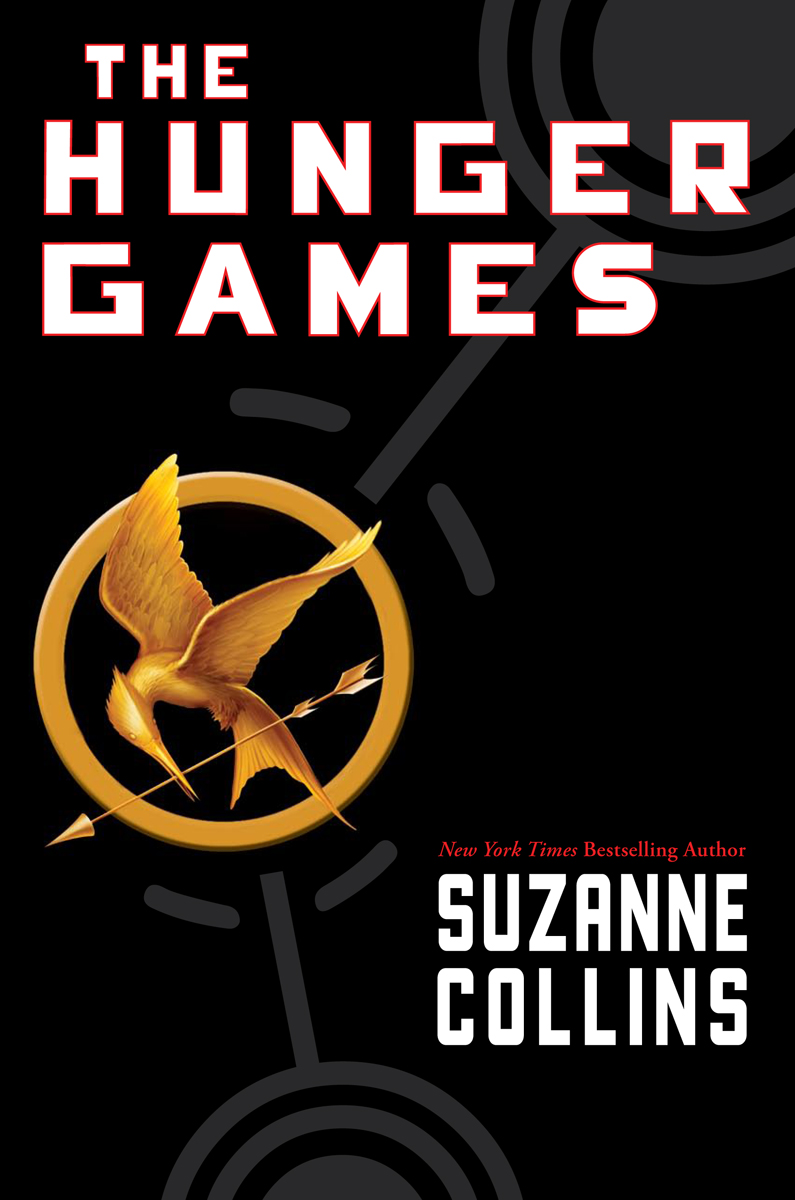
Hunger Games Postmortem (Spoiler-Free)

This book is pretty dark. Eh? Eh? "Dark"? Get it?

So I’ve finally caught up to the rest of Western civilization and read The Hunger Games. I haven’t looked at any other reviews, nor seen the movie, so this is my own, reasonably unbiased take on the book itself.

You probably know at least something about the story already, so I’ll spare you an in-depth summary. The premise is simple: 24 children, ages 12 to 18, fight each other to the death. The heroine, a 16-year-old hunter named Katniss Everdeen, saves her sister’s life by volunteering to take her place in the Games. The whole sadistic event is orchestrated by the Capitol, the elite rulers of a future North American country called Panem (as in panem et circenses, Latin for “bread and circuses“) to keep the masses under control. Political intrigue, a love triangle, and lots of violence all keep the story moving.

First things first: yep, the book is good. I read the whole thing in a weekend, which is saying something, since I haven’t made time for a whole novel in months. The formula sounds simple – take a likeable protagonist, throw her into impossible danger, watch her scramble her way out – but as legions of aspiring novelists know, it’s devilishly difficult to execute this well. Suzanne Collins nails it. From start to finish, the pages never stopped turning.

Of course, in a book that does so many things right, the flaws stand out all the more. For instance: as fast-paced as the story is, it does take a little while to get going. I found the first 60 pages, up until Katniss starts training for the Games, pretty slow. Especially tedious are a series of flashbacks, which set up Kat’s relationships with other characters but seemed like a distraction from the main story.

The language is also a bit clunky. You get sentences like this one, talking about a faraway pack of monsters: “Up close, I’m sure their more menacing attributes will be revealed.” She also overuses the word “somewhat.” I guess that sounds nitpicky, and certainly most writers have little tics like this (myself very much included), but I did find it distracting in places.

The biggest problem, though, is that I never really connected with Katniss. I liked her okay, I wanted her to win (and survive), but I never felt a visceral attachment to her character. I can think of two reasons for this.

First, she comes across as pretty mechanical in her thinking. She dismisses music and storytelling as useless, assumes other people’s feelings are cynical calculations, and spends surprisingly little time thinking about whether there’s any way she could survive without killing other innocent children. Even her love for her little sister – the whole reason she enters the Games in the first place – never felt especially believable. Katniss is a survivor, but not a lot else. Sure, that’s understandable and explainable and sensible, but compared to (say) a Frodo Baggins or a Harry Potter, she seems a little heartless.

And second – as crazy as this sounds – I never felt like she was in any real danger. Yes, she spends most of the book surrounded by people (and things) trying to kill her, and yes, she gets injured quite a few times, but I never got to a moment where I believed she was on the verge of losing. She always seemed to be in control, even when she wasn’t.

(By the way, “Couldn’t connect with the main character” was by far the #1 complaint my own beta readers had about The Counterfeit Emperor, so I understand how hard it is to get this right. Certainly she does a better job at it than I did. But still.)

I’m realizing now that I haven’t gotten into enough detail about the book’s positive aspects, and there are many, but unfortunately I’m running out of time. In lieu of that, I’ll simply go back to my earlier statement, which is among the highest praise possible for any book: it kept the pages turning. And since the story doesn’t really stand complete on its own, I may have quite a few pages left to turn in books 2 and 3.

Have you read The Hunger Games? What did you think?

Friday Links

This guy carves hardcover books into beautiful miniature landscapes, creating art out of art. (Try doing that with a Kindle!)

Kind of old news, but in case you haven’t heard, a dude skydived from 13 miles up. It was a practice run for another jump later this year from 23 miles, breaking the all-time record of 19 miles set back in 1960. In so doing, he will break the sound barrier. Just sayin’.

This week, a cornucopia of comics. (A comicopia?) High-quality comedic action from:

And finally, this is just gorgeous.

Have an outstanding weekend.

Forty-Minute Story #5 – Mr. Jones

“Dr. Gimmel?”

“Welcome, Michael, welcome. Please sit down.”

The two men entered Dr. Gimmel’s little office. Gimmel shut the door and settled into a large, grandfatherly leather chair, studying his guest. Michael Avey took his seat, folding his hands primly on his lap. He always wore the same suit: cheap, gray, threadbare, but exquisitely pressed.

“Of course this is very unusual,” said Michael. “I know you’d prefer to meet Mr. Jones personally to discuss his condition. Psychotherapy by proxy isn’t exactly what they trained you for, eh? Mr. Jones would prefer that as well. But of course, a man in his position…any hint of psychological weakness, even a rumor he was seeing a therapist…well, you understand.”

Dr. Gimmel frowned, upsetting a great gray mustache. He set aside his notebook and leaned forward confidentially.

“You’ve explained this before. What I’m still trying to understand is the exact nature of his condition. Tell me again about his symptoms. He feels…?”

“He feels anxious, mostly. So much responsibility, so many people depending on him. You understand. A man in his position…”

“Yes.”

“Sometimes his hands shake so much he can’t even sign his name. I’ve watched it happen. He has his secretary do it. Dr. Gimmel, if you could prescribe some small dosage, something mild to get him through the rough spots without interfering in his critical decision-making capacities…”

“He must have a great deal of faith in you. Letting you represent him like this.”

The hands parted, exploring the question. “Yes. Yes, I believe he does.”

“And I have great faith in you as well. I believe the two of us can make real progress.”

Michael grimaced, looked down. He smoothed his pant legs. “I am irrelevant, Doctor. Mr. Jones…”

“Michael, this is the fifth time we’ve met. I know there’s something you want to tell me. Why don’t you go ahead?”

“Mr. Jones would prefer – ”

“Michael, is there something you want to tell me?”

Michael Avey was visibly sweating now. He wiggled his shoulders, settling the suit jacket. Thin lips moved, but said nothing.

“Michael. You represent yourself. Do you understand? There is no such person as Mr. Jo – ”

“NO!” He leaped from his seat, turned away, leaned heavily on the back bookcase. For a long minute, neither man spoke, and the only sound was frantic breathing, gradually growing calm again.

Finally Michael turned again. His face was tight and pale. “This is very difficult. Very difficult. You understand, of course. A man…” He swallowed. “A man in my position…”

Dr. Gimmel nodded encouragingly. “I understand, I understand. Have a seat, Michael. Tell me about yourself.”