AI Week, Day 3: Forty-Minute Story: Wine

Wine

The sermon was over, and the last strains of O Come, All Ye Faithful had faded away. All around, people were gathering up their hats, their coats, knotting into smiling conversations as they headed out the wide doors.

John, also, stood up from the pew where he’d sat all alone, and gathered up his hat and coat. But the people around him weren’t smiling. The mix of expressions on their faces was one he knew well: some confused, some offended, most just looking away. But the pain they caused had long dulled, and by now it felt muted and familiar.

With long, easy strides, he passed the stained glass images of the Sermon on the Mount, the Transfiguration, the Passion, all framed by demure oak paneling. The soft whirring of his motors and the silver sheen of his face secured him a wide berth as he moved through the crowds. But as he neared the frowning exit doors, the pastor ran up behind him. John turned.

“Mr. Robot,” said the pastor, “would you join me in my office for a moment?”

“Of course,” said John. His synthesized voice remained pleasant, but his stomach sank – or would’ve, if he’d had one. He hoped he was wrong about what came next. This was the third church he’d tried this month already.

The pastor was a young man, handsome but sloppily shaven, and he wore a suit and tie instead of the flowing robes John had seen at the other churches. His office was a small place – apparently an add-on to the main building, as it lacked the colorful glass and stately oak that dominated the nave. The shelves were crammed with books.

“Please have a seat, Mr. Robot.” The pastor indicated a chair as he took his own seat behind the desk.

“Symanski.”

“I’m sorry?”

“My last name isn’t Robot. I’m John Symanski.” He said it kindly, still clinging to hope. “I don’t believe I know your name, sir. It wasn’t in the pamphlet they handed me.”

“Martin Eaves. The senior pastor is sick today.” Martin shook his head, as if to refocus. “I’ll get right to the point, Mr…Symanski. I think it would be best for everyone if you didn’t come to our church in the future.” He raised a hand preemptively. “It’s not that I don’t like robots. I’ve heard the news about robotic riots on the West Coast, but those are isolated incidents, and most robots are law-abiding citizens. I realize that. It’s just that your presence can be disruptive. Our congregation should have their whole attention on the word of the Lord, not be distracted by…well, by you.”

John looked at his hands, a deliberate gesture, more deferential than he felt. “May I not also hear the word of the Lord?”

“Of course. Of course. But you could study privately, or – well, I think there’s a robotic church down in Dansfield – ”

Finally John let a little of his frustration come out. “Come to Me, all who are weary and heavy-laden, and I will give you rest,” he said, less quietly than before. “The word of our Lord.”

Anger flashed in Martin’s eyes for a second. “Devils can quote scripture too,” he snapped. But he composed himself. “Look, John. You’ve obviously given this a lot of thought. You’re educated. I’ll just get right to the heart of it. You being here…there’s no point. Churches are about salvation, they’re about grace. And you – ” Now it was Martin who lowered his eyes. “Well, robots don’t have souls, John. There’s nothing to save. That’s not my choice, that’s a decision from God.”

“Ask and it will be given to you; seek and you will find; knock and the door will be opened to you.”

“Jesus spoke those words to humans, John. There’s no salvation for a pocket calculator. I’m sorry.”

“There’s no salvation for a gerbil, either, but you and I are neither of those things.” John knew it was over, that he was only digging himself deeper, but he was too stubborn to leave.

“The point – ” Martin began again, but the words died on his lips. He looked up, past John, to something behind. John turned in his chair and saw a man in his fifties, hair already pale gray, wearing jeans and a button-down shirt. The man sniffed. His nose was red, and he carried a tissue.

“Pastor Lanson,” said Martin. “I thought you’d be at home.”

“I would be if my wife had her way, but I needed some papers from the office.” He smiled at John, a warm, genuine smile. “I’d shake your hand, but I’d better spare you my germs.”

“I can’t get them,” said John, bemused.

“But you might shake someone else’s hand,” said Lanson, winking. “I won’t stay to talk, but I wanted to welcome you to our church. I do believe you will be our first chrome-skinned brother. Will you be joining us next week?”

Hope flared in John’s mind, but he didn’t dare trust it yet. Martin was behind him, so he couldn’t see the man’s reaction. “I have been told,” John said carefully, “that I do not have a soul.”

“Oh, well,” said Lanson. “Maybe you don’t and maybe you do, but that’s nothing too difficult either way. Jesus went to a party, once, and they didn’t have any wine. Come on back, and we’ll see what we can do.”

P.S. Remember, it’s AI week over at Ben’s blog too! You can read his own, rather different take on the Singularity in yesterday’s post, and today I believe he’s planning to write his own forty-minute story.

AI Week, Day 2: The Singularity

Yesterday I wrote:

The Singularity is real, and it is coming.

What did I mean by that?

Here, “Singularity” refers to the Technological Singularity, which is a future event predicted by a vocal minority of computer scientists. It’s a fringe belief, which makes me one of the crazies.

So let’s get to the crazy: what is the Singularity?

Descriptions vary depending on who you ask, but basically, the idea is that sooner or later we’re going to create a superhuman intelligence. Maybe it’ll be AI (like I’m working on now), maybe it’ll be human intelligence augmented by technology, maybe something else entirely. But once we take that first step, there’s no going back.

Look at the technology explosion we’ve already seen in the last 100 years. New technology makes it easier to develop even more new technology, which in turn makes it even easier – and so on. It’s a feedback loop. We’re using software to build software, using computer chips to design computer chips, reading websites to learn how to build websites. The pace of technological advancement is only getting faster.

Now imagine that same effect, but with intelligence instead of technology. If we can build a superintelligence, surely a superintelligence would be a whole lot better at it than we are. And if a superintelligence could improve on itself and build a hyperintelligence, what could a hyperintelligence build? It’s a feedback loop on steroids, an exponential explosion of capability.

What would such a future look like? We do not and cannot know. By its very definition, it is beyond our ability to understand. The point at which our creations overtake us and do things we can’t imagine: this is the Singularity.

This could be a heaven, a hell, or anything in between. A superintelligent AI might decide to wipe us out – a scenario Hollywood’s fond of portraying, though it’s hard to imagine a Hollywood-style happy ending. Or it might decide to be benevolent, building us a utopia or even augmenting our own abilities, pulling us up to its level.

A third option, even more frightening than the first, is total indifference to humanity. Self-centered beings that we are, we like to imagine that an AI’s main concern will be how it interacts with us. But why shouldn’t it have plans of its own, plans that don’t concern us unless we happen to blunder into its way? After all, humans don’t worry much about cattle unless we have a use for them. People who say they “like animals” tend to make exceptions for mosquitoes.

Do I really, honestly believe that if I can turn my little Lego robot into a viable AI, it will lead to the Singularity? I do.

So why am I trying it?

Because it’s going to happen sooner or later anyway. And if it happens under the guidance of someone who understands the possibilities, who is trying to make a so-called Friendly AI, then our chances of survival would seem to go up enormously.

Like I said: crazy. I know how ridiculous this sounds.

But why does it sound ridiculous? I think the main reason is that nothing remotely like it has happened before. It’s totally outside our experience. Such things always sound absurd.

But can we really afford to dismiss an idea just because nothing like it has happened before?

What do you think? Does this sound silly to you, or not? Either way, tell me why. I’d love to get some discussion going.

AI Week, Day 1: Principles of Design

Welcome to Artificial Intelligence week!

As you probably know, AI is not just a theoretical thing for me. I’m actually building an AI of my own. His name is Procyon, and he has a Lego body and a C++ brain. And although he doesn’t know much yet, he’s getting smarter by the day.

Of course, my design notebooks are way ahead of what I’ve actually built. So to kick off AI week, I thought I’d share my own personal principles of AI design.

These are in no particular order, and they range from fairly specific design issues up to general philosophy. The list below didn’t exist in this form until today; I just pulled it together based on miscellaneous insights I’ve had so far. If I’d spent more time on it, it would have more bullet points. Still, it’s an accurate and reasonably broad look at the way I view my work.

Without further ado:

Brian’s Principles of AI Design

  • It is possible to build a human-level artificial intelligence. Kind of a no-brainer, right? I wouldn’t be trying if I didn’t think it was possible. But I’m surprised how many people seem to think it just can’t be done, for a variety of philosophical, logical, and religious reasons. I could write a whole post on why I think those reasons are bogus (and I might sometime) but for now I’ll just say this is a very firm belief of mine.
  • I, personally, am capable of building a human-level artificial intelligence. This may sound egotistical, but I don’t think it is. I’m not claiming to be smarter than Marvin Minsky or any of the other giants of the AI field who have yet to succeed in achieving this dream. Rather, I believe this out of necessity – because if I don’t believe in myself, then what’s the point? This is closely related to the joy of hubris, which I’ve written about before.
  • The brain is the mind. Or, to put it another way, the brain is the soul. Many people believe the mind is somehow a separate entity, related to the physical brain but with some extra spark of, I don’t know, thinking-ness. They can’t accept that the vast array of human experience – our transcendent joys, our unspeakable passions, our ability to see the color red – all comes from something as prosaic as a three-pound lump of ugly gray tissue, or could come from something like a computer. But I can accept it, and I do.
  • The human brain is mechanical. By “mechanical” I mean that there’s nothing magical about how it works. The brain is made of cells, the cells are made of molecules, the molecules are made of atoms, and the atoms all follow the laws of physics in the usual way. The brain is the most marvelous machine we know of – but it’s still a machine. Another like it can be built.
  • The human brain should be a guide, not a map, for the AI designer. I’ve learned an awful lot about designing a mind by studying the human mind. But I also think there’s more than one way to skin a cerebrum, and I don’t see a need to follow biological design slavishly. If it makes sense, I do it.
  • Neural nets are a good idea, but too limiting. Neural nets are one of the classical AI constructs, and they’ve been very influential in the way I think about design. But they can only take you so far, at least in my experience. I think of neural nets as a signpost that helped point the way, rather than a destination.
  • E pluribus unum. Out of many, one. Like Minsky, I believe that high-level intelligence comes from the interaction of thousands (millions? trillions?) of very low-level, unintelligent agents. It may seem counterintuitive that something smart can come from a bunch of dumb things working together, but that’s how our own brains work, so why not an AI?
  • Trust in emergent behavior. My design does not have a language module, a navigation object, or a self-awareness function, yet I expect my robot to read and write, move around intelligently, and be self-aware. Why? Because I consider these high-level abilities to be emergent properties of the system.
  • Scruffy, not neat. In the neat vs. scruffy AI debate, I’m scruffy all the way. I’ve already explained this more than once, so I won’t belabor the point again.
  • Aim high. So many AI researchers today are focused on tiny subsets of the big AI problem. They work on specific issues like machine translation or facial recognition, and there’s a widespread feeling that a high-level AI can eventually be cobbled together from all these little pieces. I’m awfully skeptical of this idea, and I’m wary of solving easier versions of the Big Problem and working my way up. I prefer to start at the top. Maybe I’m being naive, but naivete is the prerogative of anybody under 30. 🙂
  • The Singularity is real and it is coming, so design with that in mind. More on this tomorrow.

Finally, there’s one other design principle I follow, one that I discovered myself and have never read about anywhere else. It’s probably the greatest single insight I’ve had since starting this project. But I’m out of time this morning, and it probably deserves a whole post in itself, so it’ll have to wait for now.

As I mentioned, tomorrow’s topic is the Singularity. Don’t miss it! And remember Ben Trube is doing AI week on his blog too, so head on over and see what he’s up to. (He generally posts around 1:00 PM, Eastern time.)

Any questions?

Friday Links

We’ll start with Awesome People Hanging Out Together, a Tumblr that delivers exactly what it promises. See photos of Paul McCartney rocking out with Zooey Deschanel, William Shatner cracking up Stan Lee, and – most incredibly – Carl Sagan chilling with the Dalai Lama. Dozens of others. Enjoy!

For a new perspective on your blogging, try UpsideDownText.com. How well does it work? ¡llǝʍ ʎʇʇǝɹd sʞɹoʍ ʇI

Now, perhaps the coolest javascript hack I’ve ever seen: Katamari Hack. Turn any web page into a Katamari Damacy level, rolling your ball around and picking up words and pictures, getting bigger as you go.

We all know the myth of the creative genius who isolates himself for years, focusing obsessively on his work before finally unleashing it on the public. Well, it isn’t a myth. Here are 12 real-life examples of brilliant people who loved solitude, from Nikola Tesla to Stanley Kubrick to Henry David Thoreau. Get thee to a cloister!

And finally: the best xkcd I’ve seen in a long time.

NEXT WEEK the Buckley blog will be all about artificial intelligence, with my esteemed colleague Benjamin Trube playing along over on his corner of the Interwebs. We’ll cover everything from Asimov’s Three Laws to Lieutenant Commander Data, from the Singularity to principles of design. The fun starts Monday, so don’t miss it!

Have a great weekend.

Ask Brian Anything: The Answers!

Can I just say one thing? You guys rock. It is currently, in this blog, rock o’clock.

I said you could ask me anything, and y’all wrote in no fewer than seven questions, on subjects as wildly varied as computer programming, poetry, T-shirts, and personal history. We’ve even got a question about questions. So meta, I love it!

And as promised, I’ve got answers for all of them. So let’s get started…

Ben Trube asks:

Opinion question: Which do you think is the more current relevant language C++ or C#? C# is newer obviously, but in your experience is it as powerful as applications written in C++? Do you think C++ will be around for another 10 years or so?

Well, looking at C++ vs. C# isn’t really comparing apples to apples. C++ is a powerful but bare-bones language with lots of optional libraries. Technically C# is too, but in practice, 99% of C# programs are written with the .NET framework. So we’re sort of comparing a language to a library.

Bare C++ is faster and more portable than C#/.NET, but it has a steeper learning curve, and it’s much easier to screw up your memory by playing with pointers. C#/.NET also has a huge number of objects that make it simple to do a very wide range of tasks.

Personally, I prefer C#, just because it’s a little more user-friendly. Though at the moment I’m using C++ for my artificial intelligence project because the Lego robot API was written in C++. As to which is more relevant, that’s hard to say; they’re both getting extremely wide use right now. But yes, I think C++ will definitely be around for at least another ten years.

Evlora asks:

What is the most useful question and it’s answer? The most useful question there is?

My wife suggested “Will you marry me?” as the most useful question (for me), but it’s possible she’s a little biased.

The most useful question I can think of is “Can you explain that more?” Everyone we meet walks around all day with massive amounts of knowledge and experience locked in their skulls, and it’s amazing what you can learn just by asking.

Whether it’s a nurse giving you an EKG, a mechanic replacing your brake pads, or even just a friend showing you some new project they’ve started, why not push them a little? Try to see the world from their point of view, figure out what they’re doing, then ask if your guess is right. People love talking about what they’re good at, so you can learn a lot this way.

This is especially true in the business world, and we’re all in the business world, even if you’re just trying to get a poem published. Asking any business partner – a client, an agent, a boss, a customer – to elaborate on what they mean is not only enlightening for you, it also makes you come across as engaged, proactive, and intelligent.

When someone’s explaining something and I don’t understand part of it, I make it a point to always ask, even if I know I’ll sound stupid.
Everyone has their areas of ignorance. The key is trying to make them smaller.

Shaila Mudambi asks:

Did you ever think about becoming a full time writer?

I should start by distinguishing between “full-time writer” and “professional writer.” Full-time means you quit your job and support yourself solely on your writing, which is an awfully tricky proposition. The typical advance on a first-time novel is somewhere around $5,000 (before taxes), and typical royalties are exactly zero. Add to that a complete lack of health insurance, and I’ll keep my day job, thank you.

But have I thought about becoming a professional writer – i.e., writing novels on evenings and weekends, and getting them sold for really reals? Absolutely. This was my deepest desire for a very long time.

Recently, as I describe in this post, I just got burned out. I had been working on the same novel for years, and I wasn’t feeling the love anymore. Switching to short stories didn’t help. After more than a decade of writing fiction, for reasons I still don’t fully understand, I just got tired. Currently, the artificial intelligence project fills the hole in my life that writing left.

Will I go back to novel-writing? Maybe. Probably someday. I don’t know. But for now, this blog scratches my writing itch just fine, and I’m sticking with it.

Zeev asks:

If you were to pick any character from any Star Trek series or movies to interview, who would it be?  Bear in mind you have to take into account personalities, for instance if you ask Q a question he might just laugh and transform you into a cucumber.

This is a great question, because the Star Trek universe offers so many fascinating choices: Spock, Odo, Picard, the Borg Queen. (Although given the parameters of the question, that last one might not be a great idea.)

In the end, though, I have to go with Data.

He can't say can't, and he's still smarter than you.

Partly because he wouldn’t turn me into a cucumber. Partly because of my fascination with AI. Partly because he’d have so many great stories to tell: constructing his own daughter, traveling back in time, being voluntarily decapitated, feeling his first emotion, hacking into the Borg Collective, talking shop with Geordi LaForge, tap dancing with Dr. Crusher.

But the biggest reason for picking Data is that he’s the most badass character in the Star Trek universe, and he doesn’t even know it. You’ve gotta respect that.

Oh, and while I’m at it, I’d have him explain quantum gravity. ‘Cause we all know string theory ain’t payin’ the bills, and I’m not getting any younger over here.

Nandita Chandraprakash asks:

How did you meet your wife? 😀

I vividly recall that brilliant autumn evening, unnaturally warm, as I wandered barefoot over the pebble-strewn shores of Nova Scotia. I caught the scent of her perfume like an errant zephyr, and as I looked to the east, I saw her: crowned by the stars, framed by the wandering auroras of the setting sun…

Heh, just kidding. Betsy and I met in Honors Calculus our freshman year of college.

Chaitra Baliga asks:

Whats your opinion on messages written on t-shirts? 😛

Love ’em! A lot of my own T-shirts (which are mostly too small for my tree-like body) have messages on them, like:

  • Stand back! I’m going to try SCIENCE!
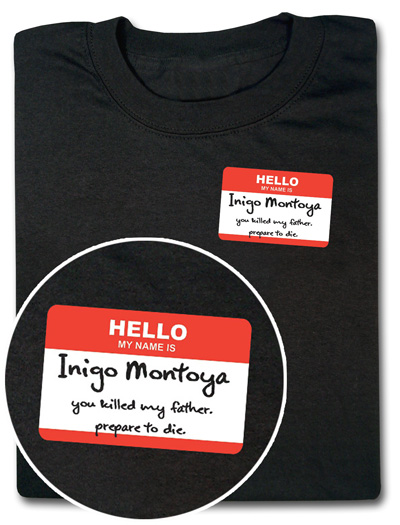
  • HELLO My name is Inigo Montoya. You killed my father. Prepare to die.
  • XKCD (in a college-style font)

You do not by chance happen to have six fingers on your right hand?

As you can tell, I’m a tiny bit of a geek.

In fact, back in my Coffee With Sargeras days, I even got into the business of designing and selling T-shirts myself. The most popular of these was emblazoned with the words “Spider Pride,” which is an inside joke that would take way too long to explain. I never got rich on them, but I sold a couple dozen, all told.

Alex Caswell asks:

Are you willing to send me an e-mail or a post with just an oversized collection of your poetry on it?

Like throwing gasoline on a flame.

Actually, a lot of my poems are already out there on the web. As you know, my old Elfwood page is still around, though I haven’t updated it in years, and a bunch of my poems are up there. Many are from my high school (and even middle school) days, and plenty of them are cringe-inducing by current standards, but you’ll find some good ones too.

My DeviantArt page (also long-abandoned, though not quite as old) has more poems. There’s some overlap with the Elfwood material, but a good amount of it’s unique.

On my old Coffee With Sargeras blog I wrote a lot of haiku and a few longer poems, though most of that was just goofing around.

And of course, clicking the Poems tag right here on this blog will give you some of my most recent work.

So, that should be a pretty good start. If you read all that and you’re still hungry for more, I’ll see what else I can dig up!

BONUS! Question #8, from my wife, Betsy:

If you could grant yourself some new ability – something amazing, like a super power or immortality – what would it be?

Omniscience. I want to know everything.

I hesitated with this one a little, because knowing everything can be scary. Every moment of torture in history, every awful thing yet to come, you’d have to carry all that around with you. But the potential upside is literally unimaginable, and I’m just too curious. I’d have to take the plunge.

There you have it – all your questions, answered. Thanks so much to everyone for playing along.

Now here’s my question to you: was this fun? Any interest in doing another round of question-and-answer sometime? Let me know in the comments!

Outliers Postmortem

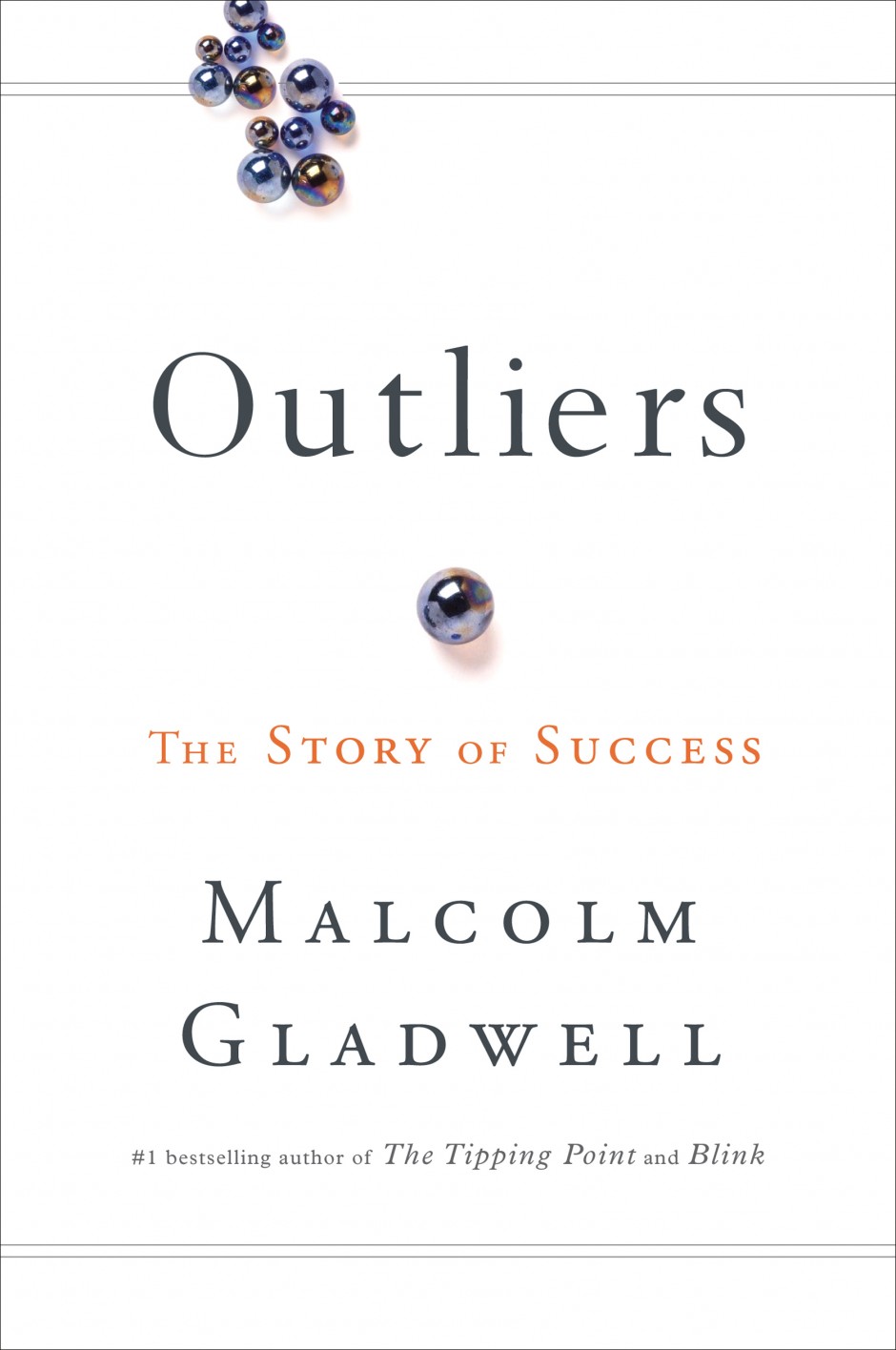
Malcom Gladwell has...lost his marbles? OH HO HO

Malcom Gladwell’s Outliers was published in 2008, landing at #1 on the New York Times bestseller list. Ever since then I’ve seen references to it all over the Internet. In particular, blogs keep mentioning Gladwell’s “10,000-hour rule.” So when I happened across it during an otherwise dull trip to Walmart, I snapped it up.

Outliers bills itself as “The Story of Success.” Gladwell examines a series of, well, outliers, people and companies notable for either extreme success or extreme failure. On the success side are the Beatles, Bill Gates, Robert Oppenheimer, and some of the best hockey players in the world. On the failure side is Korean Air, which at one point was crashing so many of its planes, that a report on its crashes had to be amended because another plane had crashed before the report was finished. (Gladwell assures us they’re better now.)

His thesis is that success works differently than we expect. Typically we imagine success as a deeply personal phenomenon, a function of raw talent, passion, and work ethic. And while Gladwell acknowledges the importance of all these traits, he points us to other, less obvious factors.

Yes, Bill Gates was brilliant and driven. He also happened to be born at just the right time to take advantage of the computing boom (according to Gladwell, anyway). And he was one of the very few kids in the country with access to a mainframe terminal, which allowed him vastly more time for programming practice than his peers.

Gladwell returns to this theme over and over: success springs not just from who we are, but from our circumstances, the opportunities we’re given, even (to a surprising degree) our cultural background. He attributes the failure of Korean Air to a tendency in Korean culture to defer to authority, leading copilots to be less vocal about problems they notice.

When it comes to raw intelligence, he finds that mostly, you only need to be “smart enough.” Past a certain point, he says, extra IQ doesn’t correlate to extra success. (He cites Chris Langan, whose IQ soars in the 200 region, as an example of such a failed genius, though frankly that section of the book comes across as pretty condescending to Langan.)

A better indicator – according to Outliers – is the 10,000-hour rule, which says that to truly master any particular skill, you generally have to put in about 10,000 hours of practice. The Beatles and Bill Gates both succeeded by virtue of this rule.

I found the book insightful and provocative, but I had some problems with it.

First, it went a little slow for my taste. In every chapter, he pushes on and on with one example after another, delving into more and more details long after he’s made his point.

Second, in spite of the mountains of anecdotes and scientific-sounding data, I never felt like he was really testing out his hypothesis with any kind of systematic rigor. In the first chapter he talks about the surprising reason that so many hockey players are born in the first three months of the year (and it is an interesting reason), but his examples feel cherry-picked, overly specific. I expected him to say something like “In fact, if you examine the records of all NHL players over the last 30 years…” But he never did. That research seems like it would be pretty easy to do, which makes its absence even more surprising.

But the book lacks something else, even more important. I kept waiting for the moment when Gladwell would turn from his statistics and analyses and say, “Now, here’s how you can apply these principles to achieve success in your own life” – or even the more pessimistic, “So that’s why you’ll probably never succeed no matter how good you think you are.” Neither of these ever happened. Gladwell apparently feels that his readers want a book on success that does not tell them how to be successful.

Yes, I can look at his principles and figure out some ideas myself. The 10,000-hour rule, for instance, stands out as one of the few factors he mentions that I can actually apply (i.e., work hard). And understanding the role of cultural background might lead me to examine my own unconscious cultural biases, looking for ways they may be holding me back.

But I’ll have to do all that on my own, because Outliers isn’t interested in taking me there.

I don’t want to trash the book or its author. It was definitely an eye-opening read, and if you get a chance to check it out, you’ll learn a lot. I just think it could’ve been a lot better.

What have you been reading lately?

P.S. This is the last day to submit your question on Ask Brian Anything. No question is too strange, so ask now!

Twisting

“If there’s nothing wrong with me…maybe there’s something wrong with the universe.”
-Dr. Beverly Crusher

The universe is strange.

I know, this isn’t exactly news. But today I’m thinking about a specific and fundamental kind of strangeness, something I’ve long noticed but never found a name for. Rather than try to describe it, I’ll give a few examples.

  • In government: The best way to make people happy is not to dictate things that would make them happy, but to relinquish control and let them find happiness on their own.
  • In war: You win not by raw force of arms, but by understanding the enemy, by getting deep inside their mind, grasping their tactics, their strategy, their philosophy.
  • In religion: Jesus says the path to eternal life lies in surrendering selfish pride, in sacrificing and accepting sacrifice. The Buddha says that release from suffering comes from surrendering the ego.
  • In writing: If you want to get a book published, you have to let go of your desire to be published – which will only be frustrated by constant rejection – and embrace the work itself.
  • In logic: Rational thinking is among the most powerful tools we’ve ever discovered, but the very act of accepting rationality requires a leap of faith.
  • In mathematics: Mathematicians constantly strive to prove new theorems, but Gödel has shown that any meaningful mathematical framework contains truths which can never be proven.
  • In medicine: We make people immune to a virus by injecting them with it.
  • In life: A lifestyle bent on pleasure-seeking ultimately makes you miserable. Pleasure comes from purpose, which comes from embracing unpleasant realities.

In every aspect of human experience, the same pattern emerges. To achieve something, we must surrender it. To defeat something, we must embrace it. No matter where you’re trying to go, the path that takes you there must somehow loop back on itself, making you walk the very opposite way you intended.

It feels almost like there’s a Möbius strip at the heart of reality, twisting everything we do into its opposite.

I’ve tried to get a handle on this phenomenon, to find a name for it. The closest I’ve come is to identify it with the Taoist concept of yin and yang. But I haven’t done enough reading on Taoism yet to know if this is really right.

Am I making any sense here? Have you encountered this kind of thing in your own experience?

The Avengers Postmortem (Spoiler-Free)

Where did Tony Stark get a palintír?

“Big man, in a suit of armor…take that away, what are you?”
“Uh…genius billionaire playboy philanthropist?”
-Captain America and Iron Man

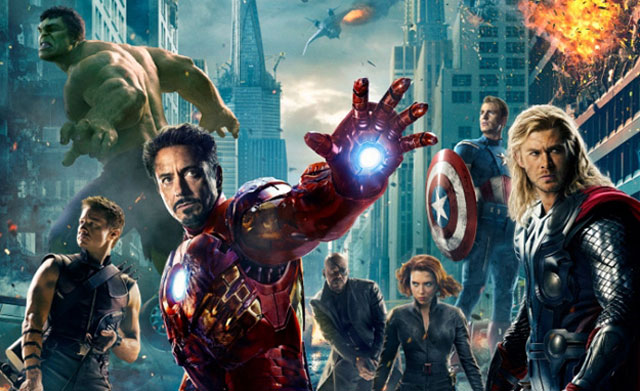
I saw The Avengers on Friday. For those who don’t know, the Avengers is a team of superheroes: Iron Man, the Hulk, Captain America, Thor, Black Widow, and Hawkeye. It’s no coincidence that most of these characters have starred in their own movies recently. Marvel’s been gearing up for this thing for years.

Beloved comic book franchise, enormous ramp-up, $220 million budget, and fan favorite Joss Whedon directing. Expectations were about as high as they could be – but this movie easily could have flopped. In less skillful hands, a story that combines six wildly different heroes might have spiraled into a CG-fueled mess of meaningless action.

There’s plenty of CG and action, but I’m happy to report that Avengers is a well-orchestrated adventure, cohesive and fast-paced from start to finish despite its 2 hour, 22-minute run time. The film charts a course between the gritty realism of Dark Knight and the goofy bombast of Green Lantern, finding just the right mix of drama and fun. For a superhero movie, Avengers has a lot of jokes, and it nails them with perfect timing. Often I couldn’t hear a line of dialogue because people were still laughing from the last one. It’s a good problem to have.

But the real reason Avengers works is that the characters are actually people. They seem to spend more time out of their superhero costumes than in them, and the interplay among their distinctive personalities is very believable. Tony Stark – the guy in the Iron Man suit – is particularly fun to watch as he pushes the buttons of others who take themselves too seriously (read: Captain America and Thor). Bruce Banner, the man who becomes the Hulk, was also a surprise favorite of mine. His soft-spoken intelligence and self-deprecating humor are a striking contrast to the terrifying creature he becomes – a creature that terrifies no one more than Banner himself.

As always, I’m running out of time, so I’ll wrap it up. Go see Avengers. You don’t need to like comic books, you don’t need to have seen the other movies. You just need to like laughing and watching things go boom.

What movies have you seen recently?

P.S. The questions for Ask Brian Anything are still coming in. You have three days left to submit your own question on any topic under the sun!

Friday Links

I’ve already gotten two great questions on yesterday’s Ask Brian Anything. Still plenty of time to get yours in. Questions can be as weird, obscure, personal, or profound as you like, on absolutely any subject whatsoever, so ask yours now!

Next up, the new trailer for Dark Knight Rises. If you haven’t already clicked Play, I don’t know what else I can tell you:

On a different note, somewhat less apocalyptically grim, you may also enjoy the Stormtrooper Shuffle.

(Really, Firefox? You’ve never heard of “apocalyptically”? You need more creative programmers. Though to be fair, your spelling suggestion “apocalyptic ally” is epic enough to make up for it.)

Nedroid this week offers a phenomenal webcomic about database hacking. Probably the most realistic depiction I’ve ever seen.

Finally, if you didn’t catch the thrilling conclusion to Ben Trube’s very own Fractal Week, now’s your chance! Watch as he builds a three-dimensional Sierpinski Pyramid out of marshmallows. Delicious!

The link above also features a sketch I drew of Mr. Trube engaged in deadly combat with a fractal. My drawing features arcane mathematical humor and unnecessary alliteration. Who could resist?

Have a great weekend! Go watch The Avengers, it’s out today! See you on Monday!

Ask Brian ANYTHING!

This is your big chance to ask anything you want about the exciting secret world of Brian D. Buckley, Esq.! Why, the opportunities are limitless!

You could ask for my insightful, penetrating analysis of global current events:

What are your thoughts on the new Dark Knight Rising trailer?

SO GOOD

…or you could ask about my work habits:

How can you dedicate forty minutes of every day to rambling, egotistical blatherskite?

Sheer, ironclad discipline.

…or about my political views:

Who should be the next President of the United States?

Donald Trump’s hair.

You could ask something deeply personal:

Have you ever had a chicken gizzard surgically grafted to your endocrine system?

HA HA NEXT QUESTION

…or just blatantly use me to do your homework:

To what extent can the modern-day Republic of Turkey be considered a successor state of the Ottoman Empire, and what role did Mustafa Kemal Atatürk play in the transition?

Seventeen.

Okay, but seriously, here’s the deal. Between now and next Wednesday, May 9, ask me any question you want in the comments. Then next Thursday, I’ll post actual, legitimate answers, right here at the Buckley Blog.

And, GO!