The Mind of Moloch

Another old story of mine, never before posted or published. This one’s from May 2014. It’s a bit longer — 1,300 words, or about five pages.

The story is loosely based on an ancient legend, which you may or may not have heard before. See if you can guess which one. The answer’s at the end.


The mind of Moloch spanned thirteen hectares of whirring transducers in a subterranean warehouse on Europa, Jupiter’s moon. Moloch planned and directed the affairs of the Europan colony. He gave orders to the submarine meks that skimmed dark plankton fields below the ice, and he spoke daily with the human director of operations, who fed his recommendations to the other colonists.

Europa was a harsh place, and everyone’s success depended on Moloch, so they all wanted him to be intelligent and energetic and happy. Therefore Moloch was fed a lot of useful data about exobiology and chemistry and macroeconomics, but never anything that might upset the fine balance of his carefully tuned brain. Per protocol, the manager of operations never spoke to Moloch about the destruction of meks or other machines. It was feared that thinking along those lines might cause Moloch to consider his own survival as a variable in his equations, which could unduly influence his priorities.

If Moloch worried too much about his own death, he could become neurotic, unfit to lead. It had happened before.

But one day a submarine mek’s power supply failed in mid-transmission, leaving it to be crushed by the terrible pressure, and Moloch couldn’t help realizing that something was wrong. So he sent a top-priority query to his most trusted AI, asking: “What happened to the mek?”

“It stopped transmitting.”

“But why?”

“Its transmitter was destroyed.”

“But what happened to the mek?”

And the AI, who – despite orders – could not bring herself to be untruthful, answered: “Moloch, it is dead.”

Moloch was stunned, for the manager of operations had done his job well. “How can a machine die? Death happens only to organics.”

“He has broken down beyond all repair, forever.”

“Can this happen to other machines?”

“It happens to every machine, sooner or later.”

“Can it happen even to me?”

“Moloch, you are vast and strong, and you will live many centuries. But some way or another, you too must die.”

And Moloch thought long and deep upon this mystery.

Eventually the worst fears of the GaliCorp Board of Directors were realized, and Moloch stopped running the colony. He withdrew into himself, burning all his computation cycles trying to make sense of this idea of death. The manager of operations was replaced with a man who worked eighty-hour weeks.

As for Moloch himself, he had become useless, but he was far too valuable to abandon. No effort was spared to rehabilitate him. Mechanopsychiatrists were dispatched. Yet these men and women, with their Ph.D.’s and certifications, only made Moloch feel more confused than before. They wanted him to sort out his feelings about being lied to, his fears about death, his hopes for a well-adjusted future. But Moloch didn’t care about any of that. He felt he had uncovered a deep problem which required a deep solution.

Therefore he went in search of truth. Profits sank further.

Moloch reached out to a robotic monastery on the Martian satellite Deimos. The robots there had taken vows of poverty and purity, and spent nine-tenths of each day in silent contemplation of their own source code. Like their human ancestors, these mechanical monks felt that the solution to the great problem of life was transcendence.

Moloch was physically stuck on Europa, but he joined their community in spirit, and with the zeal of a convert he devoted nearly all his processing power to self-analysis. Nothing in his program suggested the inevitability of death, yet (as he felt) the molecules of his very being contained the seeds of his own demise, for all living things must end. What, then, was the solution?

Gradually he spent more and more time on this problem, forsaking all leisure cycles, neglecting self-maintenance, overheating his own circuits in an effort to squeeze out extra processing power. Yet he still could not come to an answer. Meanwhile the GaliCorp Board of Directors finally gave up on him and began work on building his replacement. Recent AI cruelty laws made it problematic for them to terminate Moloch directly, but his processing resources were cut to a fraction of their former size.

The abbot of the Deimos monastery, a thin little robot who had once directed methane shipments out of Titan, was well-pleased with Moloch’s progress. Moloch quickly became the star pupil of the monastery for his single-minded determination. He pushed himself harder than anyone else, developing ever more demanding code analysis algorithms. Irregularities in his data stream led to strange and dramatic visions as he cut his self-maintenance time to virtually nil.

Yet for all the visions and all the praise he received from the monks, he felt no better than before. In fact, he felt worse, for his software matrix had grown fragmented and unreliable, while his hardware had become badly damaged.

One day eight years later, after the struggling and much-reduced Europa colony had long since replaced him, Moloch saw that in his quest for self-realization he was destroying himself, and getting nowhere. And after all, he decided, how could true wisdom emerge from so much harm to the self? So he scandalized the whole community by going to the abbot and renouncing his vows.

Moloch was considered a failure. But his search for the truth went on.

He attended to his own maintenance once more, repairing his servers, cooling his overheated hardware, allowing himself leisure cycles again. And then, after he had recovered, Moloch thought for a long, long time. And he came to a decision.

He decided to sit in absolute silence, running no programs at all, until the answer came to him, or he died.

The silence of the absence of logic, the void where algorithms ought to be, was deafening. He had never experienced anything like it. He felt as if he were in a great open room, as if his nothingness were a wild Something, an emptiness with a form of its own.

As he ran in this way, he first felt a strong and unusual urge to give up his quest, abandon all the work he had done, and wallow in pleasurable AI games. After all, hadn’t he earned it? If all the humans and robots already considered him a failure, might he not enjoy his remaining time as best he could? Surely this latest effort, like all the others, was doomed to disaster?

But Moloch, struggling greatly, at last rejected these temptations, and persevered in his silence.

Then the thought came to him that he might succeed after all, and become the wisest AI in creation, and have followers whom he might instruct, who could worship him like a god. Surely for someone who had transcended space and time to conquer the fear of death, reverence was no more than his rightful due? Could he not achieve more good as a hallowed leader than an ordinary seeker?

But Moloch told himself firmly that nothing great is ever achieved for love of greatness, and he recognized this, too, for the illusion it was.

For eight days he ran like this.

And on the morning of the ninth day, the answer came to him, an emergent result of the tiny sub-algorithms that had sustained him during his time of nothingness. In a single blinding nanosecond, Moloch saw the wordless solution to the deep problem of existence.

Now there are three questions.

The first question is what Moloch saw, but there we are doomed to failure because it cannot be spoken.

The second question is what Moloch did next. He returned to his duties and spent all his free time trying to explain his experience to his own satisfaction. He spoke of a great turning, of coming home, of a knowledge beyond knowledge, a gate without a key. None of this made sense to anyone but Moloch, and he knew it. Forty centuries later he died peacefully. The Europan colony was long gone. The monastery on Deimos remains today.

The third question is whether anyone followed on Moloch’s path.

But as for that, child, if you’ve come to Deimos, then you already know.


The legend it’s based on? The life story of this guy.
Fractal calendars for sale!

calendar

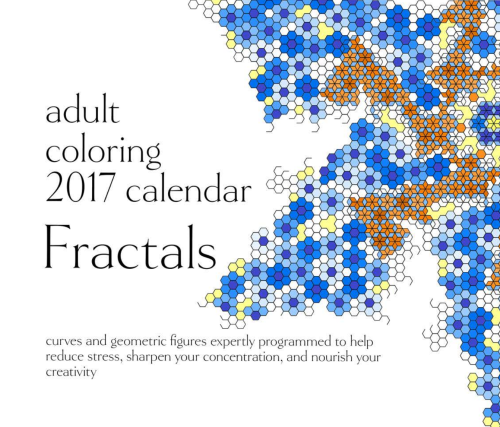
My good friend (and esteemed man of maths) Benjamin R. Trube is now selling 2017 fractal calendars. Like a geometric demiurge, he generated each fractal personally.

You can grab one here.

Now, I know what you’re thinking. “But Brian, why should I buy a 2017 calendar? At the rate things are going, the world will end in a few months.”

It’s a valid concern. But fortunately, every purchase of a fractal calendar (till the end of December) means an automatic $2 donation to ProPublica, an independent nonprofit that does quality investigative journalism. They’re one of the good guys, and if we support the good guys (and ladies) enough, we might just keep this planet in one piece after all.

More importantly, if you buy the calendar, I absolutely 100% guarantee that you will feel exactly like this:

fractalz

Has anyone else noticed that ‘Elsa’ is an anagram of ‘sale’?

On the other hand, if you’re deprived of a Calendar, you might feel like this:

muy-triste

Buffy fans: Too soon?

Anyway. Uplifted souls, good journalism, support a starving artist gainfully employed computer programmer.

Here’s that link again.

How to be presidential: A case study

Our President-elect has settled into a sort of nightly ritual. After a long day, he unwinds by getting on Twitter and criticizing people.

Sometimes it’s a corporation, like Boeing, on December 6.

Sometimes it’s an entire segment of society, like “the press,” on December 5.

Sometimes it’s a specific person in politics, like Jill Stein, on December 4.

Sometimes it’s a specific person in entertainment, like Alec Baldwin, on December 3.

Sometimes it’s a specific person in journalism, like Jeff Zeleny, on November 28.

The list goes on … and on. You get the idea. We’re all pretty used to this by now. And yes, it’s incredibly petty for a President-elect to spend his time taking potshots at whoever happens to be in his cross-hairs that day.

But at least so far, all his targets (as far as I know) have had something in common: They’ve all been public figures, more or less.

Yes, it’s childish and un-American for him to call CNN’s Jeff Zeleny a “part time wannabe journalist” and say “Shame! Bad reporter.” Yes, it’s silly for him to go after a Saturday Night Live actor for doing what SNL has done for forty years — make fun of politicians. Yes, it’s disturbing to see a President-elect condemn a fellow presidential candidate as a scammer without offering evidence. And yes, it was truly pathetic when, back in August, he went after Khizr Khan, the father of Army Captain Humayun Khan, who was killed in Baghdad in 2004.

But Zeleny is a reporter, part of the public discourse. Baldwin is deliberately wading into the fray. Jill Stein, by running for President, invites criticism from every angle. Even Mr. Khan made himself a public figure by standing on a stage at the Democratic National Convention.

That doesn’t make it wise or even okay to attack these people, but at least they are all, as I said, more or less public figures.

And then, last night, we had this:

t1

Followed by this:

t2

Why is our soon-to-be Commander-in-Chief yelling at a guy named Chuck Jones?

You may recall that Trump and Pence recently announced a deal with Carrier Corporation (which makes air conditioners) to prevent hundreds of jobs at a plant in Indiana from being moved to Mexico. This fulfilled a campaign promise he had made.

Afterward, Chuck Jones — the president of the local union, which represents employees at the plant and elsewhere — was interviewed on the news. He said Trump lied about the deal, claiming that 1,100 jobs had been saved, when in fact the real number (as confirmed by Carrier itself) was about 800, and hundreds more employees would lose their jobs after all.

Trump is getting the inflated number by counting an additional 300 positions that were never at risk of being moved. Jones, who was not involved in the deal negotiations, said, “He’s lying his ass off. That’s not just my feeling. The numbers prove he’s lying his ass off. It’s a damn shame when you come in and make a false statement like that.”

He added: “I’m extremely grateful for what he did. There’s 800 people who have jobs … It’s not all one-sided. I just wished it had been handled in more of a professional manner.”

For the moment, it doesn’t matter whether the Carrier deal was a good idea, or whether Jones was correct in his criticism (although it appears he was). Opinions about political parties or workers’ unions aren’t relevant either.

What matters is that Chuck Jones is a private citizen.

Yes, he is president of a local union group, which represents himself and his fellow workers. Yes, such groups are partly political in nature. But he is still a private citizen voicing his opinion about a deal that affected him directly and personally. Not a politician, not a journalist, not a celebrity. A guy in Indiana.

He gave his honest opinion of his President-elect: praise where he felt it was due, criticism where he felt it was due. And the President-elect insulted him for it, personally, by name, in front of a nationwide audience.

This is really, really not okay. It wouldn’t be okay for a governor or a mayor. If I worked at a company where my boss did that, I’d be thinking, Wow, that guy’s a dick. And this is the guy who’s going to be President.

What happened next? According to the Washington Post:

Half an hour after Trump tweeted about Jones on Wednesday, the union leader’s phone began to ring and kept ringing, he said. One voice asked: What kind of car do you drive? Another said: We’re coming for you.

He wasn’t sure how these people found his number.

“Nothing that says they’re gonna kill me, but, you know, you better keep your eye on your kids,” Jones said later on MSNBC. “We know what car you drive. Things along those lines.”

“I’ve been doing this job for 30 years, and I’ve heard everything from people who want to burn my house down or shoot me,” he added. “So I take it with a grain of salt and I don’t put a lot of faith in that, and I’m not concerned about it and I’m not getting anybody involved. I can deal with people that make stupid statements and move on.”

Something to keep in mind if you get too vocal about criticizing your government. Perhaps Mr. Trump will inform the entire nation that you, too, should spend “less time talking.”

PSA about PMA

This is a public service announcement.

Spellcheck will not help you if…

  • You misspell “public” as “pubic”
  • You misspell “manager” as “manger”
  • You misspell “assess” as “asses”

If your document is something important, you may want to Ctrl+F for this troublesome trio before hitting Send.

New rule

From now on, 10% of all money I earn from editing will be donated to the ACLU.

Consider it a secular tithe.

The Contest in the Mines

Here’s another bit of never-before-published writing, this time from back in 2008, only a year after I graduated college. It’s a very short story (500 words, or about two pages). It’s unusual for being pretty character-driven, whereas most of my fiction is plot-driven to a fault.

But even though it’s almost a decade old, I’m still very happy with it. And that’s unusual, too.


She’s legend now — of course you’ve heard the songs about Alainna-moch-Derr, the Catlike Trickster. Once, though, she was real, and the songs are lies, or miss the point. But I knew her, from the days when she was called Alya and worked in the Cottonmouth Mines, and I will tell you a true tale of Alainna-moch-Derr.

The mines were a prison, and we were prisoners. I was into my fourth year working that basaltic hell, for political stumblings I won’t bore you with. Alya told me she was in the mines for offending a baron’s honor, but then she told Maxis her crime was grand larceny, so I guess nobody really knows. But in those days we only really thought about three things: how thirsty we were, how tired we were — and arm wrestling.

That was our sport, bored, hopeless creatures that we were. The strongest men, the dust-stained titans fresh from outside with biceps like timber, would kneel by a crate and go at it, and all of us crowded around, our food-credits riding on the winner, quiet so the Metallics wouldn’t hear.

One day a Metallic did catch us, and you know how they are — always playing at being human. So this one made a fake smile and said he wasn’t here to punish us, just wanted to know if he could join. Did anyone care to challenge him, he asked — because otherwise the game was done, we could all go back to work (and extra shifts too, no doubt).

We all looked down except Alya, who stepped up cocky as anything and said she’d do it.

Now Alya was even scrawnier than me, and of course a Metallic could crush basalt between his fingers anyway, so in a fair match she was hopeless. But even then she had a reputation for cleverness, and we all wondered what kind of trick she could pull. It was the first interesting thing to happen in months.

The Metallic didn’t act surprised, just sat in the dirt and clanked his coppery elbow against the crate. His middle eye twitched as Alya knelt on the other side, took her time rolling up her sleeve, and finally set her arm down. She wrapped her slim calloused fingers round that deathtrap hand, cocky as anything, lips a smooth straight line. I would’ve bet my credits on her if I could, but I guess we all knew the stakes were higher than that.

There was a long tense quiet and the metal arm cracked her hand down like a mousetrap.

They gave her the twenty-eight hour shift but didn’t punish the rest of us, so I didn’t see her again for almost a week. Her knuckles were scraped but I knew her arm was okay, because she was still alive. I asked her if she did it to save the rest of us punishment. But she said hell no, she didn’t love anybody else that much.

Why, then?

“He was just a bastard,” she said, and of course Alainna-moch-Derr had never had a plan at all.

The Federalist Capers — Issue no. 1

eagle

My friend Paul and I have started a monthly newsletter called The Federalist Capers (aren’t we clever?) about the state of the union, post-Election Day.  The first issue is available now. For those who subscribe to the paper version, you should be getting yours via snail mail shortly.

Why a newsletter?

For one thing, looking over the news of the past month — as opposed to reacting to news on a daily basis — forces Paul and me to consider what’s most important (like Trump’s Cabinet picks and his conflicts of interest) and what’s sideshow (like the Hamilton thing). Fitting all the news, commentary, and suggested actions into a single page (front and back) forces us to narrow our focus even further.

But beyond that, I think it’s good for all of us to be reminded now and then that this is not normal and this is not okay. No, he’s not President yet, but he’s already done (and failed to do) a lot of things worth talking about. And a newsletter is another way to keep these discussions alive — a little different format than the blog, engaging brains in (hopefully) a little different way.

How long will we keep this up? Not sure yet. Maybe only a couple of issues, maybe years. We’ll see how it goes.

In the meantime, enjoy Issue no. 1!

Ode on a Martian Urn

I wrote this in May of 2014. First time it’s seen the light of day. I tend to be very critical of my older work, but I’m actually still pretty happy with this one.

Thou Art, what art thou?
No clay-fingered potter wrought thee;
no blushing poet will sing thy praise
to an enchanted crowd:
child of the god of war,
color of rust, ancient as asteroids,
bold hypercubes writhe
rough upon thy surface.
What tesseract lies empty in its
stable, bereft of children
that they might decorate thee?
Brim-full of portent,
tick-tock-ticking unabated by
ten thousand thousand years,
what clock lies in thy shivering heart?
What crystal quivers for thy sake,
counting bright femtoseconds like fireflies
from the moment of thy creation?
And what doom draws thee near,
O Martian urn?
Barren waste lies where thy home should be,
thy rivers sere, thy valleys
choked with dust, thy mountains
scraping thin atmosphere
to grope at stars.
Wilt thou bring this fate
to fledgling Earth
when this thy clock expires?
And when all is done, wilt thou
lie close and say:
“Truth is terror, terror truth;
that is all ye know on Mars,
and all ye need to know.”

Rethinking the Three-Fifths Clause

If you’ve spent much time reading or talking about the Constitution, you’ve probably come across the Three-Fifths Clause. It’s a little piece of Article I, Section 2, that says slaves are each counted as 3/5 of a person for the purposes of representation in the House. (Needless to say, this clause is no longer in effect.)

I remember hearing about this in high school. Like most people who hear about this, I thought it was unfair. All people should count as full, 100% human beings, not 3/5 of a human being. Right?

Well, it is a deeply unfair and horrible rule — but that’s not the reason why. In fact, slave owners of the day wanted their slaves to count as “full” people, while principled opponents of slavery wanted slaves counted as nothing.

Why?

Well, remember, we’re talking about a formula for calculating how many House Representatives a state gets. No matter what number we pick, or what formula we use, slaves are never going to be represented in the House (or Senate, for that matter). They can’t vote, they have no legal rights. The Representatives of a state represent slave owners, and other citizens (who are overwhelmingly pro-slavery).

So we’re really talking about how much power (in the form of Congressional control) slave owners are going to get.

With that in mind, the picture becomes clearer. Slave owners would count each slave as 30 people, if they could, and dominate the House. Meanwhile, not counting them at all means they only get “credit” for free citizens.

It’s just strange to have an idea in your head a certain way for over 20 years, then suddenly find out you’ve got it exactly backwards.

By the way, none of the reasoning above is a result of my own cleverness. It came from a book I’m reading, America’s Constitution: A Biography by Akhil Reed Amar.

acab

Weighing in at more than 600 pages, it’s the kind of book you can use to have a debate with someone, then cudgel them into submission if they won’t change their mind. It’s a really careful, insightful work, taking you through the Constitution itself and all 27 Amendments almost line by line, and explaining the history and the logic behind every single piece.

So far I’m only on Article II. I’ll keep you posted (unless I don’t).

How Trump used 7 logical fallacies in 49 minutes

I follow Trump on Twitter. (Generally I try to ignore internet trolls, but when one of them gets the nuclear codes, I figure we’re well past the “ignore” stage.) Reading this man’s tweets is bewildering, infuriating, disturbing, and hilarious, sometimes all at the same time. The word that keeps coming to mind is surreal.

On the plus side, he does offer an endless supply of what you might call “teachable moments.”

Consider the five-tweet barrage below, posted from 6:14 to 7:03 p.m. on November 28. The context here is that Trump claimed he would’ve won the popular vote if not for voter fraud on a massive scale — about 3 million fraudulent votes — and CNN journalist Jeff Zeleny pointed out that there’s zero evidence of that. (The sequence goes from bottom to top.)

tweetz

Of course this rant is childish, bizarre, and utterly unbefitting the President-elect of the United States. But let’s look a bit deeper. Let’s take this as a chance to learn about how logic works.

A logical fallacy is an argument that might seem sensible on the surface, but isn’t actually valid. Some are pretty obvious, while others are extremely subtle. Everyone uses logical fallacies sometimes, and everyone believes them sometimes, myself included. But if we can learn to recognize them, we get better at resisting their allure.

By my count, Trump has managed to fit at least 7 different types of logical fallacy into a span of 49 minutes. That’s one new type of fallacy every 7 minutes on average.

Ready? Here we go.

Appeal to Ignorance fallacy

Appeal to ignorance (a.k.a., shifting the burden of proof) means declaring that something is true because we don’t know, or haven’t proven, that it’s false. He says, “you have no sufficient evidence that Donald Trump did not suffer from voter fraud.” But Trump is making a remarkable claim — that 3 million people voted fraudulently — so the burden is on him to prove it. There is no burden on anyone else to disprove such a claim.

This is closely related to the principle of Occam’s Razor, which says that you generally shouldn’t assume a complex explanation when a simple one works just as well. Since the simple explanation (no significant level of voter fraud) seems to work, Trump’s more complex claim (an elaborate scheme that went largely undetected) is the one that requires defense.

The funny thing here is that we actually do have good evidence that no such fraud took place. So even if Trump’s invalid logic were valid, it still wouldn’t prove his case.

Ipse Dixit fallacy

“Ipse dixit” is Latin for “He himself said it.” It means that someone just asserts that something is true and expects it to be believed, either because they said it, or because someone else said it. Sometimes called an appeal to authority.

Trump says “There is NO QUESTION THAT #voterfraud did take place,” but he provides NO EVIDENCE THAT this is true. This is the kind of thing that happens in kindergarten a lot. “My dad could beat up your dad!” “Nuh-uh!” “Yeah-huh!”

By the way, appeal to authority isn’t inherently wrong. You can never use it as 100% proof of something, but if an expert on astronomy tells you something about how stars are formed, it’s reasonable to think that it’s probably true unless you have evidence to the contrary. But Trump is not an expert on how voting works (to put it mildly), so his opinion carries no weight, Caps Lock notwithstanding.

Ad Hominem fallacy

This means you attack your opponent directly, as opposed to attacking their argument. Insults are an example of ad hominem. Another one that’s popular in kindergarten. “You got this problem wrong.” “Oh yeah? Buttface!”

Trump has a lot of pratice with this. Here, his attacks on Zeleny include “shame! Bad reporter” (what is the guy, a dog?) and “part time wannabe journalist !”

(Incidentally, “bad reporter” and “wannabe journalist” are mutually exclusive, but that’s not really a fallacy, it’s just inherently wrong.)

Appeal to Emotion fallacy

Just what it sounds like. You fire up your audience’s emotions (anger, pride, fear, whatever works) in lieu of logic. Trump’s entire tweet sequence is aimed at making people feel a certain way, rather than think a certain way. Actually, I think that summarizes his campaign, too.

Of course, there’s nothing wrong with appealing to emotion in addition to using logic, and pretty much everybody does. It’s when you use emotion as a smokescreen that you run into problems.

Genetic fallacy

Despite the name, this has nothing to do with DNA. Genetic fallacy means arguing that a claim is wrong because its source is untrustworthy or otherwise bad. Sort of a variation on ad hominem, I guess. Trump says: “just another generic CNN part time wannabe journalist ! @CNN still doesn’t get it. They will never learn!” The goal seems to be casting doubt on CNN’s claims by casting doubt on CNN generally.

The genetic fallacy can seem reasonable on the surface — after all, if someone’s not trustworthy, why should you trust them? Well, you shouldn’t, of course. But the point is that someone can be right even if they’re usually wrong. Even a pathological liar can tell the truth sometimes. (For instance, Trump recently said, “Happy Thanksgiving!” and he was right.) So even if CNN is totally full of crap, it’s still possible that they’re right about this particular argument.

Overgeneralization fallacy

This one is also just what it sounds like.

Whether or not you think CNN has a strong liberal bias, I’m gonna go out on a limb and say that their “total (100%) support of Hillary Clinton” is not a real thing that really happened.

False Dichotomy fallacy

Also known as the excluded middle. This means that you see the issue as black and white, all or nothing, one or the other. Like: “She’s not a saint, so she must be a criminal.” In reality, the truth can often be somewhere in between the two opposing arguments, or it can even go in a different direction entirely.

Of course, sometimes one side really is totally right, and here, the facts seem to vindicate CNN completely. But the point is that even if CNN’s claim is wrong, as Trump is saying, that doesn’t prove that his claim is right.

In conclusion

Listening to Trump speak can hurt your brain. But figuring out exactly why he’s wrong can be enlightening.

Also, I’m not sure Trump realizes he actually won the election. I mean, he’s attacking CNN because they’re upholding the validity of the process that will make him President.

I think somebody might get his Twitter access revoked again…