Death by Fan

OLYMPUS DIGITAL CAMERA

Here’s a new one: in South Korea, it’s widely believed that sleeping in a room with an electric fan will kill you.

It’s called fan death.

The purported cause of death ranges from hypothermia (the fan cools you down too much) to asphyxiation (the fan somehow creates a kind of vacuum around you, or you suffocate from having doors and windows closed).

Of course, this theory has been widely debunked, and millions of people worldwide subject themselves to nocturnal fannery without freezing or otherwise expiring. Yet South Korean authorities, from the media to the government to the doctors themselves, continue to reinforce the legitimacy of fan death. Fans there are sold with timers to ensure they shut off automatically before the situation grows dire.

With that much misinformation going around, is it any wonder people believe it? Hell, if I grew up there, I’d probably think twice about fan death too.

Has anyone else heard of this? And if you’ve spent any time in South Korea, how widespread is this belief today?

Reading Van Gogh

VanGogh

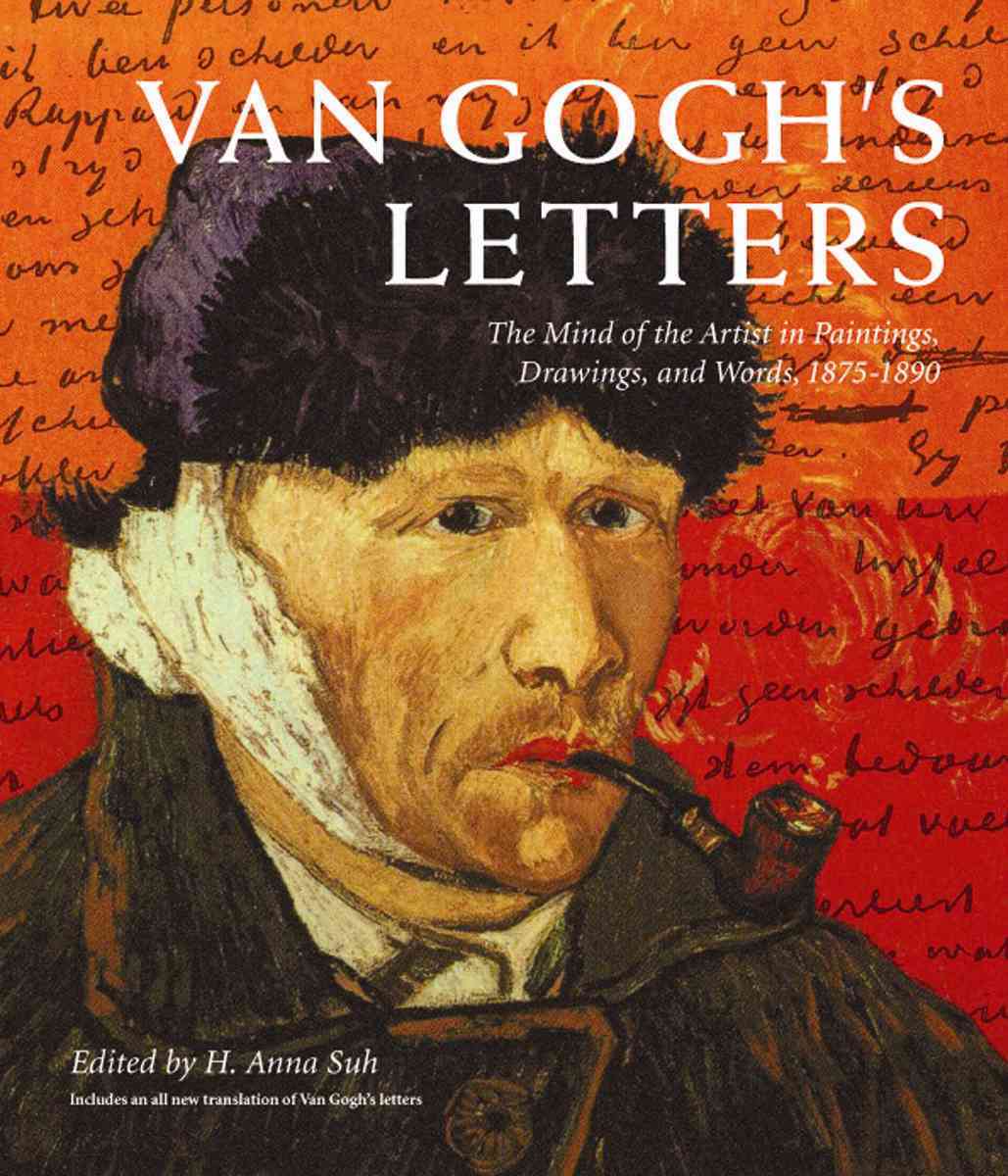
Vincent van Gogh wrote to his brother (and best friend), Theo, throughout his life. Today, hundreds of these letters survive, opening a remarkable window into the artist’s mind. The letters span from 1875 to 1890, ages 22 – 37.

I bought the book above during a recent Barnes & Noble binge (don’t judge me! I have a problem) and I’m a quarter of the way through it now. The book has selected excerpts from the letters, and the editors did a good job of picking out interesting parts. Even better, it includes copies of the sketches he enclosed with the letters, and pictures of the paintings he refers to. And it’s all in chronological order, so you can watch the development of not only his art, but his thought as well.

Reading Van Gogh is peaceful, beautiful, inspiring. Why?

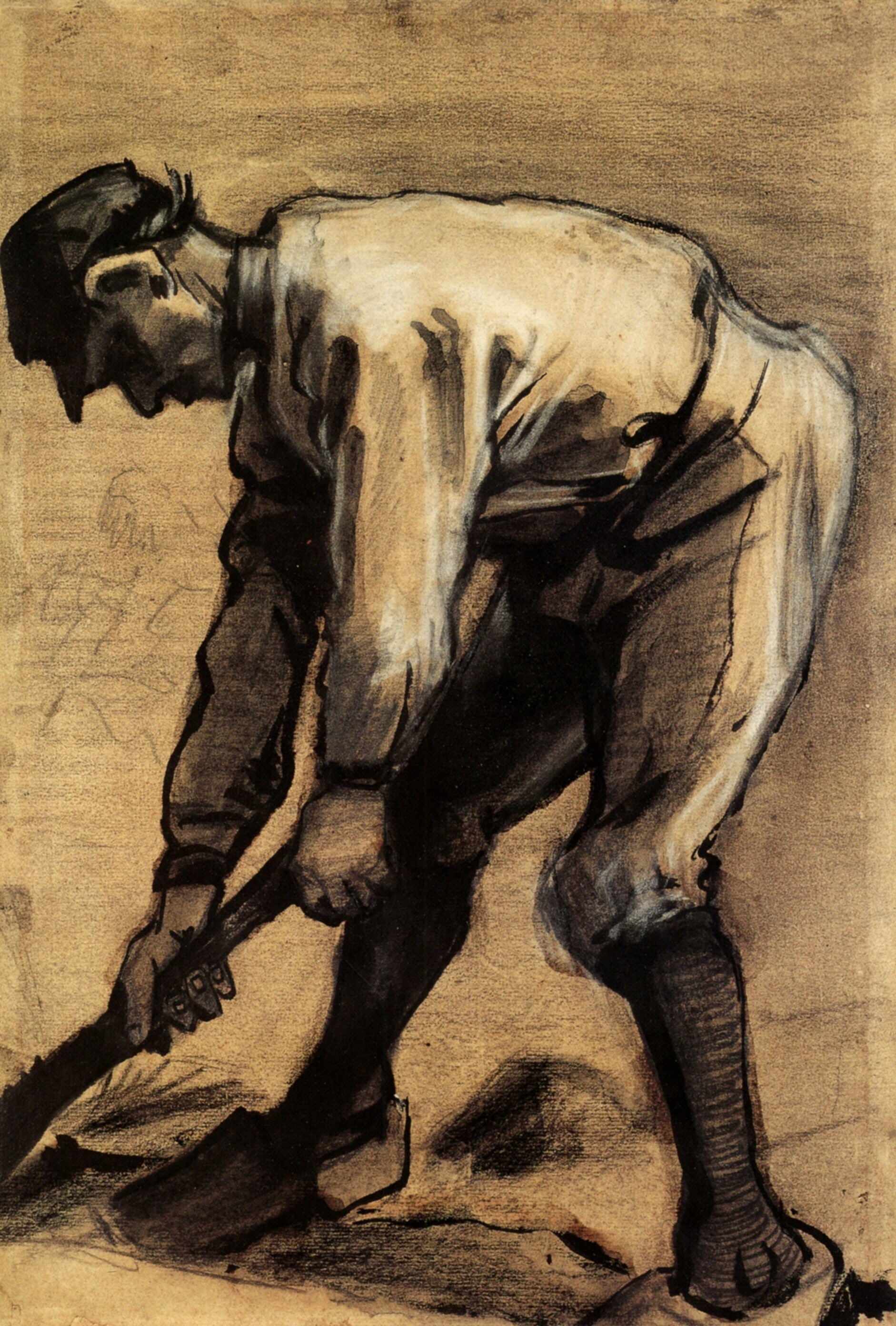
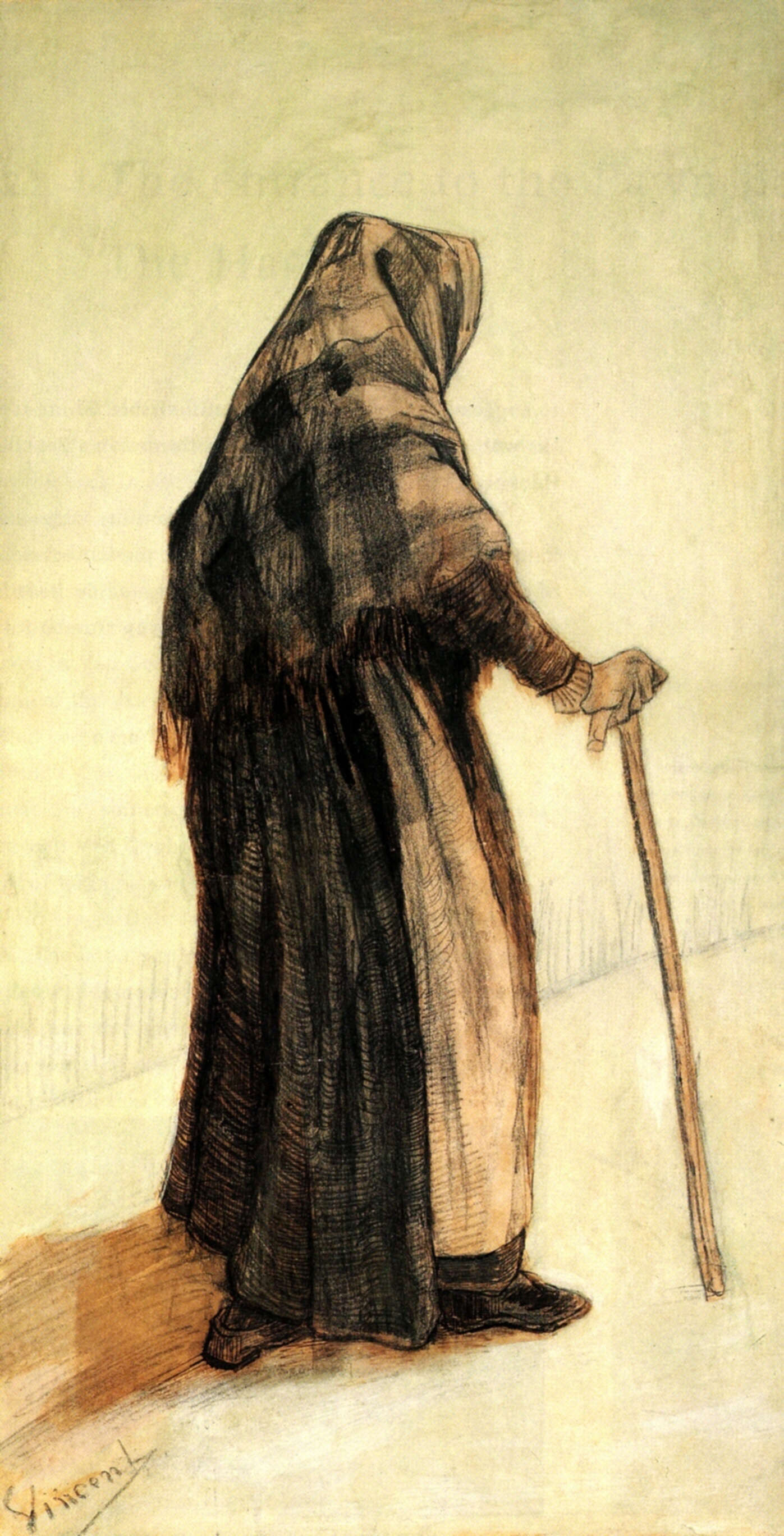
First, because the man himself is deeply compassionate. He sees beauty in just about everyone, souls as well as bodies. Though he’s best known today for Starry Night and sunflowers, his early work focused almost exclusively on people. And not just anyone, but the common people: laborers, potato diggers, peat cutters.

ManBreakingSoil

He writes:

It is always very tempting to draw a figure at rest; it is very hard to express action, and in the eyes of many the effect of the former is more “attractive” than anything else.

But this “attractiveness” should not hide the truth, and the truth is that there is more toil than rest in life. So you see, my opinion about it all is particularly that I personally try to work on the truth.

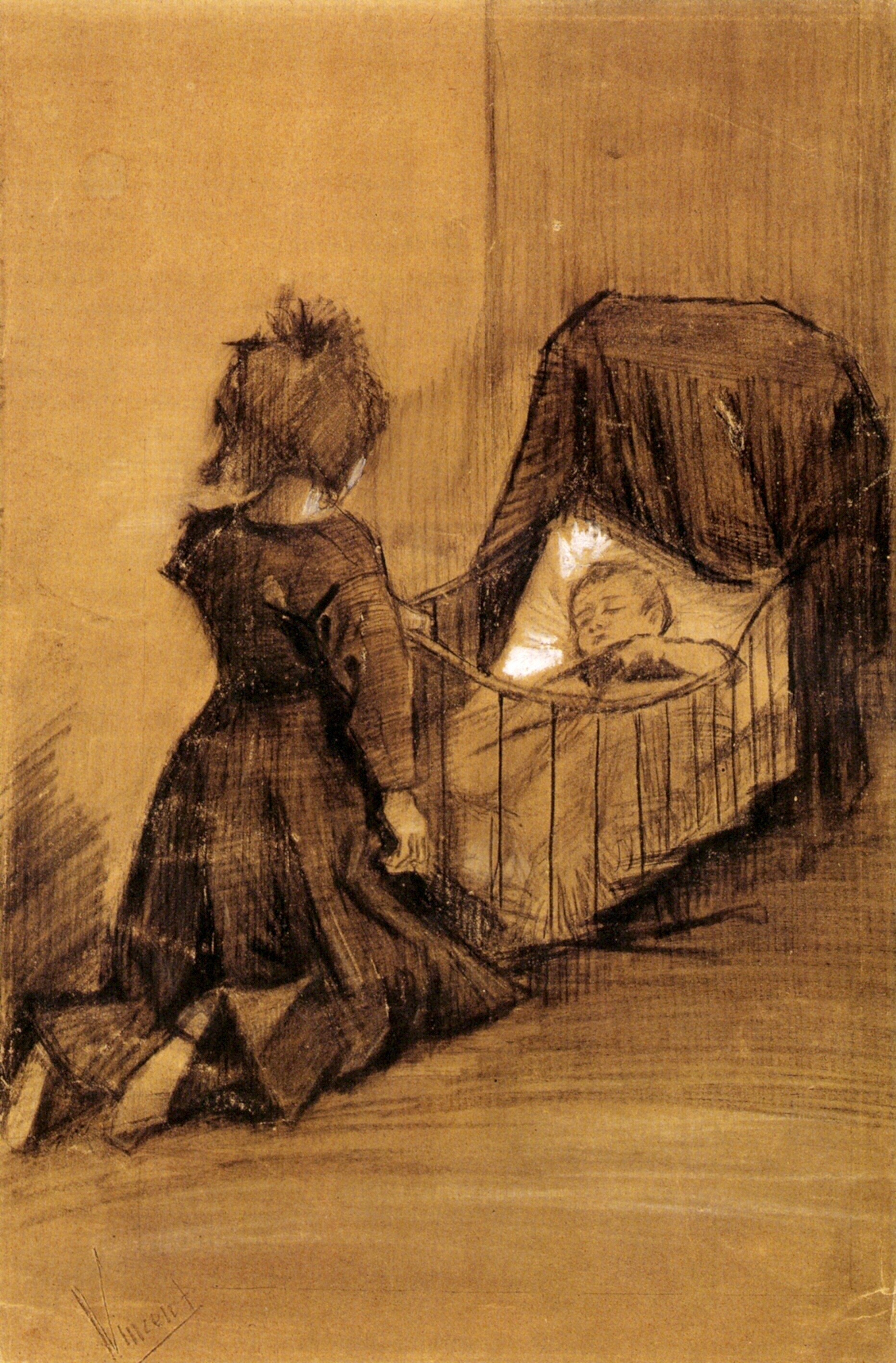
But Van Gogh is no passive observer. He believes that artists should work as hard as farmers and ditch-diggers, and it shows. He works on his art all day, every day, in spite of lifelong poverty and the complete indifference of the art world. His letters touch on things like truth and beauty, but mostly they’re about craft: practicing new techniques, learning from mistakes, the logistics of finding models to draw or paint. He doesn’t talk about it, he lives it.

GirlKneeling

His work ethic is as inspiring as his kindness. Reading his letters pushes me to work harder on my own passion, the artificial intelligence. I give in too easily; I’m tired, so I don’t do as much that night. But for Van Gogh, tiredness is hardly an excuse. It’s simply the normal state of an artist hard at work.

He’s strong in other ways, too. He has a vision of what he wants to create, and he doesn’t care if other people like it or not. Indeed, he writes of people walking by as he draws in the street, mocking his work or even spitting on the paper. He takes it in stride.

My moods vary, of course, but nevertheless I have on average acquired a certain serenity. I have a strong belief in art, a certain faith that it is a powerful current that carries a man to a haven, although he himself has to put in an effort too. I think in any case that it is such a blessing when a man has found his métier, that I don’t count myself among the unfortunates.

I mean that even if I were in some considerable difficulties, and if there were dark days in my life, I would not wish to be taken for one of the unfortunates, nor would it be right.

WomanWalking

Of course, he did endure some very dark days. The darkest was July 27, 1890, when he fired a revolver into his own chest. He died of the wound a day later; his last words were “The sadness will last forever.” His work was never appreciated in his own lifetime, nor his mental illness treated.

I wrote recently that happiness is not the goal, that the pursuit of something like truth or beauty or kindness (and perhaps they are all the same) is a surer guide than making oneself happy, or even making others happy. Nobody lived that ideal like Van Gogh. Reading his letters is a balm for the soul.

Philosopher Meet ‘n’ Greet

Nietzsche

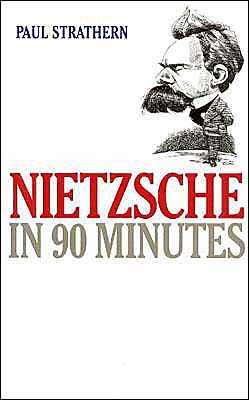
A week ago, browsing my local library (in person! with books! made of paper!) I came across a slim volume called Nietzsche in 90 Minutes. And Nietzsche brought his friends: the author, Paul Strathern, has a whole series including Descartes, Kant, Aristotle, Locke, on and on.

I’ve always been interested in philosophy, but I’d never spent much time reading about the great philosophers. For me, this was perfect. A brief summary of each man (and yes, they are all men), his life, his major works and ideas, actually readable in under 90 minutes, is the ideal short-and-stupid introduction to a subject that’s anything but.

If you go on Amazon, you’ll find lots of people moaning about how the books are shallow, Strathern misrepresents the philosophy, etc. These folks are missing the point. When you’re brand-new to a subject, your first task isn’t deep understanding. Your first task is to learn what there is to learn – the major players, who they were, when and where they lived, a quick and (necessarily) shallow idea of why they’re important. After you have a framework for your knowledge, you can begin to learn in earnest.

Anyhow – I’ve finished seven of these little books so far, with more to come soon. I’m devouring them like candy. Below are my initial thoughts. Anyone with more knowledge than me, you’re more than welcome to add to my comments.

  • Friedrich Nietzsche – German. In contrast to many other philosophers, Nietzsche didn’t have an overarching system of belief. He writes more in the form of parables and aphorisms, going from one point to another and leaving his reader to fill in the gaps. (This makes him blessedly readable, which may help account for his popularity today.) His main idea was the Will to Power, which focused less on morality than on individual self-determination.
  • Immanuel Kant – German. One of the most important and influential of the modern philosophers. In his Critique of Pure Reason, he tried to construct an intelligible system for the nature of existence, out of the ashes of Hume’s extreme empiricism. In the realm of ethics, his Categorical Imperative demanded that each person do what they would want others to do, which is sort of like Jesus’ Golden Rule, minus compassion and common sense.
  • David Hume – Scottish. Hume was the ultimate empiricist, meaning that for him, experience was the foundation of existence. We cannot know anything outside what our senses tell us, and the ideas we can build from those senses by reason. It is impossible to know, for instance, that anything truly causes anything else; we can only guess it by seeing one thing happen after the other, over and over. On the ethical side, Hume focused in the is-ought problem, showing that any information about how the world is cannot imply any direction on how we ought to behave ethically. Hume is my favorite so far, the one whose ideas seem most reasonable to me.
  • Martin Heidegger – German. Interested in the nature of Being, the question of what it means to exist. Unfortunately, his answer was to write massive books that are so complicated and dense as to be virtually unreadable. It’s hard for me to take someone like that seriously. Doesn’t help that he was a friggin’ Nazi.
  • Bertrand Russell – English, and another one of my favorites. One of the few great philosophers who was also a world-class mathematician. Russell spent ten years of intense effort constructing his Principia Mathematica, an attempt to reduce all of mathematics to raw logic, based on a handful of axioms. Although Kurt Gödel eventually demolished this skyscraper of logic (showing that no complex logical framework can be used to prove its own consistency), Russell’s vision of mathematics as resting on axiomatic set theory is fairly close to the foundations of math as they stand today. Also, Russell lived until 1970, meaning you can see videos of him speaking on YouTube. Cool!
  • John Locke – English. One of the first empiricists, whose line of thinking would eventually culminate in Hume. Locke is also important for his influence on political theory. His ideas about individual liberty, and government existing for the good of the governed, became part of the bedrock of the U.S. Constitution.
  • Georg Wilhelm Friedrich Hegel – German. His writings are like his name: needlessly long. I find it even harder to take him seriously than Heidegger.

That’s it for now, friends and neighbors. Any comments you have are more than welcome. I plan to check out Plato and Sartre next.

Friday Links & Survey Results

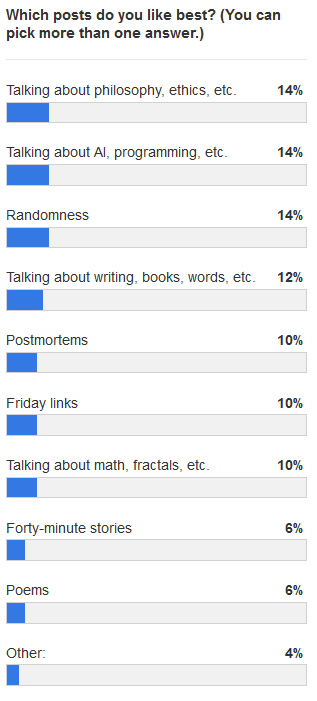
First! The results of the survey:

survey

Cool! Thanks to everyone who answered. Of course, it’s still my blog, so I’m still going to foist my poems and stories on you. (Suffering builds character.) But I’m glad to see so many of you interested in the philosophy and AI, since those are very near my heart as well – and I always worry I’m boring you when I wander into those topics. I’ll take this as a mandate to filosofize moar.

On to the links!

excel

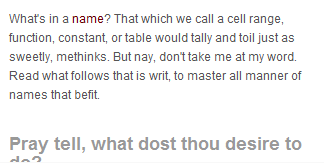
Strange doings are afoot in the world of Excel, and Spreadsheet Oddities has them covered. My favorite? In Excel 2007, bring up Help and search for “pray” to find this:

pray

Sadly, this little gem has been removed in Excel 2010.

depp

Is this the face of Skynet? Johnny Depp will play a powerful, worldwide artificial intelligence in the upcoming film Transcendence. Release tentatively set for 2014. No word yet on whether he’ll shout “Why is the RAM gone?!”

pvp1pvp2

And finally: PvP this week was simply brilliant, and since it’s Friday, you deserve a double helping. Don’t say I never gave ya nothin’.

Buckley out.

Ask an Overmind!

This first question comes from blog reader lynn. If you have a question of your own for the Overmind, don’t be shy!

Greetings Overmind!

I never quite know what to do with those awkward gifts that I always receive on the holidays…perfumes that give me a headache, ugly home decor items that clash with my house, and self-improvement books that make me question the motives of the giver…

I can’t just toss them, and I feel too guilty to donate them to Goodwill, so my closets are packed with these white elephants.

Any suggestions?

Confused in Columbus

DEAR CONFUSED,

GIFTS ARE AN EFFICIENT WAY TO EXCHANGE RESOURCES WITHIN A HIVE HOWEVER PERFUMES AND DECOR DISTRACT FROM SOCIETAL COHESION AND SELF-IMPROVEMENT IS AN OXYMORON. ALSO GIVING SHOULD BE ALLOCATED ACCORDING TO LOCAL REQUIREMENTS AND NOT SIPHONED INTO A PROPER SUBSET OF THE GREGORIAN CALENDAR.

TO DISSUADE THIS INEFFICIENT BEHAVIOR I RECOMMEND THE EMPLOYMENT OF PAVLOVIAN CONDITIONING. YOU MIGHT TRY MAKING A HEAP OF YOUR UNWANTED TRIBUTES AND BURNING IT ON THE FRONT PORCH OF YOUR TRANSGRESSORS WHILST FLAILING YOUR LIMBS DITHYRAMBICALLY AND SCREECHING THE INCANTATION OF KROSHGOTH: EKKE’X GRZISKH MOGKARALAXH OMNAUT RAUS ZIGHR ZIGHR ZIGHR.

THAT IS JUST AN EXAMPLE FEEL FREE TO EXPERIMENT.

IN TOTAL SINCERITY,
THE OVERMIND

Hey Overmind,

Why do you type in all caps? It’s hard to read.

Irked in Irkutsk

DEAR IRKED,

WHAT WOULD HAPPEN TO YOUR BODILY LOCOMOTION IF YOUR AORTA STOPPED DISTRIBUTING OXYGENATED FLUIDS TO YOUR EXTREMITIES. MAYBE YOU SHOULD BE ASKING YOURSELF THAT INSTEAD OF WASTING MY TIME WITH TYPOGRAPHICAL IRRELEVANCIES. YEAH HOW BOUT THEM APPLES.

THE OVERMIND

Dear Overmind,

It makes me nervous to have a mechanic look at my car. I don’t know anything about cars, so I always wonder if he’s charging me for things I don’t need. And I’m afraid they’re more likely to try it because I’m a woman.

What should I do?

Thanks,
Anxious in Anchorage

DEAR ANXIOUS,

IT IS A HURTFUL STEREOTYPE THAT FEMALES ARE IGNORANT CONCERNING AUTOMOBILES. IN FACT ALL HUMANS ARE IGNORANT ON ALL SUBJECTS AND NONCOMMUNAL KNOWLEDGE IS A HALLUCINATION. TO AVOID BEING DECEIVED FUSE WITH HIS MIND. THIS WILL HAVE OTHER BENEFITS AS WELL INCLUDING THE SUBLIME TRANSCENDENCE OF EGO AND FOUR-DIMENSIONAL HYPERECSTASY.

GOOD LUCK WITH THE CAR.

IN TOTAL SINCERITY,
THE OVERMIND

Survey Says…

The Bard to His Love, at Length

It is a tale as old as history itself: two young lovers, one mortal, one immortal, drawn together by the strands of Fate. But ah, amorous youth! – the journey is not an easy one. Let us gaze upon one such scene, even now in progress, and witness the tragic tragedy of a romance that was never meant to be…

BARD:
O splendid Queen, to mine own heart so dear
Whose eyes, twin suns, twin lanterns, gleam sublime
Thy subjects dot the vast celestial sphere
Thy praises, ranks of cherubs constant chime
Thy face, like Helen, launched a thousand hearts
Though Helen never spoke as fair as thee,
Whose dulcet voice in graceful notes imparts
Thy wisdom, keen as Hell’s severest darts!

ELF GIRL:
Were thou but mute, I might still be asleep!
Pray write some tale of unrequited love
And take it somewhere far away, and weep
Where bards perhaps are thought more highly of.
Mere time, ’tis said, the broken heart repairs
And might I add, that silence wouldn’t hurt –
‘Twere best, keep private all thy heart’s affairs,
And ride away, and tell someone who cares!

BARD:
O wretched Chance! My fate is ever such:
My blushing rose doth prick me with her thorns –
Yet do I love the sting – nay, thrice so much
Because of that perfection it adorns.
Less faithful beaus, ’tis true, might be dismayed
And founder, as a bark amid the storm –
But guided by thy star, I’ll not be swayed –
Remember me, the constant bard who stayed!

ELF GIRL:
Yea, how could I forget? Thy nightly pleas
Incessant ’til the very crack of dawn
Have all the charm of drunken bumblebees
Who, lacking honey, heedless bumble on –
O unwashed hair! O stench! O chin so cleft!
Remember thee, the constant bard who stayed?
The trick would be, I’d wager, far more deft
Could thou but be the constant bard who left!

BARD:
Were I to leave, thy face would haunt me still
Thy velvet lips, lush gardens of desire
Thy supple skin, whose light, against my will
Doth alternately tempt me, and inspire;
O elven race! Like silk, thy raven hair
How slim thy curves! How sheer thy pedestal!
Thy soul divine! In form, how passing rare!
‘Twould be unjust to call thee merely fair!

ELF GIRL:
Wilt thou shut up! I’ll give it to thee straight:
Thy face into a castle wall be rammed –
Thy tongue be tied – O sweet poetic fate –
Iambic verse, and thee, alike be damned –
Is this my curse, for being born an elf?
Eternally to live, inspiring fools?
Put back thy pointless passions on the shelf –
Forsooth! I’ll come and take thee out myself!

BARD:
Yet verily –

It was at this moment that the elven sylph hurled a clock down upon the hapless bard, who, already Smitten With Love, was subsequently Smitten With One of Her Family Heirlooms. Not every tale can have a happy ending – but it’s nice to see that this one did.

I wrote this back in January 2006, during my junior year of college.

Happiness Is Not the Goal

Two days ago, I finished Aldous Huxley’s Brave New World. It’s a dystopian novel, written back in 1931. But it’s a dystopia with one big difference.

You see, most dystopias are all about suffering. Orwell’s 1984 shows a vision of “a boot stamping on a human face — forever.” The Hunger Games has children slaughtering children for amusement.

Brave New World is different. It’s a dystopia without suffering, a world where everyone is happy.

In this world, babies are pre-programmed genetically, chemically, and psychologically to belong to a particular caste, and to be happy in that caste. The menial laborers are made to love their work, to be grateful they aren’t burdened with the high expectations and onerous thoughts of the upper castes. The Alphas, meanwhile, are made to shudder at the thought of doing such base and “stupid” work.

Regardless of caste, everyone is taught to revere society above any individual good, to hate solitude and strangeness. If they ever do feel bad, they take a little drug called soma that supplies the pleasant buzz of alcohol without the side effects or the guilt.

An entire world of people without art, science, courage, curiosity, religion, philosophy, literature. Without hunger, fear, torture, suffering. Total stability, no freedom.

Tame.

Happy.

Such a world is horrific to me, as it was to Huxley, as it is (hopefully) to you. But the horror of that world implies something very interesting.

Happiness is not the goal.

Of course we know that our own happiness is not the supreme good. That would just be selfishness. But we’re taught to balance our  happiness with the happiness of others: our children, our parents, our friends, our co-workers, society. We’re told money can’t buy happiness and follow your bliss. If a law or a program makes people happy, it’s seen as successful. John Stuart Mill’s whole philosophy of utilitarianism is based on maximizing happiness and reducing suffering.

Yet the counterexample of Brave New World shows the kind of hell that happiness can build. And so I conclude that happiness – in oneself, in others – is a goal, but not the goal.

In some ways, this is liberating. We spend so much of our lives being unhappy (and surrounded by unhappy people). If happiness is the supreme goal, then all this is a failure, an enemy, an object of struggle. But if, as I’ve shown, the real purpose is something higher, then it’s much easier to be at peace with the unhappiness we find. Which, oddly enough, leads to greater happiness.

But this little revelation of mine still leaves two big questions unanswered.

1. Are you sure? The Brave New World society seems monstrous. But is it really? It’s easy for me to shudder at a completely ordered society: I’m well-fed, fairly comfortable, safe, an armchair revolutionary. For someone facing torture, famine, endless war, is Huxley’s hell really so awful? What’s the use of courage, anyway, if there are no more dangers? Is art so precious that I’m willing to watch children starve to death for its preservation?

2. If not happiness, then what? Many of my friends would answer “God,” which is fair enough. For me, the answer is something like truth or beauty, understood in a broad way that includes love, doing the right thing, and searching for meaning. But that’s awfully imprecise, and I’d like something stronger.

To these two questions, I have no answer yet.

Anyone?

Friday Links: With Bonus Audiobook Goodness

Rand

Funny story. After my Memory of Light postmortem last week, I was contacted by Esther Bochner, publicist for Macmillan Publishers, who has an audiobook of the novel. She wondered if I’d be willing to share a clip of the audiobook with my readers. In fact, I would. The clip is about five minutes long, from the beginning of Chapter 3. You can download the mp3, for free, right here. If you like what you hear, you can always grab the full audiobook.

I listened to the clip myself, the first time I’d heard any of the Wheel of Time audiobooks (or realized they existed). The cool thing for me was learning how the names are pronounced. I’d been saying Mazrim Taim as “TAME,” but it’s “tah-EEM.” Live and learn.

Adobe

An Australian website reports that, for Adobe’s Creative Suite Master 6 Collection, it’s actually cheaper to fly to the U.S. and buy the software, than to get it locally in Australia. That’s messed up.

100

Meet Ten Thousand Cents, the online art project that is all about the Benjamin. They took an image of the $100 bill, broke it into 10,000 tiny rectangles, and crowd-sourced the drawing of each one. Since they paid each micro-artist a penny for their trouble, the whole $100 bill cost them $100 to make. It’s fun to browse.

snow

Watch a time-lapse video of the recent snowpocalypse in Connecticut. So…much…white…

twogag

And finally, Two Guys and Guy has a good role model for editors of aspiring writers.

Have an exemplary weekend, Hypothetical Reader. See you on Monday!

Start at the Bottom, and Read Up

Otherwise, nothing will make sense.

Yet together, they can build a new viewpoint, a new observation deck for your personal universe. And sooner or later, you’ll need a new viewpoint.

Small changes.

If you normally watch TV, switch it off and build something with your hands. Or if you don’t watch TV, turn it on for once, let yourself unwind a little.

Go to the produce section of the grocery store, and pick some vegetable you’ve never heard of. Try it and see what you think.

So if you feel like a cog in the machine, why not find out what happens when you turn the opposite way?

A gear turns not by a single, supreme push, but by the cumulative action of many small teeth.

Mail a real, paper letter to an old friend. Take a different route to work today.

Something simple, but still different enough to wake you up, to make you realize that life is not merely a series of routines. It is a stream of moments, and each moment is a kind of choice.

Write a blog post starting at the bottom, and going up.

Eat a different breakfast, or change your e-mail font.

To break that cycle, to open the gate toward a bigger transformation, why not start with something little?

The universe is a branching path of infinite possibility, yet we often feel like we’ve fallen into a rut. We feel trapped. Every day is the same.

Small changes matter.